Leigh Ann Wheeler - Böcker
Visar alla böcker från författaren Leigh Ann Wheeler. Handla med fri frakt och snabb leverans.
4 produkter
4 produkter
446 kr
Skickas inom 5-8 vardagar
How Sex Became a Civil Liberty is the first book to show how and why we have come to see sexual expression, sexual practice, and sexual privacy as fundamental rights. Using rich archival sources and oral interviews, historian Leigh Ann Wheeler shows how the private lives of women and men in the American Civil Liberties Union shaped their understanding of sexual rights as they built the constitutional foundation for the twentieth-century's sexual revolutions. Wheeler introduces readers to a number of fascinating figures, including ACLU founders Crystal Eastman and Roger Baldwin; nudists, victims of involuntary sterilization, and others who appealed to the organization for help; as well as attorneys like Dorothy Kenyon, Harriet Pilpel, and Melvin Wulf, who pushed the ACLU to tackle such controversial issues as abortion and homosexuality. It demonstrates how their work with the American Birth Control League, Planned Parenthood Federation, Kinsey Institute, Playboy magazine, and other organizations influenced the ACLU's agenda. Wheeler explores the ACLU's prominent role in nearly every major court decision related to sexuality while examining how the ACLU also promoted its agenda through grassroots activism, political action, and public education. She shows how the ACLU helped to collapse distinctions between public and private in ways that privileged access to sexual expression over protection from it. Thanks largely to the organization's work, abortion and birth control are legal, coerced sterilization is rare, sexually explicit material is readily available, and gay rights are becoming a reality. But this book does not simply applaud the creation of a sex-saturated culture and the arming of citizens with sexual rights; it shows how hard-won rights for some often impinged upon freedoms held dear by others.
580 kr
Skickas inom 5-8 vardagar
Sexual revolutions have transformed American culture, society, and politics--not to mention individual lives--throughout the twentieth century. Sex radicals challenged Victorian restraint and championed sexual liberation. In the process, they confronted a tightly knit web of legal restrictions on sexual expression and conduct designed to keep sex out of the public realm and to allow public officials to police sex in private spaces. The American Civil Liberties Union has stood at the center of these battles, using the Constitution to create an expansive body of sexual rights that helped lay the old order to rest.How Sex Became a Civil Liberty is the first book to show how ACLU leaders and attorneys forged legal principles that advanced the sexual revolution. It explains how, why, and to what effect ACLU activists developed and revised their own policies, adopted sexual expression and practice as civil liberties, persuaded courts to do the same, and joined with commercial media and others to promote these understandings of sexuality to a broader public. Through its influence over public discourse as well as law, the ACLU helped to establish a liberal, rights-based sexual ethos in the United States. It played a prominent role in nearly every major court decision related to sexuality and also reached beyond the courtroom to promote its agenda through grassroots activism, political action, advertising campaigns, and public education. Thanks to its work, abortion and birth control are legal, coerced sterilization is rare, sexually explicit material is readily available, and gay rights are becoming a reality.Using rich archival sources and interviews with major players, How Sex Became a Civil Liberty tells the story of the men and women who built the legal foundation for the sexual revolution. It explores how private lives shaped approaches to public policy and illuminates the importance of debates among activists-as well as between activists and their opponents-in shaping what we now consider to be our sexual rights. A story of tragedy as well as of triumph, How Sex Became a Civil Liberty shows how the ACLU helped to create our polarized sexual culture by collapsing old distinctions between public and private and privileging access to sexual expression over protection from it. Realizing how the result-a culture saturated with sex and a citizenry armed with sexual rights-liberates and also limits our sexual choices could help to transform fights over rights into productive conversations about how to shape the public world we share.
509 kr
Tillfälligt slut
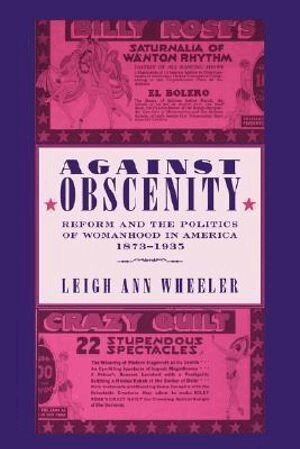
Radio "shock jocks," Super Bowl entertainment, music videos, and internet spam-all of these topics inspire passionate disagreements about whether and how to regulate sexually explicit material. But even in the midst of heated debate, most people agree that children should be shielded from exposure to pornographic images. Why are children the focal point of debates over sexually explicit material? And how did a culture rooted in Puritanism and Victorianism become saturated with sex? In Against Obscenity, Leigh Ann Wheeler offers new answers to these questions through a study of women's anti-obscenity activism from 1873 to 1935. This period saw the emergence of an increasingly sexualized popular culture comprised of burlesque shows, risque vaudeville acts, and indecent motion pictures. It also witnessed the enfranchisement of women. These momentous cultural and political developments come together in a story about middle- and upper-class women who mobilized against lewd public amusements and, simultaneously, challenged the men whose work as activists, jurors, and even law enforcement officials, had defined and regulated obscenity for several decades.By the 1920s, women who led the anti-obscenity movement enjoyed the support of millions of American women and the attention of presidents, congressmen, and Hollywood moguls. Today we live in a world profoundly shaped by their work but largely ignorant of their influence. Using primary sources as intimate as private correspondence and as formal as meeting minutes, Against Obscenity tells the story of these all but forgotten women, exploring their passionate disagreements over whether to ban a touring stage show, close a local burlesque theater, disseminate explicit sex education pamphlets, or create a federal agency to regulate Hollywood films. It shows that the rise and fall of women's anti-obscenity leadership shaped American attitudes toward and regulation of sexually explicit material even as it charted a new era in women's politics. In the end, the book argues that essentialist identity politics divided and ultimately disarmed women's anti-obscenity reform, helping us understand the curiously muted impact of woman suffrage.It also cautions against framing debates over sexual material narrowly in terms of harm to children while highlighting the dangers of surrendering discourse about sexuality to the commercial realm.
352 kr
Skickas inom 7-10 vardagar
As women beat down the doors and won the right to vote in the early twentieth century, adult (patriarchal) males rightly anticipated crusades on behalf of, or mounting conflicts over, those issues that particularly agitated women--drink, child welfare, and vice chief among them. This study examines the struggle of women to exert (matriarchal) control over burlesque houses, motion-picture theaters, and sex education in the schools--employing censorship in the role of moral leadership--and the opposition they encountered, from some men but also some women. Answering which, and why, Leigh Ann Wheeler finds that public disagreements on anti-obscenity fractured what appeared to be unity among women, undercut the earlier view of women as disinterested because apart from the public fray, and led to a resurgence of patriarchal authority--now in the shape of religious anti-obscenity. The leaders of the women's anti-obscenity movement launched their crusade in Minneapolis, but women across the country followed their example, so that Wheeler avoids the limitations of a purely local case study.Completed under the direction of Sara Evans, Wheeler's work offers a sterling example of how students of the women's experience can open new questions and deepen our understanding of cultural-political conflict in American life.