• Fri frakt över 249 kr
  • •
  • Snabba leveranser
  • •
  • Billiga böcker
Kundservice

Du är på sajten för privatpersoner.

Företag, bibliotek eller offentlig verksamhet?

Du handlar på classic.bokus.com, där alla dina funktioner finns intakta.
Till classic.bokus.com
Bokus logotyp. Gå till startsidan.
  • Erbjudanden
  • Nyheter
  • Student
  • Topplistor
  • Barn & ungdom
  • Bokus Play
  • E-böcker
  • Pocketböcker
  • Spel & pussel

10% rabatt på allt med kod: NYSTART10 →

Sidfot

Mina sidor

    Hjälp

    • Kundservice
    • Vanliga frågor och svar
    • Frakt och leverans
    • Retur vid ångerrätt
    • Reklamera vara
    • Betalning
    • Köpvillkor
    • Allmänna villkor
    • Information om webbplatsens tillgänglighet

    Om Bokus

    • Om oss
    • Pressrum
    • För studenter
    • För företag
    • För bibliotek och offentlig verksamhet
    • För leverantörer
    • Hållbarhet

    Populärt

    • Aktuella erbjudanden
    • Presentkort
    • Studentlitteratur
    • Nya böcker
    • Topplistor
    • Signerade böcker
    • Engelska böcker

    Inspiration

    • Boktips
    • BookTok
    • Populära bokserier
    • Barnbokskaraktärer
    • Populära författare
    Logotyp för Bokus
    Följ oss på Facebook (extern länk)Följ oss på Instagram (extern länk)Följ oss på YouTube (extern länk)Följ oss på TikTok (extern länk)
    bokus @ CookiesAnpassa cookiesIntegritetspolicyKöpvillkor
    Till Citymail hemsida (extern länk)Till Budbee hemsida (extern länk)Till Postnord hemsida (extern länk)Till Schenker hemsida (extern länk)Till Early Bird hemsida (extern länk)Till Walleys hemsida (extern länk)
    1. Samhälle och politik
    2. Samhälle och kultur
    3. Sociala grupper och identitet
    4. Genusvetenskap

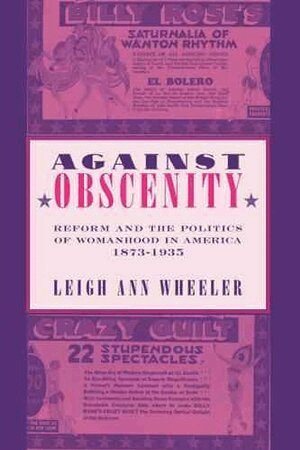
    Against Obscenity

    Reform and the Politics of Womanhood in America, 1873–1935

    AvLeigh Ann Wheeler

    Inbunden, Engelska, 2004

    Del i serien Reconfiguring American Political History

    509 kr

    Tillfälligt slut

    Fler format och utgåvor

    Häftad

    366 kr

    Beskrivning

    Radio "shock jocks," Super Bowl entertainment, music videos, and internet spam-all of these topics inspire passionate disagreements about whether and how to regulate sexually explicit material. But even in the midst of heated debate, most people agree that children should be shielded from exposure to pornographic images. Why are children the focal point of debates over sexually explicit material? And how did a culture rooted in Puritanism and Victorianism become saturated with sex? In Against Obscenity, Leigh Ann Wheeler offers new answers to these questions through a study of women's anti-obscenity activism from 1873 to 1935. This period saw the emergence of an increasingly sexualized popular culture comprised of burlesque shows, risque vaudeville acts, and indecent motion pictures. It also witnessed the enfranchisement of women. These momentous cultural and political developments come together in a story about middle- and upper-class women who mobilized against lewd public amusements and, simultaneously, challenged the men whose work as activists, jurors, and even law enforcement officials, had defined and regulated obscenity for several decades.By the 1920s, women who led the anti-obscenity movement enjoyed the support of millions of American women and the attention of presidents, congressmen, and Hollywood moguls. Today we live in a world profoundly shaped by their work but largely ignorant of their influence. Using primary sources as intimate as private correspondence and as formal as meeting minutes, Against Obscenity tells the story of these all but forgotten women, exploring their passionate disagreements over whether to ban a touring stage show, close a local burlesque theater, disseminate explicit sex education pamphlets, or create a federal agency to regulate Hollywood films. It shows that the rise and fall of women's anti-obscenity leadership shaped American attitudes toward and regulation of sexually explicit material even as it charted a new era in women's politics. In the end, the book argues that essentialist identity politics divided and ultimately disarmed women's anti-obscenity reform, helping us understand the curiously muted impact of woman suffrage.It also cautions against framing debates over sexual material narrowly in terms of harm to children while highlighting the dangers of surrendering discourse about sexuality to the commercial realm.

    Produktinformation

    • Utgivningsdatum:2004-06-03
    • Mått:152 x 229 x 24 mm
    • Vikt:522 g
    • Format:Inbunden
    • Språk:Engelska
    • Serie:Reconfiguring American Political History
    • Antal sidor:272
    • Förlag:Johns Hopkins University Press
    • ISBN:9780801878022

    Utforska kategorier

    • Genusvetenskap inom Samhälle och politik

    Mer om författaren

    Leigh Ann Wheeler is an associate professor of history and American Culture Studies at Bowling Green State University.

    Recensioner i media

    What constitutes obscenity is a contentious issue, and Wheeler makes it clear that historically, it has been dangerous ground for feminists... Her analysis is convincing. Choice 2005 Wheeler's account of the anti-obscenity campaign illuminates the importance of gender to that history; she seamlessly explores the movement as it shifted from the local to the national level; and she meticulously recounts the day-to-day struggles women faced. Along the way, she draws on an impressive list of archival sources to reconstruct women's involvement in the campaign, provides a detailed account of the victories and hardships women experienced as they attempted to shape the... anti-obscenity movement, and offers a thoughtful and well-argued addition to a growing number of studies about women activists and how their concerns for mothers and children shaped public policy. American Historical Review 2005 Tells the complicated and compelling story of women's meteoric rise to prominence in competing branches of the anti-obscenity movement prior to and immediately following passage of the Nineteenth Amendment, and their arguably more rapid exit from the scene during the late 1920s and early 1930s... A superbly written book. -- Heather Lee Miller Women and Social Movements in the United States, 1600-2000 2005 A welcome addition to the growing historiography of obscenity and censorship. In its solid research, Wheeler's book is [also] an important addition to the historiography of grassroots struggles over free speech and other rights in twentieth-century America. Journal of American History In this important book, Leigh Ann Wheeler examines a little-discussed corner of popular culture, women's campaigns to regulate 'obscenity' in the late 1800[s] and early 1900s. Those interested in issues of obscenity and the development of the concept of free speech in the United States will find Wheeler's work compelling. -- Lisa K. Boehm Journal of Popular Culture Wheeler has uncovered a fascinating chapter in the story of women's perennial attempts to protect children and vulnerable young women from the dangers of commercial vice. Her study considers several of these dangers, such as prostitution and burlesque shows, but focuses above all on the new medium of film. -- Cynthia Eagle Russett H-Net Book Review/H-SHGAPE Deftly illuminates the 'possibilities in our past' while addressing the complex struggles of women and citizens in more recent times. -- Hiroshi Kitamura American Quarterly 2006 The study gives a very good sense of the anti-obscenity reform activity and concern in the period under study. -- Encarna Trinidad Journal of American Studies 2006 This is a very good book about an important topic. -- Rebecca J. Mead Journal of Social History 2007 Wheeler's impressively researched study is essential reading for anyone interested in the history of anti-obscenity reform and women's activism in general. -- Christine Erickson American Studies

    Innehållsförteckning

    • Preface and Acknowledgments Introduction: Crossing the Great Divide: Women, Politics, and Anti-obscenity Reform Chapter 1. " "Protect the Innocent!": Men, Women, and Anti-obscenity Reform, 1873 - 1911 Chapter 2. Dressing Elsie: Women's Theater Reform, 1912 - 1919 Chapter 3. "Censorship Does Not Protect": Women's Motion Picture Reform, 1919 - 1922 Chapter 4. "Woman vs. Woman": The Leading Ladies of Motion Picture Reform, 1923 - 1930 Chapter 5. "We Don't Want Our Boys and Girls in a Place of That Kind": Women's Burlesque Reform, 1925 - 1934 Chapter 6. "Thinking as a Woman and of Women": Sex Education, Obscenity's Antidote, 1925 - 1934 Chapter 7. "Sinful Girls Lead": Crises in Women's Motion Picture Reform, 1932 - 1934 Chapter 8. "'Catholic Action' is Blazing a Spectacular Trail!": The Collapse of Women's Anti-obscenity Leadership, 1934 - 1935 Conclusion: Anti-obscenity Reform and Women's History List of Abbreviations Notes Notes on Sources Index