Lene Østermark-Johansen – författare
Visar alla böcker från författaren Lene Østermark-Johansen. Handla med fri frakt och snabb leverans.
8 produkter
8 produkter
Inbunden, Engelska, 2005
2 505 kr
Skickas inom 10-15 vardagar
The historiography of the Italian Renaissance has been much studied, but generally in the context of a few key figures. Much less appreciated is the extent of the enthusiasm for the subject in the 19th and early 20th centuries, when the subject was 'discovered' by travellers and men and women of letters, historians, artists, architects and photographers, and by collectors on both sides of the Atlantic. The essays in Victorian and Edwardian Responses to the Italian Renaissance explore the breadth of the responses stimulated by the encounter between the British, the Americans and the Italians of the Renaissance. The volume approaches the subject from an interdisciplinary perspective. While recognising the abiding importance of the familiar 'great names', it seeks to draw attention to a wider cast of people, many of whom led colourful, energetic lives, knew Italy well, and wrote eloquently about the country and its Renaissance. Several essays show that 'Renaissance studies' became a field in which female historians could explore areas of relevance to the 'New Woman'. Other chapters examine the aims and politics of collecting and the place of the collector in literature and in the rediscovery of Renaissance artists. The contribution of teachers and other less formal champions of the Italian Renaissance is explored, as is the role of photographers who re-framed and re-viewed Florence - the Renaissance city - for Victorian and later eyes.
Häftad, Engelska, 2016
910 kr
Skickas inom 10-15 vardagar
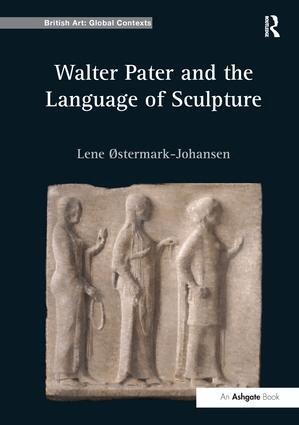
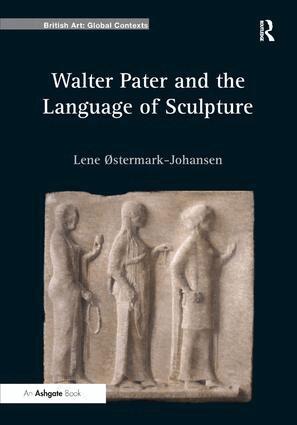
Walter Pater and the Language of Sculpture is the first monograph to discuss the Victorian critic Walter Pater's attitude to sculpture. It brings together Pater's aesthetic theories with his theories on language and writing, to demonstrate how his ideas of the visual and written language are closely interlinked. Going beyond Pater's views on sculpture as an art form, this study traces the notion of relief (rilievo) and hybrid form in Pater, and his view of the writer as sculptor, a carver in language. Alongside her treatment of rilievo as a pervasive trope, Lene Østermark-Johansen also employs the idea of rivalry (paragone) more broadly, examining Pater's concern with positioning himself as an art critic in the late Victorian art world. Situating Pater within centuries of European aesthetic theories as never before done, Walter Pater and the Language of Sculpture throws new light on the extraordinary complexity and coherence of Pater's writing: The critic is repositioned solidly within Victorian art and literature.
Inbunden, Engelska, 2019
1 811 kr
Skickas inom 10-15 vardagar
First published in 1998, this volume explores the reinvention of Michelangelo in the Victorian era. At the opening of the nineteenth century, Michelangelo’s reputation rested on the evidence of contemporary adulation recorded by Vasari and Condivi. Travel, photography, the shift of his drawings into public collections, and, in particular, the publication of his poems in their original form, transformed this situation. The complexity of his work commanded new attention and several biographies were published.As public curiosity and knowledge of the artist increased, so various groups began to ally themselves to aspects of Michelangelo’s persona. His Renaissance reputation as a towering genius, a man of great spiritual courage, who had journeyed through and for his art to the depths of despair, was important to the Pre-Raphaelites and other artists. His love for his own ‘Dark Lady’, Vittoria Colonna, aroused excited speculation among High Church advocates, who celebrated his friendship with the deeply religious woman-poet; and the emerging awareness that some half of his love poetry was dedicated to a younger man, Tommaso de’ Cavalieri, was of intense interest to the aestheticists, among them Oscar Wilde, Walter Pater and J.A. Symonds, who sought heroic figures from societies where masculinity was less rigorously defined.In this original and beautifully illustrated study, Lene Østermark-Johansen shows how the critical discussion of the artist’s genius and work became irretrievably bound up in contemporary debates about art, religion and gender and how the Romantic view of art and criticism as self-expression turned the focus from the work of art to the artist himself such that the two could never again be viewed in isolation.
Häftad, Engelska, 2020
527 kr
Skickas inom 10-15 vardagar
First published in 1998, this volume explores the reinvention of Michelangelo in the Victorian era. At the opening of the nineteenth century, Michelangelo’s reputation rested on the evidence of contemporary adulation recorded by Vasari and Condivi. Travel, photography, the shift of his drawings into public collections, and, in particular, the publication of his poems in their original form, transformed this situation. The complexity of his work commanded new attention and several biographies were published.As public curiosity and knowledge of the artist increased, so various groups began to ally themselves to aspects of Michelangelo’s persona. His Renaissance reputation as a towering genius, a man of great spiritual courage, who had journeyed through and for his art to the depths of despair, was important to the Pre-Raphaelites and other artists. His love for his own ‘Dark Lady’, Vittoria Colonna, aroused excited speculation among High Church advocates, who celebrated his friendship with the deeply religious woman-poet; and the emerging awareness that some half of his love poetry was dedicated to a younger man, Tommaso de’ Cavalieri, was of intense interest to the aestheticists, among them Oscar Wilde, Walter Pater and J.A. Symonds, who sought heroic figures from societies where masculinity was less rigorously defined.In this original and beautifully illustrated study, Lene Østermark-Johansen shows how the critical discussion of the artist’s genius and work became irretrievably bound up in contemporary debates about art, religion and gender and how the Romantic view of art and criticism as self-expression turned the focus from the work of art to the artist himself such that the two could never again be viewed in isolation.
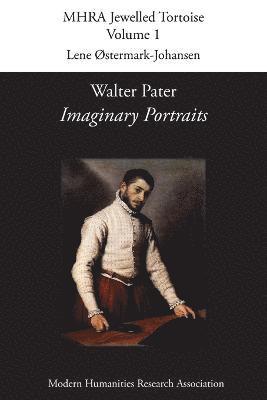
Del 1 - Mhra Jewelled Tortoise
Imaginary Portraits
Inbunden, Engelska, 2017
930 kr
Skickas inom 5-8 vardagar
Del 51 - Cultural Interactions: Studies in the Relationship between the Arts
Where Love Happens
Changing Social Practices of Love in the Long Nineteenth Century
Häftad, Engelska, 2025
754 kr
Skickas inom 5-8 vardagar
Some decades ago, Jean-Luc Nancy asked, ‘Has not everything been said on the subject of love? … Could we perhaps be exhausted?’ The question is a pertinent one; why devote yet another book to the subject? Grounding love in the realm of the concrete by querying, where does love happen?, the essays address hitherto under-researched aspects and aesthetics of love, like the love of the child, same-sex love, love of country, love for machines, controversial relationships, love of the dead, love of the past, and networks of relationships revolving around love and intimacy. Here, leading scholars suggest that changing social practices, developed in the course of the long nineteenth century, determined new spaces and places for love to happen, to unfold, develop – and break up. Thereby, the much-debated claim that romantic love is an invention of European Romanticism is challenged, asking if romantic love might not be less and other kinds of love far more romantic than at first imagined.
Del 1 - Mhra Jewelled Tortoise
Imaginary Portraits
Häftad, Engelska, 2014
350 kr
Skickas inom 5-8 vardagar
Inbunden, Engelska, 2011
1 638 kr
Tillfälligt slut
Walter Pater and the Language of Sculpture is the first monograph to discuss the Victorian critic Walter Pater's attitude to sculpture. It brings together Pater's aesthetic theories with his theories on language and writing, to demonstrate how his ideas of the visual and written language are closely interlinked. Going beyond Pater's views on sculpture as an art form, this study traces the notion of relief (rilievo) and hybrid form in Pater, and his view of the writer as sculptor, a carver in language. Alongside her treatment of rilievo as a pervasive trope, Lene Østermark-Johansen also employs the idea of rivalry (paragone) more broadly, examining Pater's concern with positioning himself as an art critic in the late Victorian art world. Situating Pater within centuries of European aesthetic theories as never before done, Walter Pater and the Language of Sculpture throws new light on the extraordinary complexity and coherence of Pater's writing: The critic is repositioned solidly within Victorian art and literature.