Leo E. Rose - Böcker
Visar alla böcker från författaren Leo E. Rose. Handla med fri frakt och snabb leverans.
5 produkter
5 produkter
284 kr
Skickas inom 7-10 vardagar
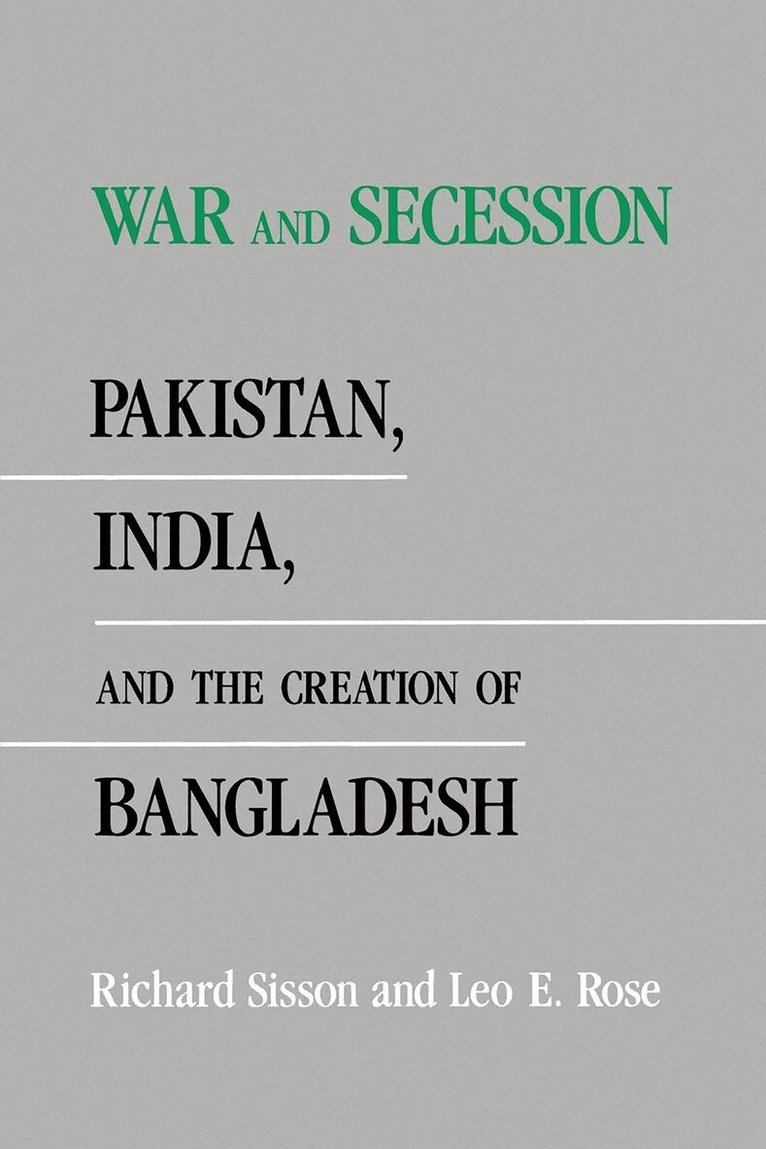
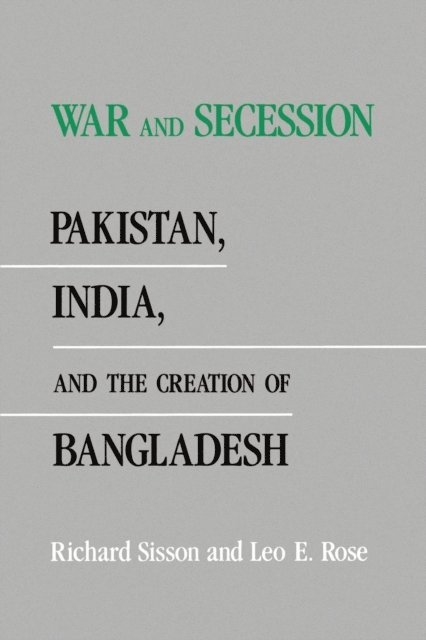
A decade after the 1971 wars in South Asia, the principal decisionmakers were still uncertain why wars so clearly unwanted had occurred. The authors reconstruct the complex decisionmaking process attending the break-up of Pakistan and the subsequent war between India and Pakistan. Much of their data derive from interviews conducted with principal players in each of the countries immediately involved - Pakistan, India, and Bangladesh - including Indira Gandhi and leaders of the Awami League in Bangladesh.
885 kr
Skickas inom 3-6 vardagar
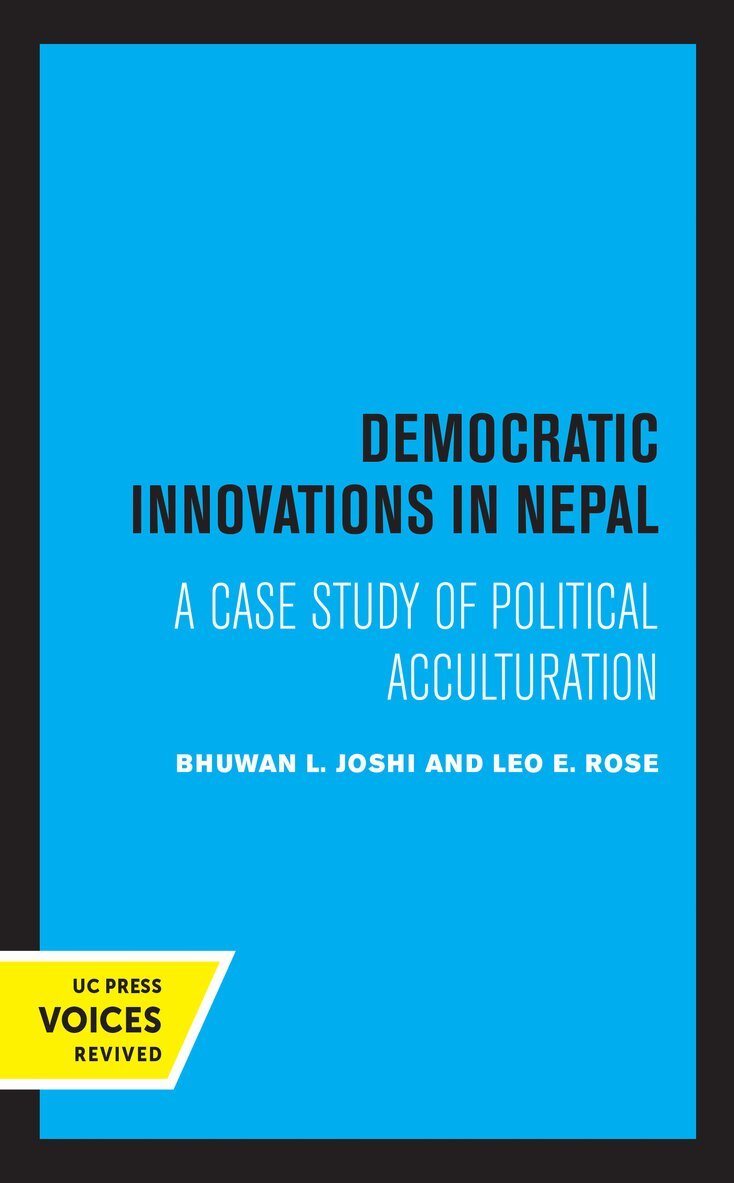
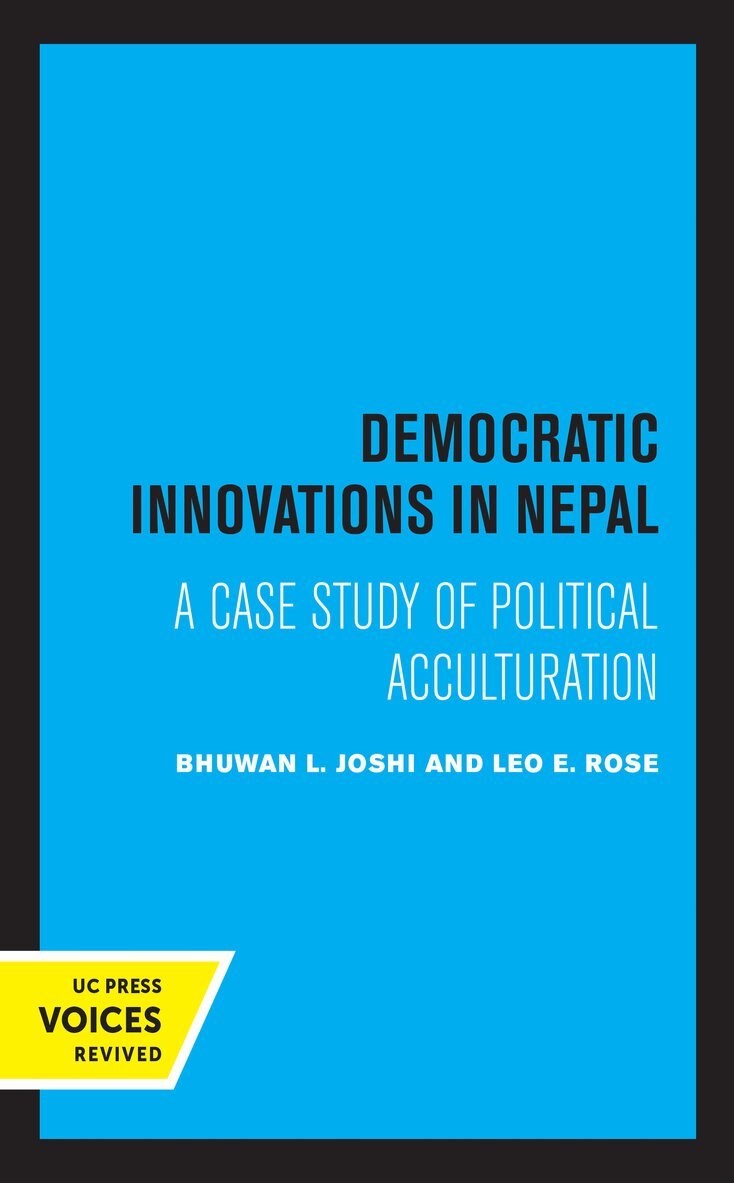
Democratic Innovations in Nepal: A Case Study of Political Acculturation explores the transformative political journey of Nepal, focusing on the period following the 1950 revolution that ended the Rana oligarchy. The study examines the profound social and political changes unleashed in a society long isolated and regimented, highlighting the emergence of a vibrant literary renaissance, rapid expansion in education, and newfound political freedoms. This post-revolution period saw Nepal experimenting with diverse political forms and ideas, reflecting a broader attempt to reconcile traditional structures with modern democratic ideals. Despite this initial burst of creativity and freedom, the political landscape became increasingly mired in conflicts and instability, with traditional modes of governance resurfacing alongside innovative experiments in democracy.The book provides a detailed account of Nepal's transitional political landscape through a case-study approach, capturing the interplay of traditional values and modern aspirations. It discusses the challenges faced by Nepal's elites in navigating the demands of modernization while contending with entrenched traditional influences. The study also places Nepal’s political evolution within a broader regional and global context, noting the country's unique position between the democratic and communist powers of India and China. By tracing Nepal's political development, the author sheds light on the broader dynamics of political change in traditional societies, offering insights into the successes and failures of democratic innovation in Nepal and its implications for other similarly situated nations.This title is part of UC Press's Voices Revived program, which commemorates University of California Press’s mission to seek out and cultivate the brightest minds and give them voice, reach, and impact. Drawing on a backlist dating to 1893, Voices Revived makes high-quality, peer-reviewed scholarship accessible once again using print-on-demand technology. This title was originally published in 1966.
835 kr
Skickas inom 3-6 vardagar
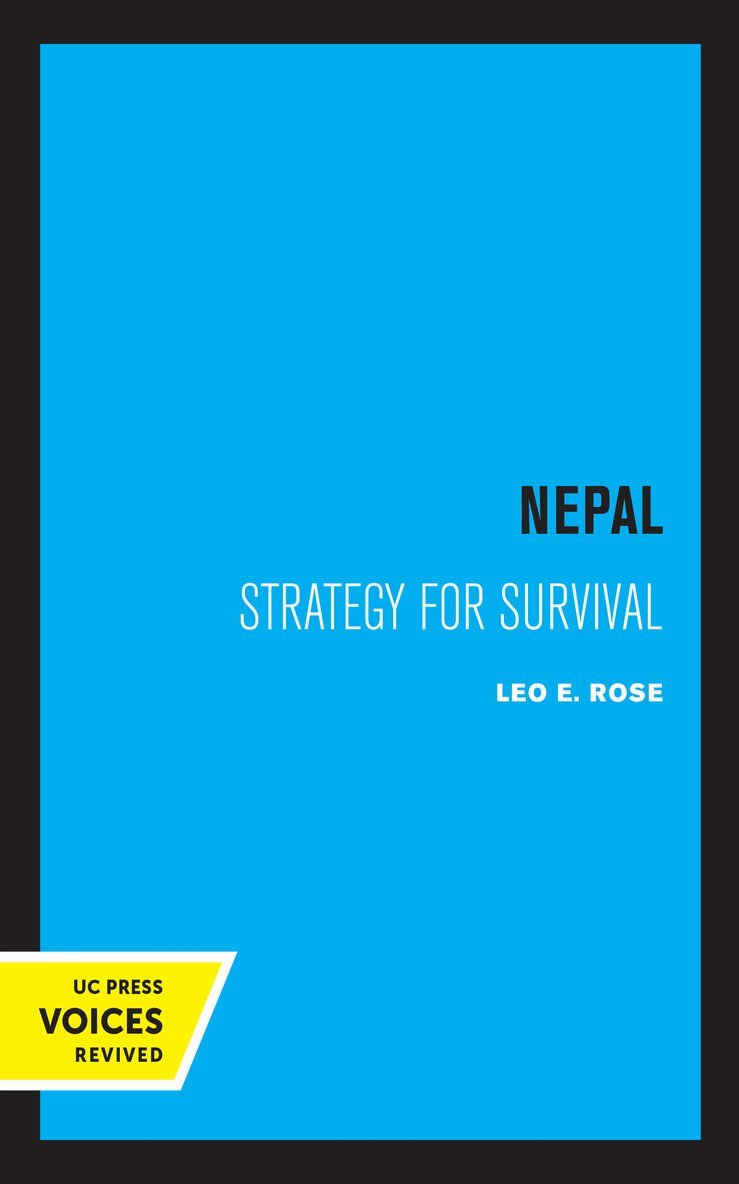
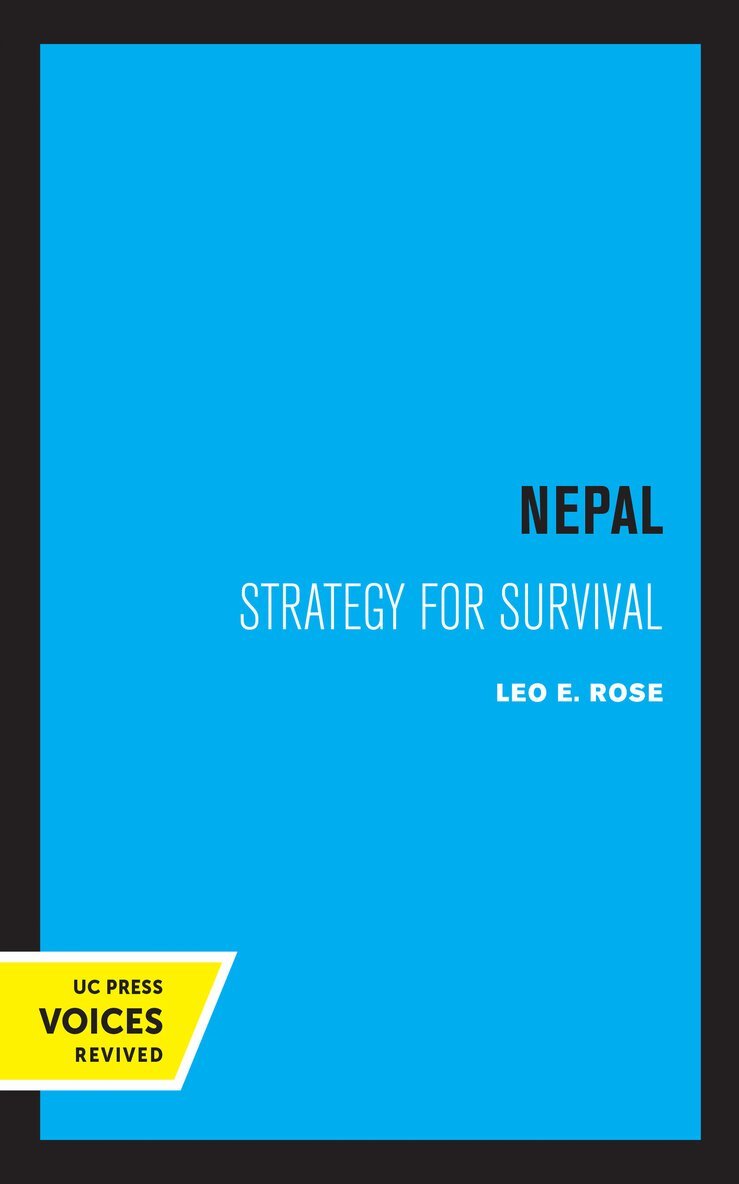
Nepal: Strategy for Survival delves into the intricate interplay of geography, history, and cultural dynamics that have shaped Nepal’s foreign policy and its interactions with neighboring giants, India and China. Situated along the Himalayan slopes, Nepal’s central location has historically made it both a cultural and commercial bridge between South and East Asia. The book examines Nepal’s strategic importance in controlling trans-Himalayan trade routes, its evolving border politics, and its delicate balancing act between these two influential powers. The analysis extends beyond political strategies, considering the profound impact of Nepal’s ethnic diversity, topographical challenges, and historical connections to Hindu and Buddhist traditions.Through a detailed exploration of Nepal’s historical and modern diplomatic efforts, the book highlights the nation’s struggle to maintain autonomy while adapting to external pressures and internal complexities. It discusses key moments of Nepal's history, such as its entangled trade and territorial negotiations with Tibet and India, as well as its response to modern geopolitical shifts. Nepal: Strategy for Survival offers a comprehensive understanding of how this small but strategically vital nation has navigated its role as both a mediator and a protector of its unique identity in the midst of powerful regional influences. This work is an essential read for anyone seeking to understand the nuanced challenges of small-state diplomacy in a complex and dynamic region.This title is part of UC Press's Voices Revived program, which commemorates University of California Press’s mission to seek out and cultivate the brightest minds and give them voice, reach, and impact. Drawing on a backlist dating to 1893, Voices Revived makes high-quality, peer-reviewed scholarship accessible once again using print-on-demand technology. This title was originally published in 1971.
781 kr
Skickas inom 7-10 vardagar
Nepal: Strategy for Survival delves into the intricate interplay of geography, history, and cultural dynamics that have shaped Nepal’s foreign policy and its interactions with neighboring giants, India and China. Situated along the Himalayan slopes, Nepal’s central location has historically made it both a cultural and commercial bridge between South and East Asia. The book examines Nepal’s strategic importance in controlling trans-Himalayan trade routes, its evolving border politics, and its delicate balancing act between these two influential powers. The analysis extends beyond political strategies, considering the profound impact of Nepal’s ethnic diversity, topographical challenges, and historical connections to Hindu and Buddhist traditions.Through a detailed exploration of Nepal’s historical and modern diplomatic efforts, the book highlights the nation’s struggle to maintain autonomy while adapting to external pressures and internal complexities. It discusses key moments of Nepal's history, such as its entangled trade and territorial negotiations with Tibet and India, as well as its response to modern geopolitical shifts. Nepal: Strategy for Survival offers a comprehensive understanding of how this small but strategically vital nation has navigated its role as both a mediator and a protector of its unique identity in the midst of powerful regional influences. This work is an essential read for anyone seeking to understand the nuanced challenges of small-state diplomacy in a complex and dynamic region.This title is part of UC Press's Voices Revived program, which commemorates University of California Press’s mission to seek out and cultivate the brightest minds and give them voice, reach, and impact. Drawing on a backlist dating to 1893, Voices Revived makes high-quality, peer-reviewed scholarship accessible once again using print-on-demand technology. This title was originally published in 1971.
1 469 kr
Skickas inom 3-6 vardagar
Democratic Innovations in Nepal: A Case Study of Political Acculturation explores the transformative political journey of Nepal, focusing on the period following the 1950 revolution that ended the Rana oligarchy. The study examines the profound social and political changes unleashed in a society long isolated and regimented, highlighting the emergence of a vibrant literary renaissance, rapid expansion in education, and newfound political freedoms. This post-revolution period saw Nepal experimenting with diverse political forms and ideas, reflecting a broader attempt to reconcile traditional structures with modern democratic ideals. Despite this initial burst of creativity and freedom, the political landscape became increasingly mired in conflicts and instability, with traditional modes of governance resurfacing alongside innovative experiments in democracy.The book provides a detailed account of Nepal's transitional political landscape through a case-study approach, capturing the interplay of traditional values and modern aspirations. It discusses the challenges faced by Nepal's elites in navigating the demands of modernization while contending with entrenched traditional influences. The study also places Nepal’s political evolution within a broader regional and global context, noting the country's unique position between the democratic and communist powers of India and China. By tracing Nepal's political development, the author sheds light on the broader dynamics of political change in traditional societies, offering insights into the successes and failures of democratic innovation in Nepal and its implications for other similarly situated nations.This title is part of UC Press's Voices Revived program, which commemorates University of California Press’s mission to seek out and cultivate the brightest minds and give them voice, reach, and impact. Drawing on a backlist dating to 1893, Voices Revived makes high-quality, peer-reviewed scholarship accessible once again using print-on-demand technology. This title was originally published in 1966.