Leonard Freedman – författare
Visar alla böcker från författaren Leonard Freedman. Handla med fri frakt och snabb leverans.
7 produkter
7 produkter
Offensive Art
Political Satire and Its Censorship around the World from Beerbohm to Borat
Inbunden, Engelska, 2008
626 kr
Skickas inom 10-15 vardagar
The Offensive Art is an arch and sometimes caustic look at the art of political satire as practiced in democratic, monarchical, and authoritarian societies around the world over the past century-together with the efforts by governmental, religious, and corporate authorities to suppress it by censorship, intimidation, policy, and fatwa. Examples are drawn from the full spectrum of satiric genres, including novels, plays, verse, songs, essays, cartoons, cabarets and revues, movies, television, and the Internet. The multicultural and multimedia breadth and historical depth of Freedman's comparative approach frames his novel assessment of the role of political satire in today's post-9/11 world, and in particular the cross-cultural controversies it generates, such as the global protests against the Jyllands-Posten cartoons.In a tongue-in-cheek style peppered with the world's best one-liners from the last century, The Offensive Art recounts the acrimonious and often perilous cat-and-mouse games between political satirists and their censors and inhibitors through the last century in America (especially FDR, LBJ, Nixon, Reagan, Clinton, and Bush II and in wartime), Britain (especially Churchill, Thatcher, Blair and the Royals), Germany (Hitler to the present), Russia (Stalin to the present), China (Mao to the present), India (from the Raj on), and the Middle East (from 1920s Egypt to today). Freedman focuses on the role and transformation of satire during shifts from authoritarian to democratic systems in such places as South Africa, Argentina, and Eastern Europe. He surveys the state of satire throughout the world today, identifying the most dangerous countries for practitioners of the offensive art, and presents his findings as to the political efficacy of satire in provoking change.
876 kr
Skickas inom 10-15 vardagar
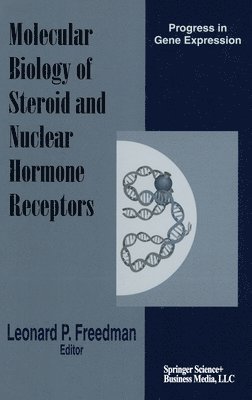
This text presents the topic of endocrinology viewed from the perspective of molecular biology.
550 kr
Skickas inom 10-15 vardagar
Intracellular Receptors: New Instruments for a Symphony of Signals In the late eighteenth century, it was proposed on theoretical grounds that each of the body's organs, beginning with the brain, must be "a factory and laboratory of a specific humor which it returns to the blood", and that these circulating signals "are indispensable for the life of the whole" (Bordeu 1775). During the nineteenth cen- tury, some remarkable physiological experiments revealed the actions of humoral factors that affected the for and function of multiple tissues, organs and organ sys- tems within the body (Berthold 1849); much later, the chemical and molecular na- ture of some of those factors was determined. Against this deep historical backdrop of the founding studies of intercellular signaling, molecular biology sprang into existence a mere forty years ago, rooted in the revelation of regulable gene expression in bacteria.But contemporaneous with those classical analyses of transcriptional regulation of the lactose operon, the mod- em era of signal transduction was inaugurated by the identification of cAMP as a second messenger --- an intracellular mediator of hormonal activation of glycogen catabolism (Sutherland and RaIl 1960). Later in that same decade, it emerged that cAMP is a critical signal not only in metazoans, but even in bacteria, where it serves an analogous function as a critical switch that activates expression of genes re- quired for catabolism of complex carbon sources, including those of the lactose operon.
Del 1 - Perspectives In Human Biology
Perspectives In Human Biology: Genes, Ethnicity And Ageing
Inbunden, Engelska, 1995
618 kr
Tillfälligt slut
This volume takes its subtitle from the theme of the ASHB meeting for 1994 “Genes, Ethnicity and Ageing”. The first paper is the annual conference lecture as delivered by the Honourable Fred Chaney, formerly Minister for Aboriginal Affairs in the Federal Government of Australia. It considers some of the difficulties in delivering government services to indigenous peoples. Jim Chisholm puts an evolutionary perspective on some aspects of human behaviour, life history and Darwinian approaches to medicine. Carol Bower reviews the value of the Western Australian Birth Defects Registry and the contributions of registries to improved health care. Alexandra Brewis and Gokarna Regmi document determinants of fertility in a Pacific Island population. There are two papers from a special symposium on Ageing and the Aged held within the meeting: George Broe and Helen Creasey consider some of the social issues associated with an ageing society, and Alan Hipkiss and colleagues take a biochemist's look at possibilities for extending the human life cycle.There are two additional papers. One by Alan Bittles documents consanguinity in the Middle East. The second, by Tsunehiko Hanihara and Hajime Ishida describes the results of their studies of Australian Aboriginals and neighbouring populations.“Understanding Ageing”, by Robin Holliday, Cambridge University Press is reviewed by Anne Mitchell.
Del 2 - Perspectives In Human Biology
Perspectives In Human Biology: Humans In The Australasian Region
Inbunden, Engelska, 1996
636 kr
Tillfälligt slut
This volume takes its subtitle from the theme of the ASHB meeting for 1995 “Humans in the Australasian Region”. Papers from the conference include a philosophical discussion of the ‘Great Ape Project’ by Colin Groves, and ‘An Osteological study of Holocene Biological Evolution of the Malay Peninsula Aborigines’ by David Bulbeck. In the short communications section, Colin Groves considers the hominid and faunal material of the Australia-New Guinea region which may explain the failure of Homo erectus to colonize Australia.Additional papers are from Peter Lisowski who provides a historical and contemporary overview of health care in China, Lincoln Schmitt who discusses the interpretation of DNA variation in the legal setting, and Charles Oxnard and Alanah Buck who present their work on techniques of assessing osteoporosis from non-invasive Fourier analyses of bone structure.The Evolution of Modern Diversity: a Study of Cranial Variation, by Marta Mirazon Lahr, is reviewed by Leonard Freedman.
Del 3 - Perspectives In Human Biology
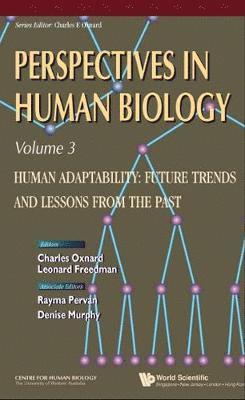
Human Adaptability: Future Trends And Lessons From The Past, Perspective In Human Biology, Vol 3
Inbunden, Engelska, 1998
807 kr
Tillfälligt slut
This volume takes its subtitle from the theme of the ASHB meeting for 1996 “Human Adaptibility: Future Trends and Lessons from the Past”. The first paper is the annual conference lecture ‘Human Evolution Today: Which Way Next?’ delivered by Professor Maciej Hennenberg, the newly appointed Wood Jones Professor at the University of Adelaide. This is followed by the transcripts of two papers resulting from a debate on ‘Species and Human Evolution,’ also from the meeting. The first is ‘Species Concept in Palaeoanthropology’ by Colin Groves and the second, ‘The Problem of Species in Hominid Evolution’ by Maciej Hennenberg.There are also a series of individual papers. Two of these are shorter integrative pieces: ‘Philosophical Problems in Palaeoanthropology’ by Darren Curnoe, and ‘A Biological Basis for Generative Learning in Science’ by Lynette Schavieren and Mark Cosgrove.These are followed in turn by two proffered papers on specific problems: ‘Patterns of Morphological Discrimination in the Human Talus: a Consideration of the Case for Negative Function’, by Robert Kidd and Charles Oxnard, and ‘The Specific Status of a new Siwalik Sivapithecine Specimen’ by David Cameron, Rajeev Patnaik and Michelle Stevens.The final contribution is one of the longer integrative papers which has characterised each of the prior volumes: ‘The Interface of Function, Genes, Development and Evolution: Insights from Primate Morphometrics’ by Charles Oxnard.
Del 3 - Perspectives In Human Biology
Human Adaptability: Future Trends And Lessons From The Past, Perspective In Human Biology, Vol 3
Häftad, Engelska, 1998
428 kr
Tillfälligt slut
This volume takes its subtitle from the theme of the ASHB meeting for 1996 “Human Adaptibility: Future Trends and Lessons from the Past”. The first paper is the annual conference lecture ‘Human Evolution Today: Which Way Next?’ delivered by Professor Maciej Hennenberg, the newly appointed Wood Jones Professor at the University of Adelaide. This is followed by the transcripts of two papers resulting from a debate on ‘Species and Human Evolution,’ also from the meeting. The first is ‘Species Concept in Palaeoanthropology’ by Colin Groves and the second, ‘The Problem of Species in Hominid Evolution’ by Maciej Hennenberg.There are also a series of individual papers. Two of these are shorter integrative pieces: ‘Philosophical Problems in Palaeoanthropology’ by Darren Curnoe, and ‘A Biological Basis for Generative Learning in Science’ by Lynette Schavieren and Mark Cosgrove.These are followed in turn by two proffered papers on specific problems: ‘Patterns of Morphological Discrimination in the Human Talus: a Consideration of the Case for Negative Function’, by Robert Kidd and Charles Oxnard, and ‘The Specific Status of a new Siwalik Sivapithecine Specimen’ by David Cameron, Rajeev Patnaik and Michelle Stevens.The final contribution is one of the longer integrative papers which has characterised each of the prior volumes: ‘The Interface of Function, Genes, Development and Evolution: Insights from Primate Morphometrics’ by Charles Oxnard.