Charles Oxnard - Böcker
Visar alla böcker från författaren Charles Oxnard. Handla med fri frakt och snabb leverans.
13 produkter
13 produkter
1 130 kr
Skickas inom 7-10 vardagar
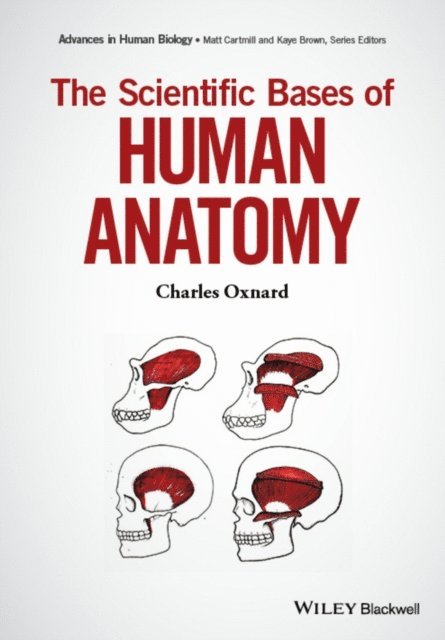
As medical schools struggle to fit ever more material into a fixed amount of time, students need to approach the study of anatomy through a succinct, integrative overview. Rather than setting forth an overwhelming list of facts to be memorized, this book engages readers with a fascinating account of the connections between human anatomy and a wide array of scientific disciplines, weaving in the latest advances in developmental and evolutionary biology, comparative morphology, and biological engineering. Logically organized around a few key concepts, The Scientific Bases of Human Anatomy presents them in clear, memorable prose, concise tabular material, and a host of striking photographs and original diagrams.
1 625 kr
Skickas inom 10-15 vardagar
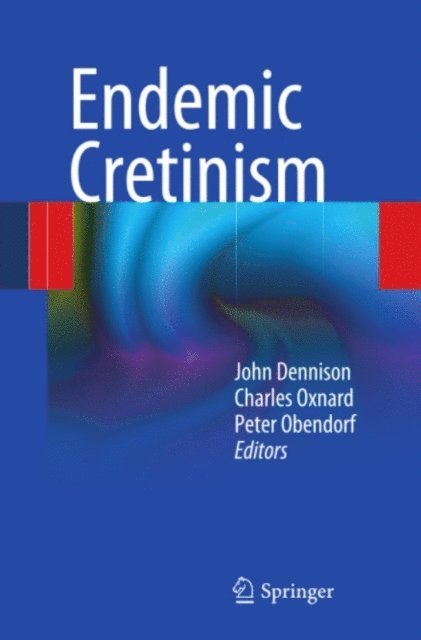
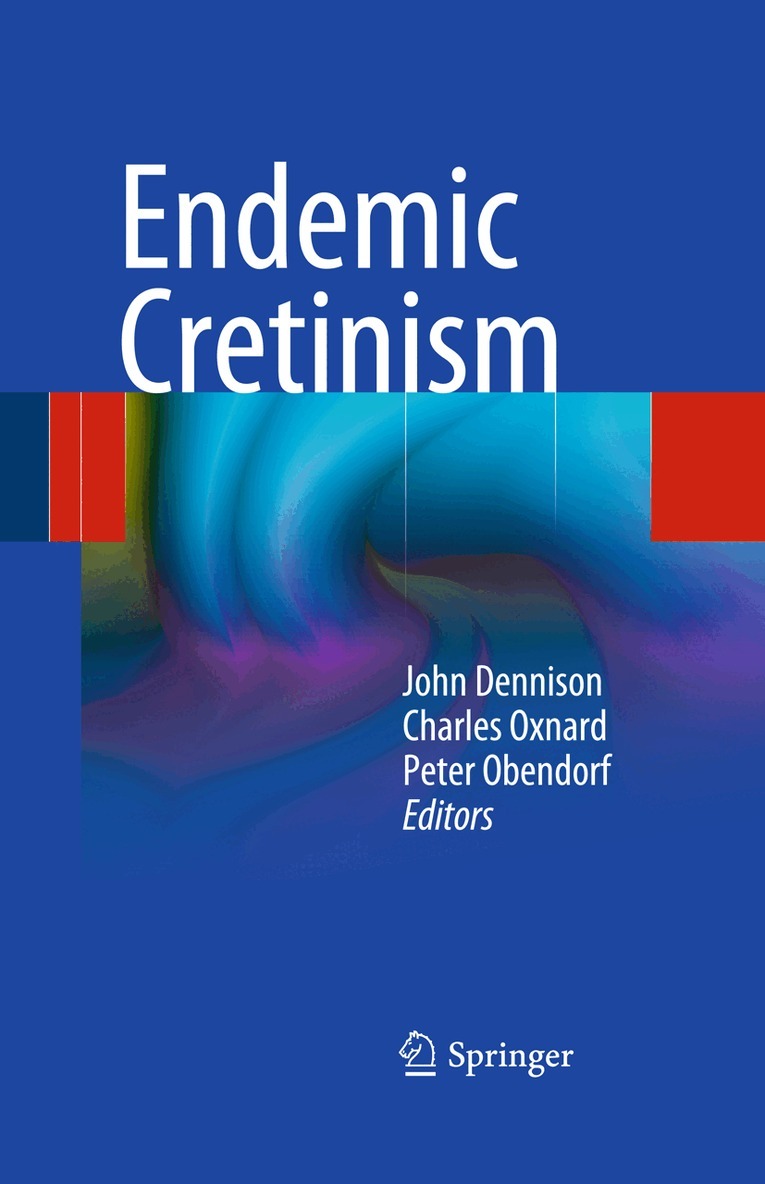
Responding to a renewed interest in the growing problem of iodine deficiency worldwide, Drs. Charles Oxnard and Peter Obendorf, along with experienced translator and anatomist John Dennison, take a fresh look at the classic text, Der endemische Kretinismus, published in 1936 by Springer. Translated here for the first time into English, this landmark text will be a welcome resource for researchers confronting the problem of iodine deficiency. Oxnard and Obendorf point out that there is very little detailed knowledge or numerical data on cretinism available in the English-speaking world. In addition, highly-renowned Professor Basil S. Hetzel, recently-retired World Health Organization Chairman of the International Council for Control of Iodine Deficiency Disorders, published in 2009 with Dr Chen Zu-pei on the resurgence of iodine deficiency in China. Indeed, throughout the entire developing world there may be as many as two billion people at risk to iodine deficiency; perhaps three quarters of a billion have goiter, and ten million may be cretins. Even in developed countries, iodine deficiency is re-emerging (as in New South Wales in 19% of children) with the result of significantly reduced numbers of gifted children (though this is not cretinism per se). Certain to be of significant interest to a wide range of researchers, health providers and professionals, including government health administrators, this English translation of Endemic Cretinism is a major contribution to the literature.
1 205 kr
Skickas inom 10-15 vardagar
Responding to a renewed interest in the growing problem of iodine deficiency worldwide, Drs. Charles Oxnard and Peter Obendorf, along with experienced translator and anatomist John Dennison, take a fresh look at the classic text, Der endemische Kretinismus, published in 1936 by Springer. Translated here for the first time into English, this landmark text will be a welcome resource for researchers confronting the problem of iodine deficiency. Oxnard and Obendorf point out that there is very little detailed knowledge or numerical data on cretinism available in the English-speaking world. In addition, highly-renowned Professor Basil S. Hetzel, recently-retired World Health Organization Chairman of the International Council for Control of Iodine Deficiency Disorders, published in 2009 with Dr Chen Zu-pei on the resurgence of iodine deficiency in China. Indeed, throughout the entire developing world there may be as many as two billion people at risk to iodine deficiency; perhaps three quarters of a billion have goiter, and ten million may be cretins. Even in developed countries, iodine deficiency is re-emerging (as in New South Wales in 19% of children) with the result of significantly reduced numbers of gifted children (though this is not cretinism per se). Certain to be of significant interest to a wide range of researchers, health providers and professionals, including government health administrators, this English translation of Endemic Cretinism is a major contribution to the literature.
Del 3 - Perspectives In Human Biology
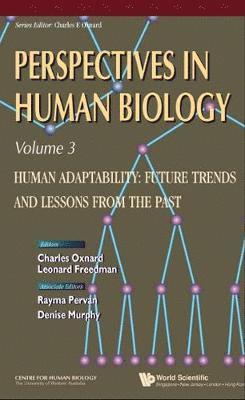
Human Adaptability: Future Trends And Lessons From The Past, Perspective In Human Biology, Vol 3
Inbunden, Engelska, 1998
807 kr
Tillfälligt slut
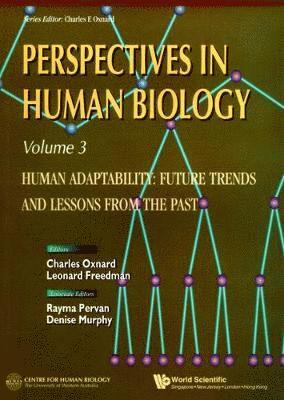
This volume takes its subtitle from the theme of the ASHB meeting for 1996 “Human Adaptibility: Future Trends and Lessons from the Past”. The first paper is the annual conference lecture ‘Human Evolution Today: Which Way Next?’ delivered by Professor Maciej Hennenberg, the newly appointed Wood Jones Professor at the University of Adelaide. This is followed by the transcripts of two papers resulting from a debate on ‘Species and Human Evolution,’ also from the meeting. The first is ‘Species Concept in Palaeoanthropology’ by Colin Groves and the second, ‘The Problem of Species in Hominid Evolution’ by Maciej Hennenberg.There are also a series of individual papers. Two of these are shorter integrative pieces: ‘Philosophical Problems in Palaeoanthropology’ by Darren Curnoe, and ‘A Biological Basis for Generative Learning in Science’ by Lynette Schavieren and Mark Cosgrove.These are followed in turn by two proffered papers on specific problems: ‘Patterns of Morphological Discrimination in the Human Talus: a Consideration of the Case for Negative Function’, by Robert Kidd and Charles Oxnard, and ‘The Specific Status of a new Siwalik Sivapithecine Specimen’ by David Cameron, Rajeev Patnaik and Michelle Stevens.The final contribution is one of the longer integrative papers which has characterised each of the prior volumes: ‘The Interface of Function, Genes, Development and Evolution: Insights from Primate Morphometrics’ by Charles Oxnard.
Del 3 - Perspectives In Human Biology
Human Adaptability: Future Trends And Lessons From The Past, Perspective In Human Biology, Vol 3
Häftad, Engelska, 1998
428 kr
Tillfälligt slut
This volume takes its subtitle from the theme of the ASHB meeting for 1996 “Human Adaptibility: Future Trends and Lessons from the Past”. The first paper is the annual conference lecture ‘Human Evolution Today: Which Way Next?’ delivered by Professor Maciej Hennenberg, the newly appointed Wood Jones Professor at the University of Adelaide. This is followed by the transcripts of two papers resulting from a debate on ‘Species and Human Evolution,’ also from the meeting. The first is ‘Species Concept in Palaeoanthropology’ by Colin Groves and the second, ‘The Problem of Species in Hominid Evolution’ by Maciej Hennenberg.There are also a series of individual papers. Two of these are shorter integrative pieces: ‘Philosophical Problems in Palaeoanthropology’ by Darren Curnoe, and ‘A Biological Basis for Generative Learning in Science’ by Lynette Schavieren and Mark Cosgrove.These are followed in turn by two proffered papers on specific problems: ‘Patterns of Morphological Discrimination in the Human Talus: a Consideration of the Case for Negative Function’, by Robert Kidd and Charles Oxnard, and ‘The Specific Status of a new Siwalik Sivapithecine Specimen’ by David Cameron, Rajeev Patnaik and Michelle Stevens.The final contribution is one of the longer integrative papers which has characterised each of the prior volumes: ‘The Interface of Function, Genes, Development and Evolution: Insights from Primate Morphometrics’ by Charles Oxnard.
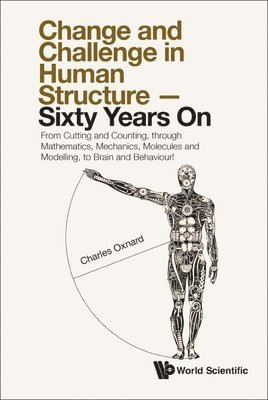
Change And Challenge In Human Structure - Sixty Years On: From Cutting And Counting, Through Mathematics, Mechanics, Molecules And Modelling, To Brain And Behaviour!
Inbunden, Engelska, 2023
1 560 kr
Skickas inom 3-6 vardagar
Regarded by many as a dead or simply dull subject, Change and Challenge in Human Structure — Sixty Years On shatters this prejudice with a series of studies that go beyond dissection and measurement and covers novel approaches to anatomical form. Award-winning anatomist Charles Oxnard takes us on an exhilarating ride: beginning with rudimentary dissections and the fascinating observation of 'missing muscles', we are led on naturally to statistical analysis of bone measurements and how they may give information about bone function. Engineering methods and pattern recognition are introduced next, as a means of studying the external shape and internal structure of bones, respectively, and their relation to mechanical function. The application of landmark analysis to anatomy, also known as geometric morphometrics, is given a full chapter treatment. Finally, Oxnard uses modelling techniques to skilfully lay out an argument for the uniqueness of human brains and new possibilities in human evolutionary theories, both past and future. This book offers nothing less than a paradigm shift in our understanding of one of the oldest fields of science, and leads us into new views of the functional, developmental, behavioural, genetic and evolutionary implications of anatomical studies.
1 953 kr
Skickas inom 3-6 vardagar
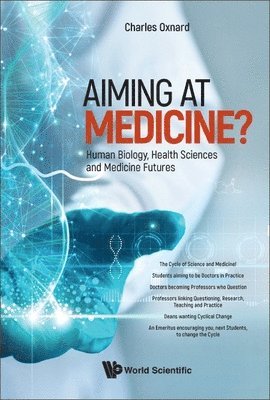
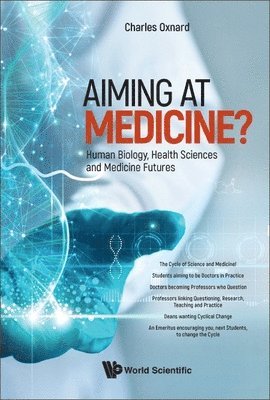
Though first a doctor who treated patients, the author became a professor, questioning facts (researching), exciting students (teaching), borrowing ideas (from the breadth of science, statistics, technology, engineering and medicine), and challenging 'how it all works'. Though beginning gently, the question in the book eventually leads fiercely into how research, teaching, practice and service really occur, and to ferocious challenges both inside academia and out in society.It is hoped that this double-ferocity will be useful: to students wondering about their futures; to physician and scientist parents looking at the possibility of their children following them; to all parents and grandparents worrying about the careers of all offspring; to anyone interested in the processes of discovery, teaching, and service; and for everyone, concerned about the wider implications for education and for society.
733 kr
Skickas inom 3-6 vardagar
Though first a doctor who treated patients, the author became a professor, questioning facts (researching), exciting students (teaching), borrowing ideas (from the breadth of science, statistics, technology, engineering and medicine), and challenging 'how it all works'. Though beginning gently, the question in the book eventually leads fiercely into how research, teaching, practice and service really occur, and to ferocious challenges both inside academia and out in society.It is hoped that this double-ferocity will be useful: to students wondering about their futures; to physician and scientist parents looking at the possibility of their children following them; to all parents and grandparents worrying about the careers of all offspring; to anyone interested in the processes of discovery, teaching, and service; and for everyone, concerned about the wider implications for education and for society.
1 238 kr
Skickas inom 3-6 vardagar
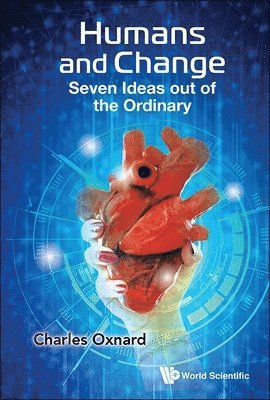
Many people today deny the idea of Human Change (especially when the word 'evolution' is used). Many others, accepting that we have changed in the past, do not see change as still occurring. My ideas (challenges) are: not only that we are still changing, but that we are changing ever more rapidly, and in new ways.Is Homo sapiens (vainly named, wise human) already in the process of becoming Homo sapientior (wiser human)? Can we expect further change to Homo sapientissimus (wisest human)? Or do we have to fear regression to Homo nerdensis?The seven Ideas of my title cover: Sex, yesterday, today and tomorrow; Gender: women's struggles (and men's); Particularly Dangerous Ideas: Race and Ethnicity, Kin and Ancestors; Ideas on Aging: Life Span, Mortality and Death; Ideas about the Brain: changed, changing and unique; Failure of Ideas: Cheating, Damned Cheating and 'Chorruption'; My Mistakes: Ideas I missed.
557 kr
Skickas inom 5-8 vardagar
Many people today deny the idea of Human Change (especially when the word 'evolution' is used). Many others, accepting that we have changed in the past, do not see change as still occurring. My ideas (challenges) are: not only that we are still changing, but that we are changing ever more rapidly, and in new ways.Is Homo sapiens (vainly named, wise human) already in the process of becoming Homo sapientior (wiser human)? Can we expect further change to Homo sapientissimus (wisest human)? Or do we have to fear regression to Homo nerdensis?The seven Ideas of my title cover: Sex, yesterday, today and tomorrow; Gender: women's struggles (and men's); Particularly Dangerous Ideas: Race and Ethnicity, Kin and Ancestors; Ideas on Aging: Life Span, Mortality and Death; Ideas about the Brain: changed, changing and unique; Failure of Ideas: Cheating, Damned Cheating and 'Chorruption'; My Mistakes: Ideas I missed.
506 kr
Tillfälligt slut
Anatomical terms are the vocabulary of medicine. Anatomy began as a descriptive science in the days when Latin was the universal scientific language. Early anatomists described the structures they saw in that language, comparing them to common and familiar objects, or borrowing terms from the Greek and Arabic masters before them. In anatomic terminology, common Latin or Greek words are used as such for any part of the body for which the ancients had a name. For many other structures, scientific names have been invented either by using certain classical words which appear to be descriptive of the part concerned, or commonly, by combining Greek or Latin roots to form a new compound term. Memorization of such terms without understanding their meaning can lead to mental indigestion.As an aid to comprehension, this book also presents the roots from which many of these descriptive terms and compounds are derived. For practical convenience, the book is organized into abbreviations, prefixes and suffixes, general terms common to all body regions, short lists for each major body part, and an alphabetical list covering the entire body. This pocket-sized handbook is essential for anyone wishing to learn and understand medical terms.
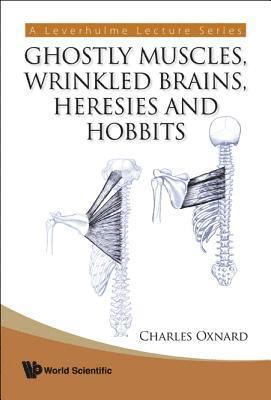
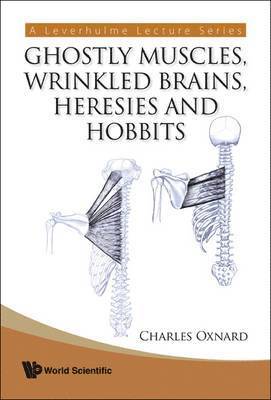
Ghostly Muscles, Wrinkled Brains, Heresies And Hobbits: A Leverhulme Public Lecture Series
Inbunden, Engelska, 2008
1 473 kr
Tillfälligt slut
The Leverhulme Trust (UK) required Charles Oxnard to present a series of public lectures during his tenure of a Leverhulme Professorship at University College, London. The lectures had to be understandable not only to undergraduate and graduate students and colleagues, but also to the interested lay public. Furthermore, they were expected to meet and venture beyond present-day thought in the subject. This near-impossible task is reproduced in this unique volume.Each chapter shows what is rarely, if ever, done in scientific papers: how the problems truly arose; how the methods came about; the curious collaborators involved; the twists and turns of thought involved in the stories; the solutions that have so far appeared; and the surprising new ideas that stem from the work. In particular, the part played by serendipity becomes ever more evident. Research is very often a kind of “Alice-in-Wonderland” task, and both students and the public alike are fascinated by the inside stories of how discoveries are really made. It is precisely this excitement and complexity that is presented in this book.
Ghostly Muscles, Wrinkled Brains, Heresies And Hobbits: A Leverhulme Public Lecture Series
Häftad, Engelska, 2008
910 kr
Tillfälligt slut
The Leverhulme Trust (UK) required Charles Oxnard to present a series of public lectures during his tenure of a Leverhulme Professorship at University College, London. The lectures had to be understandable not only to undergraduate and graduate students and colleagues, but also to the interested lay public. Furthermore, they were expected to meet and venture beyond present-day thought in the subject. This near-impossible task is reproduced in this unique volume.Each chapter shows what is rarely, if ever, done in scientific papers: how the problems truly arose; how the methods came about; the curious collaborators involved; the twists and turns of thought involved in the stories; the solutions that have so far appeared; and the surprising new ideas that stem from the work. In particular, the part played by serendipity becomes ever more evident. Research is very often a kind of “Alice-in-Wonderland” task, and both students and the public alike are fascinated by the inside stories of how discoveries are really made. It is precisely this excitement and complexity that is presented in this book.