Lesley Milner – författare
Visar alla böcker från författaren Lesley Milner. Handla med fri frakt och snabb leverans.
2 produkter
2 produkter
167 kr
Kommande
The East End of London grew up outside the city walls beyond the Tower of London in the mediaeval era, with villages beyond. The Docks brought commerce and labour to the area and in the massive growth of the metropolis in the eighteenth and nineteenth centuries, hitherto isolated settlements beyond Stepney became merged into East London. Waves of immigrants moved in from all over the country and abroad, overcrowding was rife and the mediaeval parish churches, such as St Dunstan’s Stepney, which features in the rhyme ‘Oranges and Lemons’, were supplemented by Georgian and Victorian buildings, including work by famous designers such as Nicholas Hawksmoor, Sir John Soane and William Butterfield.Churches of East London reveals the variety of historic church buildings in East London and their significance, from the mediaeval period, through the Georgian and Victorian periods and into the modern era. These unique buildings have special architectural, artistic, historic and social interest and have represented their local areas for centuries, not only the Anglican buildings but also Roman Catholic and non-denominational chapels. This fascinating picture of an important part of the history of East London over the centuries will be of interest to all those who live in or wish to know more about this area.
Del 23 - Art and Material Culture in Medieval and Renaissance Europe
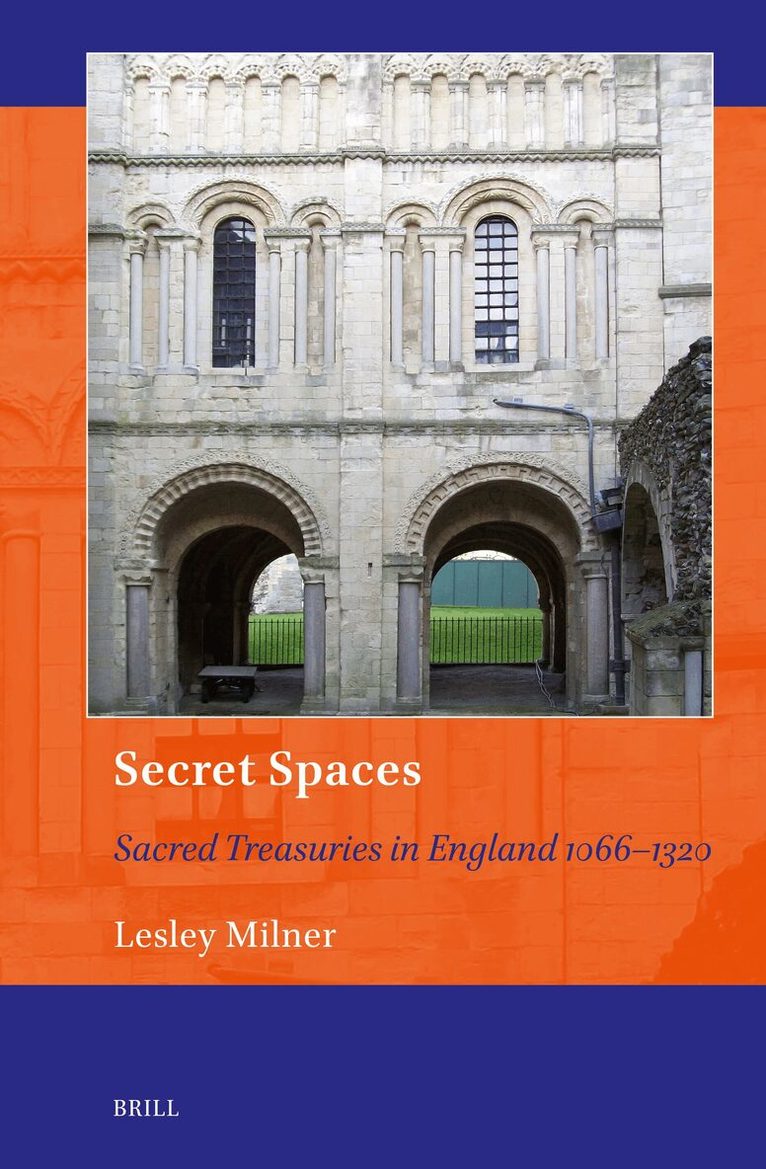
Secret Spaces: Sacred Treasuries in England 1066–1320
Inbunden, Engelska, 2024
2 261 kr
Skickas inom 5-8 vardagar
The medieval treasure house, consisting of sacristy, vestry and treasure rooms was the depository for the ecclesiastical treasure belonging to a church, holy vessels, vestments, altar hangings, candlesticks and priceless liturgical books and reliquaries. It was carefully designed to convey the message of its status and function.A book devoted to these medieval museums which housed such precious materials is long overdue. Ironically, the interest in the objects that they conserved has often resulted in ecclesiastical treasure being removed to new museums, leaving their former places of protection in need of protection themselves.