Leslie Dorrough Smith - Böcker
Visar alla böcker från författaren Leslie Dorrough Smith. Handla med fri frakt och snabb leverans.
8 produkter
8 produkter
451 kr
Skickas inom 5-8 vardagar
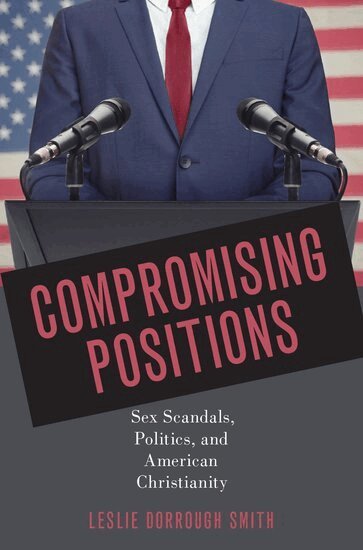
Americans have long believed that the private lives of their politicians are important indicators of their fitness to lead and of their ability to defend and uphold American values. For many, a sex scandal renders a person ineligible, or at the very least questionably qualified, for public service. In Compromising Positions, Leslie Dorrough Smith questions the assumption that sex scandals are really about sex-- that is, that they are primarily concerned with the discovery of sexual misconduct. She argues that they are, instead, a form of cultural storytelling that uses racial and gendered symbols to create a collective sense of national worth and strength.Smith shows that sex scandals involve the use of four very powerful social tools--gender, race, politics, and religion-- that together create a rhetoric about what America is, who is eligible to formally represent it, and what types of symbolic religiosity such leaders must display to legitimize their power. Americans tend to condemn or excuse the sexual misdeeds of their politicians depending on the degree to which the individual in question reinforces evangelical interpretations of "American values" and a "Christian nation." Such values include not just moral integrity, but strength, courage, and conquest. As a consequence, sex scandals are less likely to occur in cultural moments when the public is open to reading a politician's moral lapse as a symbolic form of national dominance. Put simply, when a leader is perceived as strong, domineering, and necessary for national health, many people will find ways either to overlook his illicit sexual behavior or somehow read it as an American act.
Righteous Rhetoric
Sex, Speech, and the Politics of Concerned Women for America
Inbunden, Engelska, 2014
564 kr
Skickas inom 5-8 vardagar
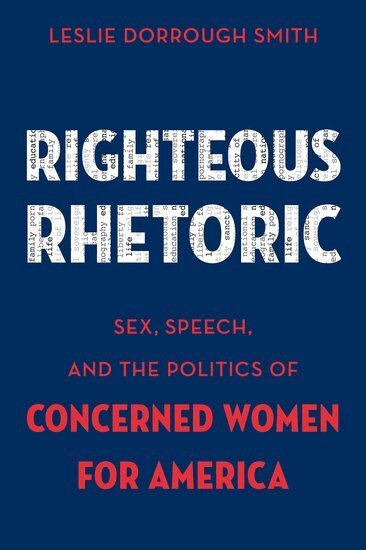
It is commonly thought that the main distinction of the New Christian Right (NCR) lies in its absolutist theologies and religious fervor. Offering a detailed study of one of the nation's leading conservative Christian women's organizations, Concerned Women for America (CWA), Leslie Smith argues that the absolute, ordered platforms for which CWA is known are not the source of its political power. Rather, such absolutes are the byproduct of "chaos rhetoric," a type of speech whose widespread public appeal stems from its deployment of symbols that create a heightened sense of social chaos and threat. Carefully manufacturing these negative emotions, the group is in a prime position to offer its own platforms as the answer to the threat. Smith focuses on CWA's strategic manipulation of particular cultural symbols to naturalize and market its own political interests, many of which revolve around issues of sex. Sex is a symbolic gold mine for many NCR groups not only because it has been cast as the ultimate emblem of morality, but more fundamentally because its regulation (through gender, identity, reproduction, and the family) is critical to the control of society at large. Righteous Rhetoric highlights the centrality of sex to CWA's political enterprise, revealing how the organization's continual fusion of sexual morals with national fortitude, facilitated by chaos rhetoric, lays bare its nationalist agendas. Smith closes by showing that chaos rhetoric is by no means a monopoly of the NCR, but is rather a ubiquitous tactic used by many groups in the fight for social dominance. A more likely source of distinction for groups like CWA, she argues, lies not in radically different theologies or political tactics, but in the ability to flexibly fuse their own identities with America's most beloved symbols in such a way that their own existence is rendered inseparable from the nation's very survival.
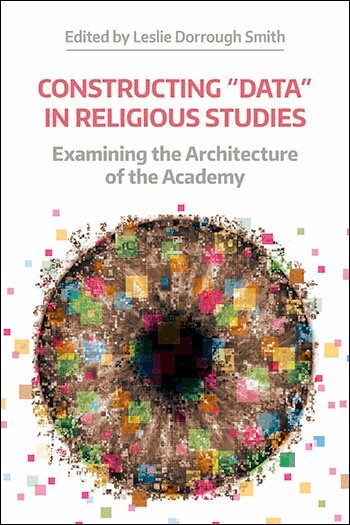
Constructing "Data" in Religious Studies
Examining the Architecture of the Academy
Inbunden, Engelska, 2019
1 177 kr
Skickas inom 5-8 vardagar
Constructing "Data" in Religious Studies provides a critical introduction to the ways in which the category "data" is understood, produced, and deployed in the discipline of religious studies. The volume is organized into four different sections, entitled "Subjects," "Objects," "Scholars," and "Institutions," with an epilogue by Russell McCutcheon and Aaron Hughes. The volume's aim is to reflect, first, on the problems, strategies, and political structures through which scholars identify (and therefore create) data, and second, on the institutions, extensions, and applications of that data. The first three sections are spearheaded by a key essay and followed by four responses, all of which consider how the politics of the academy determine the very nature of the things we purport to study. The fourth section considers what these concepts look like as they are applied and further institutionalized in college and university structures, and itself includes four essays on "teaching," "departments," "research," and "labor." Finally, the epilogue closes the volume with a consideration on the politics of scholarly collegiality, transforming the data-makers (scholars) into data themselves.
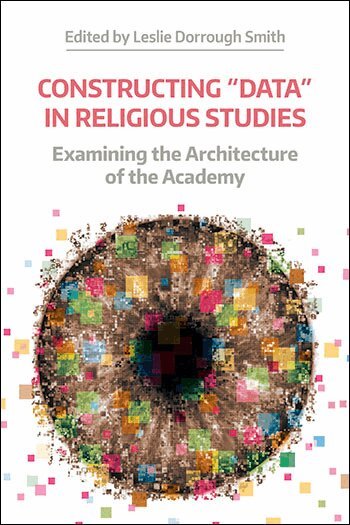
Constructing "Data" in Religious Studies
Examining the Architecture of the Academy
Häftad, Engelska, 2019
448 kr
Skickas inom 5-8 vardagar
Constructing "Data" in Religious Studies provides a critical introduction to the ways in which the category "data" is understood, produced, and deployed in the discipline of religious studies. The volume is organized into four different sections, entitled "Subjects," "Objects," "Scholars," and "Institutions," with an epilogue by Russell McCutcheon and Aaron Hughes. The volume's aim is to reflect, first, on the problems, strategies, and political structures through which scholars identify (and therefore create) data, and second, on the institutions, extensions, and applications of that data. The first three sections are spearheaded by a key essay and followed by four responses, all of which consider how the politics of the academy determine the very nature of the things we purport to study. The fourth section considers what these concepts look like as they are applied and further institutionalized in college and university structures, and itself includes four essays on "teaching," "departments," "research," and "labor." Finally, the epilogue closes the volume with a consideration on the politics of scholarly collegiality, transforming the data-makers (scholars) into data themselves.
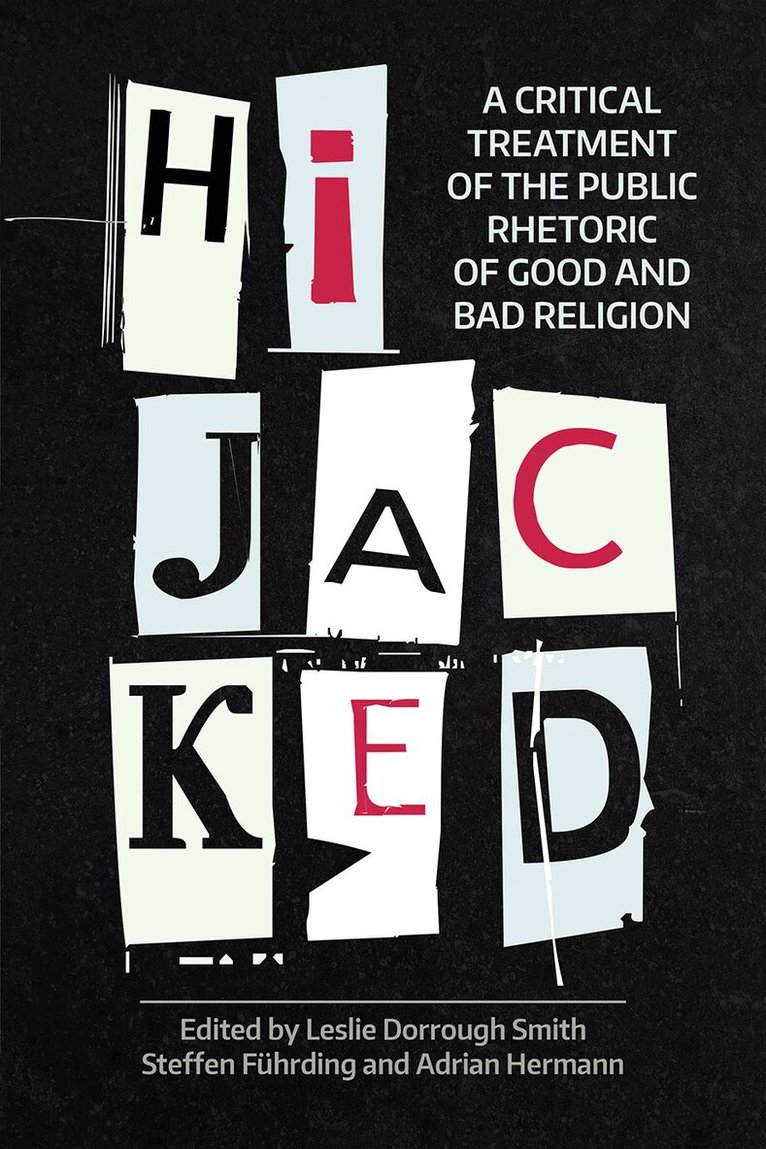
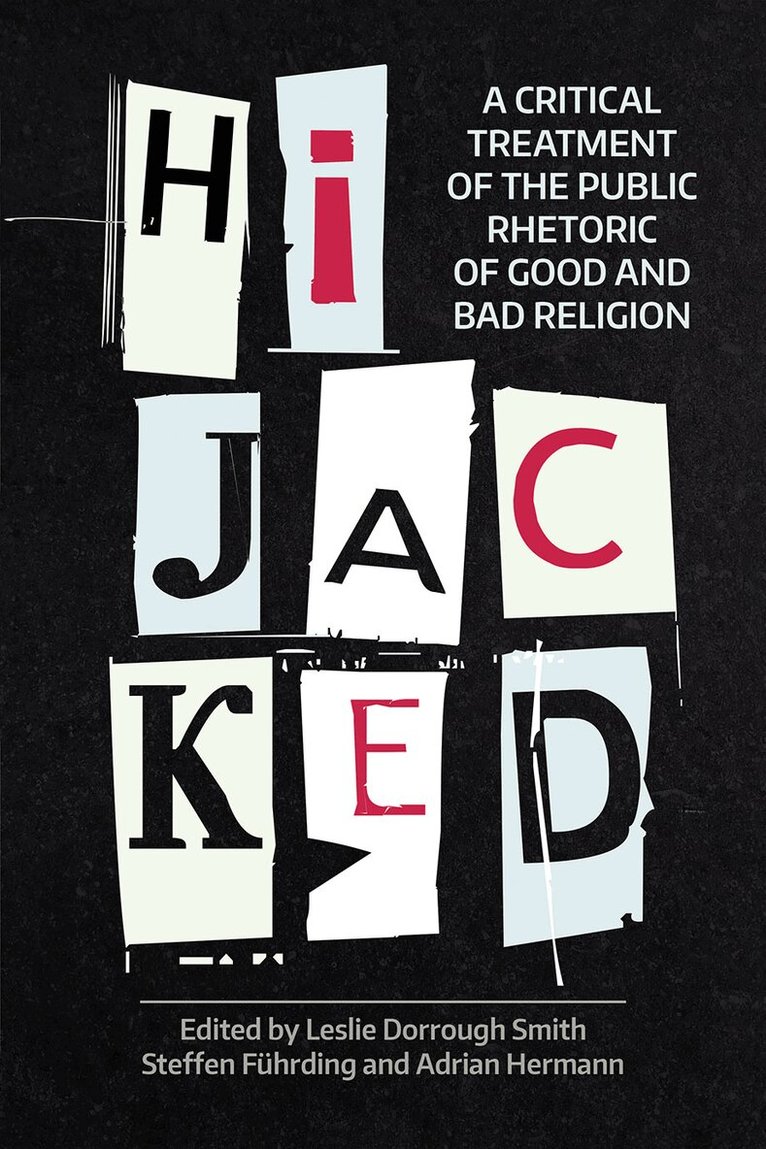
Hijacked
A Critical Treatment of the Public Rhetoric of Good and Bad Religion
Inbunden, Engelska, 2020
1 177 kr
Skickas inom 5-8 vardagar
Whether intentionally or not much of our public discourse on religion involves a subtle, but incredibly powerful, distinction between "good" and "bad" religion. The implications of these labeling practices are far-reaching, indeed, for such judgments manifest in terms such as "fundamentalist," "radical," and "extremist," words that are often the gauge by which governments worldwide determine everything from the parameters of religious freedom, to what constitutes an act of terrorism, to whether certain groups receive legal protections. Conversely, it is often surprising to see how different groups that may otherwise better typify the extremist profile remain unscathed by punitive governmental or social measures because of their pre-existing social popularity or perceived normalcy. This volume argues that public inquiry into religion is guided by unspoken value judgments, which are themselves the products of rarely-discussed political interests. This volume opens with a critical introduction which lays out the nature of the issue and its practical ramifications. The following chapter demonstrates how one can analytically critique the good/bad religion rhetoric as it appears in scholarship today. Hijacked is then organized around four different social institutions through which these value judgments have been established and deployed - namely, within politics, the media, the university, and the classroom. After a short introduction by the editors, each section begins with a chapter that highlights a particular case study or example of this good/bad distinction at work. The three to four responses that follow extrapolate from some element of the exemplar to provide an analysis on how such rhetoric operates in that particular social realm.
401 kr
Skickas inom 5-8 vardagar
Whether intentionally or not much of our public discourse on religion involves a subtle, but incredibly powerful, distinction between "good" and "bad" religion. The implications of these labeling practices are far-reaching, indeed, for such judgments manifest in terms such as "fundamentalist," "radical," and "extremist," words that are often the gauge by which governments worldwide determine everything from the parameters of religious freedom, to what constitutes an act of terrorism, to whether certain groups receive legal protections. Conversely, it is often surprising to see how different groups that may otherwise better typify the extremist profile remain unscathed by punitive governmental or social measures because of their pre-existing social popularity or perceived normalcy. This volume argues that public inquiry into religion is guided by unspoken value judgments, which are themselves the products of rarely-discussed political interests. This volume opens with a critical introduction which lays out the nature of the issue and its practical ramifications. The following chapter demonstrates how one can analytically critique the good/bad religion rhetoric as it appears in scholarship today. Hijacked is then organized around four different social institutions through which these value judgments have been established and deployed - namely, within politics, the media, the university, and the classroom. After a short introduction by the editors, each section begins with a chapter that highlights a particular case study or example of this good/bad distinction at work. The three to four responses that follow extrapolate from some element of the exemplar to provide an analysis on how such rhetoric operates in that particular social realm.
1 409 kr
Skickas inom 5-8 vardagar
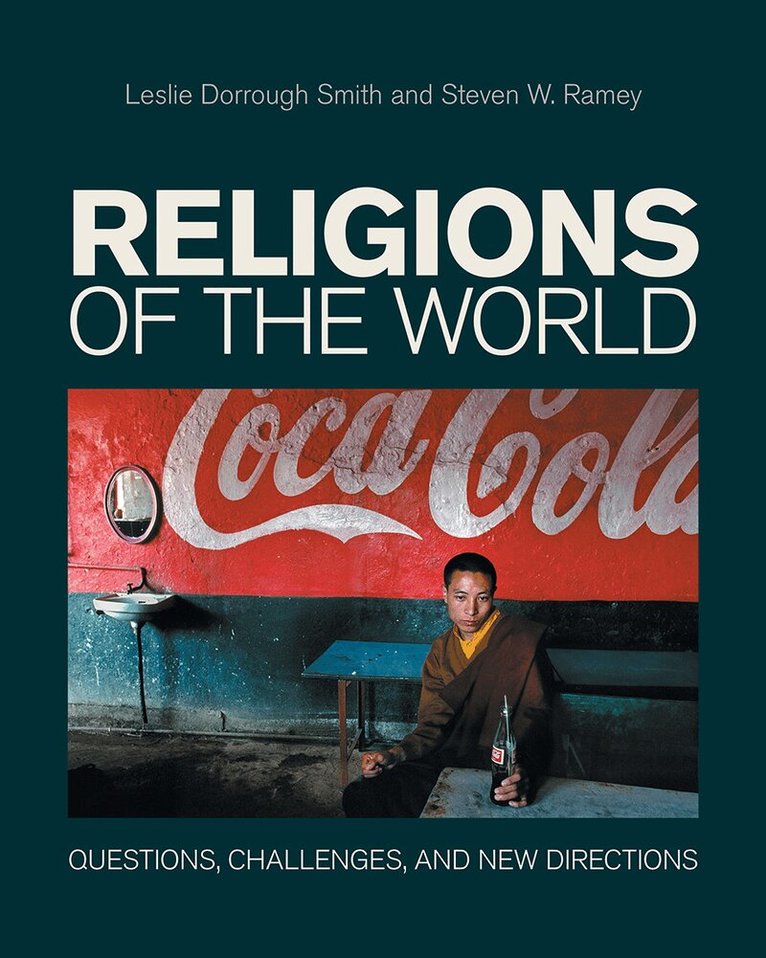
Religions of the World: Questions, Challenges, and New Directions provides a critical introduction to the social, political, and cultural interests that inform how people describe and identify with religion. One of its goals is to provide a sense of methodological transparency that few, if any, other textbooks today offer. The book opens with an Introduction that discusses contemporary methodological concerns in the study of religion, with special focus on the World Religions Paradigm. This is followed by ten chapters, six (6) of which discuss a distinct religion and four (4) of which discuss regional traditions. Thisorganization is intentional and self-conscious, as the authors discuss how these scholarly categories (distinct tradition vs. regional tradition) shape the ways that both insiders and outsiders discuss, practice, and engage religion in their daily lives.Each chapter introduces four different popular descriptions, or representations, of a particular religion or regional tradition. Following each representation is an analysis of what this representation accomplishes for those who promote it and what (or who) it also leaves out. Following this, a specific case study provides a real-world example of the difficulties in thinking about religion in overly simplistic ways. The text does not attempt to diminish or reconcile the possible contradictions between the different representations so as not to leave the reader with the idea that one representation is more correct or authentic than another, or that all four can be easily stitched together to make a tidy picture. Instead, students take away from each chapter a foundation of knowledge about the practices, issues, and conceptions that are associated with global religious traditions as well as the complexity behind any single representation.The objective is to make more transparent the human activity of constructing religion as well as the contemporary consequences of these representations, as people use them to legitimize identities and negotiate for social, legal, and economic resources. Thus, throughout the text, students are challenged to interrogate who gets to decide on a particular portrayal of a religious tradition as well as the interests informing those decisions. An Afterword also discusses ways that the skills learned in the text have applicability beyond the study of religious discourses.
651 kr
Skickas
Religions of the World: Questions, Challenges, and New Directions provides a critical introduction to the social, political, and cultural interests that inform how people describe and identify with religion. One of its goals is to provide a sense of methodological transparency that few, if any, other textbooks today offer. The book opens with an Introduction that discusses contemporary methodological concerns in the study of religion, with special focus on the World Religions Paradigm. This is followed by ten chapters, six (6) of which discuss a distinct religion and four (4) of which discuss regional traditions. Thisorganization is intentional and self-conscious, as the authors discuss how these scholarly categories (distinct tradition vs. regional tradition) shape the ways that both insiders and outsiders discuss, practice, and engage religion in their daily lives.Each chapter introduces four different popular descriptions, or representations, of a particular religion or regional tradition. Following each representation is an analysis of what this representation accomplishes for those who promote it and what (or who) it also leaves out. Following this, a specific case study provides a real-world example of the difficulties in thinking about religion in overly simplistic ways. The text does not attempt to diminish or reconcile the possible contradictions between the different representations so as not to leave the reader with the idea that one representation is more correct or authentic than another, or that all four can be easily stitched together to make a tidy picture. Instead, students take away from each chapter a foundation of knowledge about the practices, issues, and conceptions that are associated with global religious traditions as well as the complexity behind any single representation.The objective is to make more transparent the human activity of constructing religion as well as the contemporary consequences of these representations, as people use them to legitimize identities and negotiate for social, legal, and economic resources. Thus, throughout the text, students are challenged to interrogate who gets to decide on a particular portrayal of a religious tradition as well as the interests informing those decisions. An Afterword also discusses ways that the skills learned in the text have applicability beyond the study of religious discourses.