Steven W. Ramey - Böcker
Visar alla böcker från författaren Steven W. Ramey. Handla med fri frakt och snabb leverans.
7 produkter
7 produkter
355 kr
Skickas inom 7-10 vardagar
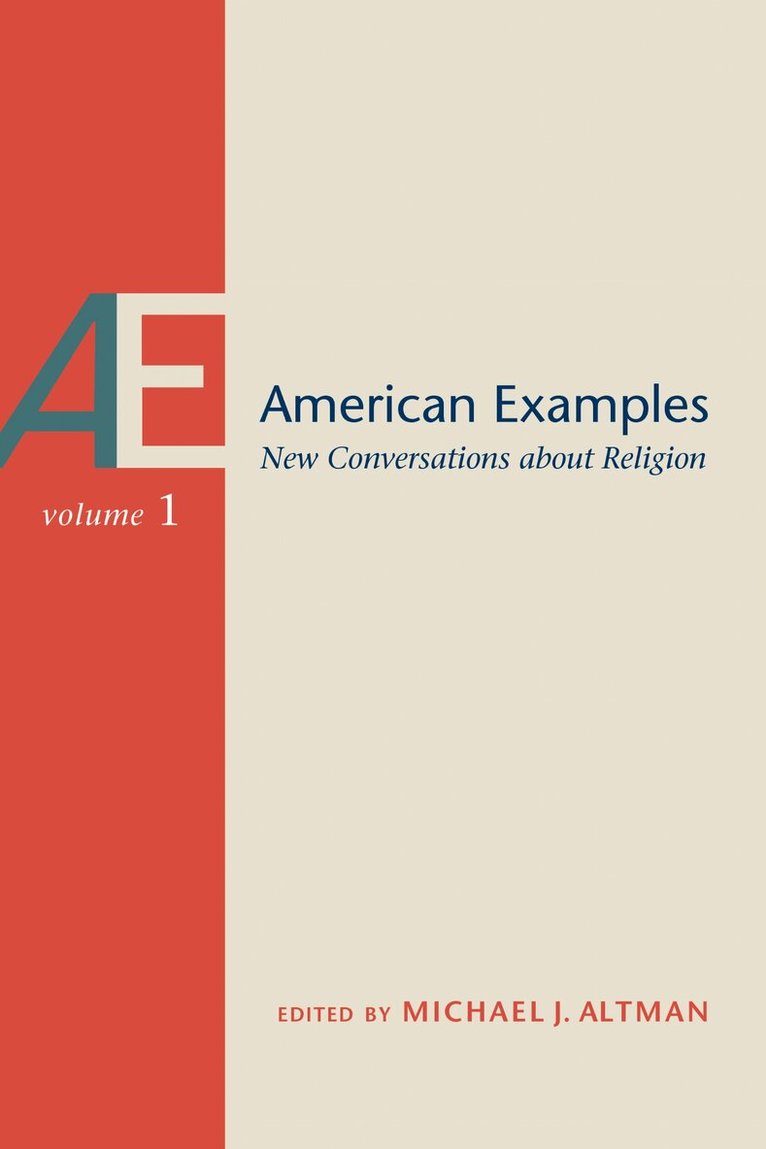
Fresh new perspectives on the study of religion, ranging from a church-architecture mecca of Southeast Indiana to what an atheist parent believes.American Examples: New Conversations about Religion, Volume One is the first in a series of annual anthologies published in partnership with the Department of Religious Studies at The University of Alabama. The American Examples initiative gathers scholars from around the world for a series of workshops designed to generate big questions about the study of religion in America. Bypassing traditional white Protestant narratives in favor of new perspectives on belief, social formation, and identity, American Examples fellows offer dynamic perspectives on American faith that challenge our understandings of both America and religion as categories.In the first volume of this exciting academic project, five topically and methodologically diverse scholars vividly reimagine the potential applications of religious history. The five chapters of this inaugural volume use case studies from America, broadly conceived, to ask larger theoretical questions that are of interest to scholars beyond the subfield of American religious history.Prea Persaud’s chapter explores the place of Hinduism among the “creole religions” of the Caribbean, while Hannah Scheidt captures what atheist parents say to each other about value systems. Travis Warren Cooper explains how the modernist church architecture of Columbus, Indiana, became central to that city’s identity. Samah Choudhury dissects how Muslim American comedians navigate Western ideas of knowledge and self to make their jokes, and their own selves legible, and Emily D. Crews uses ethnographic fieldwork to read the female reproductive body among Nigerian Pentecostal congregations. Editor Michael J. Altman also provides a brief, rich introduction assessing the state of the discipline of religious history and how the American Examples project can lead the field forward.Visit americanexamples.ua.edu for more information on the group and news about upcoming projects.
944 kr
Skickas inom 5-8 vardagar
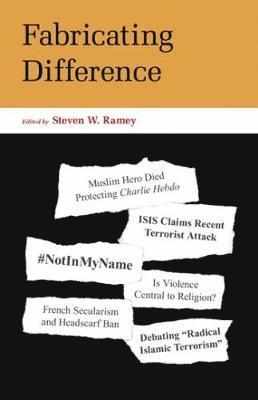
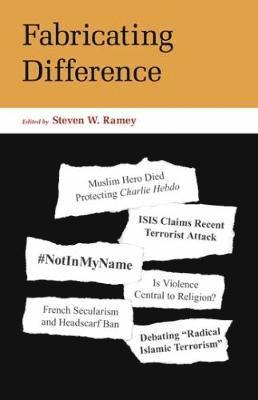
The fabrication of groups as different, as other, often has significant consequences, including violence and discrimination. This volume focuses on the discourses that construct Islam in the aftermath of traumatic events and thus illustrates how academic analysis of the fabrication of difference can contribute significantly to public discourse. It centers on two critical analyses by accomplished scholars who have written publicly on the constructions of Islam and Muslims as others. Mayanthi Fernando analyzes the rhetoric surrounding French laicite (often translated as secularism) in the aftermath of the attack on Charlie Hebdo in Paris in 2015, highlighting the ways the majority uses the language of laicite to diminish the presence of minorities. Aaron Hughes analyzes how scholars and others construct Islam in response to acts of violence attributed to people who identify with Islam, thus illustrating how critical academic analysis can contribute to the understanding of both the contestation and ideology behind groups such as ISIS.Ten early career scholars apply and extend the questions and approaches of these central essays in short reflections that apply these issues in new ways to other contexts (e.g., India, the United States, early Christianity) and topics (e.g., social issues in politics, religion vs. non-religion, nationalism, scholars in public discourse). The volume concludes with a substantive Afterword that broadens from these specific current events to present an extended analysis of the fabrication of difference and the ways recognizing these processes should influence our scholarship and our engagement with public discourse. In addressing the ways people construct difference and the Other, this volume, therefore, provides one answer to the question of the relevance of these fields in a period of both political challenge and internal critique of the assumption of the universality of academic research.
355 kr
Skickas inom 5-8 vardagar
The fabrication of groups as different, as other, often has significant consequences, including violence and discrimination. This volume focuses on the discourses that construct Islam in the aftermath of traumatic events and thus illustrates how academic analysis of the fabrication of difference can contribute significantly to public discourse. It centers on two critical analyses by accomplished scholars who have written publicly on the constructions of Islam and Muslims as others. Mayanthi Fernando analyzes the rhetoric surrounding French laicite (often translated as secularism) in the aftermath of the attack on Charlie Hebdo in Paris in 2015, highlighting the ways the majority uses the language of laicite to diminish the presence of minorities. Aaron Hughes analyzes how scholars and others construct Islam in response to acts of violence attributed to people who identify with Islam, thus illustrating how critical academic analysis can contribute to the understanding of both the contestation and ideology behind groups such as ISIS.Ten early career scholars apply and extend the questions and approaches of these central essays in short reflections that apply these issues in new ways to other contexts (e.g., India, the United States, early Christianity) and topics (e.g., social issues in politics, religion vs. non-religion, nationalism, scholars in public discourse). The volume concludes with a substantive Afterword that broadens from these specific current events to present an extended analysis of the fabrication of difference and the ways recognizing these processes should influence our scholarship and our engagement with public discourse. In addressing the ways people construct difference and the Other, this volume, therefore, provides one answer to the question of the relevance of these fields in a period of both political challenge and internal critique of the assumption of the universality of academic research.
1 099 kr
Skickas inom 5-8 vardagar
Hinduism in Five Minutes provides an accessible and lively introduction to common questions about the practices, ideas, and narratives commonly identified as Hindu. Suitable for beginning students and the general reader, the book offers more than 70 brief essays on a wide range of fascinating questions about Hinduism and its study, such as: How did Hinduism begin? How many gods / goddesses do Hindus worship? Which scriptures are important in Hinduism? Why are many Hindus vegetarian? What is the role of women in Hindu rituals? What do Hindus believe? What is caste, and why are some people treated differently because of it? How do Hindus celebrate festivals like Holi? Is yoga Hindu? What makes arranged marriage appealing to some Hindus? Do you have to be Indian to be a Hindu?Each essay is written by a leading authority and offers succinct, insightful answers along with suggestions for further reading, making the book an ideal starting point for classroom use or personal browsing.
324 kr
Skickas inom 5-8 vardagar
Hinduism in Five Minutes provides an accessible and lively introduction to common questions about the practices, ideas, and narratives commonly identified as Hindu. Suitable for beginning students and the general reader, the book offers more than 70 brief essays on a wide range of fascinating questions about Hinduism and its study, such as: How did Hinduism begin? How many gods / goddesses do Hindus worship? Which scriptures are important in Hinduism? Why are many Hindus vegetarian? What is the role of women in Hindu rituals? What do Hindus believe? What is caste, and why are some people treated differently because of it? How do Hindus celebrate festivals like Holi? Is yoga Hindu? What makes arranged marriage appealing to some Hindus? Do you have to be Indian to be a Hindu?Each essay is written by a leading authority and offers succinct, insightful answers along with suggestions for further reading, making the book an ideal starting point for classroom use or personal browsing.
1 409 kr
Skickas inom 5-8 vardagar
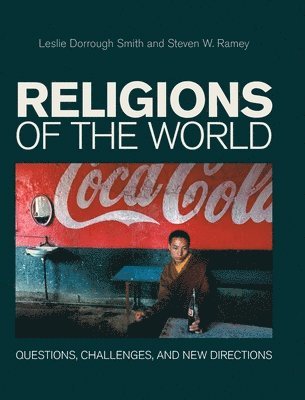
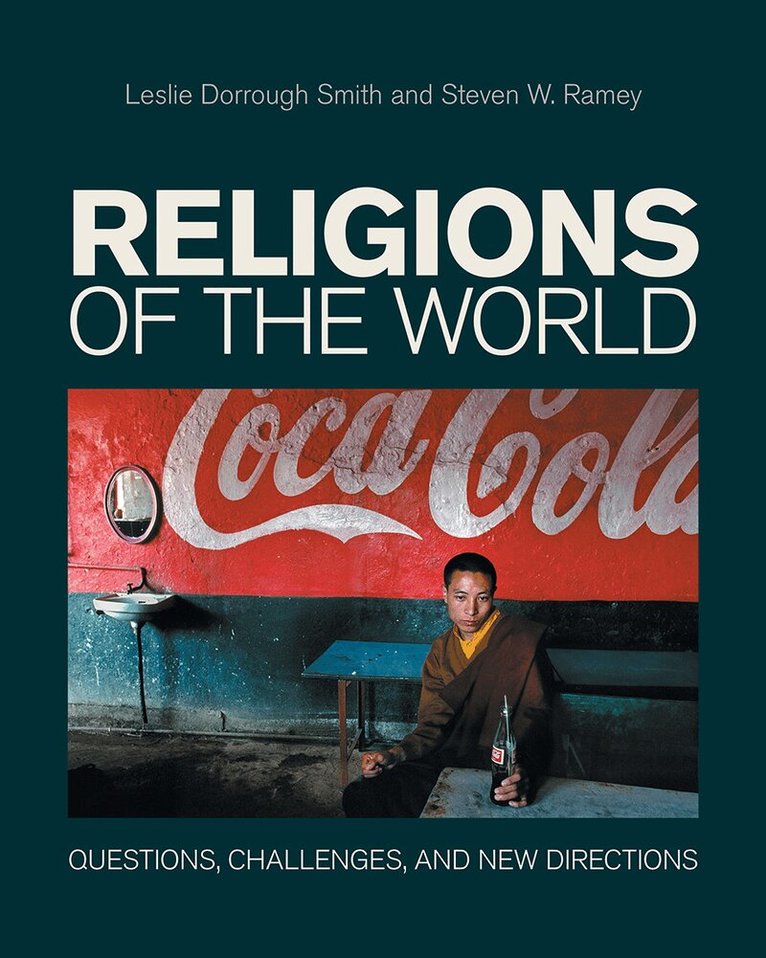
Religions of the World: Questions, Challenges, and New Directions provides a critical introduction to the social, political, and cultural interests that inform how people describe and identify with religion. One of its goals is to provide a sense of methodological transparency that few, if any, other textbooks today offer. The book opens with an Introduction that discusses contemporary methodological concerns in the study of religion, with special focus on the World Religions Paradigm. This is followed by ten chapters, six (6) of which discuss a distinct religion and four (4) of which discuss regional traditions. Thisorganization is intentional and self-conscious, as the authors discuss how these scholarly categories (distinct tradition vs. regional tradition) shape the ways that both insiders and outsiders discuss, practice, and engage religion in their daily lives.Each chapter introduces four different popular descriptions, or representations, of a particular religion or regional tradition. Following each representation is an analysis of what this representation accomplishes for those who promote it and what (or who) it also leaves out. Following this, a specific case study provides a real-world example of the difficulties in thinking about religion in overly simplistic ways. The text does not attempt to diminish or reconcile the possible contradictions between the different representations so as not to leave the reader with the idea that one representation is more correct or authentic than another, or that all four can be easily stitched together to make a tidy picture. Instead, students take away from each chapter a foundation of knowledge about the practices, issues, and conceptions that are associated with global religious traditions as well as the complexity behind any single representation.The objective is to make more transparent the human activity of constructing religion as well as the contemporary consequences of these representations, as people use them to legitimize identities and negotiate for social, legal, and economic resources. Thus, throughout the text, students are challenged to interrogate who gets to decide on a particular portrayal of a religious tradition as well as the interests informing those decisions. An Afterword also discusses ways that the skills learned in the text have applicability beyond the study of religious discourses.
651 kr
Skickas
Religions of the World: Questions, Challenges, and New Directions provides a critical introduction to the social, political, and cultural interests that inform how people describe and identify with religion. One of its goals is to provide a sense of methodological transparency that few, if any, other textbooks today offer. The book opens with an Introduction that discusses contemporary methodological concerns in the study of religion, with special focus on the World Religions Paradigm. This is followed by ten chapters, six (6) of which discuss a distinct religion and four (4) of which discuss regional traditions. Thisorganization is intentional and self-conscious, as the authors discuss how these scholarly categories (distinct tradition vs. regional tradition) shape the ways that both insiders and outsiders discuss, practice, and engage religion in their daily lives.Each chapter introduces four different popular descriptions, or representations, of a particular religion or regional tradition. Following each representation is an analysis of what this representation accomplishes for those who promote it and what (or who) it also leaves out. Following this, a specific case study provides a real-world example of the difficulties in thinking about religion in overly simplistic ways. The text does not attempt to diminish or reconcile the possible contradictions between the different representations so as not to leave the reader with the idea that one representation is more correct or authentic than another, or that all four can be easily stitched together to make a tidy picture. Instead, students take away from each chapter a foundation of knowledge about the practices, issues, and conceptions that are associated with global religious traditions as well as the complexity behind any single representation.The objective is to make more transparent the human activity of constructing religion as well as the contemporary consequences of these representations, as people use them to legitimize identities and negotiate for social, legal, and economic resources. Thus, throughout the text, students are challenged to interrogate who gets to decide on a particular portrayal of a religious tradition as well as the interests informing those decisions. An Afterword also discusses ways that the skills learned in the text have applicability beyond the study of religious discourses.