Lev R. Ginzburg - Böcker
Visar alla böcker från författaren Lev R. Ginzburg. Handla med fri frakt och snabb leverans.
4 produkter
4 produkter
913 kr
Skickas inom 7-10 vardagar
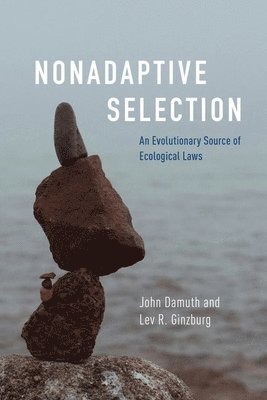
The first comprehensive explanation of a widely applicable but underappreciated mechanism of evolution operating at higher levels of organization than the individual. In this important treatise, ecologists and evolutionary biologists John Damuth and Lev R. Ginzburg identify a specific evolutionary process in biology, which they call nonadaptive selection. The idea is simple, but the implications are profound. Nonadaptive selection, as they use the term, is selection among biological entities (as is natural selection) but is based on the fitness effects of structural properties intrinsic to the entities under selection rather than on interactions between traits and a local shared environment. In other words, features of systems that evolve by nonadaptive selection do not adapt to local environmental conditions; rather, this selective process increases the long-term stability of the focal systems independent of local conditions.Nonadaptive selection may be of particular value in explaining broad, persistent patterns in multispecies biological units where adaptive evolution may be weak or poorly defined. Examples include Damuth’s Law, the equivalence of energy use among animal species across a wide range of body sizes; the ratio-dependent, or Arditi-Ginzburg, predation conjecture; the consistency of allometric scaling powers; the shortness of trophic chains; and the prevalence of certain types of three-species trophic structures across ecosystems. Damuth and Ginzburg see nonadaptive selection underlying patterns of ecological allometries, community structure, and species interactions, with some implications for macroevolution. Moreover, they find a surprising relationship between these nonadaptive processes and biological laws. They do not advocate the reorientation of any existing research programs but present nonadaptive selection as an additional conceptual framework that may be useful to add to ecology and evolution.
283 kr
Skickas inom 7-10 vardagar
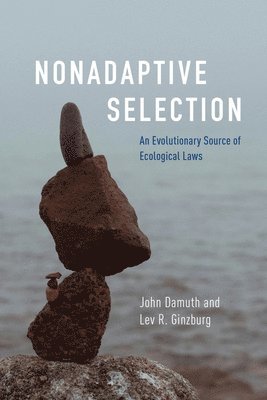
The first comprehensive explanation of a widely applicable but underappreciated mechanism of evolution operating at higher levels of organization than the individual. In this important treatise, ecologists and evolutionary biologists John Damuth and Lev R. Ginzburg identify a specific evolutionary process in biology, which they call nonadaptive selection. The idea is simple, but the implications are profound. Nonadaptive selection, as they use the term, is selection among biological entities (as is natural selection) but is based on the fitness effects of structural properties intrinsic to the entities under selection rather than on interactions between traits and a local shared environment. In other words, features of systems that evolve by nonadaptive selection do not adapt to local environmental conditions; rather, this selective process increases the long-term stability of the focal systems independent of local conditions.Nonadaptive selection may be of particular value in explaining broad, persistent patterns in multispecies biological units where adaptive evolution may be weak or poorly defined. Examples include Damuth’s Law, the equivalence of energy use among animal species across a wide range of body sizes; the ratio-dependent, or Arditi-Ginzburg, predation conjecture; the consistency of allometric scaling powers; the shortness of trophic chains; and the prevalence of certain types of three-species trophic structures across ecosystems. Damuth and Ginzburg see nonadaptive selection underlying patterns of ecological allometries, community structure, and species interactions, with some implications for macroevolution. Moreover, they find a surprising relationship between these nonadaptive processes and biological laws. They do not advocate the reorientation of any existing research programs but present nonadaptive selection as an additional conceptual framework that may be useful to add to ecology and evolution.
Ecological Modeling in Risk Assessment
Chemical Effects on Populations, Ecosystems, and Landscapes
Häftad, Engelska, 2019
954 kr
Skickas inom 10-15 vardagar
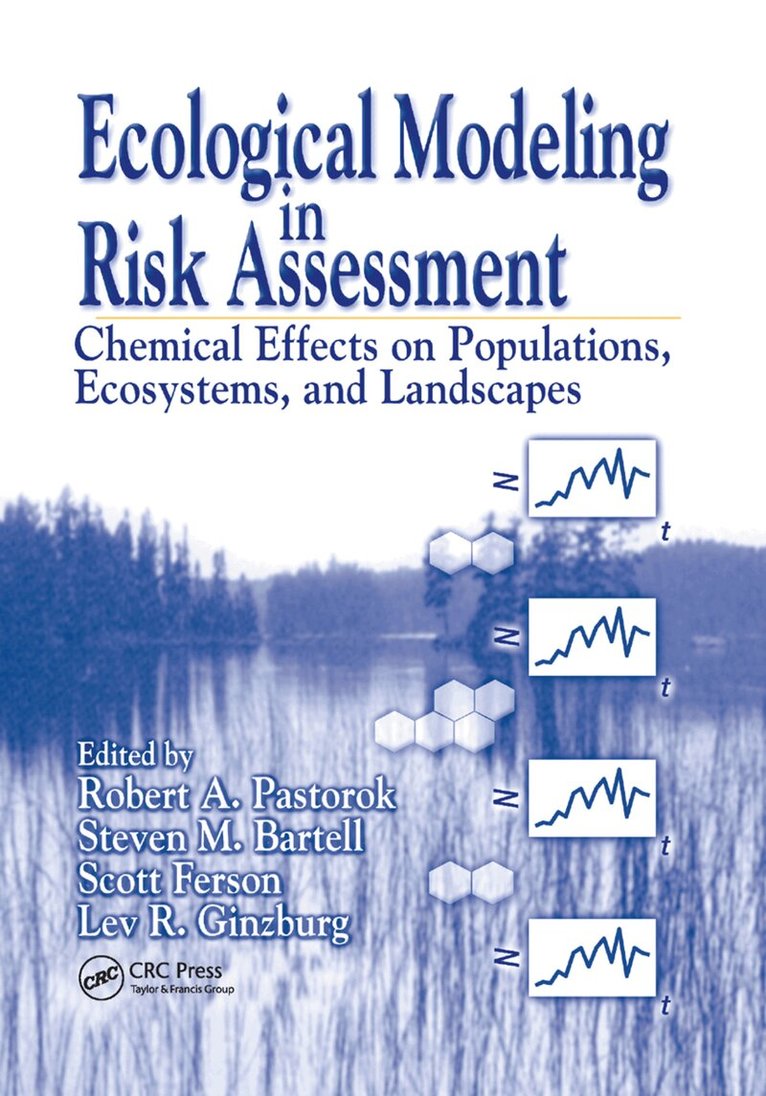
Toxic chemicals can exert effects on all levels of the biological hierarchy, from cells to organs to organisms to populations to entire ecosystems. However, most risk assessment models express their results in terms of effects on individual organisms, without corresponding information on how populations, groups of species, or whole ecosystems may respond to chemical stressors. Ecological Modeling in Risk Assessment: Chemical Effects on Populations, Ecosystems, and Landscapes takes a new approach by compiling and evaluating models that can be used in assessing risk at the population, ecosystem, and landscape levels.The authors give an overview of the current process of ecological risk assessment for toxic chemicals and of how modeling of populations, ecosystems, and landscapes could improve the status quo. They present a classification of ecological models and explain the differences between population, ecosystem, landscape, and toxicity-extrapolation models. The authors describe the model evaluation process and define evaluation criteria. Finally, the results of the model evaluations are presented in a concise format with recommendations on modeling approaches to use now and develop further.The authors present and evaluate various models on the basis of their realism and complexity, prediction of relevant assessment endpoints, treatment of uncertainty, regulatory acceptance, resource efficiency, and other criteria. They provide models that will improve the ecological relevance of risk assessments and make data collection more cost-effective. Ecological Modeling in Risk Assessment serves as a reference for selecting and applying the best models when performing a risk assessment.
Ecological Modeling in Risk Assessment
Chemical Effects on Populations, Ecosystems, and Landscapes
Inbunden, Engelska, 2001
2 578 kr
Skickas inom 10-15 vardagar
Toxic chemicals can exert effects on all levels of the biological hierarchy, from cells to organs to organisms to populations to entire ecosystems. However, most risk assessment models express their results in terms of effects on individual organisms, without corresponding information on how populations, groups of species, or whole ecosystems may respond to chemical stressors. Ecological Modeling in Risk Assessment: Chemical Effects on Populations, Ecosystems, and Landscapes takes a new approach by compiling and evaluating models that can be used in assessing risk at the population, ecosystem, and landscape levels.The authors give an overview of the current process of ecological risk assessment for toxic chemicals and of how modeling of populations, ecosystems, and landscapes could improve the status quo. They present a classification of ecological models and explain the differences between population, ecosystem, landscape, and toxicity-extrapolation models. The authors describe the model evaluation process and define evaluation criteria. Finally, the results of the model evaluations are presented in a concise format with recommendations on modeling approaches to use now and develop further.The authors present and evaluate various models on the basis of their realism and complexity, prediction of relevant assessment endpoints, treatment of uncertainty, regulatory acceptance, resource efficiency, and other criteria. They provide models that will improve the ecological relevance of risk assessments and make data collection more cost-effective. Ecological Modeling in Risk Assessment serves as a reference for selecting and applying the best models when performing a risk assessment.