Steven M. Bartell - Böcker
Visar alla böcker från författaren Steven M. Bartell. Handla med fri frakt och snabb leverans.
5 produkter
5 produkter
Ecological Modeling in Risk Assessment
Chemical Effects on Populations, Ecosystems, and Landscapes
Häftad, Engelska, 2019
956 kr
Skickas inom 10-15 vardagar
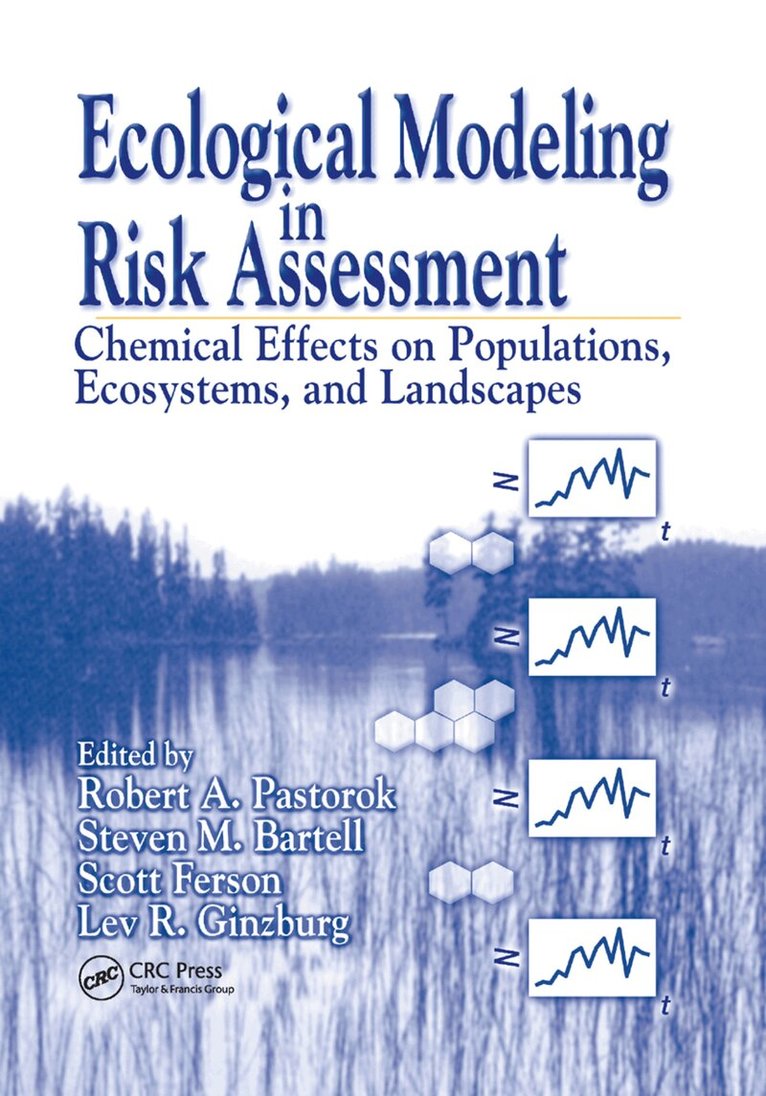
Toxic chemicals can exert effects on all levels of the biological hierarchy, from cells to organs to organisms to populations to entire ecosystems. However, most risk assessment models express their results in terms of effects on individual organisms, without corresponding information on how populations, groups of species, or whole ecosystems may respond to chemical stressors. Ecological Modeling in Risk Assessment: Chemical Effects on Populations, Ecosystems, and Landscapes takes a new approach by compiling and evaluating models that can be used in assessing risk at the population, ecosystem, and landscape levels.The authors give an overview of the current process of ecological risk assessment for toxic chemicals and of how modeling of populations, ecosystems, and landscapes could improve the status quo. They present a classification of ecological models and explain the differences between population, ecosystem, landscape, and toxicity-extrapolation models. The authors describe the model evaluation process and define evaluation criteria. Finally, the results of the model evaluations are presented in a concise format with recommendations on modeling approaches to use now and develop further.The authors present and evaluate various models on the basis of their realism and complexity, prediction of relevant assessment endpoints, treatment of uncertainty, regulatory acceptance, resource efficiency, and other criteria. They provide models that will improve the ecological relevance of risk assessments and make data collection more cost-effective. Ecological Modeling in Risk Assessment serves as a reference for selecting and applying the best models when performing a risk assessment.
2 356 kr
Skickas inom 10-15 vardagar
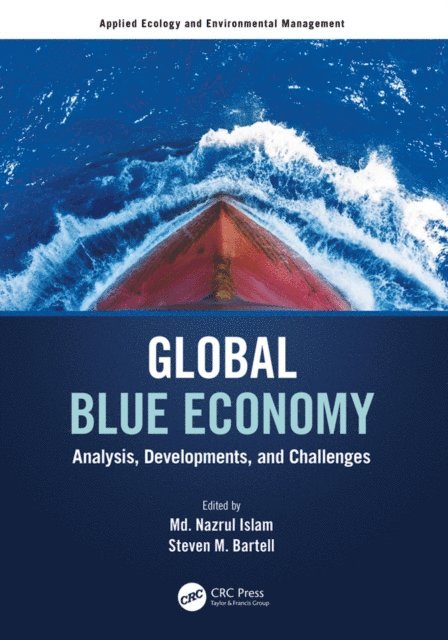
A global blue economy is an economic arena that depends on the benefits and values realized from the coastal and marine environments. This book explains the "sustainable blue economy" as a marine-based economy that provides social and economic benefits for current and future generations. It restores, protects, and maintains the diversity, productivity, and resilience of marine ecosystems, and is based on clean technologies, renewable energy, and circular material flows.
969 kr
Skickas inom 10-15 vardagar
A global blue economy is an economic arena that depends on the benefits and values realized from the coastal and marine environments. This book explains the "sustainable blue economy" as a marine-based economy that provides social and economic benefits for current and future generations. It restores, protects, and maintains the diversity, productivity, and resilience of marine ecosystems, and is based on clean technologies, renewable energy, and circular material flows.
1 294 kr
Skickas inom 10-15 vardagar
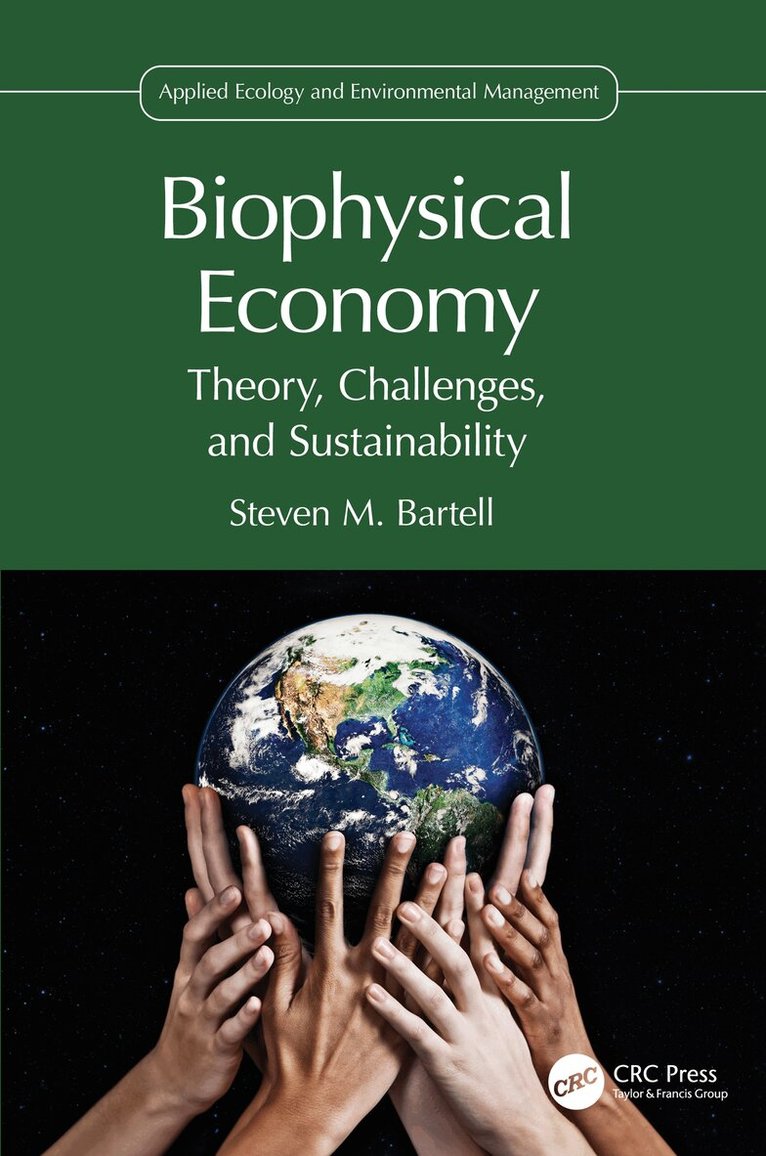
This book explores the concept of transforming the current macroeconomic system from one based on continuous growth that doesn’t recognize the fundamental importance of Earth's natural support structures, to a system consistent with the basic views of biophysical economics that acknowledges that all real wealth ultimately derives from planetary resources, both renewable and non-renewable. It describes how data and information collected by various institutions, government agencies, and the private sector can be integrated with existing management structures to transform the “continuous growth” economy into an economy that functions within understandable boundaries on a finite planet.FeaturesStimulates discussions of the feasibility of a biophysical economy.Discusses the historical developments of biophysical economics.Offers a practical approach to building a biophysical economy.Explores the human experience of living in a biophysical economy.Emphasizes the fragility of life in the Universe as we know it.This book is an excellent resource for academics and students studying sustainable development, as well as for professionals working in the private sector and public institutions with an interest in economic planning for a sustainable future.
Ecological Modeling in Risk Assessment
Chemical Effects on Populations, Ecosystems, and Landscapes
Inbunden, Engelska, 2001
2 557 kr
Skickas inom 10-15 vardagar
Toxic chemicals can exert effects on all levels of the biological hierarchy, from cells to organs to organisms to populations to entire ecosystems. However, most risk assessment models express their results in terms of effects on individual organisms, without corresponding information on how populations, groups of species, or whole ecosystems may respond to chemical stressors. Ecological Modeling in Risk Assessment: Chemical Effects on Populations, Ecosystems, and Landscapes takes a new approach by compiling and evaluating models that can be used in assessing risk at the population, ecosystem, and landscape levels.The authors give an overview of the current process of ecological risk assessment for toxic chemicals and of how modeling of populations, ecosystems, and landscapes could improve the status quo. They present a classification of ecological models and explain the differences between population, ecosystem, landscape, and toxicity-extrapolation models. The authors describe the model evaluation process and define evaluation criteria. Finally, the results of the model evaluations are presented in a concise format with recommendations on modeling approaches to use now and develop further.The authors present and evaluate various models on the basis of their realism and complexity, prediction of relevant assessment endpoints, treatment of uncertainty, regulatory acceptance, resource efficiency, and other criteria. They provide models that will improve the ecological relevance of risk assessments and make data collection more cost-effective. Ecological Modeling in Risk Assessment serves as a reference for selecting and applying the best models when performing a risk assessment.