Scott Ferson - Böcker
Visar alla böcker från författaren Scott Ferson. Handla med fri frakt och snabb leverans.
5 produkter
5 produkter
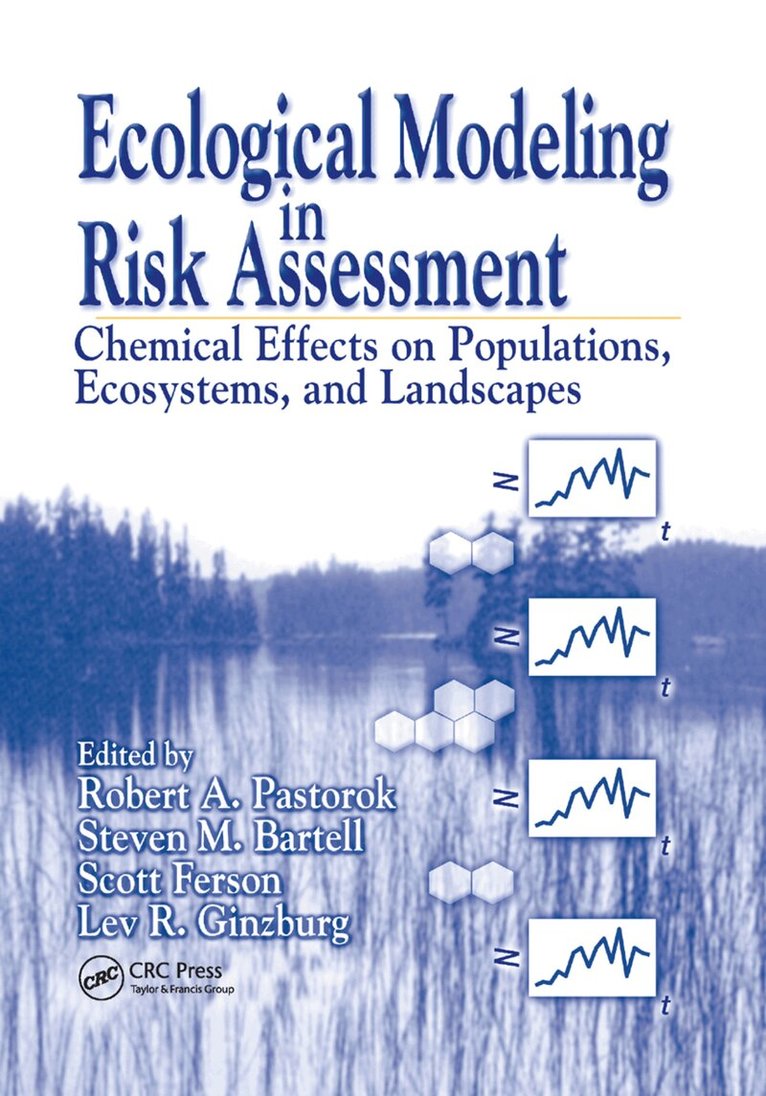
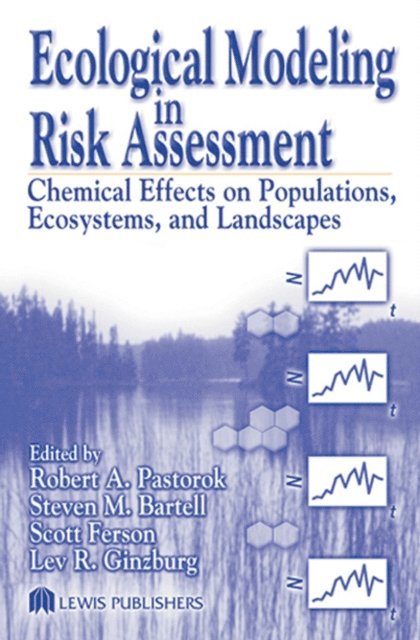
Ecological Modeling in Risk Assessment
Chemical Effects on Populations, Ecosystems, and Landscapes
Häftad, Engelska, 2019
956 kr
Skickas inom 10-15 vardagar
Toxic chemicals can exert effects on all levels of the biological hierarchy, from cells to organs to organisms to populations to entire ecosystems. However, most risk assessment models express their results in terms of effects on individual organisms, without corresponding information on how populations, groups of species, or whole ecosystems may respond to chemical stressors. Ecological Modeling in Risk Assessment: Chemical Effects on Populations, Ecosystems, and Landscapes takes a new approach by compiling and evaluating models that can be used in assessing risk at the population, ecosystem, and landscape levels.The authors give an overview of the current process of ecological risk assessment for toxic chemicals and of how modeling of populations, ecosystems, and landscapes could improve the status quo. They present a classification of ecological models and explain the differences between population, ecosystem, landscape, and toxicity-extrapolation models. The authors describe the model evaluation process and define evaluation criteria. Finally, the results of the model evaluations are presented in a concise format with recommendations on modeling approaches to use now and develop further.The authors present and evaluate various models on the basis of their realism and complexity, prediction of relevant assessment endpoints, treatment of uncertainty, regulatory acceptance, resource efficiency, and other criteria. They provide models that will improve the ecological relevance of risk assessments and make data collection more cost-effective. Ecological Modeling in Risk Assessment serves as a reference for selecting and applying the best models when performing a risk assessment.
1 064 kr
Skickas inom 10-15 vardagar
This is one of the first books to review the quantitative tools used in the study of such subjects as biodiversity, resource management, and endangered species preservation. The topics covered include population viability analysis, population dynamics, metapopulation models, estimating risks and timing of extinctions, quasi-extinction, recovery dynamics, land use, population genetics and the genetics of bottleneck populations. Now reprinted in softcover, the book remains of great interest to graduate students and practicing biologists working in conservation biology, ecology, and natural resources.
Ecological Modeling in Risk Assessment
Chemical Effects on Populations, Ecosystems, and Landscapes
Inbunden, Engelska, 2001
2 557 kr
Skickas inom 10-15 vardagar
Toxic chemicals can exert effects on all levels of the biological hierarchy, from cells to organs to organisms to populations to entire ecosystems. However, most risk assessment models express their results in terms of effects on individual organisms, without corresponding information on how populations, groups of species, or whole ecosystems may respond to chemical stressors. Ecological Modeling in Risk Assessment: Chemical Effects on Populations, Ecosystems, and Landscapes takes a new approach by compiling and evaluating models that can be used in assessing risk at the population, ecosystem, and landscape levels.The authors give an overview of the current process of ecological risk assessment for toxic chemicals and of how modeling of populations, ecosystems, and landscapes could improve the status quo. They present a classification of ecological models and explain the differences between population, ecosystem, landscape, and toxicity-extrapolation models. The authors describe the model evaluation process and define evaluation criteria. Finally, the results of the model evaluations are presented in a concise format with recommendations on modeling approaches to use now and develop further.The authors present and evaluate various models on the basis of their realism and complexity, prediction of relevant assessment endpoints, treatment of uncertainty, regulatory acceptance, resource efficiency, and other criteria. They provide models that will improve the ecological relevance of risk assessments and make data collection more cost-effective. Ecological Modeling in Risk Assessment serves as a reference for selecting and applying the best models when performing a risk assessment.
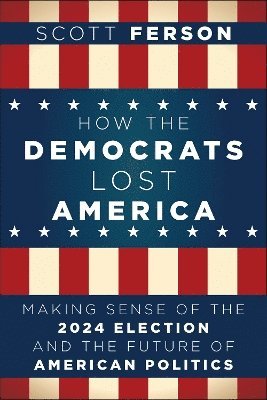
How the Democrats Lost America
Making Sense of the 2024 Election and the Future of American Politics
Inbunden, Engelska, 2026
352 kr
Skickas inom 3-6 vardagar
#1 New Release in Elections on Amazon#1 New Release in Political Parties on AmazonWhen Donald Trump won the 2024 American Presidential Election, the nation—and world—was shocked. In this critical examination of the events leading up to and following the election, political advisor Scott Ferson goes straight to the source—the American people—to understand how this happened and where we go from here.In November 2024, the Democrats didn't just lose the election—they lost the voters themselves. In the years and months leading up to the election, a lot of average Joes—enough Joes to swing an election and tilt history’s trajectory—were left looking for confidence and answers in uncertain times. These were the voters who've never chosen a party, who work full-time or overtime just to make ends meet, and who simply want to be able to live the American dream that they were promised. A generation ago, these average Joes would have been a Democrat, by tradition or community or through union organizing. Now, these voters are lost to the Democrats, and, for those in disbelief over the 2024 election, the hard lesson is the Democrats never even tried to win them over.How the Democrats Lost America explains not only why Kamala Harris and the Democrats lost the 2024 election but the larger disconnect the party has with voters in general, particularly those who don’t hug both coasts or live in select big cities in between.Through thousands of interviews over the past eight years, Scott Ferson exposes a larger problem facing our democracy: A profound disconnect with the people. By listening to people and understanding their real concerns, Democrats can find the way forward and take the steps to reconnect the people with the American promise of democracy. Democrats have a choice. These everyday voters can be lost and forgotten, or lost and found.
How the Democrats Lost America
Making Sense of the 2024 Election and the Future of American Politics
Häftad, Engelska, 2026
250 kr
Skickas inom 3-6 vardagar
#1 New Release in Elections on Amazon#1 New Release in Political Parties on AmazonWhen Donald Trump won the 2024 American Presidential Election, the nation—and world—was shocked. In this critical examination of the events leading up to and following the election, political advisor Scott Ferson goes straight to the source—the American people—to understand how this happened and where we go from here.In November 2024, the Democrats didn't just lose the election—they lost the voters themselves. In the years and months leading up to the election, a lot of average Joes—enough Joes to swing an election and tilt history’s trajectory—were left looking for confidence and answers in uncertain times. These were the voters who've never chosen a party, who work full-time or overtime just to make ends meet, and who simply want to be able to live the American dream that they were promised. A generation ago, these average Joes would have been a Democrat, by tradition or community or through union organizing. Now, these voters are lost to the Democrats, and, for those in disbelief over the 2024 election, the hard lesson is the Democrats never even tried to win them over.How the Democrats Lost America explains not only why Kamala Harris and the Democrats lost the 2024 election but the larger disconnect the party has with voters in general, particularly those who don’t hug both coasts or live in select big cities in between.Through thousands of interviews over the past eight years, Scott Ferson exposes a larger problem facing our democracy: A profound disconnect with the people. By listening to people and understanding their real concerns, Democrats can find the way forward and take the steps to reconnect the people with the American promise of democracy. Democrats have a choice. These everyday voters can be lost and forgotten, or lost and found.