Linda Gonçalves Veiga - Böcker
Visar alla böcker från författaren Linda Gonçalves Veiga. Handla med fri frakt och snabb leverans.
2 produkter
2 produkter
534 kr
Skickas inom 10-15 vardagar
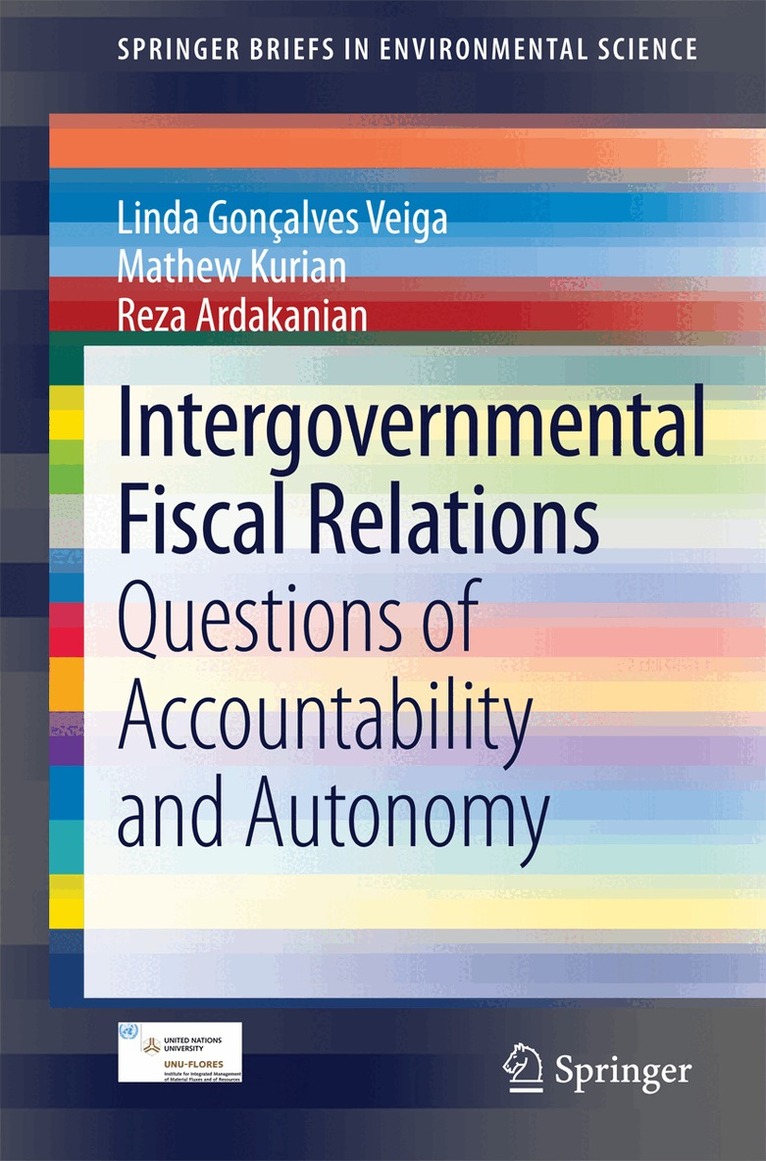
This book examines and analyzes issues related to public finance in subnational governments, along with a discussion of case studies on decentralization. Most of the analysis applies to all public goods and services provided by subnational governments, with some placed on the role of subnational governments in the management of environmental resources, notably water and wasteCoverage includes optimal arrangements for sharing fiscal responsibilities among different levels of government, the potential impact of decentralization on the quality of public goods delivery, local governments’ expenditure and revenue choices, and the effect of decentralization on accountability, governance and policy outcomes. The scope of discussion extends to both public finance theory and applied policy debates. The first chapter, on trends in financing of public services, opens with an explanation of the how and why of government intervention in the economy, the nature and purposes of transfers between and among governments and trends in decentralization. Case studies examine the impact of decentralization in such areas as service delivery, water and sanitation, education and health, and on poverty and income inequality.Chapter 2 examines public budgets: governance structures, norms and organizational practices, building up understanding of budgets, budget cycles, fiscal revenues from fees and taxes, expenses, debt and political economy issues, rules mandating balanced budgets in government and more.Chapter 3 discusses issues of accountability and policy outcomes, offering important lessons from recent international experience, including ways to strengthen political, administrative and financial accountability. The concluding chapter recounts lessons from recent international experience and surveys implications for the nexus approach to management of environmental resources.The information, analysis and expert advice presented here is particularly relevant for developing and emerging countries, where well designed decentralization reforms have a higher potential to improve efficiency in the provision of public services, and to enhance the development of integrated and sustainable strategies for the use of water, soil and waste resources and applications that advance the nexus approach.
Resources, Services and Risks
How Can Data Observatories Bridge The Science-Policy Divide in Environmental Governance?
Häftad, Engelska, 2016
534 kr
Skickas inom 10-15 vardagar
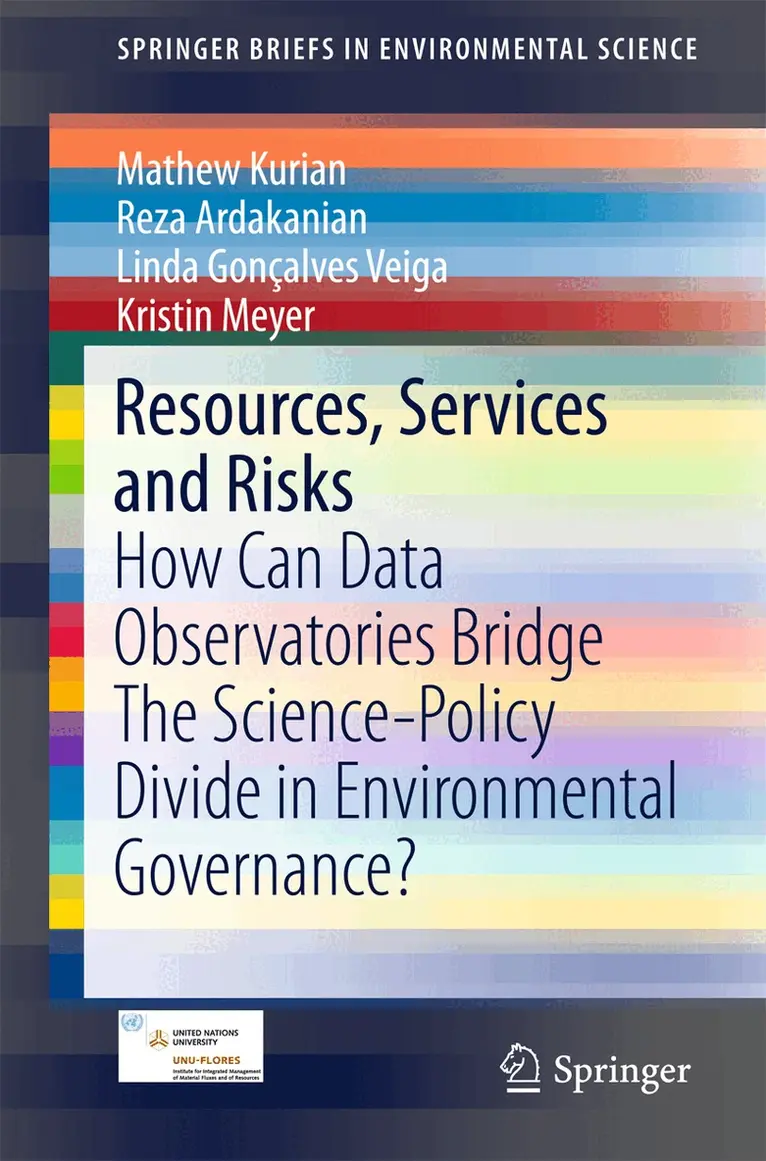
This book discusses the role of observatories in supporting evidence-based decision-making. The book focuses on issues of data accessibility, monitoring frameworks and governance processes with regard to environmental resources – water, soil and waste. This publication highlights challenges related to policy-implementation measures and examines current monitoring approaches, and illustrates how the UNU-FLORES Nexus Observatory seeks to overcome concerns related to data, monitoring and governance of water, soil and waste resources. In particular, given that extreme weather events such as droughts and floods are predicted to become more frequent in the future, it discusses the need for improved hazard risk monitoring. It proposes risk indices for drought and floods, which measure exposure and vulnerability to the phenomena through a multitude of bio-physical, socio-economic and institutional indicators. Furthermore, the potential for using openly accessible data made available throughobservatories in decision-making aimed at improving food security is also discussed. It acknowledges governments as key players in environmental resource management, and recognizes that decentralization reforms, as well as the emergence of information and communication technologies, have significantly changed the role of governments in promoting sustainable development. The book is particularly relevant for decision-makers, donor agencies, practitioners and students with an interest in environmental management who are also keen followers of discussions on the post-2015 monitoring agenda.