Linford D. Fisher - Böcker
Visar alla böcker från författaren Linford D. Fisher. Handla med fri frakt och snabb leverans.
6 produkter
6 produkter
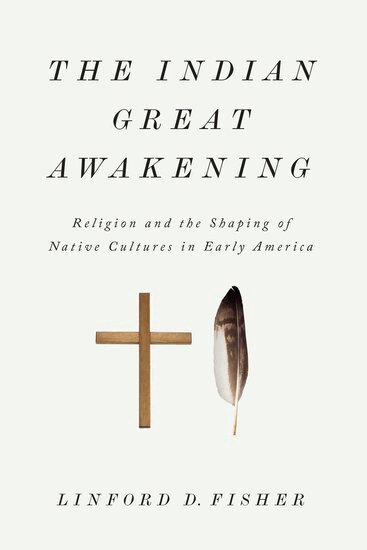
The Indian Great Awakening
Religion and the Shaping of Native Cultures in Early America
Häftad, Engelska, 2014
424 kr
Skickas inom 5-8 vardagar
The First Great Awakening was a time of heightened religious activity in the colonial New England. Among those whom the English settlers tried to convert to Christianity were the region's native peoples. In this book, Linford Fisher tells the gripping story of American Indians' attempts to wrestle with the ongoing realities of colonialism between the 1670s and 1820. In particular, he looks at how some members of previously unevangelized Indian communities in Connecticut, Rhode Island, western Massachusetts, and Long Island adopted Christian practices, often joining local Congregational churches and receiving baptism. Far from passively sliding into the cultural and physical landscape after King Philip's War, he argues, Native individuals and communities actively tapped into transatlantic structures of power to protect their land rights, welcomed educational opportunities for their children, and joined local white churches. Religion repeatedly stood at the center of these points of cultural engagement, often in hotly contested ways. Although these Native groups had successfully resisted evangelization in the seventeenth century, by the eighteenth century they showed an increasing interest in education and religion. Their sporadic participation in the First Great Awakening marked a continuation of prior forms of cultural engagement. More surprisingly, however, in the decades after the Awakening, Native individuals and sub-groups asserted their religious and cultural autonomy to even greater degrees by leaving English churches and forming their own Indian Separate churches. In the realm of education, too, Natives increasingly took control, preferring local reservation schools and demanding Indian teachers whenever possible. In the 1780s, two small groups of Christian Indians moved to New York and founded new Christian Indian settlements. But the majority of New England Natives-even those who affiliated with Christianity-chose to remain in New England, continuing to assert their own autonomous existence through leasing land, farming, and working on and off the reservations. While Indian involvement in the Great Awakening has often been seen as total and complete conversion, Fisher's analysis of church records, court documents, and correspondence reveals a more complex reality. Placing the Awakening in context of land loss and the ongoing struggle for cultural autonomy in the eighteenth century casts it as another step in the ongoing, tentative engagement of native peoples with Christian ideas and institutions in the colonial world. Charting this untold story of the Great Awakening and the resultant rise of an Indian Separatism and its effects on Indian cultures as a whole, this gracefully written book challenges long-held notions about religion and Native-Anglo-American interaction
The Indian Great Awakening
Religion and the Shaping of Native Cultures in Early America
Inbunden, Engelska, 2012
616 kr
Skickas inom 5-8 vardagar
This book tells the gripping story of American Indians' attempts to wrestle with the ongoing realities of colonialism between the 1670s and 1820. Using religion as a primary lens, this book explores the complex and interesting world of eighteenth-century southern New England co-created by Indians and colonists. By tracing the religious and cultural engagement of American Indians in Connecticut, Rhode Island, western Massachusetts, and Long Island, New York, this narrative pulls back the curtain on the often overlooked, dynamic interactions between Natives and whites in this time period. Far from passively sliding into the cultural and physical landscape after King Philip's War, Native individuals and communities actively tapped into transatlantic structures of power to protect their land rights, welcomed educational opportunities for their children, and even joined local white churches during the First Great Awakening (1740s). Religion repeatedly stood at the center of these points of cultural engagement, often in hotly contested ways. Although these Native groups had successfully resisted evangelization in the seventeenth century, by the eighteenth century they showed an increasing interest in education and religion. Their sporadic participation in the First Great Awakening marked a continuation of prior forms of cultural engagement. More surprisingly, however, in the decades after the Awakening, Native individuals and sub-groups asserted their religious and cultural autonomy to even greater degrees by leaving English churches and forming their own Indian Separate churches. In the realm of education, too, Native increasingly took control, preferring local reservation schools and demanding Indian teachers whenever possible. In the 1780s, two small group of Christian Indians moved to New York and founded new Christian Indian settlements, called Brothertown and New Stockbridge. But the majority of New England Natives-even those who affiliated with Christianity-chose to remain in New England, continuing to assert their own autonomous existence through leasing land, farming, and working on and off the reservations.
396 kr
Kommande
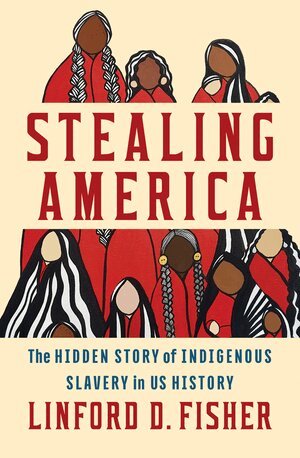
Indigenous enslavement was a colossal phenomenon of almost unimaginable consequences that ensnared nearly 600,000 Native Americans in North America. In a saga that predates 1619, this double–stealing of Indigenous people and their lands upends virtually every known narrative of American history. Captured Natives, often deliberately misidentified as Black slaves, were used not only on southern plantations, but on small northern farms and were routinely shipped overseas. While the American Revolution pealed the bells of freedom for colonists, it paved a larcenous trail of westward expansion that decimated tribes and plundered Indigenous lands. Even after Congress outlawed Native slavery in 1867, Americans forced Indigenous children into boarding schools and white homes, where they laboured under forced assimilation. This practice was not outlawed until the latter twentieth century, when Indian nations finally secured increasing rights and self–determination. The most comprehensive work of its kind, Stealing America presents a five–century genocidal history, more commonly known as the “American dream.”
373 kr
Skickas inom 7-10 vardagar
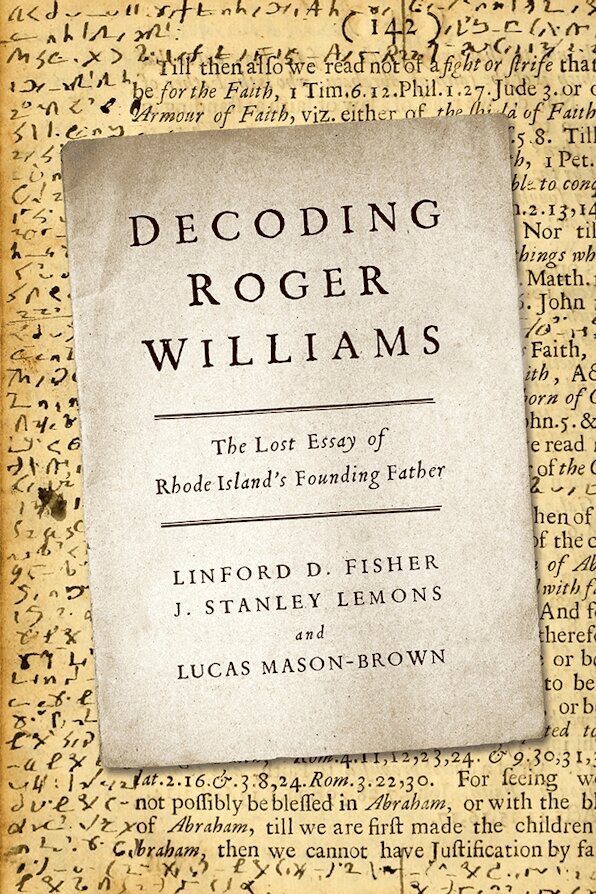
Near the end of his life, Roger Williams, Rhode Island founder and father of American religious freedom, scrawled an encrypted essay in the margins of a colonial-era book. For more than 300 years those shorthand notes remained indecipherable......until a team of Brown University undergraduates led by Lucas Mason-Brown cracked Williams' code after the marginalia languished for over a century in the archives of the John Carter Brown Library. At the time of Williams' writing, a trans-Atlantic debate on infant versus believer's baptism had taken shape that included London Baptist minister John Norcott and the famous Puritan ""Apostle to the Indians,"" John Eliot. Amazingly, Williams' code contained a previously undiscovered essay, which was a point-by-point refutation of Eliot's book supporting infant baptism.History professors Linford D. Fisher and J. Stanley Lemons immediately recognized the importance of what turned out to be theologian Roger Williams' final treatise. Decoding Roger Williams reveals for the first time Williams' translated and annotated essay, along with a critical essay by Fisher, Lemons, and Mason-Brown and reprints of the original Norcott and Eliot tracts.
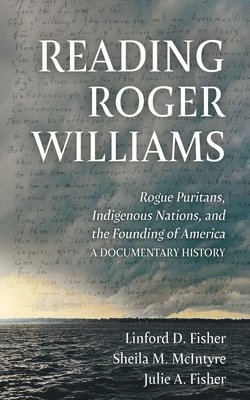
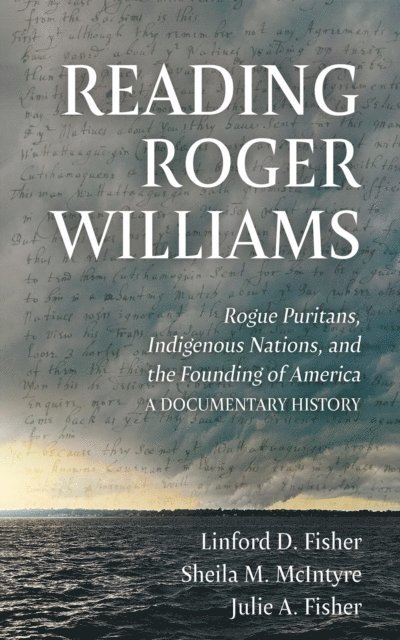
Reading Roger Williams
Rogue Puritans, Indigenous Nations, and the Founding of America-a Documentary History
Häftad, Engelska, 2024
368 kr
Skickas inom 5-8 vardagar
Reading Roger Williams
Rogue Puritans, Indigenous Nations, and the Founding of America-a Documentary History
Inbunden, Engelska, 2024
545 kr
Skickas inom 5-8 vardagar