J. Stanley Lemons - Böcker
Visar alla böcker från författaren J. Stanley Lemons. Handla med fri frakt och snabb leverans.
3 produkter
3 produkter
373 kr
Skickas inom 7-10 vardagar
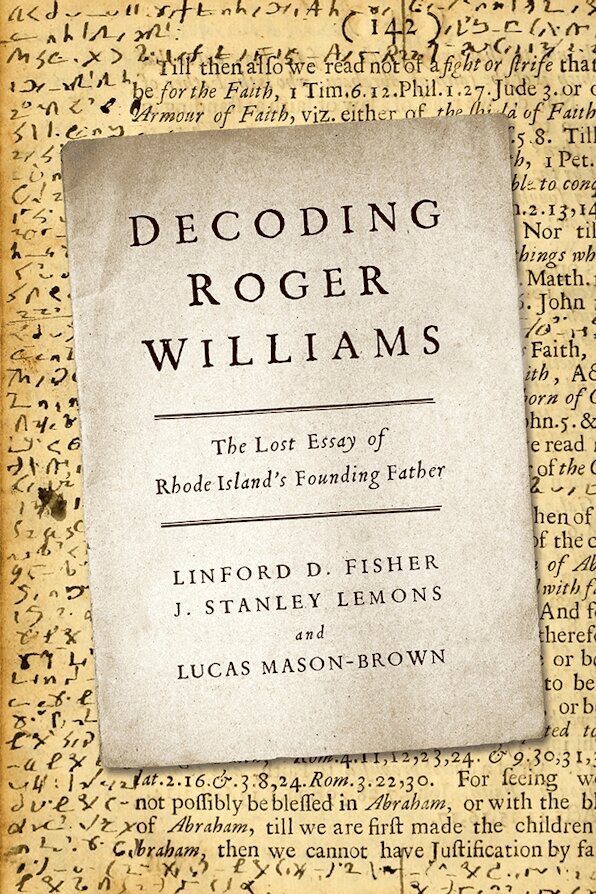
Near the end of his life, Roger Williams, Rhode Island founder and father of American religious freedom, scrawled an encrypted essay in the margins of a colonial-era book. For more than 300 years those shorthand notes remained indecipherable......until a team of Brown University undergraduates led by Lucas Mason-Brown cracked Williams' code after the marginalia languished for over a century in the archives of the John Carter Brown Library. At the time of Williams' writing, a trans-Atlantic debate on infant versus believer's baptism had taken shape that included London Baptist minister John Norcott and the famous Puritan ""Apostle to the Indians,"" John Eliot. Amazingly, Williams' code contained a previously undiscovered essay, which was a point-by-point refutation of Eliot's book supporting infant baptism.History professors Linford D. Fisher and J. Stanley Lemons immediately recognized the importance of what turned out to be theologian Roger Williams' final treatise. Decoding Roger Williams reveals for the first time Williams' translated and annotated essay, along with a critical essay by Fisher, Lemons, and Mason-Brown and reprints of the original Norcott and Eliot tracts.
763 kr
Skickas inom 10-15 vardagar
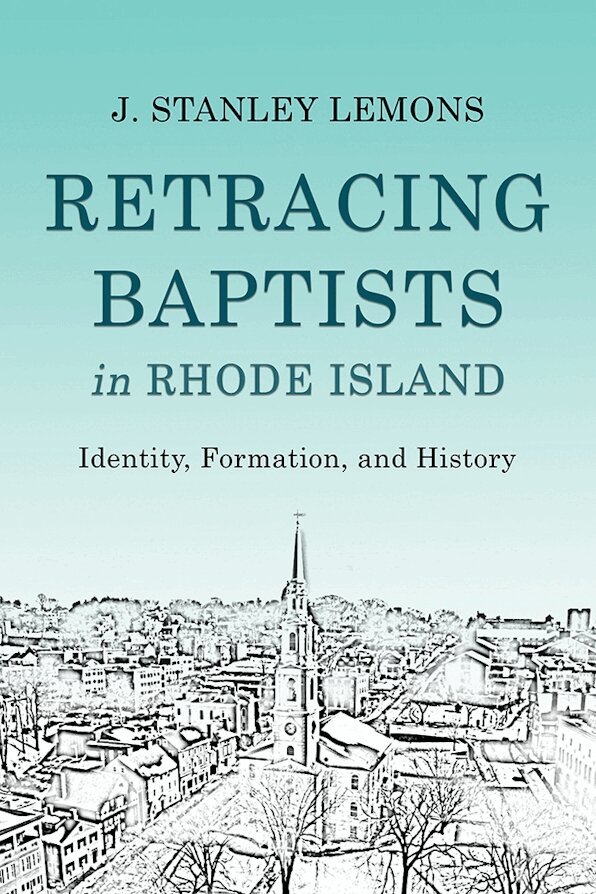
Rhode Island can legitimately claim to be the home of Baptists in America. The first three varieties of Baptists in the New World - General Six Principle, Particular, and Seventh Day - made their debut in this small colony. And it was in Rhode Island that the General Six Principle Baptists formed the first Baptist association; the Seventh Day Baptists organized the first national denomination of Baptists; the Regular Baptists founded the first Baptist college, Brown University; and the Warren Baptist Association led the fight for religious liberty in New England.In Retracing Baptists in Rhode Island, historian J. Stanley Lemons follows the story of Baptists, from their founding in the colonial period to the present. Lemons considers the impact of industrialization, urbanization, and immigration upon Baptists as they negotiated their identities in an ever-changing American landscape. Rhode Island Baptists, regardless of variety, stood united on the question of temperance, hesitated on the abolition of slavery before the Civil War, and uniformly embraced revivalism, but they remained vexed and divided over denominational competition, the anti-Masonic movement, and the Dorr Rebellion.Lemons also chronicles the relationship between Rhode Island Baptists and the broader Baptist world. Modernism and historical criticism finally brought the Baptist theological civil war to Rhode Island. How to interpret the Bible became increasingly pressing, even leading to the devolution of Brown's identity as a Baptist institution. Since the 1940s, the number of Baptists in the state has declined, despite the number of Baptist denominations rising from four to twelve. At the same time, the number of independent Baptist churches has greatly increased while other churches have shed their Baptist identity completely to become nondenominational. Lemons asserts that tectonic shifts in Baptist identity will continue to create a new landscape out of the heritage and traditions first established by the original Baptists of Rhode Island.
1 068 kr
Skickas inom 10-15 vardagar
Rhode Island can legitimately claim to be the home of Baptists in America. The first three varieties of Baptists in the New World - General Six Principle, Particular, and Seventh Day - made their debut in this small colony. And it was in Rhode Island that the General Six Principle Baptists formed the first Baptist association; the Seventh Day Baptists organized the first national denomination of Baptists; the Regular Baptists founded the first Baptist college, Brown University; and the Warren Baptist Association led the fight for religious liberty in New England.In Retracing Baptists in Rhode Island, historian J. Stanley Lemons follows the story of Baptists, from their founding in the colonial period to the present. Lemons considers the impact of industrialization, urbanization, and immigration upon Baptists as they negotiated their identities in an ever-changing American landscape. Rhode Island Baptists, regardless of variety, stood united on the question of temperance, hesitated on the abolition of slavery before the Civil War, and uniformly embraced revivalism, but they remained vexed and divided over denominational competition, the anti-Masonic movement, and the Dorr Rebellion.Lemons also chronicles the relationship between Rhode Island Baptists and the broader Baptist world. Modernism and historical criticism finally brought the Baptist theological civil war to Rhode Island. How to interpret the Bible became increasingly pressing, even leading to the devolution of Brown's identity as a Baptist institution. Since the 1940s, the number of Baptists in the state has declined, despite the number of Baptist denominations rising from four to twelve. At the same time, the number of independent Baptist churches has greatly increased while other churches have shed their Baptist identity completely to become nondenominational. Lemons asserts that tectonic shifts in Baptist identity will continue to create a new landscape out of the heritage and traditions first established by the original Baptists of Rhode Island.