Lisa Jane Graham – författare
Visar alla böcker från författaren Lisa Jane Graham. Handla med fri frakt och snabb leverans.
2 produkter
2 produkter
387 kr
Skickas inom 7-10 vardagar
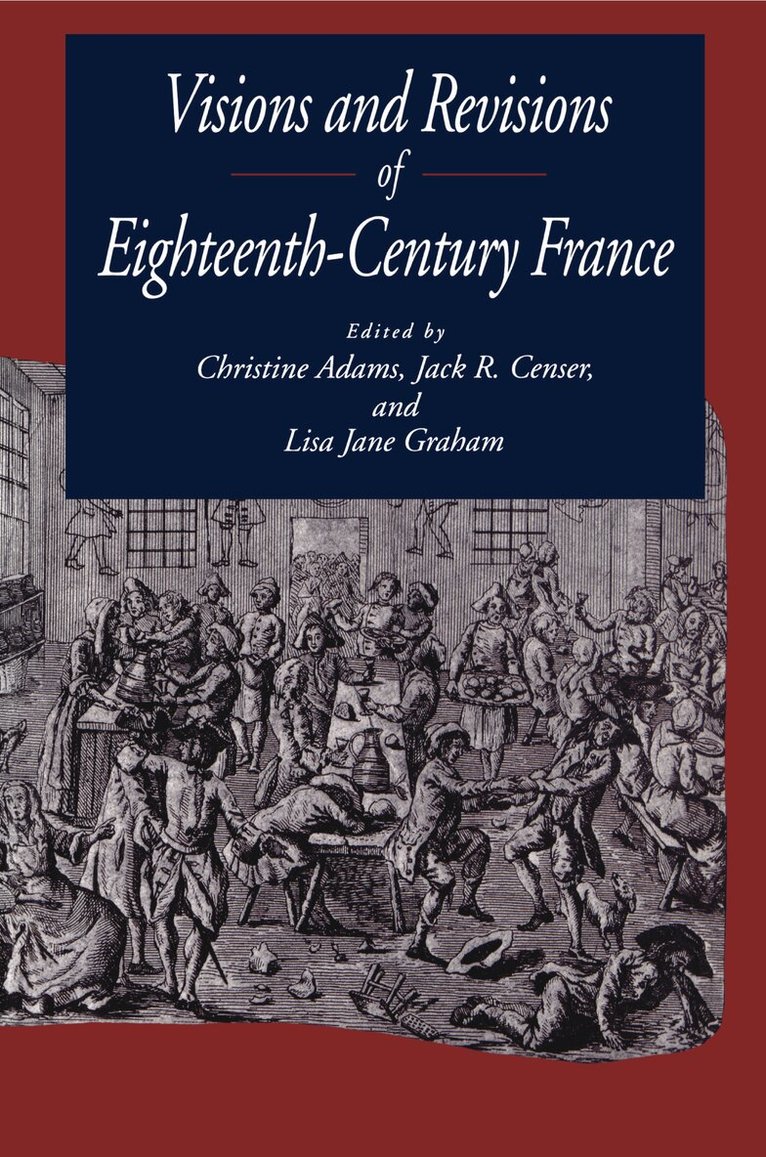
This volume brings together eight essays (all but one previously unpublished) that offer innovative strategies for studying society and culture in eighteenth-century France. Divided into three sections, the chapters map out current research paths in social, cultural, and political history. The authors engage the most heated subjects of debate in the field today, including the changing nature of political life in the age of Enlightenment, the role of public opinion in undermining absolutism, and the impact of gender on social relationships and political language in the late eighteenth century. They demonstrate a marked interest in the lives of ordinary and humble French people, finding that exclusion from the main corridors of power fostered cunning and resourcefulness, not political indifference or ignorance.The articles encompass the Old Regime and the revolutionary era without falling into the teleological trap of using the former as the backdrop for the events of 1789. On the contrary, many of the authors consciously avoid this bias by investigating the Old Regime in its own right or by consciously linking the pre- and postrevolutionary eras. This decision alone marks an important turning of the tide. By establishing a dialogue between the Old Regime and the revolution, this volume implicitly pays homage to those historians who insist on the structural continuities that underlay the rupture of 1789.Contributors are Cissie Fairchilds, Christine Adams, Orest Ranum, Lisa Jane Graham, Harvey Chisick, John Garrigus, Lenard Berlanstein, and Jack Censer.
700 kr
Skickas inom 7-10 vardagar
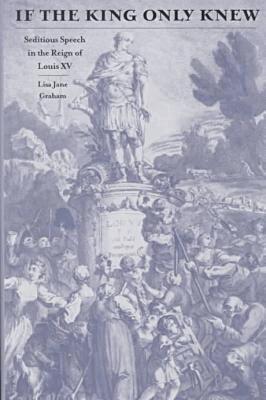
In May 1758, a bailiff named Jean Moriceau de La Motte was arrested for carrying seditious flyers and uttering mauvais discours against Louis XV. When he was questioned at the Bastille over the next several months, La Motte was unequivocal in his loyalty to the king, but his insistence failed to convince the police and probably hurt his case more than would have a simple admission of guilt. He was sentenced to be hanged on the Place de Grève after making his amends on the steps of Nôtre Dame. His punishment seemed severe, if not unwarranted, to an increasingly literate and informed Parisian populace that found censorship hard to support, either theoretically or practically, in the face of intellectual and cultural changes wrought by the Enlightenment.By looking at the police files for cases such as La Motte's, Lisa Jane Graham uncovers fascinating clues to the conflicting attitudes of eighteenth-century French subjects toward royal authority. Individuals like La Motte often failed to see the subversive implications of their words and protested their fidelity to the king in impassioned language. The crown's inability or refusal to accommodate a wider range of political speech turned the opinions of these indivduals into bitter grievances and sometimes crimes. Ironically, the decision to repress seditious speech not only alienated essentially loyal French men and women; by marking them as opponents of monarchical authority, it strengthened their sense of their own autonomy and legitimacy as social actors.The complex and surprising web of motivations lying at the heart of such loyalty, as revealed in the police files Graham examines, undermines some deeply rooted assumptions about the Enlightenment and its links to modernity. Graham's book presents the eighteenth century as the critical historical moment for studying how the premodern virtue of loyalty gave way to new ideas and vocabularies about the relationship between individuals and government. If the King Only Knew attests to the powerful emotional and ideological conflicts this difficult transition unleashed.