Liza Weinstein - Böcker
Visar alla böcker från författaren Liza Weinstein. Handla med fri frakt och snabb leverans.
3 produkter
3 produkter
983 kr
Kommande
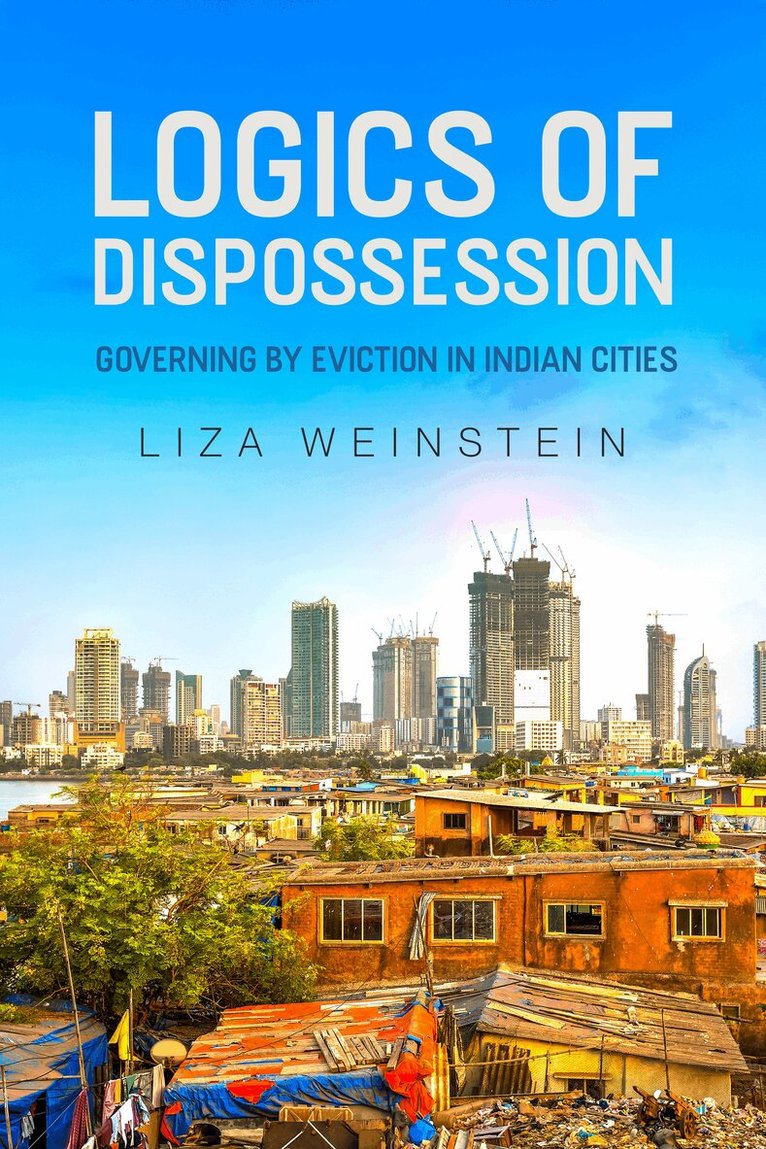
A new “bulldozer politics” has taken hold in many Indian cities, destroying neighborhoods and displacing city residents as it pursues a global city aesthetic. Presentist accounts might explain these evictions as emergent modes of capital accumulation, but Logics of Dispossession challenges that story and situates these acts in a longer historical durée. Employing a comparative genealogical approach to historical analysis, Liza Weinstein traces the Indian government’s power to evict—from its beginnings in the colonial capitals of the British Raj, to developmental state-building projects and the rise of ethnonationalist politics, up to the present neoliberal conjuncture. Drawing on multicity fieldwork, archival research, and a database of more than a thousand eviction cases, Weinstein argues that evictions constitute a historically entrenched tool of city governance, motivated by a shifting set of intersecting, often contradictory logics that have accumulated over time and in locally specific ways across Indian cities aspiring to be world-class.
496 kr
Kommande
A new “bulldozer politics” has taken hold in many Indian cities, destroying neighborhoods and displacing city residents as it pursues a global city aesthetic. Presentist accounts might explain these evictions as emergent modes of capital accumulation, but Logics of Dispossession challenges that story and situates these acts in a longer historical durée. Employing a comparative genealogical approach to historical analysis, Liza Weinstein traces the Indian government’s power to evict—from its beginnings in the colonial capitals of the British Raj, to developmental state-building projects and the rise of ethnonationalist politics, up to the present neoliberal conjuncture. Drawing on multicity fieldwork, archival research, and a database of more than a thousand eviction cases, Weinstein argues that evictions constitute a historically entrenched tool of city governance, motivated by a shifting set of intersecting, often contradictory logics that have accumulated over time and in locally specific ways across Indian cities aspiring to be world-class.
300 kr
Skickas inom 11-20 vardagar
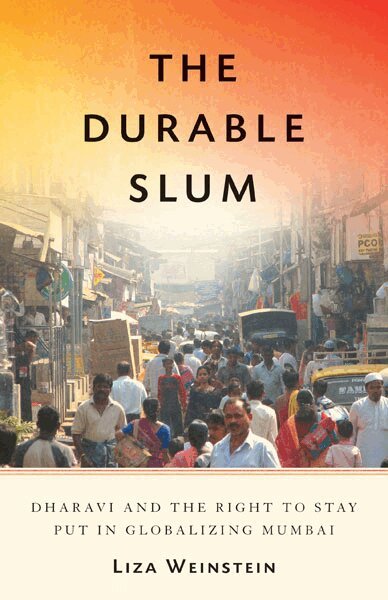
In the center of Mumbai, next to the city’s newest and most expensive commercial developments, lies one of Asia’s largest slums, where as many as one million squatters live in makeshift housing on one square mile of government land. This is the notorious Dharavi district, best known from the movie Slumdog Millionaire. In recent years, cities from Delhi to Rio de Janeiro have demolished similar slums, at times violently evicting their residents, to make way for development. But Dharavi and its residents have endured for a century, holding on to what is now some of Mumbai’s most valuable land. In The Durable Slum, Liza Weinstein draws on a decade of work, including more than a year of firsthand research in Dharavi, to explain how, despite innumerable threats, the slum has persisted for so long, achieving a precarious stability. She describes how economic globalization and rapid urban development are pressuring Indian authorities to eradicate and redevelop Dharavi-and how political conflict, bureaucratic fragmentation, and community resistance have kept the bulldozers at bay. Today the latest ambitious plan for Dharavi’s transformation has been stalled, yet the threat of eviction remains, and most residents and observers are simply waiting for the project to be revived or replaced by an even grander scheme.Dharavi’s remarkable story presents important lessons for a world in which most population growth happens in urban slums even as brutal removals increase. From Nairobi’s Kibera to Manila’s Tondo, megaslums may be more durable than they appear, their residents retaining a fragile but hard-won right to stay put.