• Fri frakt över 249 kr
  • •
  • Snabba leveranser
  • •
  • Billiga böcker
Kundservice

Du är på sajten för privatpersoner.

Företag, bibliotek eller offentlig verksamhet?

Du handlar på classic.bokus.com, där alla dina funktioner finns intakta.
Till classic.bokus.com
Bokus logotyp. Gå till startsidan.
  • Erbjudanden
  • Student
  • Topplistor
  • Barn & ungdom
  • Bokus Play
  • E-böcker
  • Ljudböcker
  • Pocketböcker
  • Spel och pussel

5% studentrabatt – använd koden KURSBOK27 →

Sidfot

Mina sidor

    Hjälp

    • Kundservice
    • Vanliga frågor och svar
    • Frakt och leverans
    • Retur vid ångerrätt
    • Reklamera vara
    • Betalning
    • Köpvillkor
    • Allmänna villkor
    • Information om webbplatsens tillgänglighet

    Om Bokus

    • Om oss
    • Pressrum
    • För studenter
    • För företag
    • För bibliotek och offentlig verksamhet
    • För leverantörer
    • Hållbarhet

    Populärt

    • Aktuella erbjudanden
    • Presentkort
    • Studentlitteratur
    • Nya böcker
    • Topplistor
    • Signerade böcker
    • Engelska böcker

    Inspiration

    • Boktips
    • BookTok
    • Barnbokskaraktärer
    • Populära författare
    Logotyp för Bokus
    Följ oss på Facebook (extern länk)Följ oss på Instagram (extern länk)Följ oss på YouTube (extern länk)Följ oss på TikTok (extern länk)
    bokus @ CookiesAnpassa cookiesIntegritetspolicyKöpvillkor
    Till Citymail hemsida (extern länk)Till Budbee hemsida (extern länk)Till Postnord hemsida (extern länk)Till Schenker hemsida (extern länk)Till Early Bird hemsida (extern länk)Till Walleys hemsida (extern länk)
    1. Samhälle och politik
    2. Sociologi och antropologi
    3. Antropologi

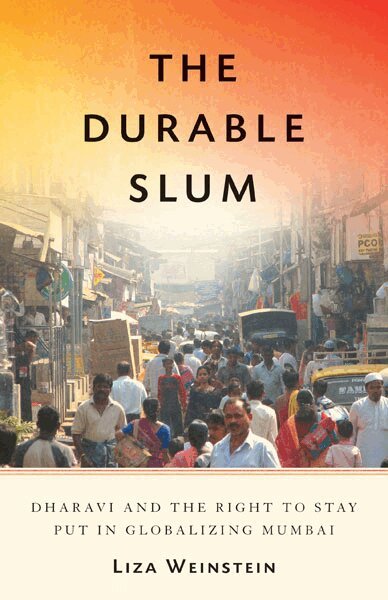
    Durable Slum

    Dharavi and the Right to Stay Put in Globalizing Mumbai

    AvLiza Weinstein

    Häftad, Engelska, 2014

    Del i serien Globalization and Community

    302 kr

    Beställningsvara. Skickas inom 5-8 vardagar. Fri frakt över 249 kr.

    Beskrivning

    In the center of Mumbai, next to the city’s newest and most expensive commercial developments, lies one of Asia’s largest slums, where as many as one million squatters live in makeshift housing on one square mile of government land. This is the notorious Dharavi district, best known from the movie Slumdog Millionaire. In recent years, cities from Delhi to Rio de Janeiro have demolished similar slums, at times violently evicting their residents, to make way for development. But Dharavi and its residents have endured for a century, holding on to what is now some of Mumbai’s most valuable land. In The Durable Slum, Liza Weinstein draws on a decade of work, including more than a year of firsthand research in Dharavi, to explain how, despite innumerable threats, the slum has persisted for so long, achieving a precarious stability. She describes how economic globalization and rapid urban development are pressuring Indian authorities to eradicate and redevelop Dharavi-and how political conflict, bureaucratic fragmentation, and community resistance have kept the bulldozers at bay. Today the latest ambitious plan for Dharavi’s transformation has been stalled, yet the threat of eviction remains, and most residents and observers are simply waiting for the project to be revived or replaced by an even grander scheme.Dharavi’s remarkable story presents important lessons for a world in which most population growth happens in urban slums even as brutal removals increase. From Nairobi’s Kibera to Manila’s Tondo, megaslums may be more durable than they appear, their residents retaining a fragile but hard-won right to stay put.

    Produktinformation

    • Utgivningsdatum:2014-06-28
    • Mått:140 x 216 x 38 mm
    • Vikt:282 g
    • Format:Häftad
    • Språk:Engelska
    • Serie:Globalization and Community
    • Antal sidor:256
    • Förlag:University of Minnesota Press
    • ISBN:9780816683109

    Utforska kategorier

    • Antropologi inom Samhälle och politik
    • Asiens historia inom Historia och arkeologi
    • Sociala grupper och identitet inom Samhälle och politik

    Mer om författaren

    Liza Weinstein is assistant professor of sociology at Northeastern University.

    Recensioner i media

    "There remains a dearth of rigorous and creative monographs that present a sound analysis of urbanism and urban processes in Indian cities. The Durable Slum clearly fills this gap. In particular, Mumbai, often the subject of popular writing, does not have an iconic academic monograph that provides insights into the workings of the city. This is such a text. Liza Weinstein's work presents the sociological research and analysis that can transform the megaslum from a horizon of popular imagination into a field of inquiry." -Ananya Roy, University of California, Berkeley "An important addition to the work being done on urban poverty."-Economic and Political Weekly"[The Durable Slum] is a significant contribution to the literature on urban transformations and the durability of low-income residents and their settlements. "-Pacific Affairs"The Durable Slum not only adds to the scholarship on the political economy of Dharavi, but through analysis of the Dharavi Redevelopment Project (DRP) also forms an important contribution to the question of how poor, seemingly-powerless slum populations respond to the totalising forces of global capital, and how they manage ‘to stay put’."-South Asia: Journal of South Asia Studies"Weinstein has produced a noteworthy book, which reminds us of the importance of long-term research in grasping the entangled and locally varying facets of urban processes."-disP: The Planning Review"The Durable Slum is well worth reading and teaching and provides novel insights that apply to urban contexts near and far, domestic and international."-Social Forces"A remarkable and stimulating study."-American Journal of Sociology

    Innehållsförteckning

    • ContentsPrefaceAbbreviationsIntroduction: A Mansion in the Slum1. Becoming Asia’s Largest Slum2. State Interventions and Fragmented Sovereignties3. From Labor to Land: An Emerging Political Economy4. Political Entrepreneurship and Enduring Fragmentations5. The Right to Stay PutConclusion: Precarious StabilityAcknowledgmentsNotesBibliographyIndex