Loren E. Lomasky – författare
Visar alla böcker från författaren Loren E. Lomasky. Handla med fri frakt och snabb leverans.
11 produkter
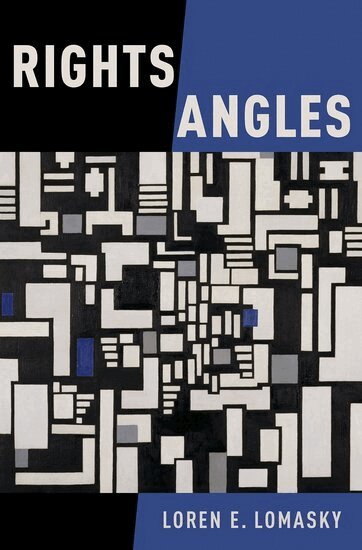
Rights Angles
Inbunden, 2016
1894 kr
Lägg i varukorg
Loren Lomasky is a leading advocate of a rights-based libertarian approach to political and social issues. This volume collects fifteen of his articles that have appeared since his influential volume Persons, Rights, and the Moral Community (OUP, 1987) alongside one new essay. The volume represents …
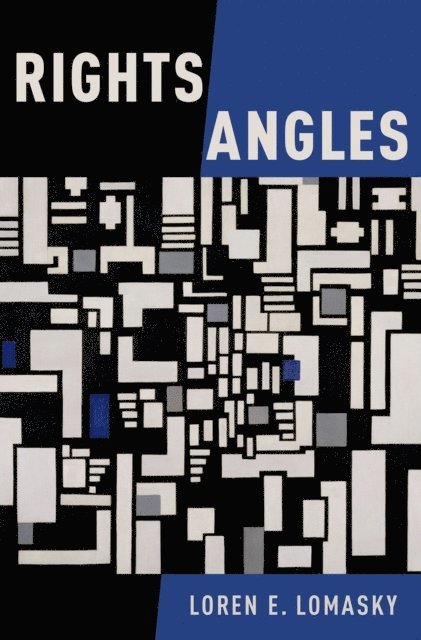
Rights Angles
E-bok, 2016
1229 kr
Lägg i varukorg
Loren Lomasky is a leading advocate of a rights-based libertarian approach to political and social issues. This volume collects fifteen of his articles that have appeared since his influential volume Persons, Rights, and the Moral Community (OUP, 1987) alongside one new essay. The volume represents …
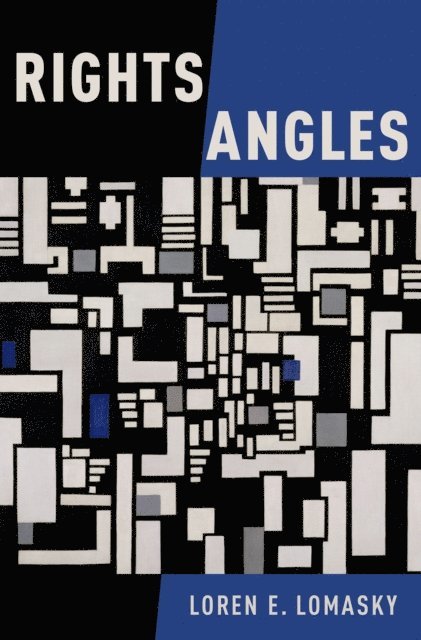
Rights Angles
E-bok, 2016
1229 kr
Lägg i varukorg
Loren Lomasky is a leading advocate of a rights-based libertarian approach to political and social issues. This volume collects fifteen of his articles that have appeared since his influential volume Persons, Rights, and the Moral Community (OUP, 1987) alongside one new essay. The volume represents …
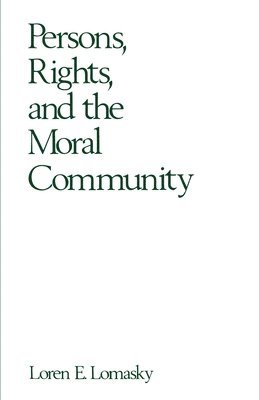
Persons, Rights, and the Moral Community
Häftad, 1990
813 kr
Lägg i varukorg
This book presents the foundations of a liberal individualistic theory of rights, and explains what rights we have and do not have, why we have them, who is and who is not a holder of rights, and the place of rights within the overall structure of morality. The author argues for the moral …
Persons, Rights, and the Moral Community
E-bok, 1990
587 kr
Lägg i varukorg
This book provides a complete and convincing account of what rights we do and do not have, who has them, and why. Presenting the foundations of a liberal, individualistic theory of rights, Lomasky explains the place of rights within the overall structure of morality, arguing for the moral …
Politics and Process
New Essays in Democratic Thought
Av H. G. Brennan, Loren E. Lomasky
Häftad, 2005
569 kr
Lägg i varukorg
Much of the most interesting and controversial work in analyzing democratic institutions over the recent past has its intellectual origins in public choice economics. The political arena provides the analytical framework for the study of human behaviour in markets, and the currency in votes and …
Politics and Process
New Essays in Democratic Thought
Av H. G. Brennan, Loren E. Lomasky
Inbunden, 1989
1693 kr
Lägg i varukorg
Much of the most interesting and controversial work in analyzing democratic institutions over the recent past has its intellectual origins in public choice economics. The political arena provides the analytical framework for the study of human behaviour in markets, and the currency in votes and …
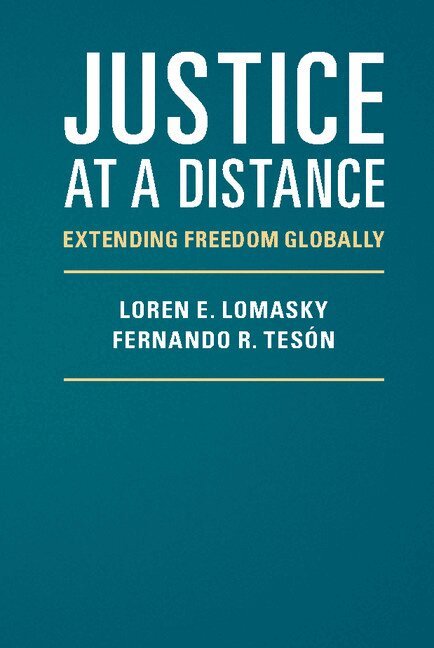
Justice at a Distance
Extending Freedom Globally
Av Loren E. Lomasky, Fernando R. Tesón
Inbunden, 2015
1432 kr
Lägg i varukorg
The current global-justice literature starts from the premise that world poverty is the result of structural injustice mostly attributable to past and present actions of governments and citizens of rich countries. As a result, that literature recommends vast coercive transfers of wealth from rich …
Justice at a Distance
Extending Freedom Globally
Av Loren E. Lomasky, Fernando R. Tesón
Häftad, 2015
471 kr
Lägg i varukorg
The current global-justice literature starts from the premise that world poverty is the result of structural injustice mostly attributable to past and present actions of governments and citizens of rich countries. As a result, that literature recommends vast coercive transfers of wealth from rich …
Justice at a Distance
Extending Freedom Globally
Av Fernando R. Teson, Loren E. Lomasky
E-bok, 2015
457 kr
Lägg i varukorg
The current global-justice literature starts from the premise that world poverty is the result of structural injustice mostly attributable to past and present actions of governments and citizens of rich countries. As a result, that literature recommends vast coercive transfers of wealth from rich …
Justice at a Distance
Extending Freedom Globally
Av Fernando R. Teson, Loren E. Lomasky
E-bok, 2015
457 kr
Lägg i varukorg
The current global-justice literature starts from the premise that world poverty is the result of structural injustice mostly attributable to past and present actions of governments and citizens of rich countries. As a result, that literature recommends vast coercive transfers of wealth from rich …