Louis Kaplan - Böcker
Visar alla böcker från författaren Louis Kaplan. Handla med fri frakt och snabb leverans.
5 produkter
5 produkter
332 kr
Skickas inom 7-10 vardagar
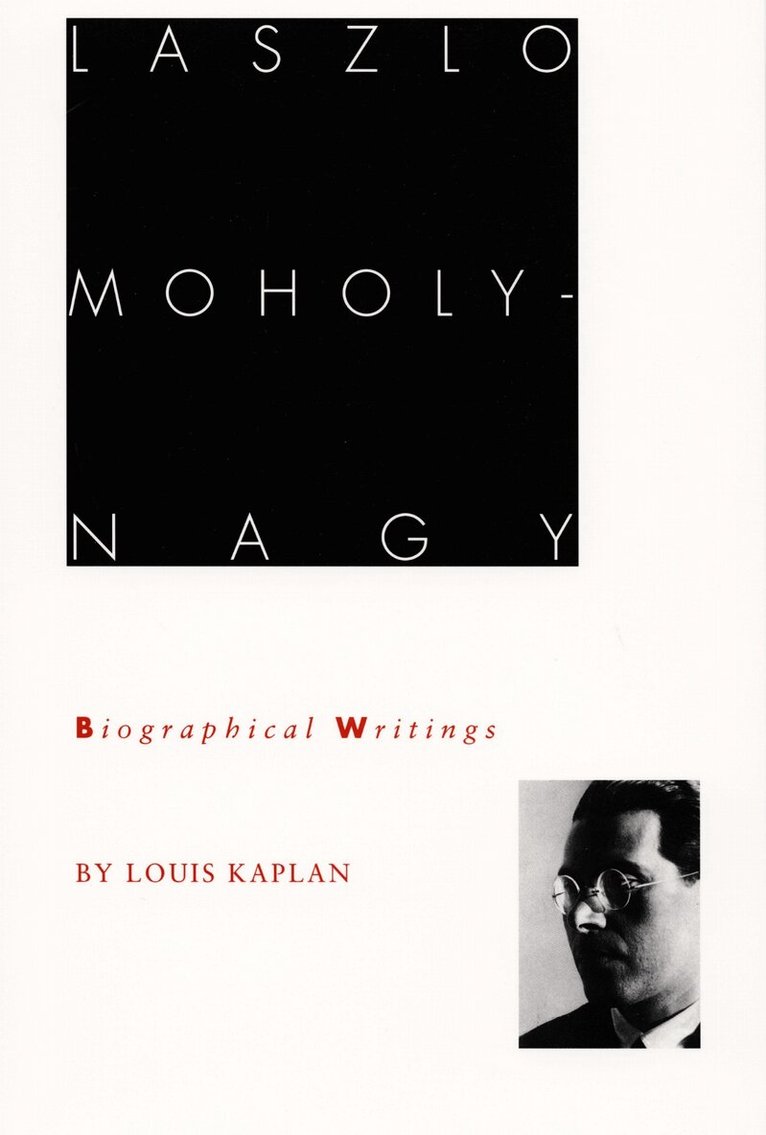
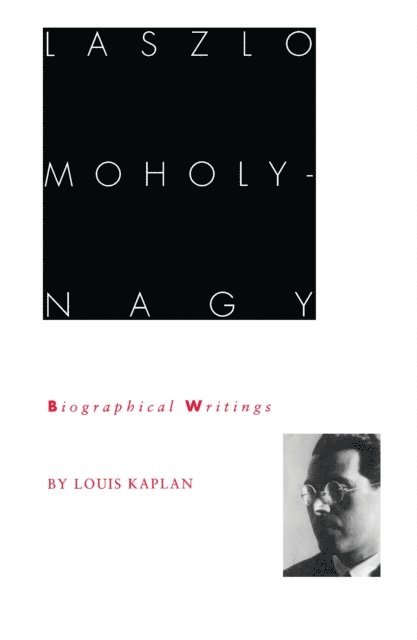
Marking the centenary of the birth of Laszlo Moholy-Nagy (1895–1946), this book offers a new approach to the Bauhaus artist and theorist’s multifaceted life and work-an approach that redefines the very idea of biographical writing. In Laszlo Moholy-Nagy, Louis Kaplan applies the Derridean deconstructivist model of the "signature effect" to an intellectual biography of a Constructivist artist. Inhabiting the borderline between life and work, the book demonstrates how the signature inscribed by "Moholy" operates in a double space, interweaving signified object and signifying matter, autobiography and auto-graphy. Through interpretative readings of over twenty key artistic and photographic works, Kaplan graphically illustrates Moholy’s signature effect in action. He shows how this effect plays itself out in the complex of relations between artistic originality and plagiarism, between authorial identity and anonymity, as well as in the problematic status of the work of art in the age of technical reproduction. In this way, the book reveals how Moholy’s artistic practice anticipates many of the issues of postmodernist debate and thus has particular relevance today. Consequently, Kaplan clarifies the relationship between avant-garde Constructivism and contemporary deconstruction.This new and innovative configuration of biography catalyzed by the life writing of Moholy-Nagy will be of critical interest to artists and writers, literary theorists, and art historians.
1 417 kr
Skickas inom 10-15 vardagar
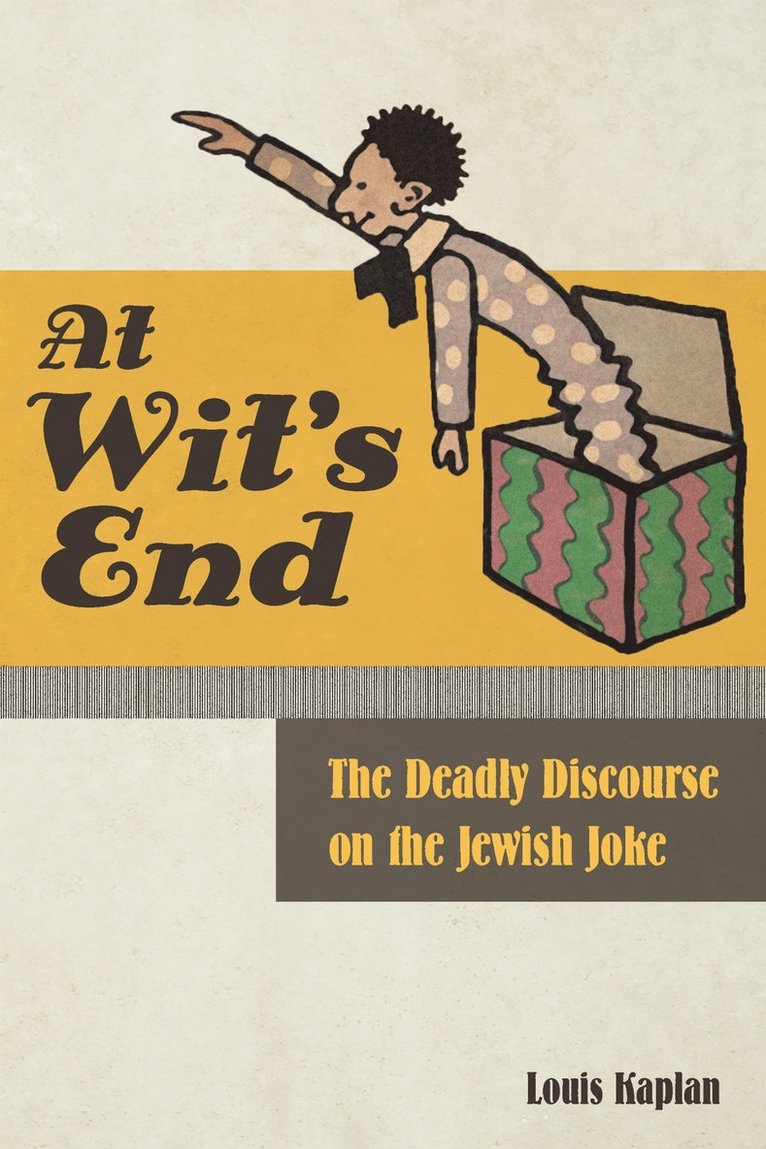
CHOICE: OUTSTANDING ACADEMIC TITLEA scholarly and thought-provoking work that places Jewish humor at the center of a discourse about Jewish and German relations through most of the twentieth century.At Wit's End explores the fascinating discourse on Jewish wit in the twentieth century when the Jewish joke became the subject of serious humanistic inquiry and inserted itself into the cultural and political debates among Germans and Jews against the ideologically charged backdrop of anti-Semitism, the Jewish question, and the Holocaust.The first in-depth study to explore the Jewish joke as a crucial rhetorical figure in larger cultural debates in Germany, author Louis Kaplan presents an engrossing and lucid work of scholarship that examines how "der jüdische Witz" (referring to both Jewish wit and jokes) was utilized differently in a number of texts, from the Weimar Republic to the rise of National Socialism, and how it was re-introduced into the public sphere after the Holocaust with the controversial publication of Salcia Landmann's collection of Jewish jokes in the reparations era (Wiedergutmachung). Kaplan reviews the claims made about the Jewish joke and its provocative laughter by notable writers from a variety of ideological perspectives, demonstrating how their reflections on this complex cultural trope enable a better understanding of German–Jewish intercultural relations and their eventual breakdown in the Third Reich. He also illustrates how selfcritical and self-ironic Jewish Witz maintained a fraught and ambivalent relationship with anti-Semitism.In reviewing this critical and traumatic moment in modern German–Jewish history through the deadly discourse on the Jewish joke, At Wit's End includes chapters on the virulent Austrian anti-Semitic racial theorist Arthur Trebitsch, the Nazi racial propagandist Siegfried Kadner, the German Marxist cultural historian Eduard Fuchs, the Jewish diasporic historian Erich Kahler, and the Jewish cabaret impresario Kurt Robitschek, among others. Shedding new light on anti-Semitism and on the Jewish question leading up to the Holocaust, At Wit's End provides readers with a unique perspective by which to gain important insights about this crucial historical period that reverberates into the present day, when potentially offensive humor coupled with a toxic political climate and xenophobia can have deadly consequences.
391 kr
Skickas inom 10-15 vardagar
CHOICE: OUTSTANDING ACADEMIC TITLEA scholarly and thought-provoking work that places Jewish humor at the center of a discourse about Jewish and German relations through most of the twentieth century.At Wit's End explores the fascinating discourse on Jewish wit in the twentieth century when the Jewish joke became the subject of serious humanistic inquiry and inserted itself into the cultural and political debates among Germans and Jews against the ideologically charged backdrop of anti-Semitism, the Jewish question, and the Holocaust.The first in-depth study to explore the Jewish joke as a crucial rhetorical figure in larger cultural debates in Germany, author Louis Kaplan presents an engrossing and lucid work of scholarship that examines how "der jüdische Witz" (referring to both Jewish wit and jokes) was utilized differently in a number of texts, from the Weimar Republic to the rise of National Socialism, and how it was re-introduced into the public sphere after the Holocaust with the controversial publication of Salcia Landmann's collection of Jewish jokes in the reparations era (Wiedergutmachung). Kaplan reviews the claims made about the Jewish joke and its provocative laughter by notable writers from a variety of ideological perspectives, demonstrating how their reflections on this complex cultural trope enable a better understanding of German–Jewish intercultural relations and their eventual breakdown in the Third Reich. He also illustrates how selfcritical and self-ironic Jewish Witz maintained a fraught and ambivalent relationship with anti-Semitism.In reviewing this critical and traumatic moment in modern German–Jewish history through the deadly discourse on the Jewish joke, At Wit's End includes chapters on the virulent Austrian anti-Semitic racial theorist Arthur Trebitsch, the Nazi racial propagandist Siegfried Kadner, the German Marxist cultural historian Eduard Fuchs, the Jewish diasporic historian Erich Kahler, and the Jewish cabaret impresario Kurt Robitschek, among others. Shedding new light on anti-Semitism and on the Jewish question leading up to the Holocaust, At Wit's End provides readers with a unique perspective by which to gain important insights about this crucial historical period that reverberates into the present day, when potentially offensive humor coupled with a toxic political climate and xenophobia can have deadly consequences.
223 kr
Skickas inom 7-10 vardagar
The ticklish subject of humour is often on the sidelines of writing about photography, yet photos often entertain us with their wit and visual jokes. Photography and Humour remedies this situation by providing a history of photographic laughter, gathering together over one hundred images. In this first survey to look at the history of photography through the lens of humour, Louis Kaplan reviews some of the important ways photographers from the mid-1800s to today have found humour in the world, and how viewers have found amusement in photographs.Kaplan focuses on key aspects of photographic humour that are closely connected to human experience – our identity, social situations, and death. He exposes readers to the key genres of photographic humour, whether making fun of photography’s role in identity and identification, mocking the social function of photography or scoffing at the association of photography and death. The images range from stereographic domestic comedies to the biting political satires of photomontage, from conceptual artistic pratfalls to Surrealist humour noir, from the doubles of trick photography to amusing optical distortions, from the decisively funny moments of photojournalism to the parodies and masquerades of contemporary art photography. Illustrations bring together classics from renowned photographers, including Jacques Henri Lartigue, Elliott Erwitt, Weegee, Cindy Sherman and Martin Parr, as well as hidden gems of vernacular photography. This is a unique collection of the deadpan, the witty and the downright absurd.
475 kr
Skickas inom 3-6 vardagar