Louise Purbrick - Böcker
Visar alla böcker från författaren Louise Purbrick. Handla med fri frakt och snabb leverans.
6 produkter
6 produkter
294 kr
Skickas inom 5-8 vardagar
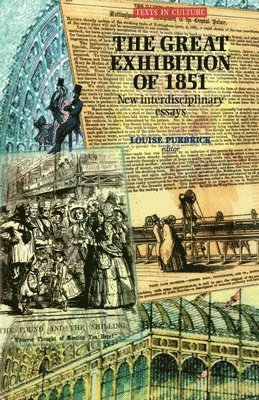
The Great Exhibition of 1851 has become a touchstone for the nineteenth century. The Crystal Palace produced a commodity world, an imperial spectacle, a picture of capitalism, a liberal dream, a vision of modern life. Historians have saturated the Great Exhibition with meanings.This collection of essays exposes how meaning has been produced around the Great Exhibition. It contains a series of critical readings of the official and popular historical record of the Exhibition. Critics and historians of art, culture, design and literature have been brought together to examine the objects, the images, the documents and the fictions of 1851. Their essays explore the determined use of industrial knowledge, the contested definitions of nation and colony, and the actual control of the space of the Crystal Palace after the Great Exhibition closed.The Great Exhibition of 1851 presents new interpretations of one of the most significant exhibitions in the nineteenth century and will be essential reading for anyone studying cultural history, design history, art history and literature.
2 181 kr
Skickas inom 10-15 vardagar
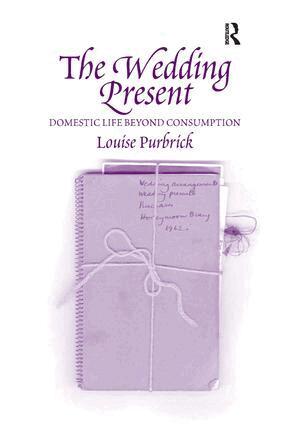
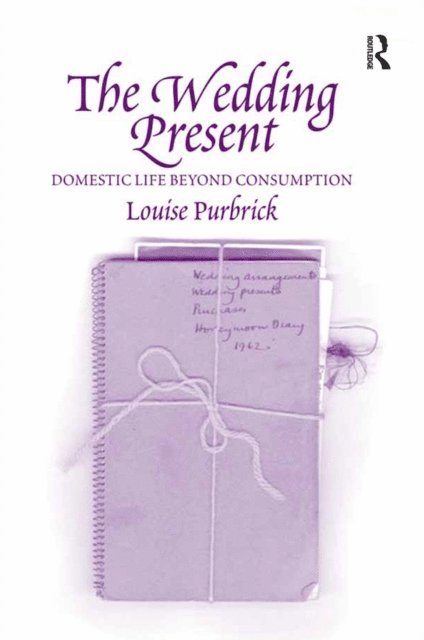
In this fascinating work, Louise Purbrick offers an alternative analysis of contemporary domestic consumption. She investigates the ritualized presentation of objects upon marriage, and their subsequent cycles of exchange within the domestic sphere. Focusing on gift-giving in Britain from 1945 to the present, comparative context is provided by material from North America and Europe. Presenting new material on the enactment of exchange relationships within everyday domesticity, the book makes significant historical, theoretical and methodological contributions to the analysis of contemporary consumption. It also re-evaluates consumption theory as well as examining the methodology of recent studies in consumption and domesticity, pressing for a more rigorous approach to the use of case studies. By considering how the specific contexts in which consumption occurs, such as married domesticity, can limit possible versions of selfhood, The Wedding Present tests the assumption that consuming creates individual identities. Thus, the book argues, consumption cannot be isolated as an explanation of individual or social formation.
754 kr
Skickas inom 10-15 vardagar
In this fascinating work, Louise Purbrick offers an alternative analysis of contemporary domestic consumption. She investigates the ritualized presentation of objects upon marriage, and their subsequent cycles of exchange within the domestic sphere. Focusing on gift-giving in Britain from 1945 to the present, comparative context is provided by material from North America and Europe. Presenting new material on the enactment of exchange relationships within everyday domesticity, the book makes significant historical, theoretical and methodological contributions to the analysis of contemporary consumption. It also re-evaluates consumption theory as well as examining the methodology of recent studies in consumption and domesticity, pressing for a more rigorous approach to the use of case studies. By considering how the specific contexts in which consumption occurs, such as married domesticity, can limit possible versions of selfhood, The Wedding Present tests the assumption that consuming creates individual identities. Thus, the book argues, consumption cannot be isolated as an explanation of individual or social formation.
1 229 kr
Skickas inom 7-10 vardagar
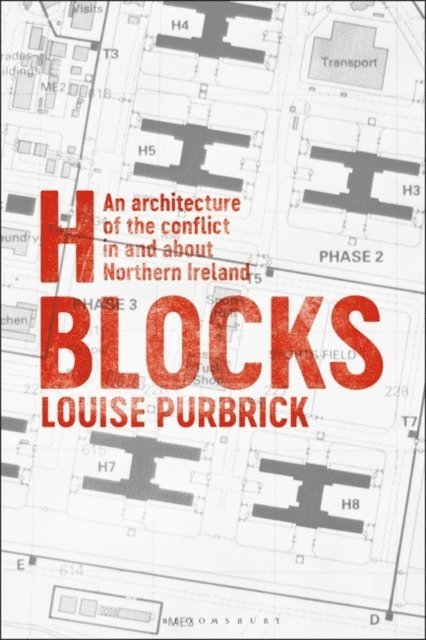
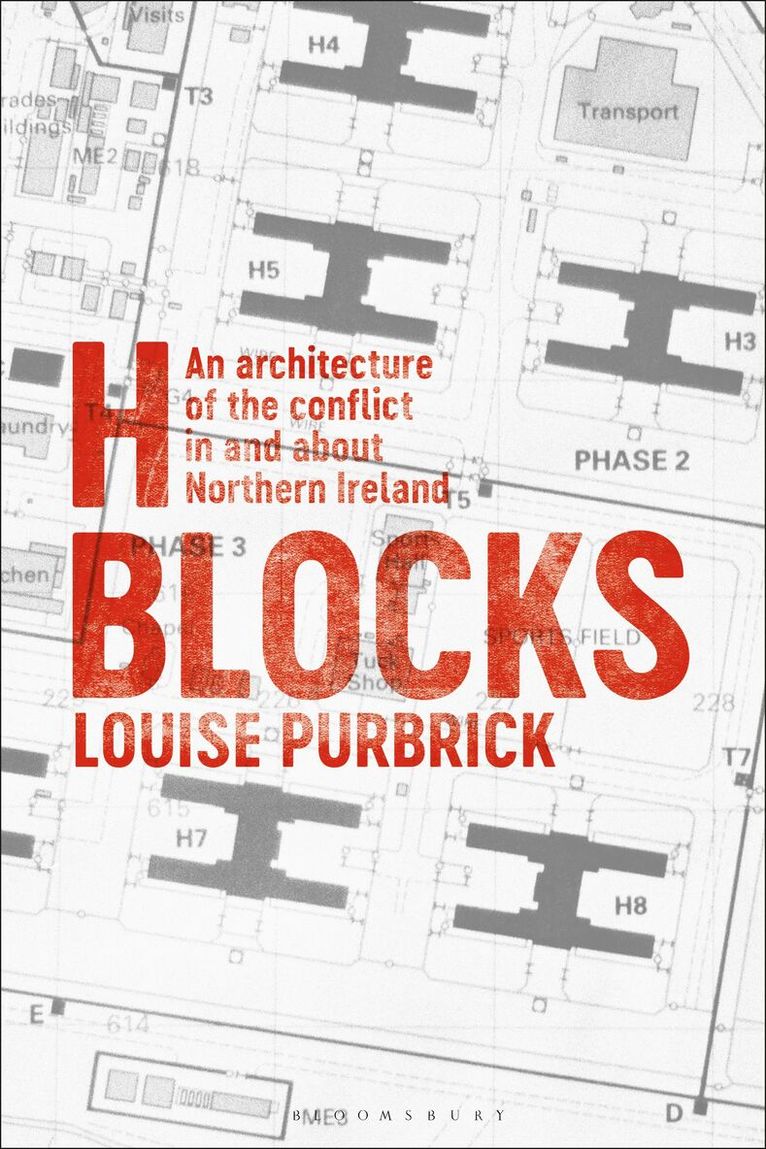
Shortlisted for the Alice Davis Hitchcock Medallion 2023Shortlisted for the Colvin Prize 2023A place of incarceration and liberation, political debate and historical denial, the H Block cell units of Long Kesh/Maze prison in Northern Ireland housed members of both Republican and Loyalist military groups during ‘The Troubles’ and are now considered ‘icons’ of that conflict. The H Block’s dual status as an articulation of and resistance against power mean that the area is still one of the most contested sites of conflict in Europe.Based on a long-standing site-specific investigation, and drawing on a range of sources from architectural plans to photographs of street protests, H Blocks explores the material relationship between the prison as a built articulation of power and its inhabitants, highlighting the ethical and political roles that architecture can play in situations of conflict. It also addresses the afterlife of such sites after the end of conflict and how they can adapt to the changing cultural meanings of their space.The book demonstrates how the conflicted histories of the prison are configured in its design and destruction, and the inhabitation and attempted preservation of the site itself, revealing how its architecture is bound up with questions of power and resistance, embodiment and attachment, witnessing and remembering, the materiality of history and its commodification.
420 kr
Skickas inom 10-15 vardagar
Shortlisted for the Alice Davis Hitchcock Medallion 2023Shortlisted for the Colvin Prize 2023A place of incarceration and liberation, political debate and historical denial, the H Block cell units of Long Kesh/Maze prison in Northern Ireland housed members of both Republican and Loyalist military groups during ‘The Troubles’ and are now considered ‘icons’ of that conflict. The H Block’s dual status as an articulation of and resistance against power mean that the area is still one of the most contested sites of conflict in Europe.Based on a long-standing site-specific investigation, and drawing on a range of sources from architectural plans to photographs of street protests, H Blocks explores the material relationship between the prison as a built articulation of power and its inhabitants, highlighting the ethical and political roles that architecture can play in situations of conflict. It also addresses the afterlife of such sites after the end of conflict and how they can adapt to the changing cultural meanings of their space.The book demonstrates how the conflicted histories of the prison are configured in its design and destruction, and the inhabitation and attempted preservation of the site itself, revealing how its architecture is bound up with questions of power and resistance, embodiment and attachment, witnessing and remembering, the materiality of history and its commodification.
349 kr
Skickas inom 7-10 vardagar
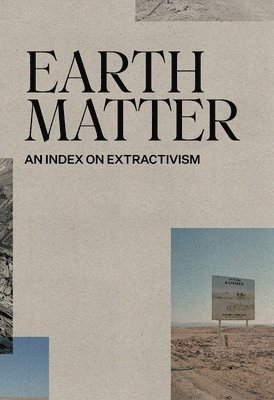
The culmination of over a decade of collaborative research exploring the global impact of extractivism, tied to the Traces of Nitrate project. Earth Matter delves into the history of extractivism in Chile, beginning with the nitrate mines in the Atacama Desert in the nineteenth century and extending to the ongoing extraction of copper, lithium, and water. Through photography, video, archival research, and personal interviews, artist-researchers Xavier Ribas, Ignacio Acosta, and activist-writer Louise Purbrick examine the interconnected forces that bind Chile’s natural resources to global capital, particularly in the financial district of London.This publication offers a critical analysis of how extractivist practices have shaped both historical and contemporary life, while anticipating future forms of exploitation. An index of terms explores past and present facts, documents, sites, projects, politicians, activists, NGOs, and critical writings, forming a Benjaminian constellation that readers can connect and decipher at their own pace.The book includes essays by scientist Cristina Dorador on life in extreme climates, politician and environmentalist Sara Larraín on the legal protection of glaciers, political theory professor Robert Nichols on the history of land expropriation related to extractivism, and art curator Carles Guerra. Earth Matter provides a comprehensive map of the forces driving the increasingly hegemonic system of resource extraction. It reflects not only on past struggles but also on the ongoing fight for justice in the face of an unrelenting global economy.Traces of Nitrate is an arts research collective led by Ignacio Acosta, Louise Purbrick, and Xavier Ribas, committed to documenting the extraction of minerals from Chile and their transformation in global capitalist systems. Through writing, photography, video, and sound, they seek to reveal the ecological and colonial legacies of mining and advocate for environmental justice.