Lubomír Doležel – författare
Visar alla böcker från författaren Lubomír Doležel. Handla med fri frakt och snabb leverans.
3 produkter
3 produkter
456 kr
Skickas inom 7-10 vardagar
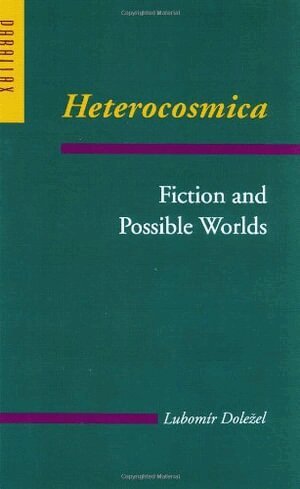
"The universe of possible worlds is constantly expanding and diversifying thanks to the incessant world-constructing activity of human minds and hands. Literary fiction is probably the most active experimental laboratory of the world-constructing enterprise."-from the author's Preface The standard contrast between fiction and reality, notes Lubomir Dolezel, obscures an array of problems that have beset philosophers and literary critics for centuries. Commentators usually admit that fiction conveys some kind of truth-the truth of the story of Faust, for instance. They acknowledge that fiction usually bears some kind of relation to reality-for example, the London of Dickens. But both the status of the truth and the nature of the relationship have baffled, frustrated, or repelled a long line of thinkers. In Heterocosmica, Lubomir Dolezel offers nothing less than a complete theory of literary fiction based on the idea of possible worlds. Beginning with a discussion of the extant semantics and pragmatics of fictionality-by Leibniz, Russell, Frege, Searle, Auerbach, and others-he relates them to literature, literary theory, and narratology.He also investigates theories of action, intention, and literary communication to develop a system of concepts that allows him to offer perceptive reinterpretations of a host of classical, modern, and postmodern fictional narratives-from Defoe through Dickens, Dostoevsky, Huysmans, Bely, and Kafka to Hemingway, Kundera, Rhys, Plenzdorf, and Coetzee. By careful attention to philosophical inquiry into possible worlds, especially Saul Kripke's and Jaakko Hintikka's, and through long familiarity with literary theory, Dolezel brings us an unprecedented examination of the notion of fictional worlds.
705 kr
Tillfälligt slut
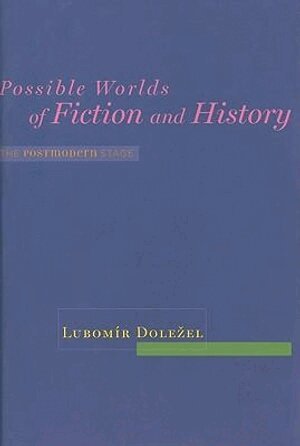
With Possible Worlds of Fiction and History, Lubomir Dole el reexamines the claim-made first by Roland Barthes and then popularized by Hayden White-that "there is no fundamental distinction between fiction and history." Dole el rejects this assertion and demonstrates how literary and discourse theory can help the historian to restate the difference between fiction and history. He challenges scholars to reassess the postmodern viewpoint by reintroducing the idea of possible worlds. Possible-worlds semantics reveals that possible worlds of fiction and possible worlds of history differ in their origins, cultural functions, and structural and semantic features. Dole el's book is the first systematic application of this idea to the theory and philosophy of history. Possible Worlds of Fiction and History is the crowning work of one of literary theory's most engaged thinkers.
296 kr
Skickas inom 7-10 vardagar
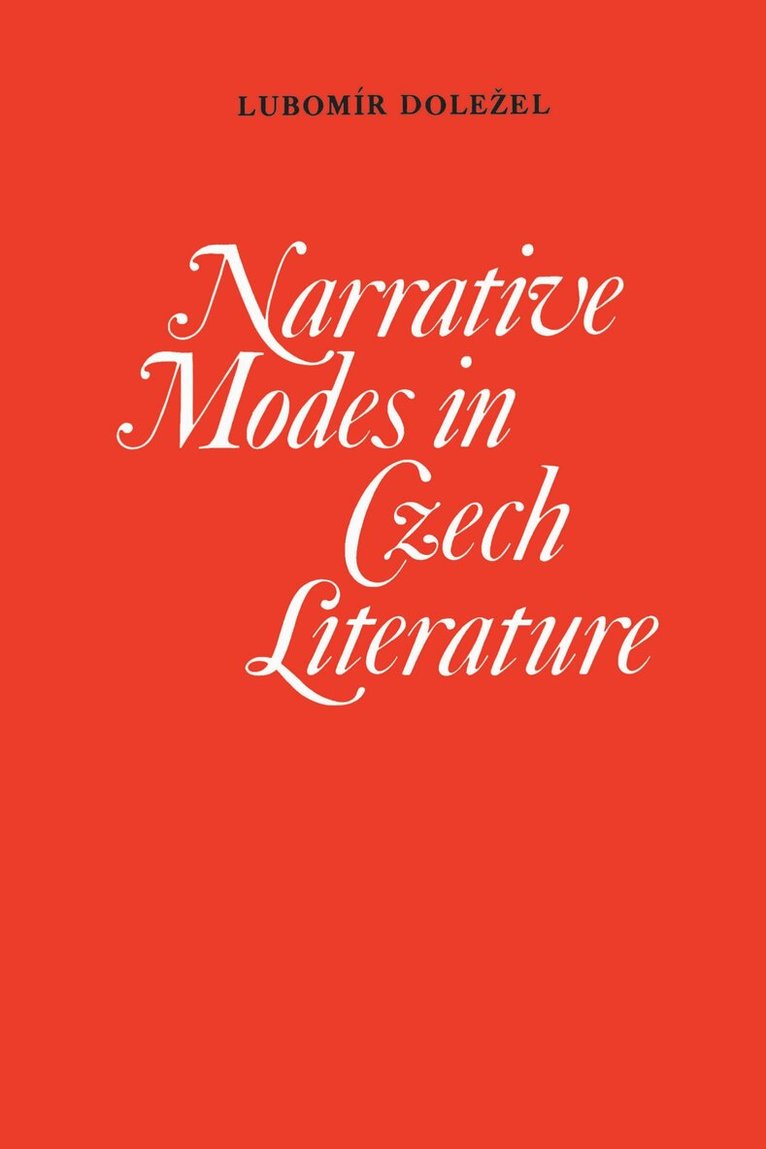
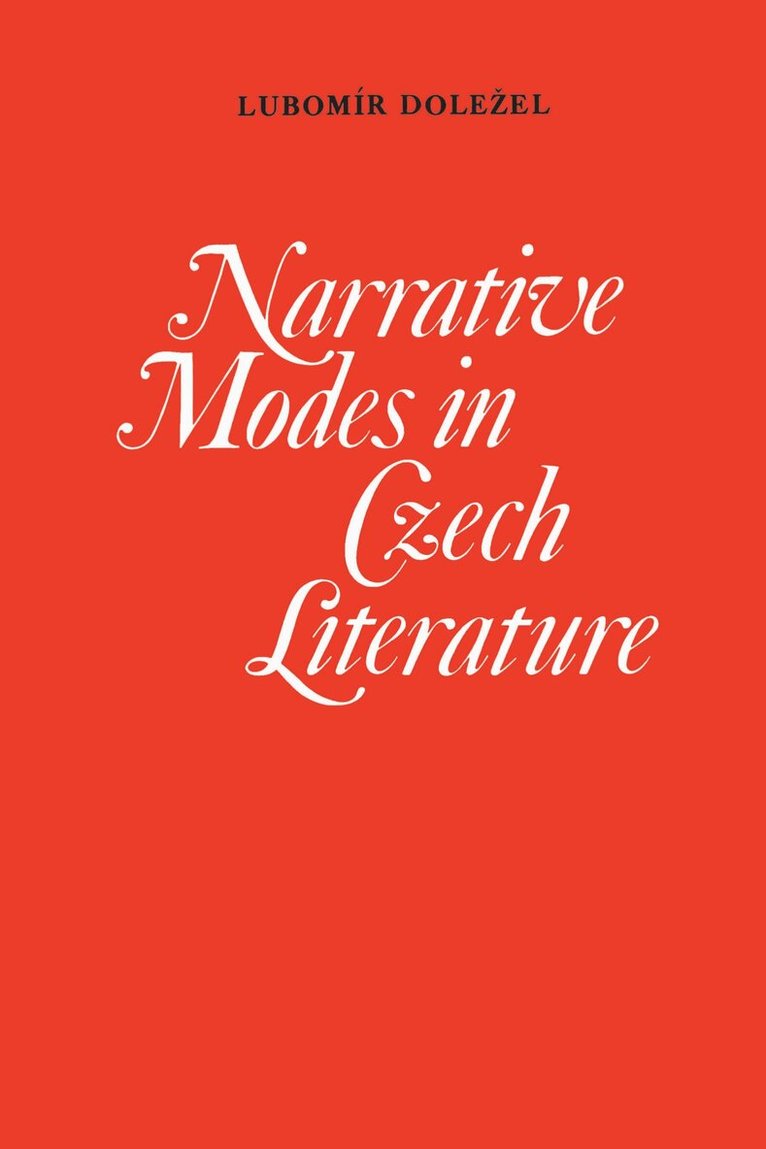
In this study of the study of the linguistic approach to narrative structures, the author examines the question of point of view in fiction, drawing examples from Czech literature. He applies the methods of structural linguistics and literary studies as developed by the Prague Linguistic School, and the modern methodology of semiotics and text theory. This approach, widely used in Czechoslovakia and elsewhere in Europe, is not as well known as it should be in the English-speaking world.The essays may be read without any knowledge of the Czech language or Czech literary history. All Czech examples and materials are translated into English, preserving traits of the original texts which are relevant for structural analysis; the original Czech of all examples appears in an appendix. While the examples serve as documentation for theoretical statements, they also serve to familiarize the English-speaking reader with some of the major works of Czech fiction, especially those of Komenský (Comenius), Rais Ĉapek, Vanĉura, Pujmanová, Olbrachtm and Kundera. These works demonstrate the continuous bond between Czech fiction and European literary traditions, and offer original and profound insights into the cultural, social, and political experience of the Czech nation.Of particular interest to specialists in Slavic studies, general linguistics, poetics and text theory, and to students of general and comparative literature, Narrative Modes in Czech Literature deals with a significant problem of poetics and makes an original, constructive contribution to the theory of literature in the English language.