Lucinda Byatt – författare
Visar alla böcker från författaren Lucinda Byatt. Handla med fri frakt och snabb leverans.
3 produkter
3 produkter
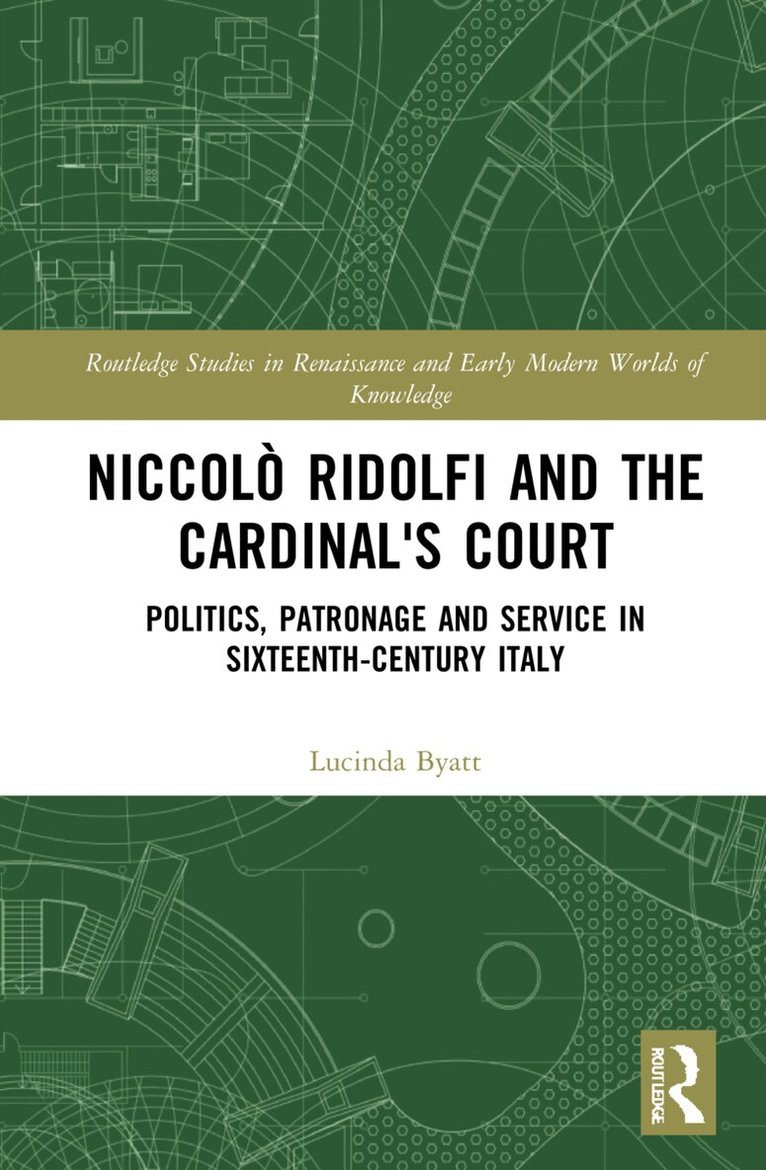
Niccolò Ridolfi and the Cardinal's Court
Politics, Patronage and Service in Sixteenth-Century Italy
Inbunden, Engelska, 2022
2 317 kr
Skickas inom 10-15 vardagar
Niccolò Ridolfi (1501–50), was a Florentine cardinal, nephew and cousin to the Medici popes Leo X and Clement VII, and he owed his status and wealth to their patronage. He remained actively engaged in Florentine politics, above all during the years of crisis that saw the Florentine state change from republic to duchy. A widely respected patron and scholar throughout his life, his sudden death during the conclave of 1549–50 led to allegations of poison that an autopsy appears to confirm.This book examines Cardinal Ridolfi and his court in order to understand the extent to which cardinalate courts played a key part in Rome’s resurgence and acted as hubs of knowledge located on the fault lines of politics and reform in church and state, hospitable spaces that can be analysed in the context of entanglements in Florentine and Roman cultural and political patronage, and intersections between the princely court and a more professional and complex knowledge and practice of household management in the consumer and service economy of early modern Rome. Based on an array of archival sources and on three treatises whose authors were closely linked to Ridolfi’s court, this monograph explores these multidisciplinary intersections to allow the more traditional fields of church and political history to be approached from different angles.Niccolò Ridolfi and the Cardinal's Court will appeal to all those interested in the organisation of these elite establishments and their place in sixteenth-century Roman society, the life and patronage of Niccolò Ridolfi in the context of the Florentine exiles who desired a return to republicanism, and the history of the Roman Catholic Church.
Niccolò Ridolfi and the Cardinal's Court
Politics, Patronage and Service in Sixteenth-Century Italy
Häftad, Engelska, 2024
578 kr
Skickas inom 10-15 vardagar
Niccolò Ridolfi (1501–50), was a Florentine cardinal, nephew and cousin to the Medici popes Leo X and Clement VII, and he owed his status and wealth to their patronage. He remained actively engaged in Florentine politics, above all during the years of crisis that saw the Florentine state change from republic to duchy. A widely respected patron and scholar throughout his life, his sudden death during the conclave of 1549–50 led to allegations of poison that an autopsy appears to confirm.This book examines Cardinal Ridolfi and his court in order to understand the extent to which cardinalate courts played a key part in Rome’s resurgence and acted as hubs of knowledge located on the fault lines of politics and reform in church and state, hospitable spaces that can be analysed in the context of entanglements in Florentine and Roman cultural and political patronage, and intersections between the princely court and a more professional and complex knowledge and practice of household management in the consumer and service economy of early modern Rome. Based on an array of archival sources and on three treatises whose authors were closely linked to Ridolfi’s court, this monograph explores these multidisciplinary intersections to allow the more traditional fields of church and political history to be approached from different angles.Niccolò Ridolfi and the Cardinal's Court will appeal to all those interested in the organisation of these elite establishments and their place in sixteenth-century Roman society, the life and patronage of Niccolò Ridolfi in the context of the Florentine exiles who desired a return to republicanism, and the history of the Roman Catholic Church.
474 kr
Skickas inom 7-10 vardagar
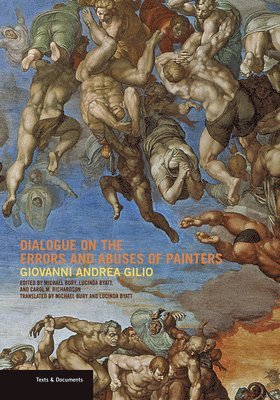
Giovanni Andrea Gilio's "Dialogue on the Errors and Abuses of Painters" (1564) is one of the first treatises on art published in the post-Tridentine period. It remains a key primary source for the discussion of the reform of art as it unfolded at the time of the Council of Trent and the Catholic Reformation.Relatively little is known about Gilio himself, a cleric from Fabriano, Italy, although he was evidently familiar with Cardinal Alessandro Farnese's lively court circle in Rome as he dedicated his book to the cardinal. His text-available in English in full for the first time-takes the form of a spirited dialogue among six protagonists, using the voices of each to present different points of view. Through their dialogue Gilio grapples with a host of issues, from the relationship between poetry and painting, to the function of religious images, to the effects such images have on viewers. The primary focus is the proper representation of history, and Michelangelo's Last Judgment fresco in the Sistine Chapel is the exemplary case. Indeed, Michelangelo's painting is both praised and condemned as an example of the possibilities and limits of art. Although Gilio's dialogue is often quoted by art historians to point out the more controlling view of art and artists by the Roman Catholic Church, the unabridged text reveals the nuanced and provisional debates, happening during this critical era.