Ludovico Battista - Böcker
Visar alla böcker från författaren Ludovico Battista. Handla med fri frakt och snabb leverans.
3 produkter
3 produkter
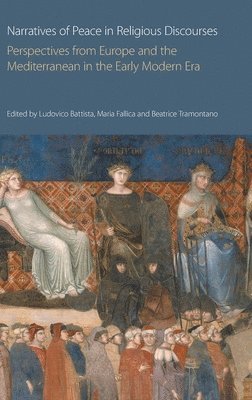
Narratives of Peace in Religious Discourses
Perspectives from Europe and the Mediterranean in the Early Modern Era
Inbunden, Engelska, 2024
1 177 kr
Skickas inom 5-8 vardagar
In the Modern Age, the encounter and conflict between competing religious identities produced a renewed emphasis on the concept of peace, which was invested with religious, political and ideological connotations that still need to be investigated. This volume explores the role of religious discourse in the construction of the concept of peace from the Renaissance to the Enlightenment, analyzing the narratives which in Europe gave extrahuman value to peace, with a focus on the processes of idealization of peace and the relationship with the concept of toleration. The volume investigates crucial authors such as Nicholas of Cusa, Luis Vives, Pico della Mirandola, Erasmus of Rotterdam, Thomas More, Pierre Bayle, Benjamin Constant, who reflected on the problem of tolerance as an attempt to shape the relationship between confessions as a peaceful coexistence beyond doctrinal differences. The essays explore the extent to which religious conflicts within Christianity triggered a rhetoric of peace and tolerance/toleration, for instance in the case of the French Wars of Religion and the Revolt of the Netherlands. The rhetoric and imaginary field of peace in its religious connotations are then explored and analyzed in their apocalyptic (for Benivieni or Savonarola) or humanistic connotations (from Petrarca to Pico). The essays combine history, philosophy, history of religions and anthropology, with approaches that go from the historical-critical analysis of documents, to archive research, to comparative history to the analysis of the world of objects, that, following the "material turn", allows an alternative view on the narratives of confrontation and peace that presided over the intrareligious exchange.
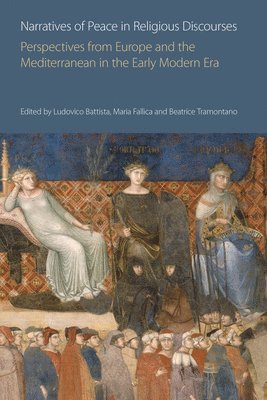
Narratives of Peace in Religious Discourses
Perspectives from Europe and the Mediterranean in the Early Modern Era
Häftad, Engelska, 2024
386 kr
Skickas
In the Modern Age, the encounter and conflict between competing religious identities produced a renewed emphasis on the concept of peace, which was invested with religious, political and ideological connotations that still need to be investigated. This volume explores the role of religious discourse in the construction of the concept of peace from the Renaissance to the Enlightenment, analyzing the narratives which in Europe gave extrahuman value to peace, with a focus on the processes of idealization of peace and the relationship with the concept of toleration. The volume investigates crucial authors such as Nicholas of Cusa, Luis Vives, Pico della Mirandola, Erasmus of Rotterdam, Thomas More, Pierre Bayle, Benjamin Constant, who reflected on the problem of tolerance as an attempt to shape the relationship between confessions as a peaceful coexistence beyond doctrinal differences. The essays explore the extent to which religious conflicts within Christianity triggered a rhetoric of peace and tolerance/toleration, for instance in the case of the French Wars of Religion and the Revolt of the Netherlands. The rhetoric and imaginary field of peace in its religious connotations are then explored and analyzed in their apocalyptic (for Benivieni or Savonarola) or humanistic connotations (from Petrarca to Pico). The essays combine history, philosophy, history of religions and anthropology, with approaches that go from the historical-critical analysis of documents, to archive research, to comparative history to the analysis of the world of objects, that, following the "material turn", allows an alternative view on the narratives of confrontation and peace that presided over the intrareligious exchange.
Renaissance Papacy’s Projects of Religious Reform between Ancient Christianity and “Catholic Orientalism”
Inbunden, Engelska, 2025
1 608 kr
Skickas inom 3-6 vardagar
This volume takes the Renaissance papacy as an institution promoting an ambivalent and complex project of religious reform, where the ideal of the affirmation of a new political power, nourished by classical cultural models, coexists – in dialectic tension – with the attempt to absorb and channel the diverse claims for the spiritual renewal of the Church, based on Biblical and apocalyptic motifs. In particular, this volume explores the influence of texts and motifs from ancient Christianity on the ideological and theological-political projects of the Catholic Church between 1431–1549 as well as the rise of the so-called “Catholic orientalism” in Renaissance Rome, the study of Hebrew texts, and Christian Kabbalah.Contributions by A. Annese, L. Battista, G. Bartolucci, F. Berno, D. Del Prete, A. Gerace, N. Kouremenos, V. Lauria, and T. Leinonen.