Luis Unceta Gómez - Böcker
Visar alla böcker från författaren Luis Unceta Gómez. Handla med fri frakt och snabb leverans.
4 produkter
4 produkter
414 kr
Skickas inom 7-10 vardagar
Politeness serves to manage social relations or is wielded as an instrument of power. Through good manners, people demonstrate their educational background and social rank. This is the first book to bring together the most recent scholarship on politeness and impoliteness in Ancient Greek and Latin, signalling both its universal and its culture-specific traits. Leading scholars analyse texts by canonical classical authors (including Plato, Cicero, Euripides, and Plautus), as well as non-literary sources, to provide glimpses into the courtesy and rudeness of Greek and Latin speakers. A wide range of interdisciplinary approaches is adopted, namely pragmatics, conversation analysis, and computational linguistics. With its extensive introduction, the volume introduces readers to one of the most dynamic fields of Linguistics, while demonstrating that it can serve as an innovative tool in philological readings of classical texts.
1 245 kr
Skickas inom 10-15 vardagar
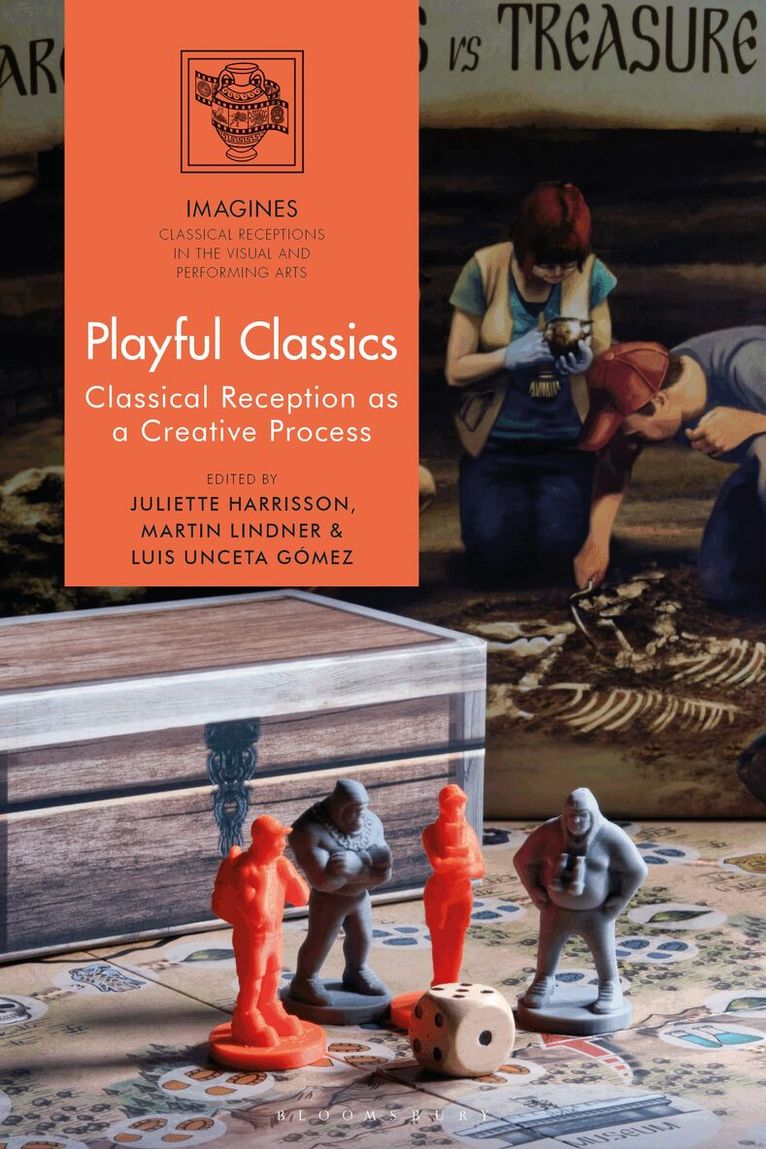
This is the first book to deal exclusively with ludic interactions with classical antiquity – an understudied research area within classical reception studies – that can shed light on current processes of construction and appropriation of the Greco-Roman world. Classical antiquity has, for many years, been sold as a product and consumed in a wide variety of forms of entertainment. As a result, games, playing and playful experiences are a privileged space for the reception of antiquity. Through the medium of games, players, performers and audiences are put into direct contact with the classical past, and encouraged to experience it in a participative, creative and subjective fashion.The chapters in this volume, written by scholars and practitioners, cover a variety of topics and cultural artefacts including toys, board games and video games, as well as immersive experiences such as museums, theme parks and toga parties. The contributors tackle contemporary ludic practices and several papers establish a dialogue between artists and scholars, contrasting and harmonising their different approaches to the role of playfulness. Other chapters explore the educational potential of these manifestations, or their mediating role in shaping our conceptions of ancient Greece and Rome. Altogether, this edited collection is the first to offer a comprehensive overview of the ways we can play with antiquity.
530 kr
Kommande
This is the first book to deal exclusively with ludic interactions with classical antiquity – an understudied research area within classical reception studies – that can shed light on current processes of construction and appropriation of the Greco-Roman world. Classical antiquity has, for many years, been sold as a product and consumed in a wide variety of forms of entertainment. As a result, games, playing and playful experiences are a privileged space for the reception of antiquity. Through the medium of games, players, performers and audiences are put into direct contact with the classical past, and encouraged to experience it in a participative, creative and subjective fashion.The chapters in this volume, written by scholars and practitioners, cover a variety of topics and cultural artefacts including toys, board games and video games, as well as immersive experiences such as museums, theme parks and toga parties. The contributors tackle contemporary ludic practices and several papers establish a dialogue between artists and scholars, contrasting and harmonising their different approaches to the role of playfulness. Other chapters explore the educational potential of these manifestations, or their mediating role in shaping our conceptions of ancient Greece and Rome. Altogether, this edited collection is the first to offer a comprehensive overview of the ways we can play with antiquity.
3 024 kr
Skickas inom 3-6 vardagar
In a time of acute crisis when our societies face a complex series of challenges (race, gender, inclusivity, changing pedagogical needs and a global pandemic) we urgently need to re-access the nature of our engagement with the Classical World. This edited collection argues that we need to discover new ways to draw on our discipline and the material it studies to engage in meaningful ways with these new academic and societal challenges. The chapters included in the collection interrogate the very processes of reception and continue the work of destabilising the concept of a pure source text or point of origin. Our aim is to break through the boundaries that still divide our ancient texts and material culture from their reception, and interpretive communities. Our contributors engage with these questions theoretically and/or through the close examination of cultural artefacts. They problematise the concept of a Western, elitist canon and actively push the geographical boundaries of reception as both a local and a global phenomenon. Individually and cumulatively, they actively engage with the question of how to marshal the classical past in our efforts to respond to the challenges of our mutable contemporary world.