Martin Lindner - Böcker
Visar alla böcker från författaren Martin Lindner. Handla med fri frakt och snabb leverans.
10 produkter
10 produkter
1 406 kr
Kommande
Exploring the presence and use of the Medusa myth in popular music performance, Gina Bevan takes a new theoretical framework to the world of classical reception to understand the influence of the Gorgon on female pop stars. Medusa has long been used as a figure to denote the demonisation of women and the marginalisation of social groups since antiquity, but we see a transformation of this mythological figure in the 21st century where she becomes a heroine of female empowerment. What will become clear to the reader is that Medusa’s myth is not fixed, and through pop music, the Gorgon can be re-read and moulded by, and for, a modern audience. This book will explore how performers and their fans engage with the Gorgon, the terrifying monster from Greco-Roman mythology with a petrifying gaze. Some of the biggest female pop stars in the world have been read as Medusa, including Madonna and Lady Gaga, while others, such as Rihanna and Azalea Banks, have become the Gorgon in their work. What is it about Medusa that resonates with modern audiences? The unique ways these female musicians are using the Gorgon, be that explicitly or implicitly, points to how Medusa in popular music is an underexplored area that is ripe for analysis.
1 245 kr
Skickas inom 10-15 vardagar
This is the first book to deal exclusively with ludic interactions with classical antiquity – an understudied research area within classical reception studies – that can shed light on current processes of construction and appropriation of the Greco-Roman world. Classical antiquity has, for many years, been sold as a product and consumed in a wide variety of forms of entertainment. As a result, games, playing and playful experiences are a privileged space for the reception of antiquity. Through the medium of games, players, performers and audiences are put into direct contact with the classical past, and encouraged to experience it in a participative, creative and subjective fashion.The chapters in this volume, written by scholars and practitioners, cover a variety of topics and cultural artefacts including toys, board games and video games, as well as immersive experiences such as museums, theme parks and toga parties. The contributors tackle contemporary ludic practices and several papers establish a dialogue between artists and scholars, contrasting and harmonising their different approaches to the role of playfulness. Other chapters explore the educational potential of these manifestations, or their mediating role in shaping our conceptions of ancient Greece and Rome. Altogether, this edited collection is the first to offer a comprehensive overview of the ways we can play with antiquity.
530 kr
Kommande
This is the first book to deal exclusively with ludic interactions with classical antiquity – an understudied research area within classical reception studies – that can shed light on current processes of construction and appropriation of the Greco-Roman world. Classical antiquity has, for many years, been sold as a product and consumed in a wide variety of forms of entertainment. As a result, games, playing and playful experiences are a privileged space for the reception of antiquity. Through the medium of games, players, performers and audiences are put into direct contact with the classical past, and encouraged to experience it in a participative, creative and subjective fashion.The chapters in this volume, written by scholars and practitioners, cover a variety of topics and cultural artefacts including toys, board games and video games, as well as immersive experiences such as museums, theme parks and toga parties. The contributors tackle contemporary ludic practices and several papers establish a dialogue between artists and scholars, contrasting and harmonising their different approaches to the role of playfulness. Other chapters explore the educational potential of these manifestations, or their mediating role in shaping our conceptions of ancient Greece and Rome. Altogether, this edited collection is the first to offer a comprehensive overview of the ways we can play with antiquity.
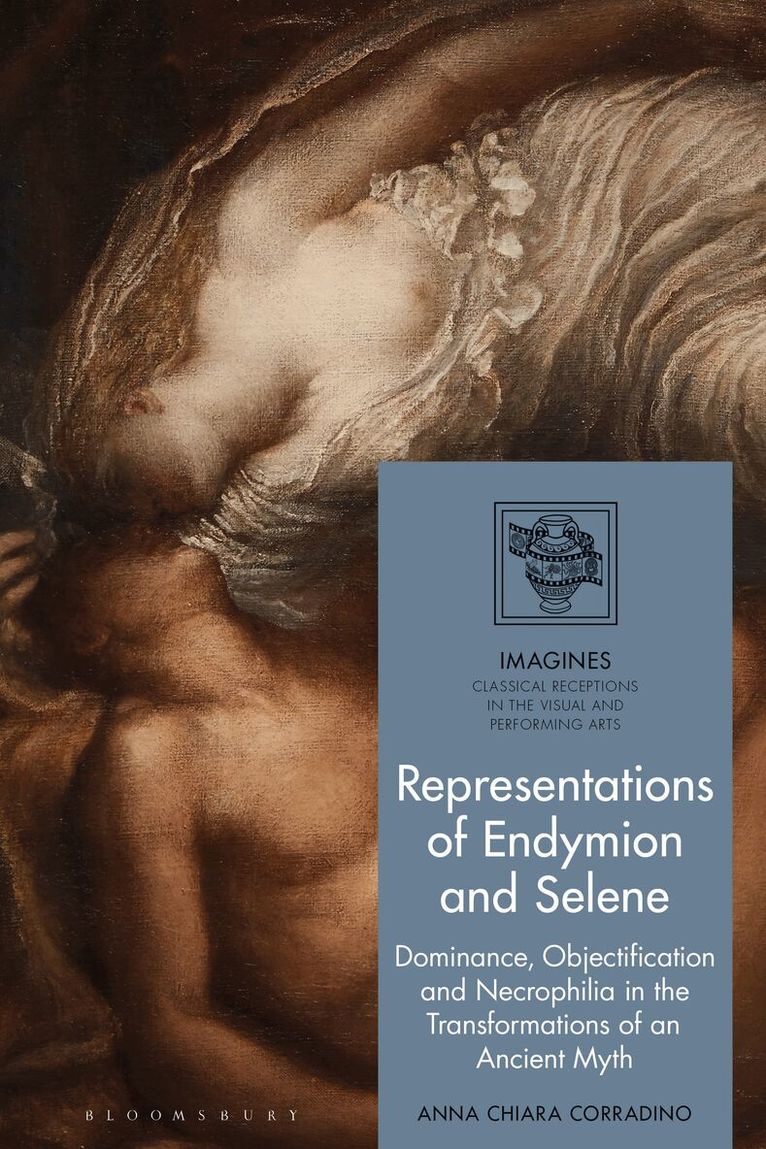
Representations of Endymion and Selene
Dominance, Objectification, and Necrophilia in the Transformations of an Ancient Myth
Häftad, Engelska, 2026
557 kr
Kommande
A focused study of an ancient myth and its reception, which provokes new consideration of how myth in general can challenge social norms. Analyzing the visual and literary transformations of the myth of Endymion and Selene, Anna Chiara Corradino argues that this myth becomes a valuable tool for understanding the cultural problematization and censorship of female sexuality, as well as the marginalization of alternative forms of male sexuality. The myth's key themes, of dominant femininity, reified masculinity and female necrophilia, are shaped through the centuries from the core story of Selene, the goddess of the Moon, falling in love with a mortal shepherd, Endymion, and granting him eternal sleep so she can kiss him every night.In five core sections focusing on the archaeology of the myth in the ancient world, the art of the Renaissance to Baroque periods, and modern art and film, Corradino traces the way the relationship between the two 'lovers' embodies the taboo topic of the eroticization of the sleeping and/or dead male body, and the suppressed desire of female domination and dominance. This research breaks new ground by displaying how these marginal desires have always challenged normativity and have had a profound impact on and through multiple receptions.
499 kr
Kommande
This book examines the reception of Graeco-Roman sculptures of Venus and their role in the construction of the body aesthetics of the “fit” American woman in the decades around the turn of the 20th century. In this historical moment, 19th-century anthropometric methods, the anti-corset dress reform movement and early fitness culture were united in their goal of identifying and producing healthy, procreative female bodies. These discourses presented ancient statues of Venus – most frequently, the Venus de Milo – as the supreme visual model of a superior, fit, feminine physique. An America of such Venuses would herald the future prosperity of the “American race” by reviving the robust health and moral righteousness of the ancient Greeks.Venuses had long been symbols of beauty, but the new situation of Venus statues as an aesthetic and moral destination for women set up a slippage between ideal sculpture and living bodies: what did it mean for a woman to embody – or to try to embody – the perfect health and beauty of an ancient statue? How were women expected to translate this model into flesh? What were the political stakes to which this vision of a nation of American Venuses was bound? Who was believed to conform to this ideal, and who was excluded from it? In taking on these questions, Franks engages with physical culture and dress-reform media, modern artwork that adapts Graeco-Roman traditions, anthropological texts, art histories of ancient Greece, film, advertising and medical reporting on women’s health.
1 406 kr
Kommande
The first book-length study on mythology reception in video games, this monograph examines how video games characterize mythological characters from the perspectives of classical reception and game studies. Characters are vital to most stories, and many video games. They allow us to enter the fiction of a game, and facilitate our embodiment in the game world. Over time, what are initially blank slates transform into fictional existents with well-developed personalities and goals. In this context, narratology uses the term ‘characterization’ to refer to how character traits are ascribed to the entities we call ‘characters’.How does characterization operate in games? How do players impact this process? How is mythology transformed by video games? What can games ‘do’ that other media cannot? After establishing a theoretical framework, this book moves to six case studies that each analyze mythological characters in a particular game: Smite, Assassin’s Creed Odyssey, Immortals Fenyx Rising, God of War, Theseus and Asgard’s Wrath 2. The scope of these studies is diverse, incorporating examples from mainstream, indie and virtual reality gaming. While the book’s main focus lies with Greco-Roman mythology, it also includes games with Norse and Egyptian settings, or with playable characters from a wide range of international mythological traditions. Through these case studies, Alexander Vandewalle leads his readers to an understanding of different modalities or ‘languages’ of mythology reception in games. He argues for a striking diversity in mythological games and their characters, and illuminates how the relationship between games and antiquity is fundamentally one of continuous dialogue and play.
1 383 kr
Skickas inom 10-15 vardagar
Art Nouveau was a style for a new age, but it was also one that continued to look back to the past. This new study shows how in expressing many of their most essential concerns – sexuality, death and the nature of art – its artists drew heavily upon classical literature and the iconography of classical art. It challenges the conventional view that Art Nouveau's adherents turned their backs on Classicism in their quest for new forms. Across Europe and North America, artists continued to turn back to the ancient world, and in particular to Greece, for the vitality with which they sought to infuse their creations.The works of many well-known artists are considered through this prism, including those of Gustav Klimt, Aubrey Beardsley and Louis Comfort Tiffany. But, breaking new ground in its comparative approach, this study also considers some of the movement's less well-known painters, sculptors, jewellers and architects, including in central and eastern Europe, and their use of classical iconography to express new ideas of nationhood. Across the world, while Art Nouveau was a plural style drawing on multiple influences, the Classics remained a key artistic vocabulary for its artists, whether blended with Orientalist and other iconographies, or preserving the purity of classical form.
Leben in der Kriese
Zeitromane der Neuen Sachlichkeit und die intellektuelle Mentalität der klassischen Moderne. Metzler Studienausgabe
Häftad, Tyska, 1994
450 kr
Skickas inom 10-15 vardagar
Die Zeitromane der Neuen Sachlickeit spiegeln besonders deutlich die Probleme der Intellektuellen, die Widersprüche der modernen Massenzivilisation zu verarbeiten und selbst ihren Ort darin zu finden. Martin Lindner weist nach, daß sich Form und Inhalt der neusachlichen Literatur erst vor dem Hintergrund einer Lebensideologie" genannten, epochalen Denkstruktur erschließen, die zwischen 1890 und den 50er Jahren die intellektuelle Mentalität entscheidend prägte.
1 029 kr
Skickas inom 3-6 vardagar
257 kr
Skickas inom 3-6 vardagar