Luke McNamara – författare
Visar alla böcker från författaren Luke McNamara. Handla med fri frakt och snabb leverans.
7 produkter
7 produkter
Reforming Rape Trials
The Impact of Law Reform on Criminal Trials in Australia
Inbunden, Engelska, 2026
1 316 kr
Kommande
Despite fifty years of "progressive" rape law reform in Australia and across the common law world, victim-survivors of sexual violence continue to express disappointment and distress when they seek justice through the criminal courts.Reforming Rape Trials examines why. Drawing on rare access to tens of thousands of pages of transcripts from more than 100 rape trials in New South Wales and Victoria, the authors reveal a significant gap between the rhetoric of reform and the realities of courtroom practice. Complainants are still routinely accused of lying and are interrogated for not behaving as a supposedly "genuine" victim should. These questioning practices remain deeply shaped by rape myths and stereotypes that are both harmful and empirically unfounded.Departing from earlier scholarship, which has largely attributed ongoing problems to failures of implementation by lawyers, judges, and juries, the book argues that the issues run deeper. The persistence of rape-myth reasoning and character attacks is not simply a failure of courtroom actors to adapt; it stems from the fact that policymakers and legislators have never genuinely attempted to eliminate these practices. Modern reform efforts often prioritize complex statutory definitions of consent and detailed jury directions. Yet these tools do little to transform the parts of the trial that most urgently require change-particularly cross-examination strategies steeped in outdated and misleading assumptions about sexual violence.The authors conclude that meaningful justice for victim-survivors requires a broader rethinking of law reform. Central to this is confronting the expansive notion of "relevant" evidence, which currently allows rape myths to enter the courtroom under the guise of probative value. They argue that an accused person's criminal responsibility can — and must — be assessed without relying on evidence that perpetuates myths that have no legitimate role in twenty-first-century trials.This is an open access title. It is available to read and download as a free PDF version on Oxford Academic and is made available under a Creative Commons Attribution-Non Commercial-No Derivatives 4.0 International licence.
756 kr
Skickas inom 10-15 vardagar
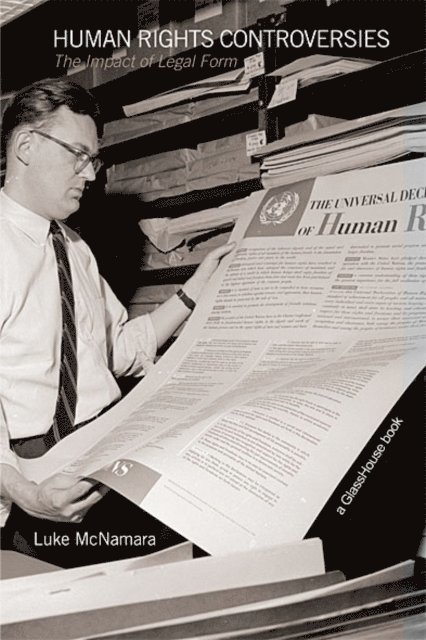
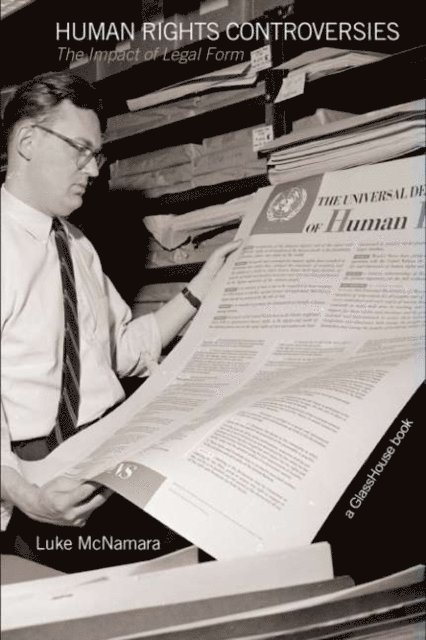
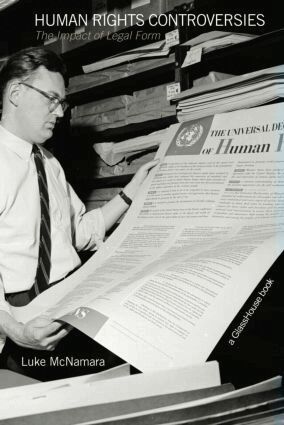
Many countries confront similar human rights controversies, but, despite the claimed universality of human rights values they are not always resolved in the same way. Why? What role do local legal conditions play? Is human rights discourse more potent where rights are constitutionally entrenched, rather than where there is a tradition of respect for underlying human rights values but no bill of rights? Comparative socio-legal examination of three recent controversies - double jeopardy reform, recognition of same-sex relationships and the operation of hate speech laws - in four countries - Australia, Canada, New Zealand and the United Kingdom provides answers to these questions. Examination of these controversies suggests that differences in the design of domestic legal institutions and procedures for the injection of human rights values into legal decision-making processes can have a powerful effect on the manner in which human rights issues are constructed, handled and resolved.
783 kr
Tillfälligt slut
1 342 kr
Tillfälligt slut
1 135 kr
Tillfälligt slut
409 kr
Tillfälligt slut
In 1989 New South Wales became the first Australian state to pass legislation outlawing racial vilification. By 2001 the Commonwealth and the majority of Australian states and territories had followed suit, suggesting a broadly held view that racism was a sufficiently serious problem in Australian society to warrant the imposition of legislative restrictions and sanctions on conduct which generated ill-feeling against particular racial or ethnic groups. And yet, throughout this period the legal regulation of racial vilification has been controversial, with each new legislative reform initiative prompting heated debate. Regulating Racism provides a comprehensive examination of the history and current operation of federal, state and territorial racial vilification laws in Australia. Based on detailed analysis of relevant reports, legislation, parliamentary debates, statistical data, and judicial and quasi-judicial decisions, it reviews the range of approaches to the legal regulation of racial vilification which have been adopted in this country, including the creation of: criminal offences; statutory torts; and grounds of human rights complaint.The book addresses a number of key questions about the origins and operation of racial vilification laws. Why were different legislative models chosen? What are the implications of those choices for victims of racial vilification? What impact have free speech 'rights' and values had on the approach which Australian law-makers have adopted towards the regulation of racial vilification? How have racial vilification laws been applied and interpreted by human rights agencies, prosecuting authorities, tribunals and courts? Regulating Racism evaluates the strengths and weaknesses of the various approaches to the legal regulation of racial vilification which have been utilised to date in Australia. It makes an important contribution to our understanding of the role and limits of racial vilification laws in a democratic multicultural society.
2 381 kr
Skickas inom 10-15 vardagar
Many countries confront similar human rights controversies, but, despite the claimed universality of human rights values they are not always resolved in the same way. Why? What role do local legal conditions play? Is human rights discourse more potent where rights are constitutionally entrenched, rather than where there is a tradition of respect for underlying human rights values but no bill of rights? Comparative socio-legal examination of three recent controversies - double jeopardy reform, recognition of same-sex relationships and the operation of hate speech laws - in four countries - Australia, Canada, New Zealand and the United Kingdom provides answers to these questions. Examination of these controversies suggests that differences in the design of domestic legal institutions and procedures for the injection of human rights values into legal decision-making processes can have a powerful effect on the manner in which human rights issues are constructed, handled and resolved.