Luke Yoquinto - Böcker
Visar alla böcker från författaren Luke Yoquinto. Handla med fri frakt och snabb leverans.
4 produkter
4 produkter
274 kr
Skickas
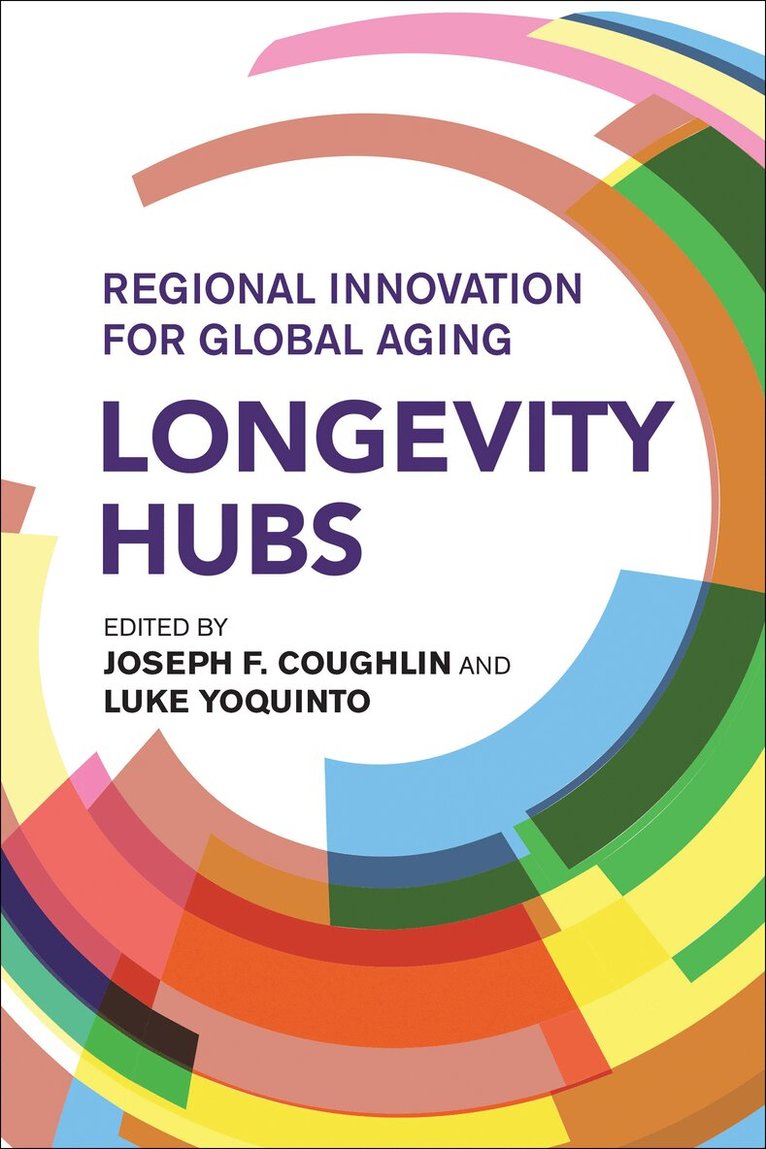
How innovation hotspots for the world s aging population may prove to be of vital economic and strategic importance in the years ahead. Populations around the world are aging, and older adults economic influence already considerable stands to grow markedly in the decades ahead. Finding ways to make these lives better is a win-win-win: for older consumers; for aging economies; and for companies and the regions where they reside. This much-needed volume edited by Joseph Coughlin and Luke Yoquinto, Longevity Hubs, brings together contributors entrepreneurs, researchers, designers, public servants, and others who are addressing the multifaceted concerns of aging societies. Together, they explore the possibility that specific regions will soon distinguish themselves as longevity hubs: a home to disproportionate economic and innovative activity for older populations. If a region were to emerge as such a disproportionate hotspot, that area and its home nation might better weather some of the challenges posed by population aging, while at the same time providing a cash injection into the local economy thanks to aging markets domestic and foreign. Longevity Hubs explores strategies adopted by different areas government and industry leaders to promote such activity; who different regions target markets are; and how local, older adults may affect (and be affected by) innovation in their area. Longevity Hubs opens on Greater Boston, with the collected articles comprising the 'Longevity Hub' special project that ran in the Boston Globe in 2021 and 2022. Then the book zooms out to take in a more global stage, in the form of nine chapters written by representatives of cities and regions staking a claim as powerhouses of aging innovation. These include Louisville, in the US; Newcastle, in the UK; Dubai; Milan; Sao Paulo; Tel Aviv; regions in Japan and Thailand; and Aging2.0, a distributed network.
269 kr
Skickas inom 3-6 vardagar
153 kr
Skickas inom 7-10 vardagar
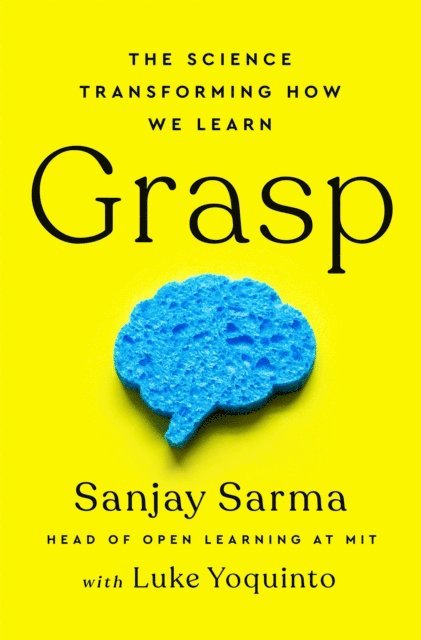
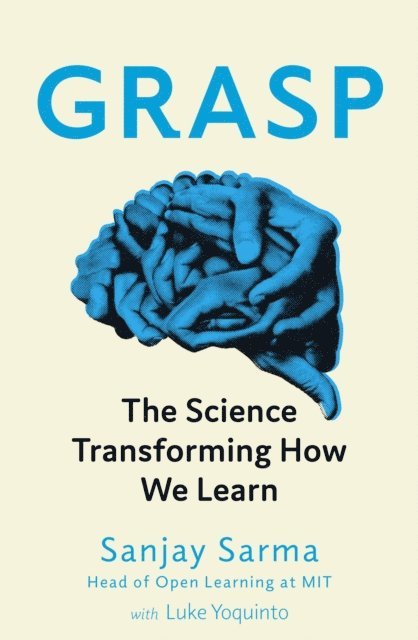
'Sarma's book may be the most important work on education written this century' - SkepticAs the head of Open Learning at MIT, Sanjay Sarma has a daunting job description: to fling open the doors of the MIT experience for the benefit of the wider world. But if you're going to undertake such an ambitious project, you must first ask: How exactly does learning work? What conditions are most conducive? Are our traditional classroom methods - lecture, homework, test, repeat - actually effective? And if not, which techniques are?Grasp takes readers across multiple frontiers, from fundamental neuroscience to cognitive psychology and beyond, as it explores the future of learning. For instance:· Scientists are studying the role of forgetting, exposing it not as a simple failure of memory but a critical weapon in our learning arsenal· New developments in neuroimaging are helping us understand how reading works in the brain. It's become possible to identify children who might benefit from specialised dyslexia interventions - before they learn to read· Many schools have begun converting to flipped classrooms, in which you watch a lesson at home, then do your 'homework' in classAlong the way, Sarma debunks long-held views such as the noxious idea of 'learning styles,' while equipping readers with a set of practical tools for absorbing and retaining information across a lifetime of learning. He presents a vision for learning that's more inclusive and democratic - revealing a world bursting with powerful learners, just waiting for the chance they deserve.Drawing from the author's experience as an educator and the work of researchers and educational innovators at MIT and beyond, Grasp offers scientific and practical insight, promising not just to inform and entertain readers but to open their minds.
114 kr
Skickas inom 7-10 vardagar
'Sarma's book may be the most important work on education written this century' - SkepticAs the head of Open Learning at MIT, Sanjay Sarma has a daunting job description: to fling open the doors of the MIT experience for the benefit of the wider world. But if you're going to undertake such an ambitious project, you must first ask: How exactly does learning work? What conditions are most conducive? Are our traditional classroom methods - lecture, homework, test, repeat - actually effective? And if not, which techniques are?Grasp takes readers across multiple frontiers, from fundamental neuroscience to cognitive psychology and beyond, as it explores the future of learning. For instance:· Scientists are studying the role of forgetting, exposing it not as a simple failure of memory but a critical weapon in our learning arsenal· New developments in neuroimaging are helping us understand how reading works in the brain. It's become possible to identify children who might benefit from specialised dyslexia interventions - before they learn to read· Many schools have begun converting to flipped classrooms, in which you watch a lesson at home, then do your 'homework' in classAlong the way, Sarma debunks long-held views such as the noxious idea of 'learning styles,' while equipping readers with a set of practical tools for absorbing and retaining information across a lifetime of learning. He presents a vision for learning that's more inclusive and democratic - revealing a world bursting with powerful learners, just waiting for the chance they deserve.Drawing from the author's experience as an educator and the work of researchers and educational innovators at MIT and beyond, Grasp offers scientific and practical insight, promising not just to inform and entertain readers but to open their minds.