Lyla Mehta - Böcker
Visar alla böcker från författaren Lyla Mehta. Handla med fri frakt och snabb leverans.
8 produkter
8 produkter
495 kr
Skickas inom 10-15 vardagar
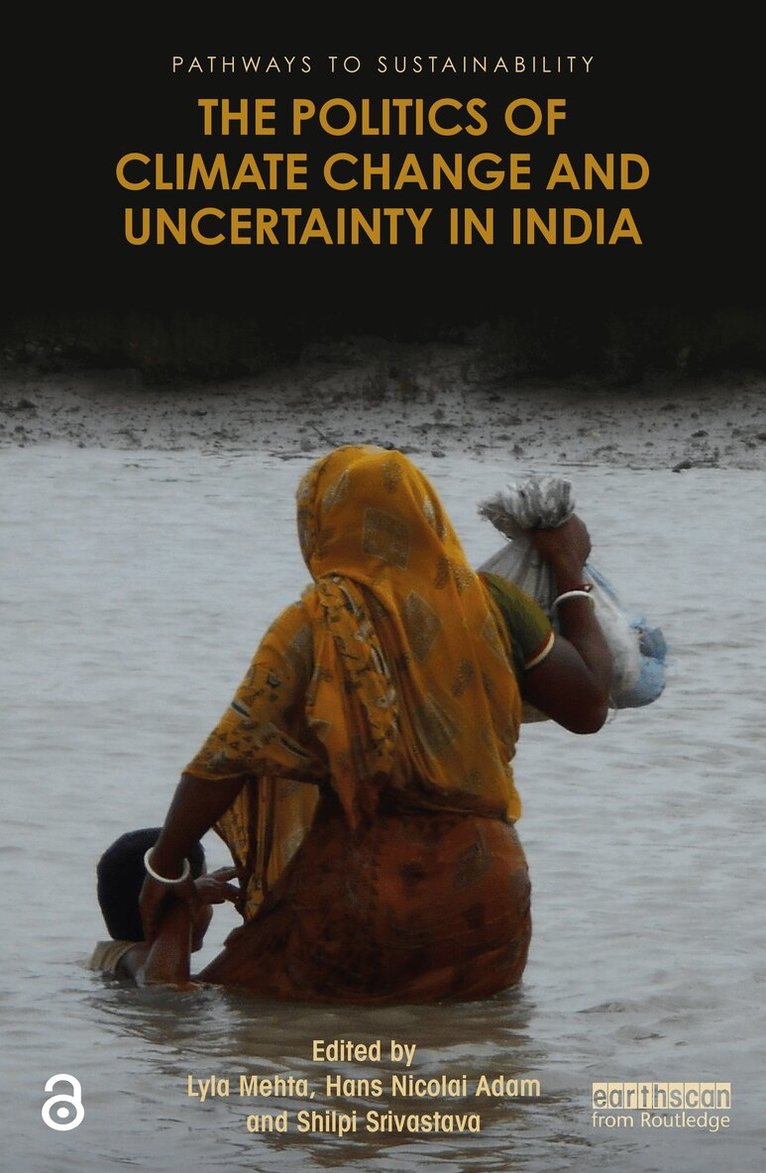
This book brings together diverse perspectives concerning uncertainty and climate change in India. Uncertainty is a key factor shaping climate and environmental policy at international, national and local levels. Climate change and events such as cyclones, floods, droughts and changing rainfall patterns create uncertainties that planners, resource managers and local populations are regularly confronted with. In this context, uncertainty has emerged as a "wicked problem" for scientists and policymakers, resulting in highly debated and disputed decision-making. The book focuses on India, one of the most climatically vulnerable countries in the world, where there are stark socio-economic inequalities in addition to diverse geographic and climatic settings. Based on empirical research, it covers case studies from coastal Mumbai to dryland Kutch and the Sundarbans delta in West Bengal. These localities offer ecological contrasts, rural–urban diversity, varied exposure to different climate events, and diverse state and official responses. The book unpacks the diverse discourses, practices and politics of uncertainty and demonstrates profound differences through which the "above", "middle" and "below" understand and experience climate change and uncertainty. It also makes a case for bringing together diverse knowledges and approaches to understand and embrace climate-related uncertainties in order to facilitate transformative change. Appealing to a broad professional and student audience, the book draws on wide-ranging theoretical and conceptual approaches from climate science, historical analysis, science, technology and society studies, development studies and environmental studies. By looking at the intersection between local and diverse understandings of climate change and uncertainty with politics, culture, history and ecology, the book argues for plural and socially just ways to tackle climate change in India and beyond. The Open Access version of this book, available at http://www.taylorfrancis.com/books/e/9781003257585, has been made available under a Creative Commons Attribution-Non Commercial-No Derivatives 4.0 license.
2 088 kr
Skickas inom 10-15 vardagar
This book brings together diverse perspectives concerning uncertainty and climate change in India. Uncertainty is a key factor shaping climate and environmental policy at international, national and local levels. Climate change and events such as cyclones, floods, droughts and changing rainfall patterns create uncertainties that planners, resource managers and local populations are regularly confronted with. In this context, uncertainty has emerged as a "wicked problem" for scientists and policymakers, resulting in highly debated and disputed decision-making. The book focuses on India, one of the most climatically vulnerable countries in the world, where there are stark socio-economic inequalities in addition to diverse geographic and climatic settings. Based on empirical research, it covers case studies from coastal Mumbai to dryland Kutch and the Sundarbans delta in West Bengal. These localities offer ecological contrasts, rural–urban diversity, varied exposure to different climate events, and diverse state and official responses. The book unpacks the diverse discourses, practices and politics of uncertainty and demonstrates profound differences through which the "above", "middle" and "below" understand and experience climate change and uncertainty. It also makes a case for bringing together diverse knowledges and approaches to understand and embrace climate-related uncertainties in order to facilitate transformative change. Appealing to a broad professional and student audience, the book draws on wide-ranging theoretical and conceptual approaches from climate science, historical analysis, science, technology and society studies, development studies and environmental studies. By looking at the intersection between local and diverse understandings of climate change and uncertainty with politics, culture, history and ecology, the book argues for plural and socially just ways to tackle climate change in India and beyond. The Open Access version of this book, available at http://www.taylorfrancis.com/books/e/9781003257585, has been made available under a Creative Commons Attribution-Non Commercial-No Derivatives 4.0 license.
2 098 kr
Skickas inom 10-15 vardagar
This book is the first comprehensive effort to bring together Water, Food Security and Nutrition (FSN) in a way that goes beyond the traditional focus on irrigated agriculture. Apart from looking at the role of water and sanitation for human well-being, it proposes alternative and more locally appropriate ways to address complex water management and governance challenges from the local to global levels against a backdrop of growing uncertainties.The authors challenge mainstream supply-oriented and neo-Malthusian visions that argue for the need to increase the land area under irrigation in order to feed the world’s growing population. Instead, they argue for a reframing of the debate concerning production processes, waste, food consumption and dietary patterns whilst proposing alternative strategies to improve water and land productivity, putting the interests of marginalized and disenfranchized groups upfront.The book highlights how accessing water for FSN can be challenging for small-holders, vulnerable and marginalized women and men, and how water allocation systems and reform processes can negatively affect local people’s informal rights. The book argues for the need to improve policy coherence across water, land and food and is original in making a case for strengthening the relationship between the human rights to water and food, especially for marginalized women and men. It will be of great interest to practitioners, students and researchers working on water and food issues.
497 kr
Skickas inom 10-15 vardagar
This book is the first comprehensive effort to bring together Water, Food Security and Nutrition (FSN) in a way that goes beyond the traditional focus on irrigated agriculture. Apart from looking at the role of water and sanitation for human well-being, it proposes alternative and more locally appropriate ways to address complex water management and governance challenges from the local to global levels against a backdrop of growing uncertainties.The authors challenge mainstream supply-oriented and neo-Malthusian visions that argue for the need to increase the land area under irrigation in order to feed the world’s growing population. Instead, they argue for a reframing of the debate concerning production processes, waste, food consumption and dietary patterns whilst proposing alternative strategies to improve water and land productivity, putting the interests of marginalized and disenfranchized groups upfront.The book highlights how accessing water for FSN can be challenging for small-holders, vulnerable and marginalized women and men, and how water allocation systems and reform processes can negatively affect local people’s informal rights. The book argues for the need to improve policy coherence across water, land and food and is original in making a case for strengthening the relationship between the human rights to water and food, especially for marginalized women and men. It will be of great interest to practitioners, students and researchers working on water and food issues.
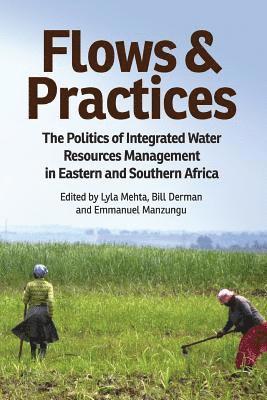
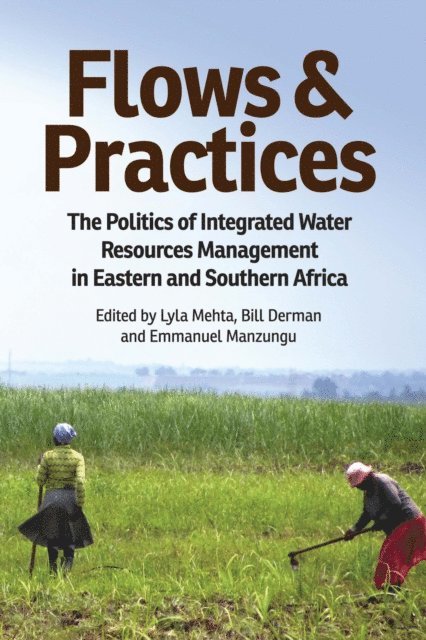
Flows and Practices
The Politics of Integrated Water Resources Management in Eastern and Southern Africa
Häftad, Engelska, 2017
607 kr
Skickas inom 5-8 vardagar
2 300 kr
Skickas inom 10-15 vardagar
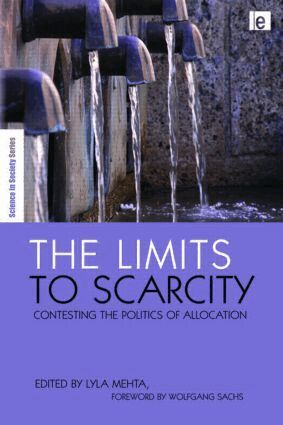
Scarcity is considered a ubiquitous feature of the human condition. It underpins much of modern economics and is widely used as an explanation for social organisation, social conflict and the resource crunch confronting humanity's survival on the planet. It is made out to be an all-pervasive fact of our lives – be it of housing, food, water or oil. But has the conception of scarcity been politicized, naturalized, and universalized in academic and policy debates? Has overhasty recourse to scarcity evoked a standard set of market, institutional and technological solutions which have blocked out political contestations, overlooking access as a legitimate focus for academic debates as well as policies and interventions? Theoretical and empirical chapters by leading academics and scholar-activists grapple with these issues by questioning scarcity's taken-for-granted nature. They examine scarcity debates across three of the most important resources - food, water and energy – and their implications for theory, institutional arrangements, policy responses and innovation systems. The book looks at how scarcity has emerged as a totalizing discourse in both the North and South. The 'scare' of scarcity has led to scarcity emerging as a political strategy for powerful groups. Aggregate numbers and physical quantities are trusted, while local knowledges and experiences of scarcity that identify problems more accurately and specifically are ignored. Science and technology are expected to provide 'solutions', but such expectations embody a multitude of unexamined assumptions about the nature of the 'problem', about the technologies and about the institutional arrangements put forward as a 'fix.' Through this examination the authors demonstrate that scarcity is not a natural condition: the problem lies in how we see scarcity and the ways in which it is socially generated.
552 kr
Skickas inom 10-15 vardagar
Scarcity is considered a ubiquitous feature of the human condition. It underpins much of modern economics and is widely used as an explanation for social organisation, social conflict and the resource crunch confronting humanity's survival on the planet. It is made out to be an all-pervasive fact of our lives – be it of housing, food, water or oil. But has the conception of scarcity been politicized, naturalized, and universalized in academic and policy debates? Has overhasty recourse to scarcity evoked a standard set of market, institutional and technological solutions which have blocked out political contestations, overlooking access as a legitimate focus for academic debates as well as policies and interventions? Theoretical and empirical chapters by leading academics and scholar-activists grapple with these issues by questioning scarcity's taken-for-granted nature. They examine scarcity debates across three of the most important resources - food, water and energy – and their implications for theory, institutional arrangements, policy responses and innovation systems. The book looks at how scarcity has emerged as a totalizing discourse in both the North and South. The 'scare' of scarcity has led to scarcity emerging as a political strategy for powerful groups. Aggregate numbers and physical quantities are trusted, while local knowledges and experiences of scarcity that identify problems more accurately and specifically are ignored. Science and technology are expected to provide 'solutions', but such expectations embody a multitude of unexamined assumptions about the nature of the 'problem', about the technologies and about the institutional arrangements put forward as a 'fix.' Through this examination the authors demonstrate that scarcity is not a natural condition: the problem lies in how we see scarcity and the ways in which it is socially generated.
308 kr
Tillfälligt slut