Lyn Wright - Böcker
Visar alla böcker från författaren Lyn Wright. Handla med fri frakt och snabb leverans.
6 produkter
6 produkter
628 kr
Kommande
Learning Language: First Language, Bilingual, and Second Language Acquisition is the first textbook to offer a holistic introduction to language acquisition, combining from three key fields: child first language acquisition, bi- and mulitilingual acquisition, and second language acquisition.Rich in pedagogy, this innovative book adopts a distinct interdisciplinary approach to coherently explain how languages are learned. Organised around the linguistic targets of acquisition (sounds, words, structures, communication), the book offers a clear and deep understanding of the commonalities and divergence among these three research traditions. In this volume, Adams, Warren and Wright survey both the core theory principles and research practices in each area. They support students, researchers, and instructors by providing clear explanations, clear examples, and a wide range of instructional materials: from an overview of key research methods and guiding theories to definitions of key terms, reflection questions to spark discussion, and class exercises. Downloadable material is also available, including practical exercises, additional readings, and suggested research topics. Instructors and readers can choose to follow the book structure or to use the three main sections independently, focusing on each type of language acquisition in turn.This unique book provides an ideal basis for introductory courses in Language Acquisition, ESOL, Applied Linguistics for Language Teaching, Child Language Development, and Speech Pathology programs. It also serves as a flexible and accessible resource for anyone interested in applied linguistics and language acquisition.
2 194 kr
Kommande
Learning Language: First Language, Bilingual, and Second Language Acquisition is the first textbook to offer a holistic introduction to language acquisition, combining from three key fields: child first language acquisition, bi- and mulitilingual acquisition, and second language acquisition.Rich in pedagogy, this innovative book adopts a distinct interdisciplinary approach to coherently explain how languages are learned. Organised around the linguistic targets of acquisition (sounds, words, structures, communication), the book offers a clear and deep understanding of the commonalities and divergence among these three research traditions. In this volume, Adams, Warren and Wright survey both the core theory principles and research practices in each area. They support students, researchers, and instructors by providing clear explanations, clear examples, and a wide range of instructional materials: from an overview of key research methods and guiding theories to definitions of key terms, reflection questions to spark discussion, and class exercises. Downloadable material is also available, including practical exercises, additional readings, and suggested research topics. Instructors and readers can choose to follow the book structure or to use the three main sections independently, focusing on each type of language acquisition in turn.This unique book provides an ideal basis for introductory courses in Language Acquisition, ESOL, Applied Linguistics for Language Teaching, Child Language Development, and Speech Pathology programs. It also serves as a flexible and accessible resource for anyone interested in applied linguistics and language acquisition.
1 754 kr
Skickas inom 10-15 vardagar
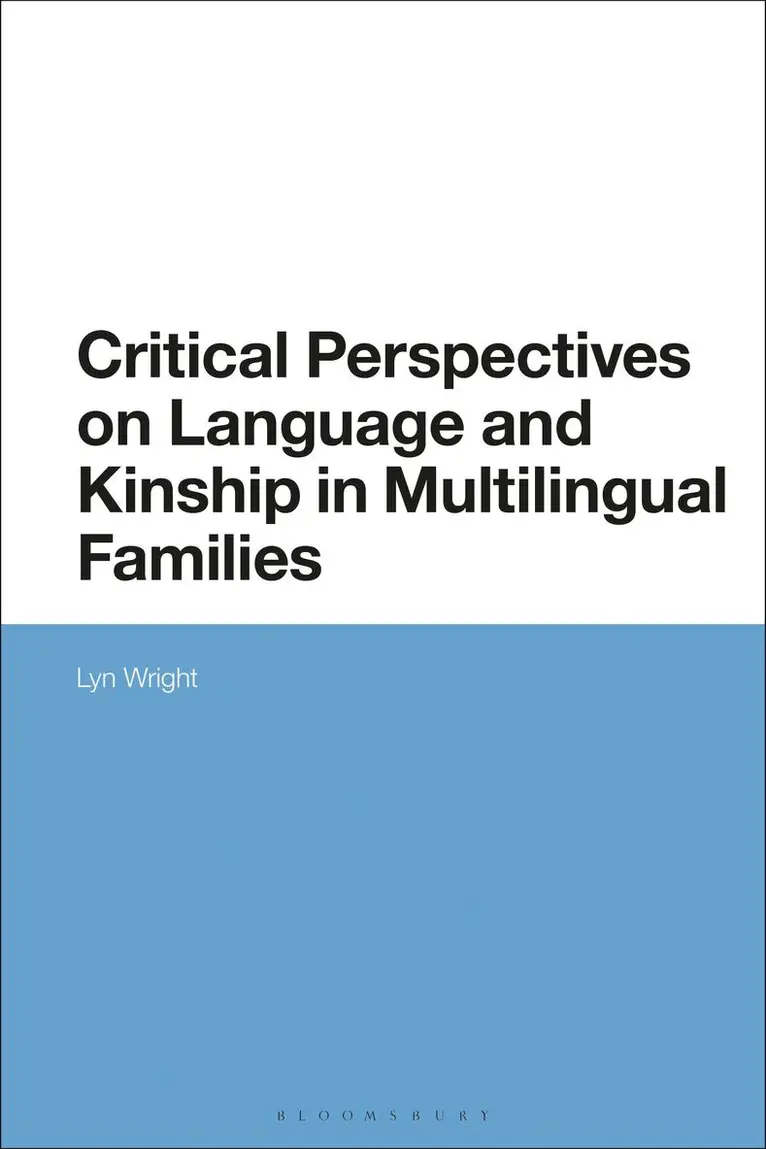
Applying critical kinship perspectives to the study of multilingual families, this book foregrounds family formation processes, gender, and sexuality in examinations of language use. Focusing on historically marginalized families (such as single parent, adoptive, and LGBTQ+), the analyses draw on data from private and public spheres including interviews and recorded interactions in homes, as well as memoirs, documentaries, news media, and even comedy. Lyn Wright addresses questions such as why single parents might be better at raising bilingual children, how multilingualism plays a role in constructing shared histories in adoptive families, and what translingual resources allow LGBTQ+ families to negotiate gender roles and family relationships. In addition, she examines the construction of monolingual, nuclear family norms in public discourse that potentially constrain families’ everyday multilingual identities.Integrating related fields of family discourse, family language socialization, and family language policy unifies ways of understanding the intersections of kinship and language. The analyses in this book provide insight into multilingual family experiences, children’s language development, and societal level language maintenance and shift.
2 157 kr
Skickas inom 10-15 vardagar
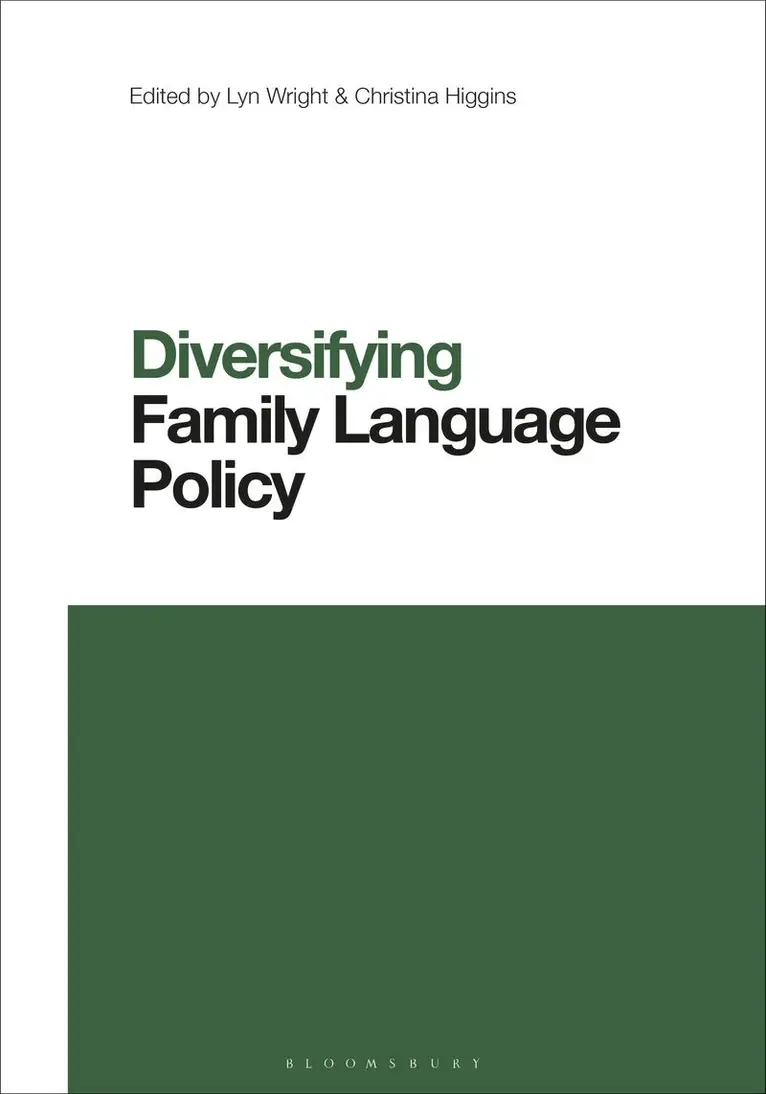
An increasingly important field of research within multilingualism and sociolinguistics, Family Language Policy (FLP) investigates the explicit and overt planning of language use within the home and among family members. However the diverse range of different family units and contexts around the globe necessitates a similarly diverse range of research perspectives which are not yet represented within the field. Tackling this problem head on, this volume expands the scope of families in FLP research. Bringing together contributors and case studies from every continent, this essential reference broadens lines of inquiry by investigating language practices and ideologies in previously under-researched families. Seeking to better reflect contemporary influences on FLP processes, chapters use innovative methodologies, including digital ethnographies and autoethnography, to explore diverse family configurations (adoptive, LGBTQ+, and single parent), modalities (digital communication and signed languages), and speakers and contexts (adult learners, Indigenous contexts, and new speakers).Bringing to light the dynamic, fluid nature of family and kinship as well as the important role that multilingualism plays in family members’ negotiation of power, agency, and identity construction, Diversifying Family Language Policy is a state-of-the-art reference to contemporary theoretical, methodological and ethical advances in the field of family language policy.
447 kr
Skickas inom 10-15 vardagar
Applying critical kinship perspectives to the study of multilingual families, this book foregrounds family formation processes, gender, and sexuality in examinations of language use. Focusing on historically marginalized families (such as single parent, adoptive, and LGBTQ+), the analyses draw on data from private and public spheres including interviews and recorded interactions in homes, as well as memoirs, documentaries, news media, and even comedy. Lyn Wright addresses questions such as why single parents might be better at raising bilingual children, how multilingualism plays a role in constructing shared histories in adoptive families, and what translingual resources allow LGBTQ+ families to negotiate gender roles and family relationships. In addition, she examines the construction of monolingual, nuclear family norms in public discourse that potentially constrain families’ everyday multilingual identities.Integrating related fields of family discourse, family language socialization, and family language policy unifies ways of understanding the intersections of kinship and language. The analyses in this book provide insight into multilingual family experiences, children’s language development, and societal level language maintenance and shift.
585 kr
Skickas inom 10-15 vardagar
An increasingly important field of research within multilingualism and sociolinguistics, Family Language Policy (FLP) investigates the explicit and overt planning of language use within the home and among family members. However the diverse range of different family units and contexts around the globe necessitates a similarly diverse range of research perspectives which are not yet represented within the field. Tackling this problem head on, this volume expands the scope of families in FLP research. Bringing together contributors and case studies from every continent, this essential reference broadens lines of inquiry by investigating language practices and ideologies in previously under-researched families. Seeking to better reflect contemporary influences on FLP processes, chapters use innovative methodologies, including digital ethnographies and autoethnography, to explore diverse family configurations (adoptive, LGBTQ+, and single parent), modalities (digital communication and signed languages), and speakers and contexts (adult learners, Indigenous contexts, and new speakers).Bringing to light the dynamic, fluid nature of family and kinship as well as the important role that multilingualism plays in family members’ negotiation of power, agency, and identity construction, Diversifying Family Language Policy is a state-of-the-art reference to contemporary theoretical, methodological and ethical advances in the field of family language policy.