Lynn Staley - Böcker
Visar alla böcker från författaren Lynn Staley. Handla med fri frakt och snabb leverans.
7 produkter
7 produkter
470 kr
Skickas inom 10-15 vardagar
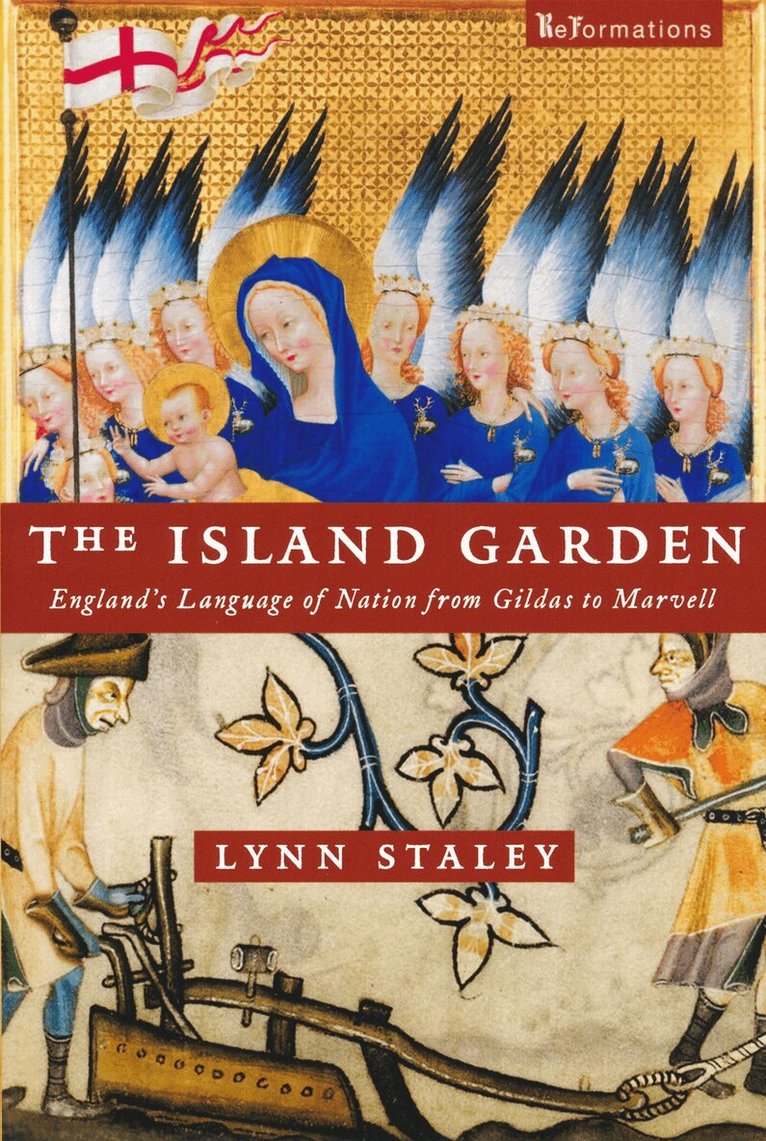
For centuries England's writers used the metaphor of their country as an island garden to engage in a self-conscious debate about national identity. In The Island Garden: England's Language of Nation from Gildas to Marvell, Lynn Staley suggests that the trope of Britain as an island garden catalyzed two crucial historical perspectives and thus analytic modes: as isolated and vulnerable, England stood in a potentially hostile relation to the world outside its encircling sea; as semi-enclosed and permeable, it also accepted recuperative relationships with those who moved across its boundaries. Identifying the concept of enclosure as key to Britain's language of place, Staley traces the shifting meanings of this concept in medieval and early modern histories, treatises, and poems. Beginning with Gildas in the sixth century, Staley maintains that the metaphor of England as the island garden was complicated, first, by Bede in the eighth century and later by historians, polemicists, and antiquarians. It allowed them to debate the nature of England's identity in language whose point might be subversive but that was beyond royal retribution. During the reign of Edward III, William Langland employed the subjects and anxieties linked to the island garden metaphor to create an alternative image of England as a semi-enclosed garden in need of proper cultivation. Staley demonstrates that Langland's translation of the metaphor for nation from a discreet and royal space into a communally productive half-acre was reformulated by writers such as Chaucer, Hoccleve, Tusser, Johnson, and Marvell, as well as others, to explore the tensions in England's social and political institutions. From the early thirteenth to the seventeenth centuries, English treatments of the biblical story of Susanna capture this self-conscious use of metaphoric language and suggest a perspective on law, individual rights, and conscience that is ultimately crucial to England's self-conception and description. Staley identifies in literary discourse a persistent argument for England as a garden that is enclosed yet not isolated, and that is protected by a law whose ideal is a common good that even kings must serve. The Island Garden is a fascinating and focused exploration of the ways in which authors have developed a language of place to construct England's cultural, social, and political identity.
657 kr
Skickas inom 5-8 vardagar
Margery Kempe’s Dissenting Fictions, a contextual and historical study of the Book, focuses on Kempe’s ability to construct a fiction that exploits the conventions of sacred biography and devotional prose as the means of scrutinizing the very foundations of fifteenth-century English society. Thus, though the Book is cast into a communally sanctioned "female" form, Kempe uses the very conventions that tended to define that form to test its outer limits. In producing a text whose apparatus locates it in a communal context, she signals her grasp of the relationship between both gender and genre and genre and public, but her underlying technique works to dissolve the very community she thereby constitutes. In so doing, she creates a work that is open to radically opposed readings. Each of the book’s four chapters considers a key aspect of Kempe’s fiction: her manipulation of the tropes of authorship; her exploitation of the conventions of sacred biography; her use of the language of gender as a means of exploring the issue of spiritual authority; and her handling of such important contemporary issues as vernacular translation and nationalism. The conclusion addresses the issue of community that is radically opposed to contemporary views of the English body politic. In situating Kempe in relation to contemporary texts and to contemporary issues, such as Lollardy, Lynn Staley provides a radically new way of looking at Kempe herself as an author who was fully aware of the types of constrictions she faced as a woman writer. As the study demonstrates, in Kempe we have the first major prose fiction writer of the Middle Ages. Her Book is a tribute to her keen understanding of conventional forms and modes and thus to her ability to reshape traditional materials. It is also a tribute to her understanding of the ways in which she might exploit the conventions and values of a patriarchal society to her own ends. Rather than Margery, the hysteric, Staley insists on Kempe, the controlling author, who, like Chaucer and Langland, creates a fiction that dramatizes the weaknesses of the social and ecclesiastical institutions of her day.
Powers of the Holy
Religion, Politics, and Gender in Late Medieval English Culture
Häftad, Engelska, 1996
572 kr
Skickas inom 5-8 vardagar
The Powers of the Holy explores ways in which the language and images of Christian devotion in late fourteenth-century England were inextricably bound up with a variety of social and political relations. Addressing a wide range of texts, David Aers and Lynn Staley analyze the complex, shifting, and often extremely subtle forms in which writers responded to this situation.Aers concentrates on representations of the humanity of Christ. He unfolds the spiritual and political implications of different versions of the humanity of Christ composed in this period, addressing major issues of gender and power introduced into the field by Caroline Walker Bynum and others. He considers conventional devotional texts, Wycliffite writings, Langland's Piers Plowman, and Julian of Norwich's Revelation. Staley focuses on Julian of Norwich and Geoffrey Chaucer, two very different minds working both within and against dominant conventions of representations and power. Though not usually paired, both writers signal their knowing participation in the contemporary debate about power and authority, a debate that was conducted using the language of sanctity.The Powers of the Holy shows how and why medieval attempts to deal with an emerging crisis in the legitimization of authority (in most domains) interacted with conflicting versions of Christian sanctity. Simultaneously it shows just how, and why, matters that were distinctively spiritual could be politicized. Future readings of the period will undoubtedly follow this book’s cultivation of methodologies that avoid any splitting apart of the study of devotion and devotional texts, the study of the politics of ecclesiastical and secular institutions, and the study of gender.
577 kr
Skickas inom 5-8 vardagar
The Shepheardes Calender is the poem that launched Edmund Spenser's career and changed the direction of English poetry. In this reappraisal, Lynn Staley Johnson demonstrates that Spenser himself made a self-conscious effort to create a new literature, a new esthetic for a new era. Drawing upon a wide range of primary sources, she places the poem in its literary, social, political , and cultural context, contributing to our understanding of the relationship between Spenser and his times. She pays particular attention to the emergence of the myth of Elizabeth and of England during the first half of Elizabeth's reign and the ways in which the young Spenser manipulated the concerns and issues of the time, transforming popular culture into literary expression.By its active engagement with both the present and the past, the Calender suggests Spenser's conception of poetry as informed dialogue designed for social work, offering a reinterpretation of the relationship between the poet and his community. Choosing not to be circumscribed by the voices of his significant historical and literary past, the Calender proclaims the poet, not as transmitter or mediator, but as an active and shaping force, capable of remaking the present by offering his age a picture of a new and potentially more glorious reality.Johnson seeks to bridge the gap between the literature of the Middle Ages and the Renaissance by linking Spenser's strategies and themes to those of his medieval forebears, especially Chaucer. Both Edmund Spenser and his enigmatic Calender stand facing two ways, back into the age dubbed "middle" and forward, hailing the new; as it's study demonstrates, only by bringing these views into a single focus can we begin to appreciate the radical and innovative nature of a poem that for many heralds the renaissance of English poetry.
123 kr
Tillfälligt slut
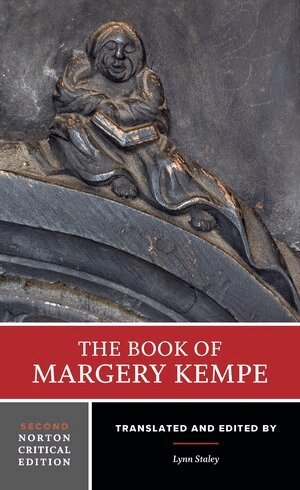
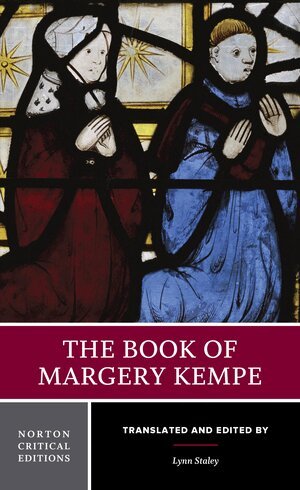
Kempe's work is accompanied by an introduction, a map of medieval England, a Kempe lexicon, and explanatory annotations."Contexts" collects primary readings that illuminate The Book of Margery Kempe. Included are excerpts from The Constitutions of Thomas Arundel, Meditations on the Life of Christ, The Shewings of Julian of Norwich, The Book of Saint Bride, and The Life of Marie d'Oignies by Jacques de Vitry."Criticism" includes nine varied interpretations of the autobiography, written by Clarissa W. Atkinson, Lynn Staley, Karma Lochrie, David Aers, Kathleen Ashley, Gail McMurray Gibson, Sarah Beckwith, Caroline Walker Bynum, and Nicholas Watson.A Selected Bibliography is also included.
1 223 kr
Skickas inom 7-10 vardagar
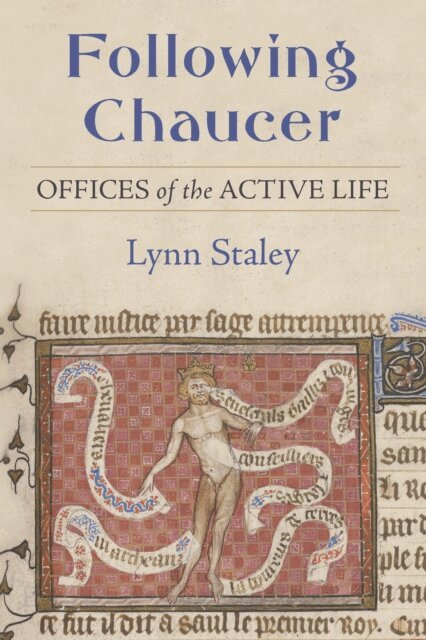
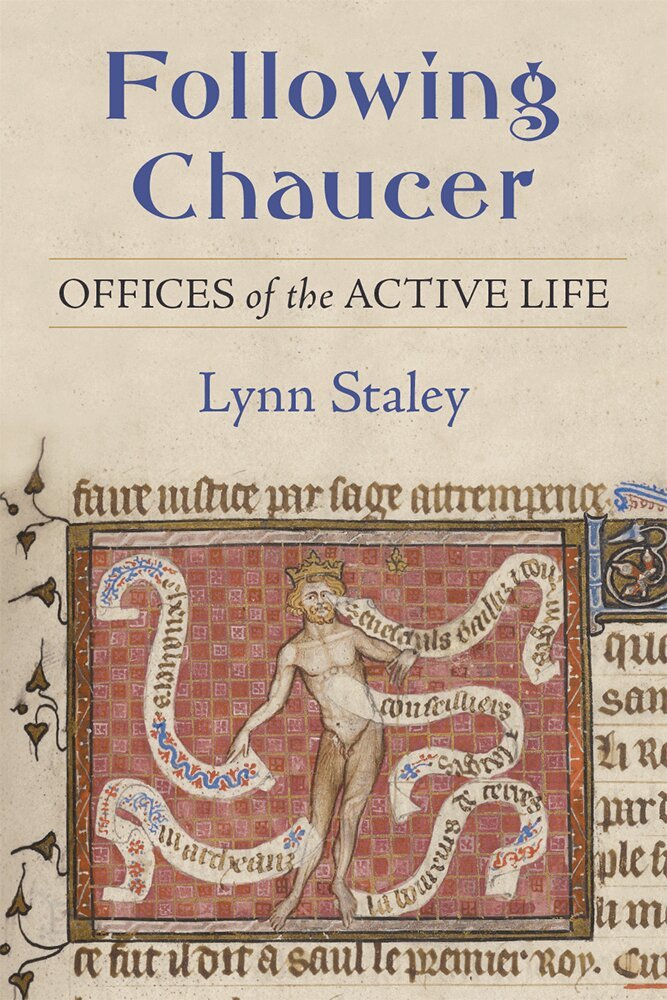
Following Chaucer: Offices of the Active Life explores three representative figures—the royal woman, the poet, and the merchant—in relation to the concept of “office,” which Cicero linked to the health of the republic, but Chaucer to that of the common good. Not usually conjoined to the term “office,” these three figures, situated in the active life, were not firmly mapped onto the body politic, which was used to figure a relational and ordered social body ruled by the king, the head. These figures are points of entry into a set of questions rooted in Chaucer’s understanding of his cultural and historical past and in his keen appraisal of the social dynamics of his own time that also reverberate in the centuries after Chaucer’s death.Following Chaucer does not trace influence but uses Chaucer’s likely reading, circumstances, and literary and social affiliations as guides to understanding his poetry, within the context of late medieval English culture and the reshaping of the concept of these particular offices that suited the needs of a future whose dynamics he anticipated. His understanding of the importance of the Ciceronian concept of office within the active life, his profound cultural awareness, and his probing of the foundations of social change provide him with a keen sense of the persistent tensions and inconsistencies that are fundamental to his poetry.
161 kr
Skickas inom 7-10 vardagar
“The only consistent thing about Margery Kempe and her Book is that they both seem fated to be made and remade, over and over, during her lifetime and afterwards. She has been a lay saint and a heretic, a dysphoric woman gendered as both mother and virgin, a mad woman and a brilliant maker, a person of privilege and a social outcast, a friend and a loner, a speaker of queer nonsense and mystical truth. This revised edition of the Book of Margery Kempe offers readers an opportunity to meet ‘the Creature’ (as she called herself) again in a renewed form. However we first find her, Margery Kempe and her Book challenges us to come back and see it all, again, in a new way.”—M. W. BYCHOWSKI, Case Western Reserve UniversityThis Norton Critical Edition includes:Lynn Staley’s superb translation, preserving the voices and cadences of the original text and retaining much of the Middle English language.A “Kempe lexicon,” defining the author’s idiosyncratic words and spelling, and additional explanatory annotations.Two new images of St. Nicholas’ chapel in King’s Lynn and a map of medieval England accompanying Staley’s revised introduction.Primary sources that contextualize the religious authorities and divine figures who inform Margery’s character and spiritual journey.Eleven critical essays—four new to the Second Edition—offering diverse perspectives on authorship, cross-culturalism, and moralism, among other topics.A selected bibliography.