M. Anne Katzenberg - Böcker
Visar alla böcker från författaren M. Anne Katzenberg. Handla med fri frakt och snabb leverans.
5 produkter
5 produkter
2 336 kr
Skickas inom 5-8 vardagar
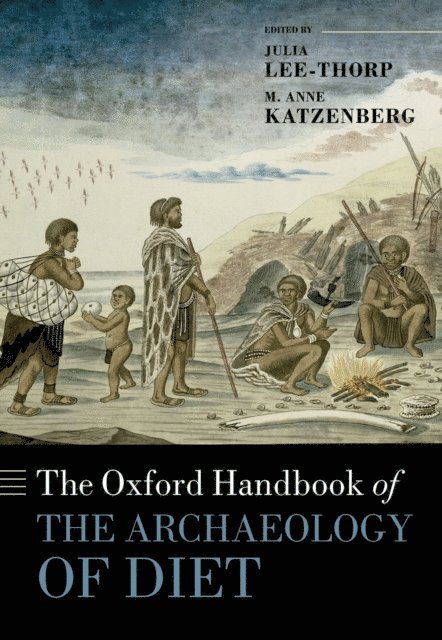
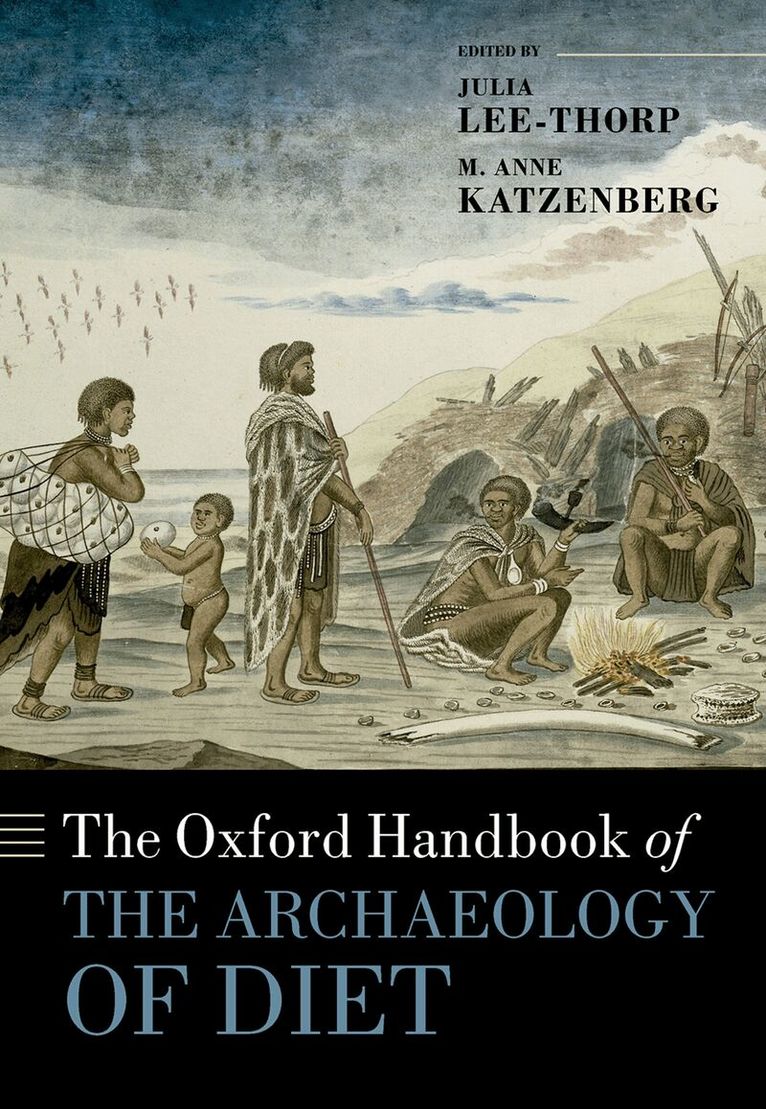
Humans are unique among animals for the wide diversity of foods and food preparation techniques that are intertwined with regional cultural distinctions around the world. The Oxford Handbook of the Archaeology of Diet explores evidence for human diet from our earliest ancestors through the dispersal of our species across the globe. As populations expanded, people encountered new plants and animals and learned how to exploit them for food and other resources. Today, globalization aside, the results manifest in a wide array of traditional cuisines based on locally available indigenous and domesticated plants and animals. How did this complexity emerge? When did early hominins actively incorporate animal foods into their diets, and later, exploit marine and freshwater resources? What were the effects of reliance on domesticated grains such as maize and rice on past populations and the health of individuals? How did a domesticated plant like maize move from its place of origin to the northernmost regions where it can be grown? Importantly, how do we discover this information, and what can be deduced about human health, biology, and cultural practices in the past and present? Such questions are explored in thirty-three chapters written by leading researchers in the study of human dietary adaptations. The approaches encompass everything from information gleaned from comparisons with our nearest primate relatives, tools used in procuring and preparing foods, skeletal remains, chemical or genetic indicators of diet and genetic variation, and modern or historical ethnographic observations. Examples are drawn from across the globe and information on the research methods used is embedded within each chapter. The Handbook provides a comprehensive reference work for advanced undergraduate and graduate students and for professionals seeking authoritative essays on specific topics about diet in the human past.
1 096 kr
Skickas inom 10-15 vardagar
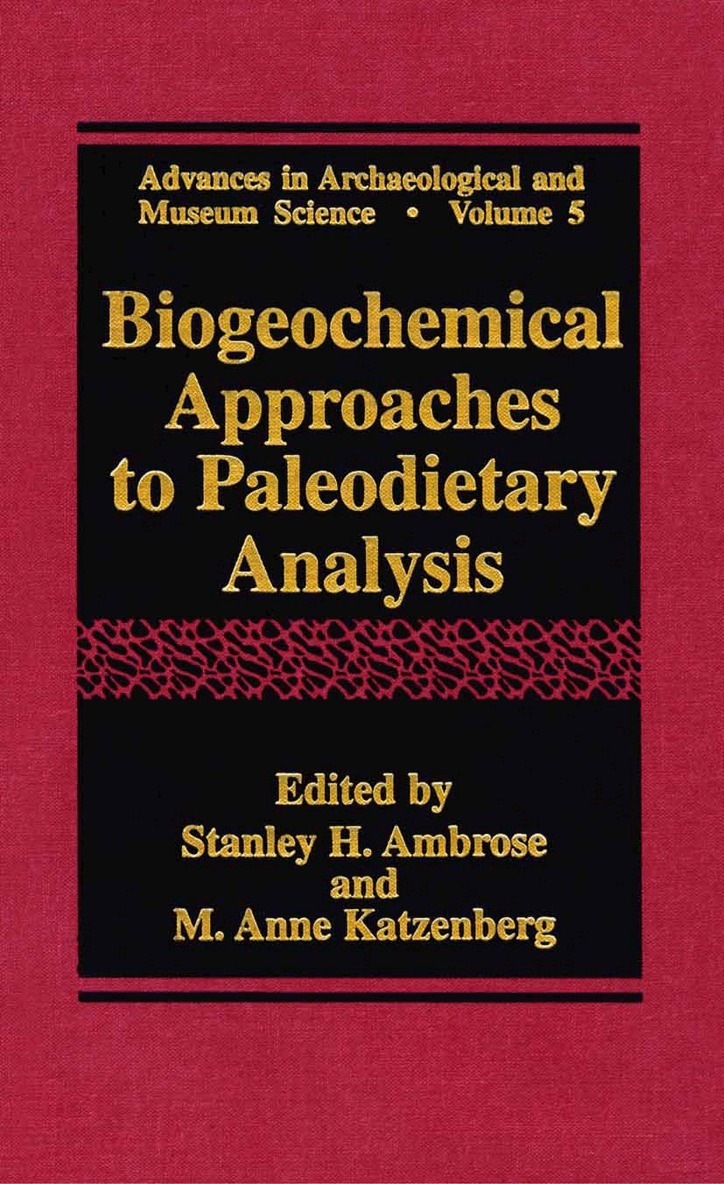
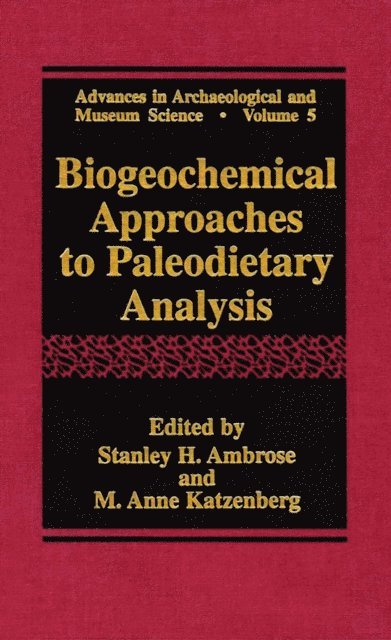
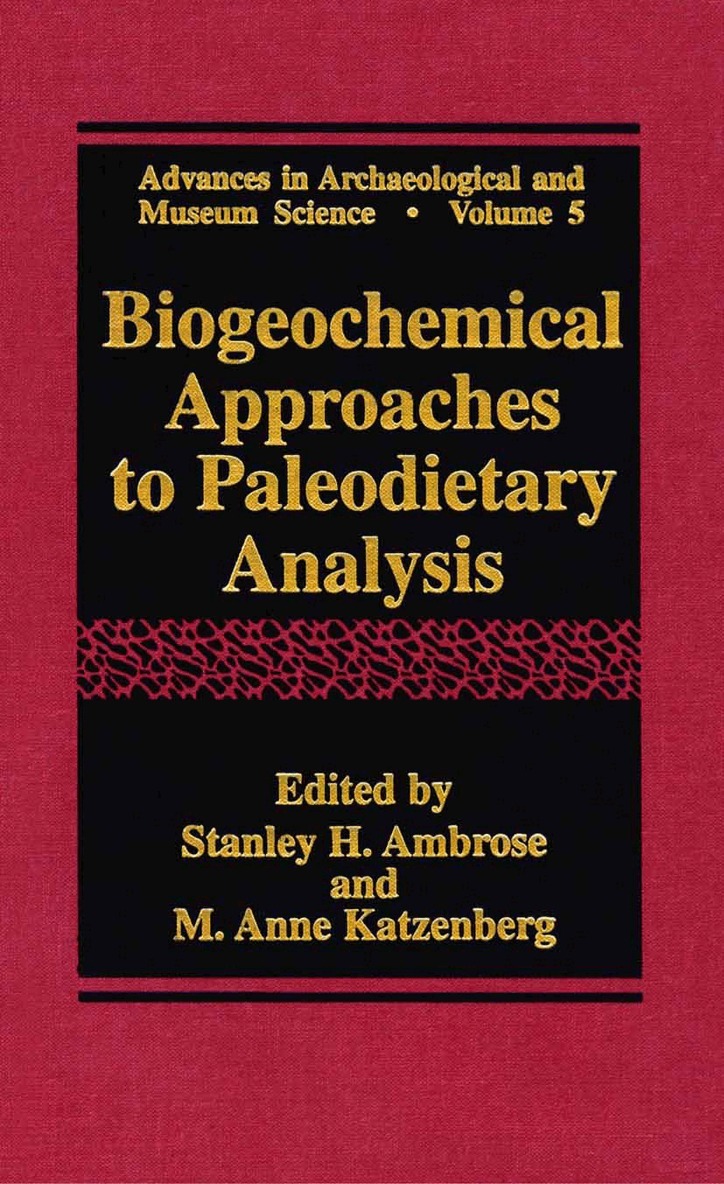
Thisvolume is the fifthi n the Advances in Archaeological and Museum Science series by the Society for Archaeological Sciences (SAS). The purpose of this series is top rovide summaries of advances in various topics in archaeometry, archaeological science, environmental archaeology, preservation technology, and museumconservation. The SAS exists to encourage interdisciplinary collaboration between archaeologistsand colleaguesi n the natural sciences. SAS members are drawn from manydisciplinary fields. However, theya ll share a common belief that natural science techniques andmethods constitutea n essential component of archaeological field and laboratory studies. xi Preface The study of human diet brings togetherr esearchers from diverse back grounds, ranging from modern human nutrition and biochemistry to the geo chemistry of fossilized bones and teeth. Human paleodiet research, as studied through the chemical composition of bones and teeth, has been advanced sig nificantlyi n the last 25 years, since the publication ofearly work on trace ele ments (Brown 1973) ando n stable carbon isotopes (Vogel andv and er Merwe 1977, vand er Merwe and Vogel 1978).An important forum forsuch p rogress has been the series of Advanced Se minars on Pa leodiet, held every threey ears since 1986. The contributions in this volume a rose from the Fourth Advanced Seminar on Paleodiet, which washeld in Banff, Alb erta in September of 1994. The Advanced Seminars bring togethera small international group of researchers interested in improving and expanding techniques fors tudying past diet through bone chemistry.
1 370 kr
Skickas inom 7-10 vardagar
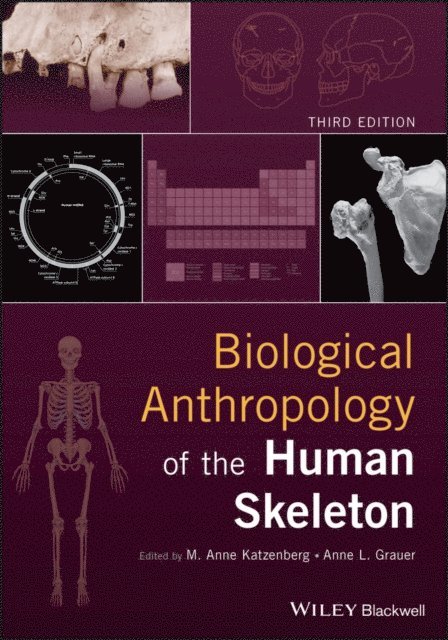
An Indispensable Resource on Advanced Methods of Analysis of Human Skeletal and Dental Remains in Archaeological and Forensic ContextsNow in its third edition, Biological Anthropology of the Human Skeleton has become a key reference for bioarchaeologists, human osteologists, and paleopathologists throughout the world. It builds upon basic skills to provide the foundation for advanced scientific analyses of human skeletal remains in cultural, archaeological, and theoretical contexts.This new edition features updated coverage of topics including histomorphometry, dental morphology, stable isotope methods, and ancient DNA, as well as a number of new chapters on paleopathology. It also covers bioarchaeological ethics, taphonomy and the nature of archaeological assemblages, biomechanical analyses of archaeological human skeletons, and more. Fully updated and revised with new material written by leading researchers in the fieldIncludes many case studies to demonstrate application of methods of analysisOffers valuable information on contexts, methods, applications, promises, and pitfalls Covering the latest advanced methods and techniques for analyzing skeletal and dental remains from archaeological discoveries, Biological Anthropology of the Human Skeleton is a trusted text for advanced undergraduates, graduate students, and professionals in human osteology, bioarchaeology, and paleopathology.
1 096 kr
Skickas inom 10-15 vardagar
Thisvolume is the fifthi n the Advances in Archaeological and Museum Science series by the Society for Archaeological Sciences (SAS). The purpose of this series is top rovide summaries of advances in various topics in archaeometry, archaeological science, environmental archaeology, preservation technology, and museumconservation. The SAS exists to encourage interdisciplinary collaboration between archaeologistsand colleaguesi n the natural sciences. SAS members are drawn from manydisciplinary fields. However, theya ll share a common belief that natural science techniques andmethods constitutea n essential component of archaeological field and laboratory studies. xi Preface The study of human diet brings togetherr esearchers from diverse back grounds, ranging from modern human nutrition and biochemistry to the geo chemistry of fossilized bones and teeth. Human paleodiet research, as studied through the chemical composition of bones and teeth, has been advanced sig nificantlyi n the last 25 years, since the publication ofearly work on trace ele ments (Brown 1973) ando n stable carbon isotopes (Vogel andv and er Merwe 1977, vand er Merwe and Vogel 1978).An important forum forsuch p rogress has been the series of Advanced Se minars on Pa leodiet, held every threey ears since 1986. The contributions in this volume a rose from the Fourth Advanced Seminar on Paleodiet, which washeld in Banff, Alb erta in September of 1994. The Advanced Seminars bring togethera small international group of researchers interested in improving and expanding techniques fors tudying past diet through bone chemistry.
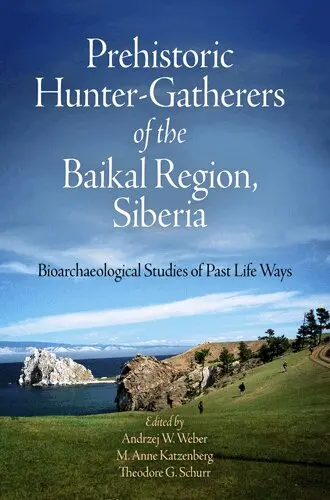
Prehistoric Hunter–Gatherers of the Baikal Regio – Bioarchaeological Studies of Past Life Ways
Bioarchaeological Studies of Past Life Ways
Inbunden, Engelska, 2010
876 kr
Tillfälligt slut
Siberia's Lake Baikal region is an archaeologically unique and emerging area of hunter-gatherer research, offering insights into the complexity, variability, and dynamics of long-term culture change. The exceptional quality of archaeological materials recovered there facilitates interdisciplinary studies whose relevance extends far beyond the region. The Baikal Archaeology Project--one of the most comprehensive studies ever conducted in the history of subarctic archaeology--is conducted by an international multidisciplinary team studying Middle Holocene (about 9,000 to 3,000 years B.P.) hunter-gatherers of the region. Funded by the Social Sciences and Humanities Research Council of Canada, the project includes scholars in archaeology, physical anthropology, ethnography, molecular biology, geophysics, geochemistry, and paleoenvironmental studies. This book presents the current team's research findings on questions about long-term patterns of hunter-gatherer adaptive strategies. Grounded in interdisciplinary approaches to primary research questions of cultural change and continuity over 6,000 years, the project utilizes advanced research methods and integrates diverse lines of evidence in making fundamental and lasting contributions to hunter-gatherer archaeology. Content of this book's DVD-ROM may be found online at this location: http://core.tdar.org/project/376587.