• Fri frakt över 249 kr
  • •
  • Snabba leveranser
  • •
  • Billiga böcker
Kundservice

Du är på sajten för privatpersoner.

Företag, bibliotek eller offentlig verksamhet?

Du handlar på classic.bokus.com, där alla dina funktioner finns intakta.
Till classic.bokus.com
Bokus logotyp. Gå till startsidan.
  • Erbjudanden
  • Nyheter
  • Student
  • Topplistor
  • Barn & ungdom
  • Bokus Play
  • E-böcker
  • Pocketböcker
  • Spel & pussel

10% studentrabatt med kod TERM26

Sidfot

Mina sidor

    Hjälp

    • Kundservice
    • Vanliga frågor och svar
    • Frakt och leverans
    • Retur vid ångerrätt
    • Reklamera vara
    • Betalning
    • Köpvillkor
    • Allmänna villkor
    • Information om webbplatsens tillgänglighet

    Om Bokus

    • Om oss
    • Pressrum
    • För studenter
    • För företag
    • För bibliotek och offentlig verksamhet
    • För leverantörer
    • Hållbarhet

    Populärt

    • Aktuella erbjudanden
    • Presentkort
    • Studentlitteratur
    • Nya böcker
    • Topplistor
    • Signerade böcker
    • Engelska böcker

    Inspiration

    • Boktips
    • BookTok
    • Populära bokserier
    • Barnbokskaraktärer
    • Populära författare
    Logotyp för Bokus
    Följ oss på Facebook (extern länk)Följ oss på Instagram (extern länk)Följ oss på YouTube (extern länk)Följ oss på TikTok (extern länk)
    bokus @ CookiesAnpassa cookiesIntegritetspolicyKöpvillkor
    Till Citymail hemsida (extern länk)Till Budbee hemsida (extern länk)Till Postnord hemsida (extern länk)Till Schenker hemsida (extern länk)Till Early Bird hemsida (extern länk)Till Walleys hemsida (extern länk)
    1. Samhälle och politik
    2. Samhälle och kultur
    3. Kultur och medier
    4. Kulturvetenskap

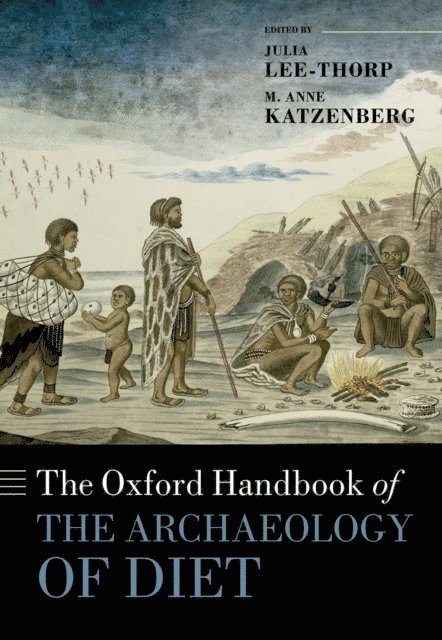
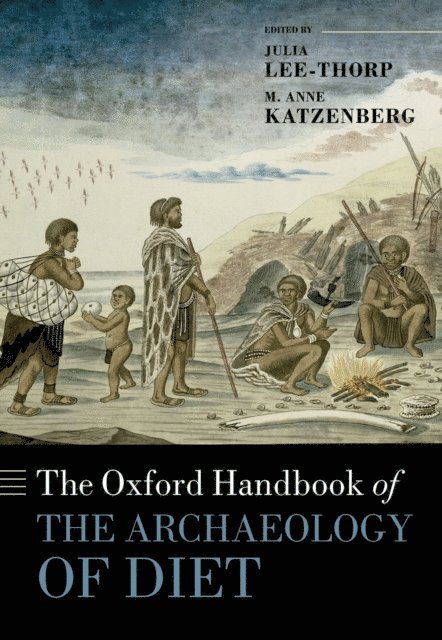
    The Oxford Handbook of the Archaeology of Diet

    AvJulia Lee-Thorp,M. Anne Katzenberg

    Inbunden, Engelska, 2024

    Del i serien Oxford Handbooks

    2 485 kr

    Beställningsvara. Skickas inom 5-8 vardagar. Fri frakt över 249 kr.

    Beskrivning

    Humans are unique among animals for the wide diversity of foods and food preparation techniques that are intertwined with regional cultural distinctions around the world. The Oxford Handbook of the Archaeology of Diet explores evidence for human diet from our earliest ancestors through the dispersal of our species across the globe. As populations expanded, people encountered new plants and animals and learned how to exploit them for food and other resources. Today, globalization aside, the results manifest in a wide array of traditional cuisines based on locally available indigenous and domesticated plants and animals. How did this complexity emerge? When did early hominins actively incorporate animal foods into their diets, and later, exploit marine and freshwater resources? What were the effects of reliance on domesticated grains such as maize and rice on past populations and the health of individuals? How did a domesticated plant like maize move from its place of origin to the northernmost regions where it can be grown? Importantly, how do we discover this information, and what can be deduced about human health, biology, and cultural practices in the past and present? Such questions are explored in thirty-three chapters written by leading researchers in the study of human dietary adaptations. The approaches encompass everything from information gleaned from comparisons with our nearest primate relatives, tools used in procuring and preparing foods, skeletal remains, chemical or genetic indicators of diet and genetic variation, and modern or historical ethnographic observations. Examples are drawn from across the globe and information on the research methods used is embedded within each chapter. The Handbook provides a comprehensive reference work for advanced undergraduate and graduate students and for professionals seeking authoritative essays on specific topics about diet in the human past.

    Produktinformation

    • Utgivningsdatum:2024-07-04
    • Mått:180 x 252 x 45 mm
    • Vikt:1 654 g
    • Format:Inbunden
    • Språk:Engelska
    • Serie:Oxford Handbooks
    • Antal sidor:784
    • Förlag:OUP OXFORD
    • ISBN:9780199694013

    Utforska kategorier

    • Kulturvetenskap inom Samhälle och politik
    • Antropologi inom Samhälle och politik
    • Arkeologiska perioder och områden inom Historia och arkeologi

    Mer om författaren

    Julia Lee-Thorp obtained her PhD in Archaeology at the University of Cape Town in 1989, where she continued to work before her appointment as Research Professor of Archaeological Sciences at the University of Bradford in 2005. In 2010 she moved to the School of Archaeology, University of Oxford before retiring in 2019. She is best known for demonstrating the long-term integrity of stable isotopes in enamel, findings that opened opportunities to explore dietary ecology and environments in the distant and more recent pasts. She has carried out research across the globe, but her main focus remains in African archaeology and palaeoanthropology.M. Anne Katzenberg completed her PhD in Anthropology at the University of Toronto in 1983. After teaching there for two years, she accepted a position at the University of Calgary where she remained until her retirement in 2019. Her research focused on past human diet and the interaction of diet, disease, and population dynamics. She contributed to early research on the use of nitrogen isotopes for determining the duration of nursing and to debates on the timing of maize cultivation and intensification in North America. Her research collaborations include documenting riverine dietary adaptations in Texas and exploring population dynamics in ancient Paquimé, Mexico.

    Recensioner i media

    This is a reference book and a set of exemplary studies of diet. As such, it is valuable for all libraries that focus on the archaeology of diet in the regions covered.

    Innehållsförteckning

    • Julia Lee-Thorp and M. Anne Katzenberg: Preface Part I: Evolutionary Perspectives 1: Frederick E. Grine: Reconstructing extinct hominin diets: Paradigms, prospects, and pitfalls 2: Margaret J. Schoeninger, William C. McGrew, and Caroline Phillips: Evolutionary implications of non-human primate diets 3: Sireen El Zaatari and Peter S. Ungar: From earlier to later hominins: dental microwear approaches and perspectives 4: Matt Sponheimer and Julia Lee-Thorp: Tooth enamel biogeochemistry and early hominin diets 5: Gabriele A. Macho: The implications of morphology, mechanics, and microstructure of teeth for understanding dietary drivers in human evolution 6: Richard Wrangham and Rachel Carmody: Influences of the control of fire on the energy value and composition of the human diet 7: Henry T. Bunn, Travis Rayne Pickering, and Manuel Dominguez-Rodrigo: How meat made us human: Archaeological evidence of the diet and foraging capabilities of Early Pleistocene Homo in East Africa 8: Eugene Morin, John D. Speth, and Julia Lee-Thorp: Middle Palaeolithic diets: a critical examination of the evidence 9: Antonieta Jerardino: Shell middens and seashores: Marine molluscs in the diets of emerging modern humans in southern Africa Part II: Diversity of Human Diets in the Past 10: M. Anne Katzenberg: Introductory essay: Introduction to Diversity of Human Diets in the Past Africa 11: Peter Mitchell: 'Discourse on rivers, and fish and fishing': Freshwater aquatic resources and hunter-gatherers in southern African prehistory 12: Judith Sealy: Intensification, diet, and group boundaries among Later Stone Age coastal hunter-gatherers along the western and southern coasts of South Africa Eurasia 13: Robert J. Losey, M. Anne Katzenberg, and Tatiana Nomokonova: Middle Holocene fishing and hunting in the Baikal region of Siberia 14: Rick J. Schulting: Dietary shifts at the Mesolithic-Neolithic transition in Europe: An overview of the stable isotope data 15: Dorian Q. Fuller and Cristina Castillo: Diversification and cultural construction of a crop: the case of glutinous rice and waxy cereals in the food cultures of eastern Asia 16: Amy Bogaard and Amy Styring: Plants, people, and diet in the Neolithic of western Eurasia The Americas 17: John P. Hart: New trends in prehistoric Northeastern North American agriculture evidence: a view from Central New York 18: Clark Spencer Larsen: Dietary transition in the Late Holocene Eastern North America: the orofacial record of masticatory function, nutritional quality, and health in maize farmers 19: George R. Milner, Jane E. Buikstra, and Anna C. Novotny: Stepwise transition to agriculture in the American Midcontinent 20: Christine D. White: Isotopic anthropology of ancient Maya diets 21: J. Scott Raymond: Evolution of diet and the food economy in Peru and Ecuador: 10,000 to 500 B.P. Oceania and South East Asia 22: Melinda S. Allen: Dietary opportunities and constraints on islands: A multi-proxy approach to diet in the southern Cook Islands 23: Judith Littleton and Rachel Scott: Identifying dietary variability in Southern Australia from scarce remains 24: Cristina Castillo and Dorian Q. Fuller: Bananas: The spread of a tropical forest fruit as an agricultural staple Part 3: Diet, Health, and Disease across the Lifespan 25: Stanley J. Ulijaszek: Diet, nutrition, and disease across the lifespan 26: Sabrina C. Agarwal and Melanie J. Miller: Nutrition and bone loss in antiquity 27: Pascale Gerbault, Catherine Walker, Katherine Brown, Ekaterina Yonova-Doing, and Mark G. Thomas: The evolution of lactose tolerance in dairying populations 28: Linda M. Reynard: How 'best' to determine trophic levels in archaeological agricultural communities 29: Frank Huelsemann, Karsten Koehler, and Ulrich Flenker: Effects of heavy exercise and restricted diet regimes on nitrogen balance and body composition 30: Emöke J.E. Szathmáry: Pre-contact diets of indigenous subarctic peoples of North America 31: Emöke J.E. Szathmáry: Dietary change in populations of the North American Subarctic 32: John P. Ziker: Diets of hunter-gatherers in the Arctic and Subarctic 33: Warren M. Wilson and Darna L. Dufour: Reliance upon a toxic staple crop: an anthropological consideration of the Tukanoan Amerindian cultivation of manioc (Manihot esculenta Crantz ssp. esculenta) in Northwestern Amazonia