254 kr
Arkeologiska perioder och områden
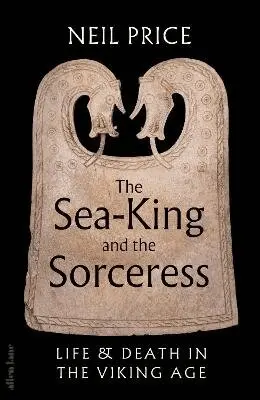
- Inbunden, Engelska, 2026The Sunday Times bestselling author of The Children of Ash and Elm and award-winning expert on the Vikings brings us even closer to their worldWho do we think of when we think about the Vikings? Most of us are familiar with the seafaring marauders who raided, traded and settled the coasts of Europe between the eighth and eleventh centuries. In fact, those warriors made up only a small minority among a diverse people who had many roles and callings.In this eye-opening and often moving book, Neil Price takes us on a journey across the Viking world, revealing the complex, varied and richly textured lives of those who inhabited it through the intimate context of their burials. Traversing a vast Scandinavian diaspora that stretched from the eastern Steppe all the way to Newfoundland, we meet townsfolk and farmers, the free and the enslaved, immigrants and diplomats, followers of many gods and the worshippers of one, sea-kings, shamans, sorceresses, and – of course – the ferocious pirates who gave the víkingar their name.Unexpected encounters along the way challenge received wisdom about Norse culture, spiritual practices and politics, showing how they transformed their times and in doing so were changed themselves. How did a woman of Persian ancestry come to be interred in the richest Viking grave ever found? What do an arctic hunter and a Sámi nomad tell us about a fast-changing society’s notions of identity and belonging? How did these individuals see themselves, and what were their attitudes towards the elderly, infirm and children in their midst?Drawing on the latest archaeological research and scientific analysis, The Sea-King and the Sorceress brings us closer to understanding the lives and times of the Vikings. The era that bears their name will never seem so simple again.
- Häftad, Engelska, 2026
209 kr
Skickas inom 5-8 vardagar
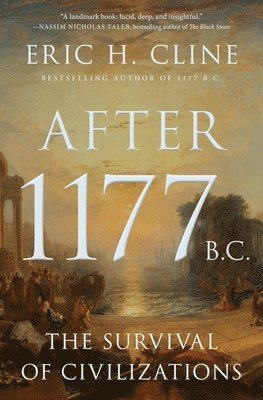
In this gripping sequel to his bestselling 1177 B.C., Eric Cline tells the story of what happened after the Bronze Age collapsed—why some civilizations endured, why some gave way to new ones, and why some disappeared forever“A landmark book: lucid, deep, and insightful. . . . You cannot understand human civilization and self-organization without studying what happened on, before, and after 1177 B.C.”—Nassim Nicholas Taleb, bestselling author of The Black SwanAt the end of the acclaimed history 1177 B.C., many of the Late Bronze Age civilizations of the Aegean and Eastern Mediterranean lay in ruins, undone by invasion, revolt, natural disasters, famine, and the demise of international trade. An interconnected world that had boasted major empires and societies, relative peace, robust commerce, and monumental architecture was lost and the so-called First Dark Age had begun. Now, in After 1177 B.C., Eric Cline tells the compelling story of what happened next, over four centuries, across the Aegean and Eastern Mediterranean world. It is a story of resilience, transformation, and success, as well as failures, in an age of chaos and reconfiguration.After 1177 B.C. tells how the collapse of powerful Late Bronze Age civilizations created new circumstances to which people and societies had to adapt. Those that failed to adjust disappeared from the world stage, while others transformed themselves, resulting in a new world order that included Phoenicians, Philistines, Israelites, Neo-Hittites, Neo-Assyrians, and Neo-Babylonians. Taking the story up to the resurgence of Greece marked by the first Olympic Games in 776 B.C., the book also describes how world-changing innovations such as the use of iron and the alphabet emerged amid the chaos.Filled with lessons for today's world about why some societies survive massive shocks while others do not, After 1177 B.C. reveals why this period, far from being the First Dark Age, was a new age with new inventions and new opportunities. - Inbunden, Svenska, 2025
285 kr
Skickas
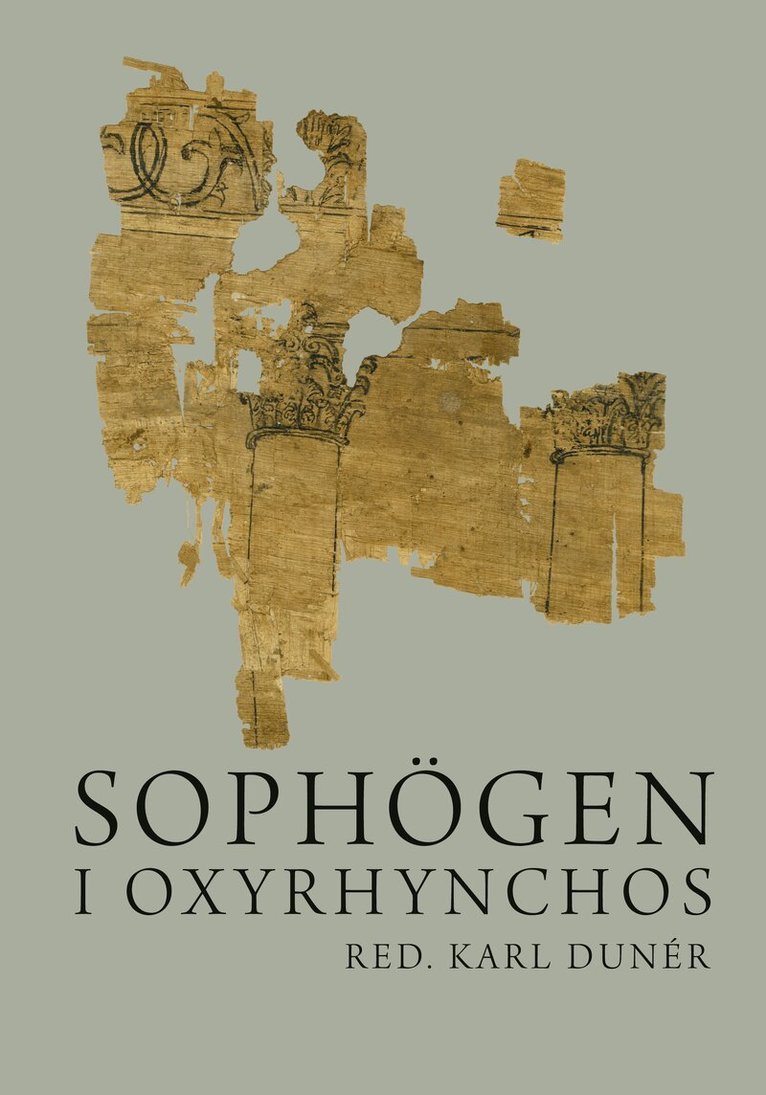
Sophögen i den gamla staden Oxyrhynchos i Egypten grävdes ut av brittiska arkeologer kring sekelskiftet 1900 och visade sig rymma enorma skatter: en halv miljon grekiska papyrustexter av väldigt olika karaktär. Utifrån de sextusen hittills dechiffrerade texterna har Karl Dunér gjort ett rikt och varierat urval som fördjupar vår bild av antikens liv. Översatta privatbrev blandas med tidigare okända dikter och dramer, besvärjelser med köpekontrakt, efterlysningar med obscena komediscener – man kommer rakt in i enskilda liv för tvåtusen år sen och möter poeter som man inte visste fanns.
Sophögen i Oxyrhynchos innehåller också essäer av forskarna Ingela Nilsson, Denis M. Searby, Alexander Andrée och Paul Linjamaa. Här finns även ett flertal återgivningar av papyrus-fragment.
- Inbunden, Svenska, 2021
291 kr
Skickas
»För den historiskt intresserade är boken en veritabel guldgruva.« Kungsälvs-posten
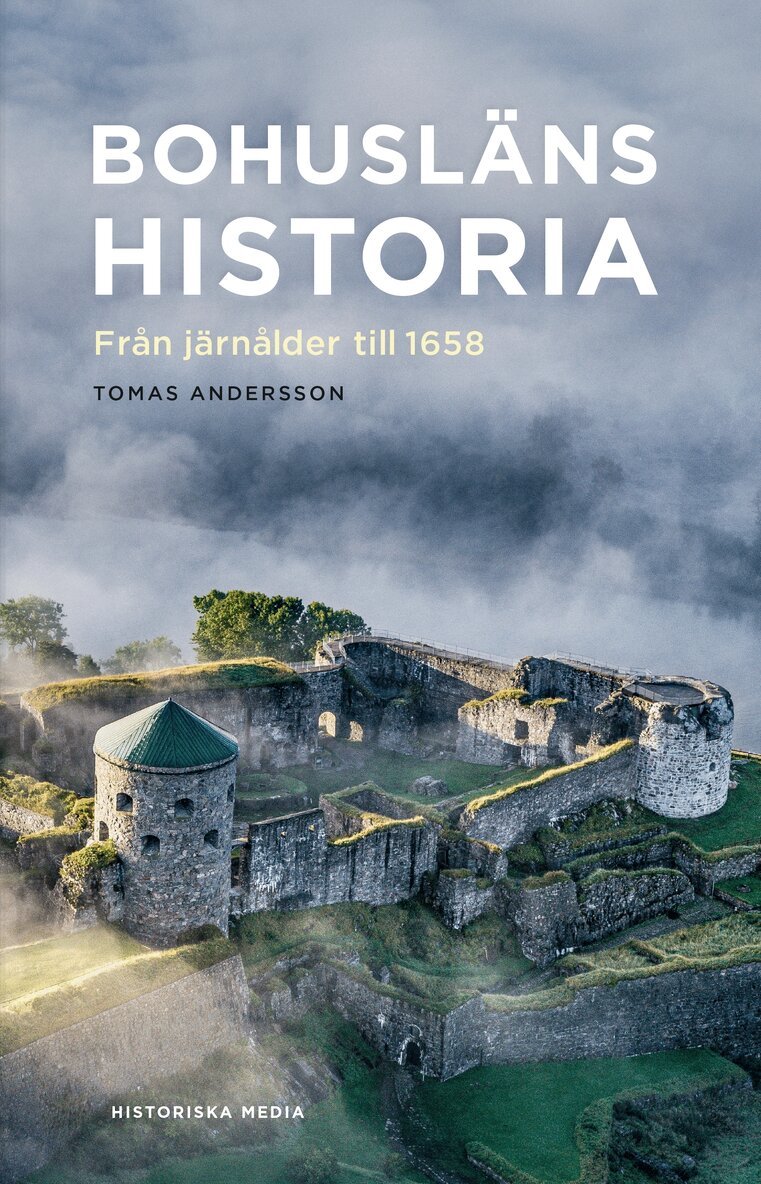
Bohuslän har varit skådeplats för många stormiga strider under århundradenas lopp. Danska och norska stormän har kämpat om herraväldet, vikingar har gett sig ut på Nordsjön för att kolonisera de brittiska öarna, Island och Grönland. Men här blomstrade också Kungahälla, Norges mest betydande stad under 1100-talet, och en rad andra livliga handelsplatser utmed älven och kusten.
På Bohus fästning tar flera färgstarka personer plats på scen - kung Magnus Eriksson, som under 1300-talet regerade över både Norge och Sverige, och senare unionsdrottningen Margareta. Heliga Birgitta dyker också upp, både i rollen som bröllopsgäst och lärare åt Magnus Erikssons hustru, Blanka av Namur.
Tomas Andersson är arkeolog, historiker och författare. I Bohusläns historia - som tar avstamp i yngre järnålder och sträcker sig fram till freden i Roskilde 1658 - riktar han allt strålkastarljus mot landområdet som på 1300-talet hade kunnat utvecklas till ett eget mellannordiskt kungarike. För första gången i bokform får området sin egen historia berättad, fri från norska, danska och svenska övertoner.
- Häftad, Engelska, 2024
727 kr
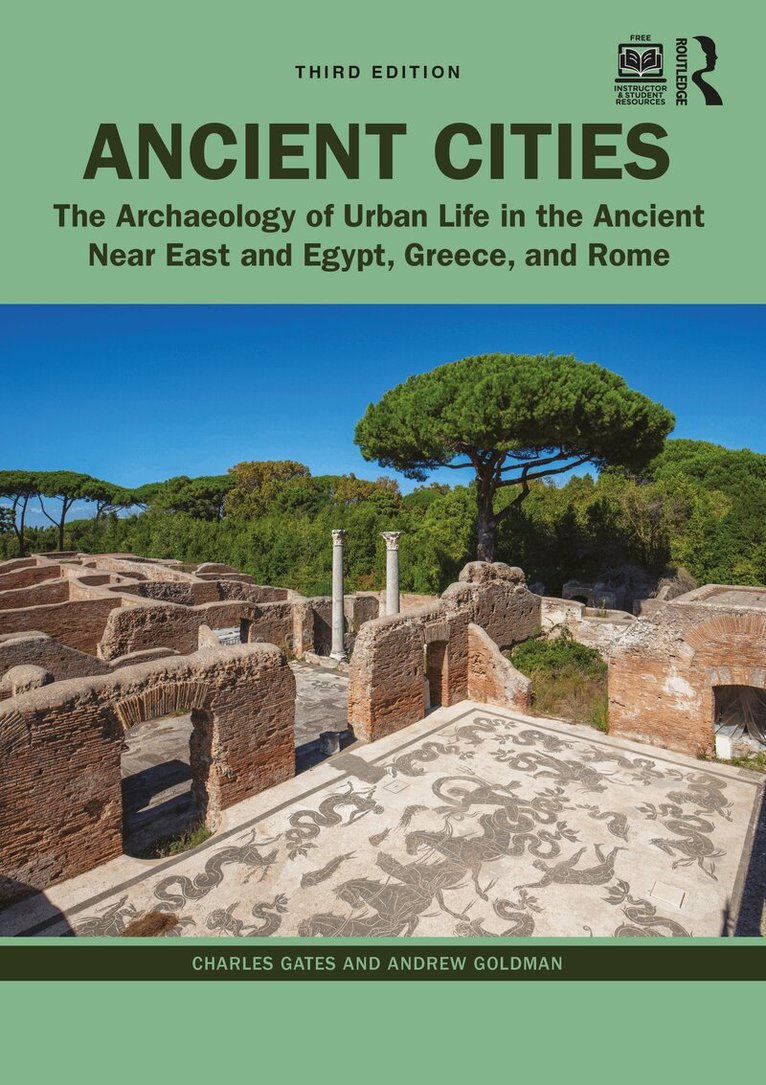
The third edition of Ancient Cities surveys the cities of the Ancient Near East, Egypt, and the Greek, Etruscan, and Roman worlds from the perspectives of archaeology and architectural history, bringing to life the physical world of ancient city dwellers by concentrating on archaeological evidence.Urban form is the focus: the physical appearance and overall plans of cities, their architecture and natural topography, and the cultural and historical contexts in which they flourished. Attention is also paid to non-urban features such as religious sanctuaries and burial grounds, places and institutions that were a familiar part of the city dweller’s experience. Objects or artifacts that furnished everyday life are discussed, such as writing systems, pottery, sculpture, wall paintings, mosaics, and coins. Ancient Cities is unusual in presenting this wide range of Old World cultures in such comprehensive detail, giving equal weight to the Preclassical and Classical periods, and in showing the links between these ancient cultures. In this new edition, in which Andrew Goldman has joined Charles Gates in updating the volume, readers and lecturers will be delighted to see a major revision of the chapters on Greek cities in South Italy and Sicily, the Etruscans, the development of the capital city, Rome, during the Republic as well as the Empire, and the end of the ancient city.This new edition includes several new and updated user-friendly features, such as:Clear and accessible language, assuming no previous background knowledgeLavishly illustrated, with almost 350 line drawings, maps, and photographs, including new contributions from Neslihan Yılmaz Tekman adding to her already acclaimed illustrationsSuggestions for further reading for each chapterA companion website with images, study guides, and an interactive timeline. With its comprehensive presentation of ancient Mediterranean and Near Eastern cities, its rich collection of illustrations, and its companion website, Ancient Cities remains an essential textbook for university and high school students across a wide range of archaeology, ancient history, and ancient Near Eastern, Biblical, and Classical Studies courses. - LjudbokSvenska, 2017
99 kr
Lyssna direkt efter köp
Vinnare av Augustpriset 2015 och utnämnd till "Årets bok om svensk historia 2015" av Nättidningen Svensk Historia
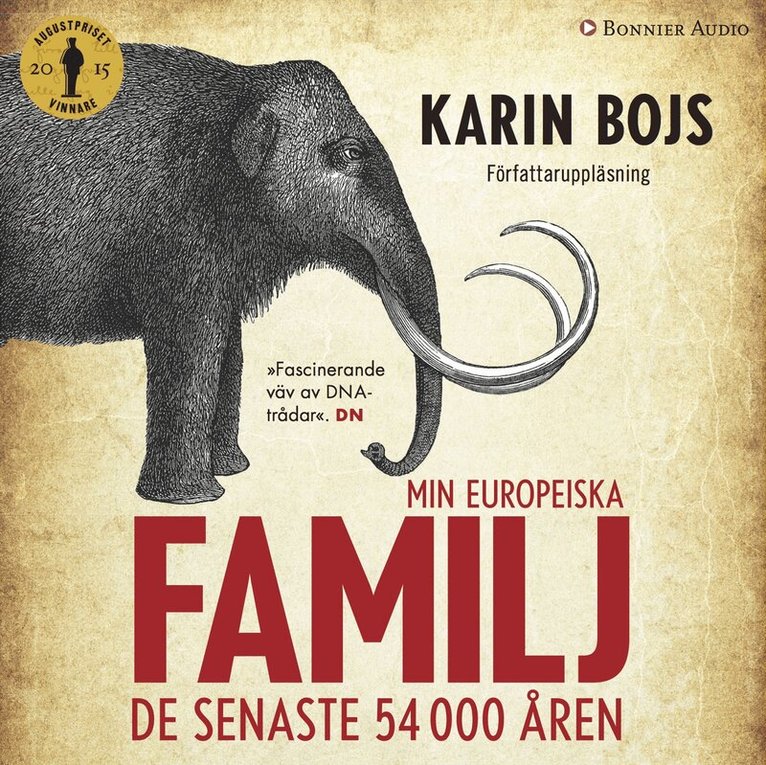
Vetenskapsjournalisten Karin Bojs bestämde sig för att släktforska på djupet och låta DNA-trådarna knyta ihop henne själv med forntidens människor. Hon läste studier, intervjuade forskare och reste i ett tiotal länder för att följa spåren bakåt. Sedan 1980-talet har DNA-tekniken genomgått en enastående utveckling. Den har revolutionerat såväl kriminalteknikers arbete som biologisk och medicinsk forskning, och har på senare år börjat bidra till ny kunskap inom arkeologi och historia. Till och med släktforskande privatpersoner har börjat använda DNA som verktyg. Med hjälp av små variationer i DNA-sekvensen går det numera att hitta kusiner, sysslingar och bryllingar, och även släktingar som levde för mycket länge sedan – under den senaste istiden och ännu längre tillbaka. Resultatet av Karin Bojs arbete blev en bok om hennes ursprung och hennes familj. Men också om oss andra. Vi är ju släkt. Någonstans, någon gång levde vår senaste gemensamma förmoder och förfader. DNA-trådarna knyter ihop oss alla.
- Häftad, Engelska, 1999
313 kr
Skickas
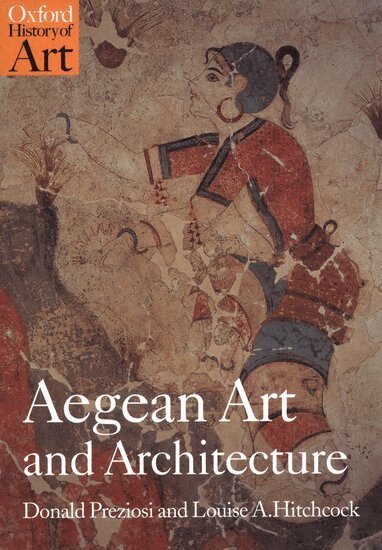
The amazing discovery of the 'first European civilization' in Crete, Greece and the Aegean islands during the late nineteenth and early twentieth centuries was beyond what anyone had imagined. Beginning with the Neolithic period, before 3000 BCE, and ending at the close of the Bronze Age and the transition to the Iron Age of Hellenic Greece (c.1000 BCE), this is the first comprehensive introduction to the visual arts and architecture of this extraordinary era. This book introduces the reader to the historical and social contexts within which the arts - pottery, gold, silver, and ivory objects, gravestone reliefs, frescoes, and architecture - of the Aegean area developed. It examines the functions they served, and the ways in which they can be read as evidence for the interactions of many different peoples and societies in the eastern Mediterranean. It also provides an up-to-date critical historiography of the field in its relationship to the growth of ancient art history, archaeology, and museology in the nineteenth and twentieth centuries, giving a contemporary audience a clear appreciation of what has been at stake in the uncovering and reconstruction of this ancient society. - Häftad, Engelska, 2011
343 kr
Skickas inom 5-8 vardagar
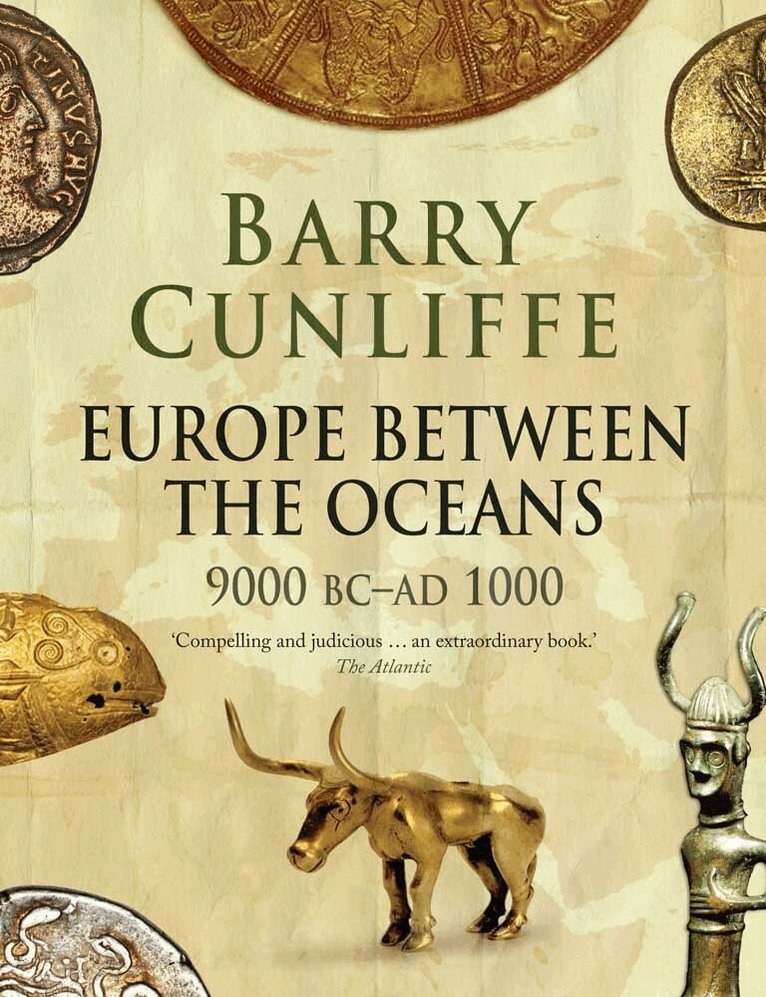
A sensational, interdisciplinary work which entirely reorients our understanding of Europe from 10,000 BC to the time of the VikingsIn this magnificent book, distinguished archaeologist Barry Cunliffe reframes our entire conception of early European history, from prehistory through the ancient world to the medieval Viking period. Cunliffe views Europe not in terms of states and shifting political land boundaries but as a geographical niche particularly favored in facing many seas. These seas, and Europe’s great transpeninsular rivers, ensured a rich diversity of natural resources while also encouraging the dynamic interaction of peoples across networks of communication and exchange. The development of these early Europeans is rooted in complex interplays, shifting balances, and geographic and demographic fluidity.Drawing on archaeology, anthropology, and history, Cunliffe has produced an interdisciplinary tour de force. His is a bold book of exceptional scholarship, erudite and engaging, and it heralds an entirely new understanding of Old Europe. - Inbunden, Svenska, 2020
447 kr
Skickas
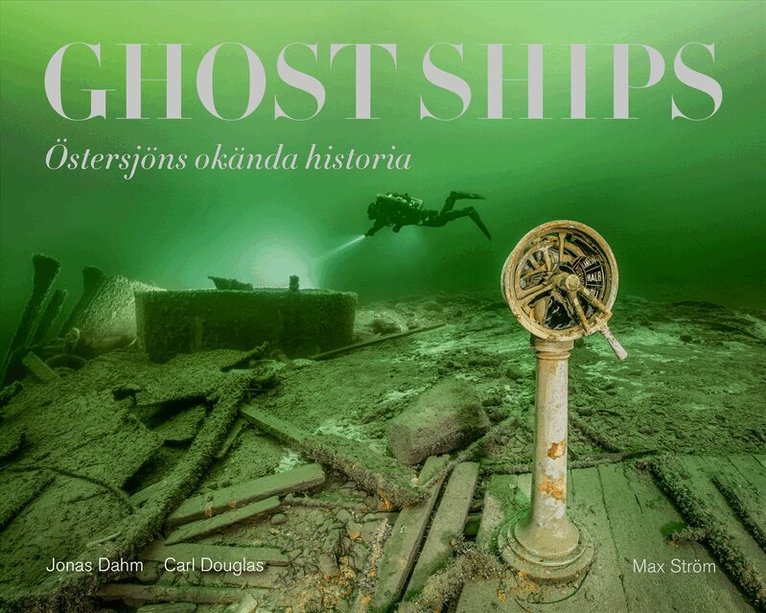
I denna magnifika fotobok får vi följa med dykarna Jonas Dahm och Carl Douglas till de mest spektakulära vraken i Östersjön. Detta unika hav rymmer närmare 100 000 vrak – det kalla vattnet och avsaknaden av skeppsmask har skapat en skattkista för vrakletare. Det är regalskepp från stormaktstiden, ståtliga träskepp från 1700-talet, lastfartyg från 1800-talet och ubåtar från andra världskriget. Ombord på dessa sjunkna skepp har tiden stått stilla – ofta känns det som om besättningen nyss lämnat fartyget. Vraken blir ett slags tidsmaskiner, en märklig blandning av brutal dramatik och det mjukt insomnade.
Dessa fantastiska bilder av vrak har väckt uppmärksamhet över hela världen och de visas här för första gången i riktigt stort format.
- Storpocket, Svenska, 2023
159 kr
Mycket har hunnit hända inom DNA-forskningen sedan Karin Bojs skrev Augustprisvinnaren Min europeiska familj - de senaste 54 000 åren (2015) och uppföljaren Svenskarna och deras fäder - de senaste 11 000 åren (2016).
Bland annat börjar forskare kunna urskilja hur vandringsmönstren har skilt sig åt för Europas fäder och mödrar.
En hel del, visar det sig.
Karin Bojs borrar i äldre påståenden om folkvandringar och könsroller, och visar vad den allra senaste vetenskapen kan säga.
Resan går från regnskogens schimpanser till Nordens sköldmör. Via bland annat neandertal-sex, de första hundarna, den första metallen, de första tama hästarna och ett 5000 år gammalt incestfall på Irland.
- Inbunden, Svenska, 2022
357 kr
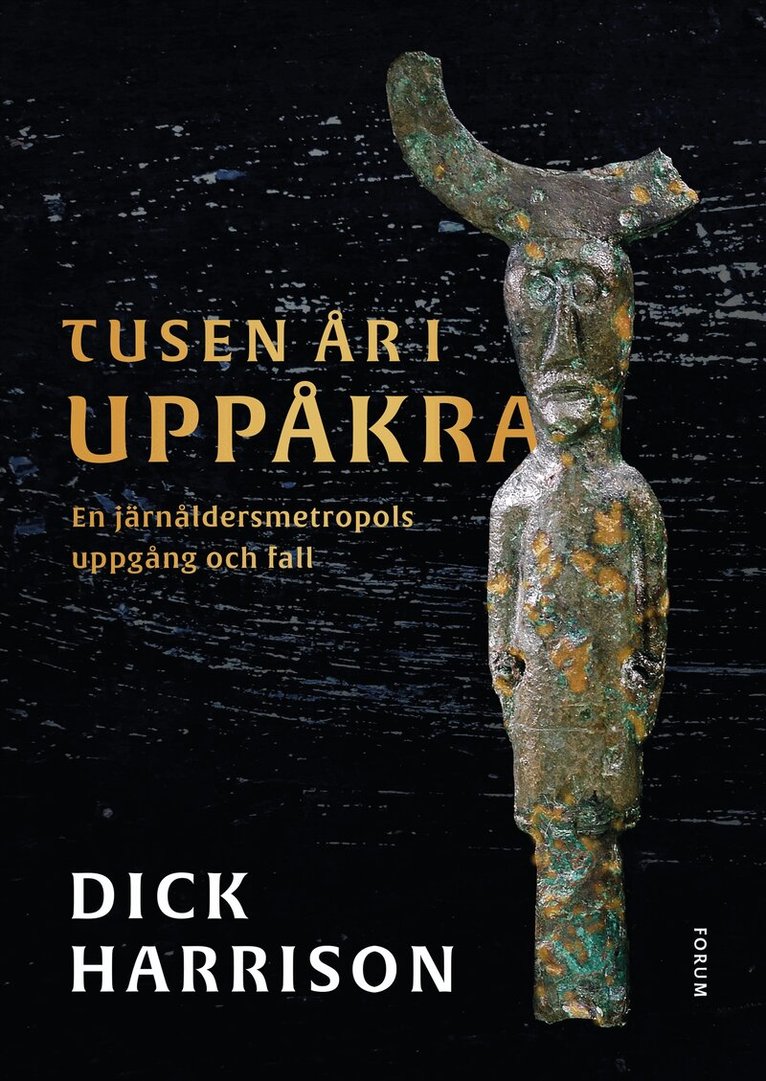
I Uppåkra utanför Lund breder odlingsfälten ut sig över den skånska slätten. Men i över tusen år fanns här ett rikt maktcentrum stort som en stad, med hövdingahall, tempel och mängder av hantverkshus och gårdar. Det var en unik plats i den skandinaviska järnålderns historia, betydligt större än de mer kända Birka och Hedeby, med långväga kontakter ut i världen. Än har bara ett par promille av området grävts ut, ändå har fantastiska fynd hittats som förändrar vår syn på historien.
I "Tusen år i Uppåkra" berättar Dick Harrison om staden som försvann och föll i glömska och ger samtidigt en levande bild av livet i Norden, så som det såg ut på sagornas och hjältedikternas tid – från förromersk järnålder till vikingatid.
- Storpocket, Svenska, 2023
159 kr
Vinnare av Augustpriset 2015 och utnämnd till "Årets bok om svensk historia 2015" av Nättidningen Svensk Historia
Vetenskapsjournalisten Karin Bojs bestämde sig för att släktforska på djupet och låta DNA-trådarna knyta ihop henne själv med forntidens människor. Hon läste studier, intervjuade forskare och reste i ett tiotal länder för att följa spåren bakåt. Sedan 1980-talet har DNA-tekniken genomgått en enastående utveckling. Den har revolutionerat såväl kriminalteknikers arbete som biologisk och medicinsk forskning, och har på senare år börjat bidra till ny kunskap inom arkeologi och historia. Till och med släktforskande privatpersoner har börjat använda DNA som verktyg. Med hjälp av små variationer i DNA-sekvensen går det numera att hitta kusiner, sysslingar och bryllingar, och även släktingar som levde för mycket länge sedan – under den senaste istiden och ännu längre tillbaka. Resultatet av Karin Bojs arbete blev en bok om hennes ursprung och hennes familj. Men också om oss andra. Vi är ju släkt. Någonstans, någon gång levde vår senaste gemensamma förmoder och förfader. DNA-trådarna knyter ihop oss alla.
- Inbunden, Engelska, 2015
1 516 kr
Skickas inom 5-8 vardagar
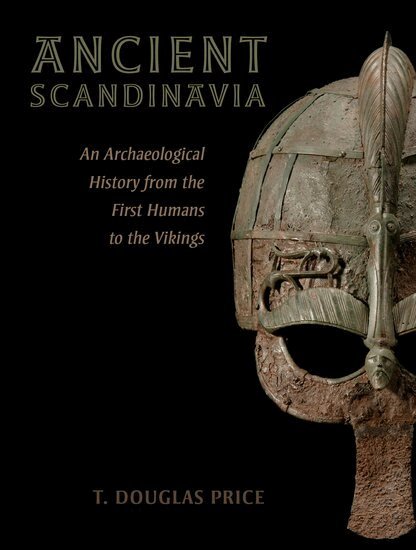
Although occupied only relatively briefly in the long span of world prehistory, Scandinavia is an extraordinary laboratory for investigating past human societies. The area was essentially unoccupied until the end of the last Ice Age when the melting of huge ice sheets left behind a fresh, barren land surface, which was eventually covered by flora and fauna. The first humans did not arrive until sometime after 13,500 BCE. The prehistoric remains of human activity in Scandinavia - much of it remarkably preserved in its bogs, lakes, and fjords - have given archaeologists a richly detailed portrait of the evolution of human society.In this book, Doug Price provides an archaeological history of Scandinavia-a land mass comprising the modern countries of Denmark, Sweden, and Norway-from the arrival of the first humans after the last Ice Age to the end of the Viking period, ca. AD 1050. Constructed similarly to the author's previous book, Europe before Rome, Ancient Scandinavia provides overviews of each prehistoric epoch followed by detailed, illustrative examples from the archaeological record. An engrossing and comprehensive picture emerges of change across the millennia, as human society evolves from small bands of hunter - gatherers to large farming communities to the complex warrior cultures of the Bronze and Iron Ages, which culminated in the spectacular rise of the Vikings. The material evidence of these past societies - arrowheads from reindeer hunts, megalithic tombs, rock art, beautifully wrought weaponry, Viking warships - give vivid testimony to the ancient humans who once called home this often unforgiving edge of the inhabitable world. - Häftad, Engelska, 2018
193 kr
Skickas inom 5-8 vardagar
An account of all the new and surprising evidence now available that contradicts the standard narrative for the beginnings of the earliest civilizations An Economist Best History Book 2017 “Scott is one of those rare academics whose writing is a thing of beauty.”—Rana Dasgupta, The Week “Scott hits the nail squarely on the head by exposing the staggering price our ancestors paid for civilization and political order.”—Walter Scheidel, Financial Times Why did humans abandon hunting and gathering for sedentary communities dependent on livestock and cereal grains, and governed by precursors of today’s states? Most people believe that plant and animal domestication allowed humans, finally, to settle down and form agricultural villages, towns, and states, which made possible civilization, law, public order, and a presumably secure way of living. But archaeological and historical evidence challenges this narrative. The first agrarian states, says James C. Scott, were born of accumulations of domestications: first fire, then plants, livestock, subjects of the state, captives, and finally women in the patriarchal family—all of which can be viewed as a way of gaining control over reproduction. Scott explores why we avoided sedentism and plow agriculture, the advantages of mobile subsistence, the unforeseeable disease epidemics arising from crowding plants, animals, and grain, and why all early states are based on millets and cereal grains and unfree labor. He also discusses the “barbarians” who long evaded state control, as a way of understanding continuing tension between states and nonsubject peoples. - Häftad, Engelska, 2026
169 kr
Skickas
A MUST-READ AS CHRISTOPHER NOLAN'S EPIC FILM 'THE ODYSSEY' SAILS ONTO MOVIE SCREENS THIS SUMMER! THE INSTANT TIMES BESTSELLERAward-winning classicist and historian Emily Hauser takes readers on an epic journey to uncover the true story of the real women behind Ancient Greece’s greatest legends in Homer's epic poems, the Iliad and Odyssey . . . 'Bold and intellectually thrilling.' TOM HOLLAND, historian and co-host of 'The Rest is History' podcast'Absolutely blew me away . . . this book is quite wonderful.' ELODIE HARPER, author of The Wolf Den'A wonderful, beautifully written and important book.' DAN JONES, author of Henry V'A book the world has been waiting for . . . I loved it.' BETTANY HUGHES, author of The Seven Wonders of the Ancient WorldContrary to perceptions built up over three thousand years, ancient history is not all about men – and it's not only men's stories that deserve to be told.In Mythica Emily Hauser tells, for the first time, the extraordinary stories of the real women behind some of the western world’s greatest legends. Following in their footsteps, digging into the history behind Homer’s epic poems, piecing together evidence from the original texts, recent astonishing archaeological finds and the latest DNA studies, she reveals who these women – queens, mothers, warriors, slaves – were, how they lived, and how history has (or has not – until now) remembered them.A riveting new history of the Bronze Age Aegean and a journey through Homer’s epics charted entirely by women – from Helen of Troy, Briseis, Cassandra and Aphrodite to Circe, Athena, Hera, Calypso and Penelope – Mythica is a ground-breaking reassessment of the reality behind the often-mythologized women of Greece’s greatest epics, and of the ancient world itself as we learn ever more about it. - Häftad, Engelska, 2004
217 kr
Skickas inom 5-8 vardagar
A fantastic voyage through 15,000 years of history that laid the foundations for civilisation as we know it by award-winning science writer Steven Mithen.Twenty thousand years ago Earth was in the midst of an ice age. Then global warming arrived, leading to massive floods, the spread of forests and the retreat of the deserts. By 5,000 BC a radically different human world had appeared. In place of hunters and gatherers there were farmers; in place of transient campsites there were towns. The foundations of our modern world had been laid and nothing that came after - the Industrial Revolution, the atomic age, the internet - have ever matched the significance of those events. AFTER THE ICE tells the story of climate change's impact during this momentous period - one that also saw the colonisation of the Americas and mass extinctions of animals throughout the world. Drawing on the latest cutting-edge research in archaeology, cognitive science, palaeontology, geology and the evolutionary sciences, Steven Mithen creates an evocative, original and remarkably complete picture of minds, cultures, lives and landscapes through 15,000 years of history. - Inbunden, Svenska, 2022
270 kr
Skickas
Mycket har hunnit hända inom DNA-forskningen sedan Karin Bojs skrev Augustprisvinnaren Min europeiska familj - de senaste 54 000 åren (2015) och uppföljaren Svenskarna och deras fäder - de senaste 11 000 åren (2016).
Bland annat börjar forskare kunna urskilja hur vandringsmönstren har skilt sig åt för Europas fäder och mödrar.
En hel del, visar det sig.
Karin Bojs borrar i äldre påståenden om folkvandringar och könsroller, och visar vad den allra senaste vetenskapen kan säga.
Resan går från regnskogens schimpanser till Nordens sköldmör. Via bland annat neandertal-sex, de första hundarna, den första metallen, de första tama hästarna och ett 5000 år gammalt incestfall på Irland.
- Häftad, Engelska, 2016
188 kr
Skickas inom 5-8 vardagar
*Ten-year anniversary edition with new introduction from the author*Star Reader Reviews -" ⭐⭐⭐⭐⭐ Captivating, necessary and enlightening." "⭐⭐⭐⭐⭐ Essential. Wonderfully researched.""⭐⭐⭐⭐⭐ This book is as good, if not better, than "Fingerprints of the Gods.""⭐⭐⭐⭐⭐ Read this book. Change your perspective." Graham Hancock - star of Netflix's ANCIENT APOCOLYPSE - is author of the global bestseller Fingerprints of the Gods. A book which remains an astonishing, deeply controversial, wide-ranging investigation of the mysteries of our past and the evidence for Earth's lost civilization.Magicians of the Gods, the sequel to his seminal work, explores how, at the end of the last ice age, fragments from a giant comet caused a global cataclysm, on a scale unseen since the extinction of the dinosaurs, wiping out an advanced civilization from the earth. Making us a species with amnesia, forced to begin again like children with no memory of what went before. This book is filled with completely new evidence, new travels to the world's most mysterious archaeological sites, new insights based on the latest scientific evidence.The impacts, from the comet fragments (a mile wide approaching at more than 60,000 miles an hour) generated huge amounts of heat which instantly liquidized millions of square kilometers of ice, destabilizing the Earth's crust and causing the global deluge that is remembered in myths all around the world.A second series of impacts, equally devastating, causing further cataclysmic flooding, occurred 11,600 years ago, the exact date that Plato gives for the destruction and submergence of Atlantis.But there were survivors - known to later cultures by names such as 'the Sages', 'the Magicians', 'the Shining Ones', and 'the Mystery Teachers of Heaven'. They travelled the world in their great ships doing all in their power to keep the spark of civilization burning, settling at key locations: Gobekli Tepe in Turkey, Baalbek in the Lebanon, Giza in Egypt, ancient Sumer, Mexico, Peru and across the Pacific. Everywhere they went these 'Magicians of the Gods' brought with them the memory of a time when mankind had fallen out of harmony with the universe and paid a heavy price.A memory and a warning to the future... For the comet that wrought such destruction may not be done with us yet. Astronomers believe that a 20-mile 'dark' fragment of the original giant comet remains hidden within its debris stream and threatens the Earth. An astronomical message encoded at Gobekli Tepe, and in the Sphinx and the pyramids of Egypt, warns that the 'Great Return' will occur in our time... - Häftad, Engelska, 2022
156 kr
Skickas
This rich and magisterial work traces Palestine's millennia-old heritage, uncovering cultures and societies of astounding depth and complexity that stretch back to the very beginnings of recorded history.Starting with the earliest references in Egyptian and Assyrian texts, Nur Masalha explores how Palestine and its Palestinian identity have evolved over thousands of years, from the Bronze Age to the present day. Drawing on a rich body of sources and the latest archaeological evidence, Masalha shows how Palestine’s multicultural past has been distorted and mythologised by Biblical lore and the Israel–Palestinian conflict.In the process, Masalha reveals that the concept of Palestine, contrary to accepted belief, is not a modern invention or one constructed in opposition to Israel, but rooted firmly in ancient past. Palestine represents the authoritative account of the country's history. - Häftad, Engelska, 2026
188 kr
Skickas
'Delightful … Venner builds an excellent narrative of a city that was thriving and bustling with life at the very point it was snuffed out.' The Times We all know how the people of Pompeii died. But what about how they lived? __________ In 24 hours, Pompeii will vanish. The morning of the eruption was a day like any other. Julia Felix opens her tavern for another day of business, defying every convention that says a woman can't succeed alone. Petrinus, newly freed from slavery, wrestles with an impossible decision about his future. Politician Gaius Cuspius Pansa prepares to host the Plebian Games, a spectacle that will cement his power forever. In 24 hours, seven lives will change forever. Drawing on the latest archaeological discoveries, Dr Jess Venner brings the ancient streets to life through the eyes of those who lived, worked, loved and ultimately met their fate in Pompeii. Here is a community more complex, diverse and human than we ever imagined.Pompeii is remembered for its destruction, but here we discover the vibrant lives that came before. Richly evocative and immersive, The Lost Voices of Pompeii vividly recreates the final twenty-four hours before the eruption, reminding us exactly what – and who – was lost in 79 AD. This is the story of everything, and everyone, that was lost. __________ For anyone who has ever walked the ruins of Pompeii and wondered what lives beneath the ash, this is the book that answers that question. - Inbunden, Svenska, 2026
129 kr
Skickas
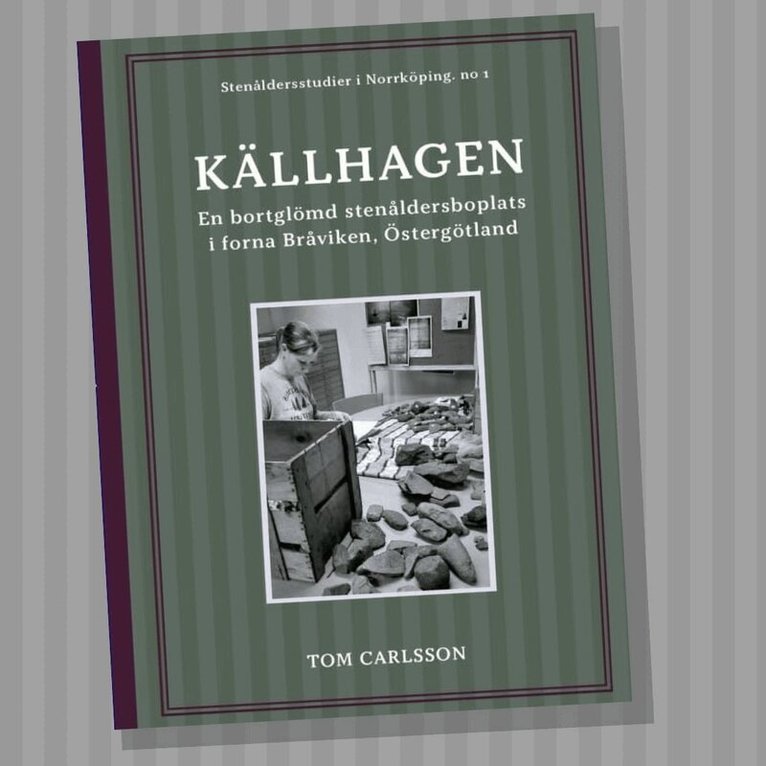
Augusti 1999 får Norrköpings stadsmuseum att brev från Bonni Rehnqvist i Falkenberg. Hon frågar om museet är intresserat av en större fyndsamling från Källhagen utanför Norrköping. Samlingen visar sig bestå av drygt 720 föremål, bland annat ett hundratal stenyxor, från en 7000 år gammal och helt okänd stenåldersboplats. - Häftad, Svenska, 2024
236 kr
Skickas
I Bibeln och arkeologerna beskriver Hans Furuhagen hur arkeologiska utgrävningar i Heliga landet och Mellanöstern har visat lämningar av platser och företeelser som omnämns i Bibeln.
I dag har nya tekniska förutsättningar och ett nytt sätt att se på fyndens kontext påverkat tolkningarna, men många gånger har fynden också blivit omstridda. Både i omgivningen och bland arkeologerna själva har det funnits religiösa, politiska och ekonomiska biavsikter. Arkeologiska fynd blev exempelvis en viktig faktor i samband med staten Israels tillblivelse och fornfynden väcker fortfarande diskussion i detta område.
- Häftad, Engelska, 2010
348 kr
Skickas inom 5-8 vardagar
Roughly half the world's population speaks languages derived from a shared linguistic source known as Proto-Indo-European. But who were the early speakers of this ancient mother tongue, and how did they manage to spread it around the globe? Until now their identity has remained a tantalizing mystery to linguists, archaeologists, and even Nazis seeking the roots of the Aryan race. The Horse, the Wheel, and Language lifts the veil that has long shrouded these original Indo-European speakers, and reveals how their domestication of horses and use of the wheel spread language and transformed civilization. Linking prehistoric archaeological remains with the development of language, David Anthony identifies the prehistoric peoples of central Eurasia's steppe grasslands as the original speakers of Proto-Indo-European, and shows how their innovative use of the ox wagon, horseback riding, and the warrior's chariot turned the Eurasian steppes into a thriving transcontinental corridor of communication, commerce, and cultural exchange.He explains how they spread their traditions and gave rise to important advances in copper mining, warfare, and patron-client political institutions, thereby ushering in an era of vibrant social change. Anthony also describes his fascinating discovery of how the wear from bits on ancient horse teeth reveals the origins of horseback riding. The Horse, the Wheel, and Language solves a puzzle that has vexed scholars for two centuries--the source of the Indo-European languages and English--and recovers a magnificent and influential civilization from the past. - Häftad, Engelska, 2015
182 kr
Skickas inom 5-8 vardagar
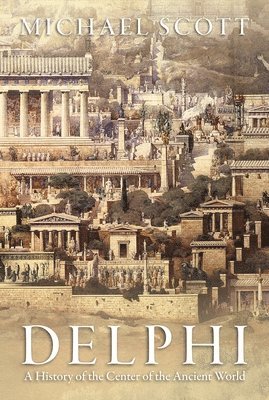
The oracle and sanctuary of the Greek god Apollo at Delphi were known as the "omphalos"--the "center" or "navel"--of the ancient world for more than 1000 years. Individuals, city leaders, and kings came from all over the Mediterranean and beyond to consult Delphi's oracular priestess; to set up monuments to the gods; and to take part in competitions. In this richly illustrated account, Michael Scott covers the history and nature of Delphi, from the literary and archaeological evidence surrounding the site, to its rise as a center of worship, to the constant appeal of the oracle despite her cryptic prophecies. He describes how Delphi became a contested sacred site for Greeks and Romans and a storehouse for the treasures of rival city-states and foreign kings. He also examines the eventual decline of the site and how its meaning and importance have continued to be reshaped. A unique window into the center of the ancient world, Delphi will appeal to general readers, tourists, students, and specialists. - Inbunden, Engelska, 2024
365 kr
Skickas inom 5-8 vardagar
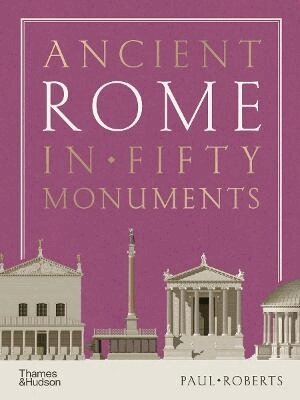
A sweeping new history of the city of Rome, told through its emperors and the monuments they built to make their mark on one of the great capitals of the classical world. ‘What is worse than Nero? What is better than Nero’s Baths?’ – so wrote the poet Martial in the first century AD, demonstrating the power that buildings have on public consciousness. In ancient Rome, who built a monument and why mattered as much as its physical structure. Over centuries and under many different emperors, a small village in Italy was transformed into the crowning glory of an empire. Seeking out the personalities behind the great building projects is key to understanding them. With this firmly in mind, Paul Roberts takes the reader on a tour of ancient Rome, vividly evoking the sights and sounds of the city: from the roar of the crowds at the Circus Maximus and the Colosseum, to the dazzling gleam of the marble- and mosaic-covered baths of Caracalla and Diocletian. He tells this story emperor by emperor, drawing out the political, social and cultural backdrop to the monuments and ultimately the very human motivations that gave rise to their construction – and destruction. These fascinating buildings are further brought to life with reconstructions that show how the ancients themselves would have experienced them. When and why were these monuments built? What did they add to the lives of the people who used them? What impact did they have on the shape of the city? Roberts expertly weaves together the latest archaeological research with social and cultural history, to tell the story of the Eternal City, always in some way rising, falling and being rebuilt. - Häftad, Svenska, 2021
385 kr
Skickas inom 5-8 vardagar
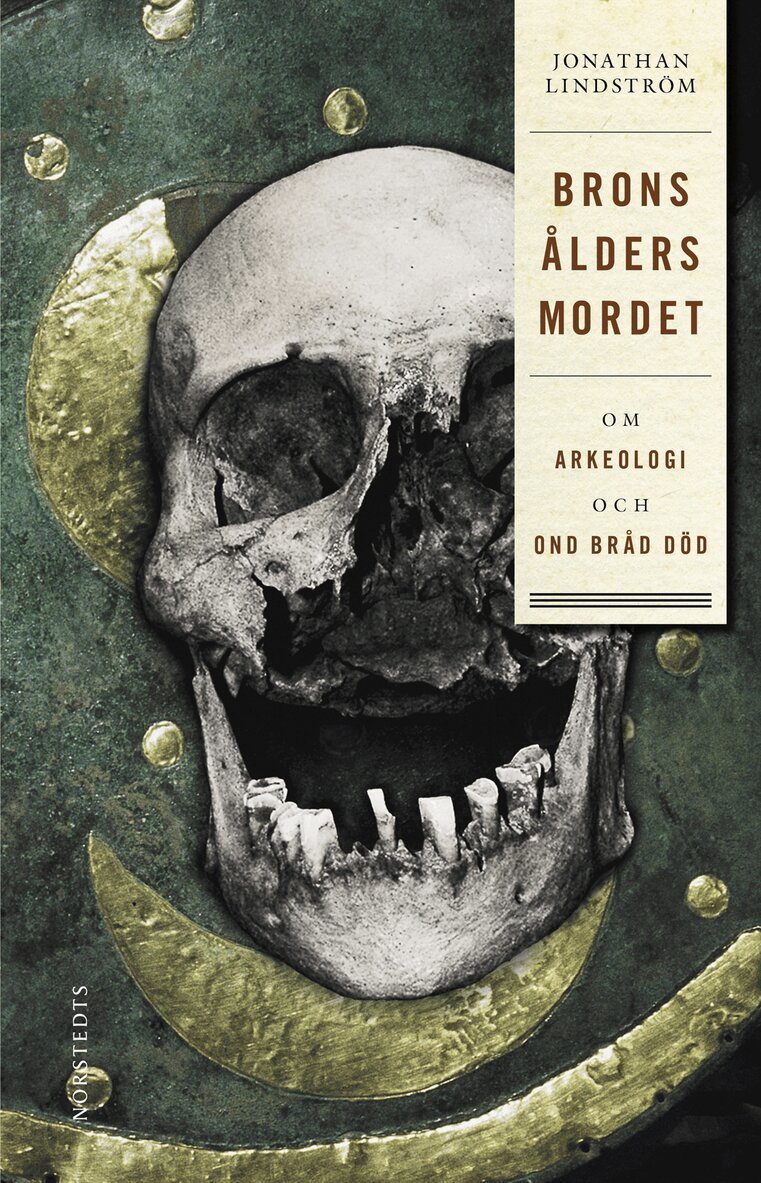
Den 10 juni år 1953 grävde lantarbetare Zetterström upp en ihjälslagen bronsåldersman i en vattensjuk åker på godset Granhammar. Det blev ett halvsekel senare upptakten till en mordutredning med oanade konsekvenser.I jakten på mördaren har arkeologen Jonathan Lindström konsulterat en mängd experter, alltifrån DNA-analytiker, meteorologer och barnmorskor till isotoparkeologer, flintslagningsexperter och livräddare. De har lyckats kartlägga offrets hela liv, från det att han som nyfödd ammades i en bondstugas dunkel, över traumatiska barndomsupplevelser och ett händelserikt och rörligt liv till den olyckliga dag då han mötte en våldsam död. För första gången kommer vi en forntida människa riktigt nära.Upplösningen på mordgåtan blev tack vare modern undersökningsteknik en fullständig överraskning, som sprider ett skarpt ljus över Europas mest mytomspunna förhistoriska period, den gyllene bronsåldern.
- Häftad, Engelska, 2019
265 kr
Skickas
Nearly 13,000 years ago, a catastrophic cosmic event wiped out millions of people and animals, plunging the world into a sudden ice age. Humanity struggled to survive.At Göbekli Tepe in present-day southern Turkey, the descendants of those who witnessed this devastation built a monumental stone sanctuary, encoded with symbolic carvings. These structures were not random decorations; they were a sophisticated record of a forgotten global catastrophe. Soon after, agriculture emerged, civilization began, and human history changed forever.In Prehistory Decoded, Dr. Martin Sweatman reveals how ancient people preserved scientific knowledge through monumental architecture and symbolic art. Drawing on evidence from archeoastronomy, the Younger Dryas impact hypothesis, and coherent catastrophism, he shows how early civilizations recorded celestial cycles, solstices, precession, and cosmic threats long before modern science.This groundbreaking book explores:The astronomical significance of Göbekli Tepe and Karahan Tepe The origins of the zodiac and ancient constellationsHow early proto-writing encoded cosmic knowledge The real meaning behind ancient symbols and cave art Why myths of floods and destruction are rooted in real eventsFrom the Lion-Man of Hohlenstein-Stadel to the Great Sphinx of Giza, this book deciphers a hidden code embedded across ancient cultures worldwide. A code that reveals humanity has faced cosmic disasters before and may face them again.Prehistory Decoded challenges conventional views of history and exposes a far more dangerous ancient world than we’ve been taught. It is a compelling, evidence-based exploration of the true origins of civilization, early science, and humanity’s long memory of cosmic catastrophe. - Del 43 - Fornvårdaren
Mjälleborgen på Frösön
Inbunden, Svenska, 2025190 kr
Skickas inom 5-8 vardagar
Mjälleborgen är en fornborg som under 300-talet eller 400-talet byggdes på Frösön. Borgen var ett gigantiskt bygge av jord, stenmurar och timmer. Den fick en dramatisk historia med flera nedbränningar innan borgberget övergavs någon gång under 700- eller 800-talet. Fornborgen var den enda i det inre av Nordskandinavien. Andra fornborgar fanns däremot i jordbruksbygderna västerut kring Trondheimsfjorden och österut vid norrlandskusten. Vilka byggde borgen och varför? Vilka använde den och hur såg den ut? Dessa frågor gav upphov till det största arkeologiska utgrävningsprojektet någonsin i Jämtland. Arbetena utfördes på 1980-talet av Jamtli länsmuseum och Umeå Universitet. Ove Hemmendorff ledde undersökningarna. Här sammanfattar han utgrävningarna, berättar om nedbrända husrester, raserade murverk och förkolnade befästningsdetaljer. Men även om föremål, matrester i form av ben och sädeskorn, spår av järntillverkning och smide med mera, Borgens historia sätts i ett Mittskandinaviskt perspektiv med utblickar mot den samtida utvecklingen i Tröndelag respektive vid Bottenvikskusten. - Häftad, Engelska, 2021
156 kr
Skickas
** WINNER OF THE PEN HESSELL-TILTMAN PRIZE 2021 **'Beautiful, evocative, authoritative.' Professor Brian Cox'Important reading not just for anyone interested in these ancient cousins of ours, but also for anyone interested in humanity.’ Yuval Noah HarariKindred is the definitive guide to the Neanderthals. Since their discovery more than 160 years ago, Neanderthals have metamorphosed from the losers of the human family tree to A-list hominins.Rebecca Wragg Sykes uses her experience at the cutting edge of Palaeolithic research to share our new understanding of Neanderthals, shoving aside clichés of rag-clad brutes in an icy wasteland. She reveals them to be curious, clever connoisseurs of their world, technologically inventive and ecologically adaptable. Above all, they were successful survivors for more than 300,000 years, during times of massive climatic upheaval.Much of what defines us was also in Neanderthals, and their DNA is still inside us. Planning, co-operation, altruism, craftsmanship, aesthetic sense, imagination, perhaps even a desire for transcendence beyond mortality. Kindred does for Neanderthals what Sapiens did for us, revealing a deeper, more nuanced story where humanity itself is our ancient, shared inheritance. - Häftad, Engelska, 2026
167 kr
Skickas
The empire behind the legendCarthage was a power that dominated the western Mediterranean for almost six centuries before its fall to Rome. The history of the realm and its Carthaginians was subsumed by their conquerors and, along the way, the story of the real Carthage was lost. An ancient North African kingdom, Carthage was the home of Hannibal and of Dido, of war elephants and enormous power and wealth, of great beauty and total destruction.In this landmark new history, Eve MacDonald tells the essential story of the lost culture of Carthage and of its forgotten people, using brand new archaeological analysis to uncover the history behind the legend. A journey that takes us the Phoenician Levant of the early Iron Age to the Atlantic and all along the coast of Africa, Carthage puts the city and the story of North Africa once again at the centre of Mediterranean history. Reclaimed from the Romans, this, for the very first time, is the Carthaginian version of the tale.