M. N. Pearson - Böcker
Visar alla böcker från författaren M. N. Pearson. Handla med fri frakt och snabb leverans.
4 produkter
4 produkter
Merchants and Rulers in Gujarat
The Response to the Portuguese in the Sixteenth Century
Häftad, Engelska, 2021
332 kr
Skickas inom 7-10 vardagar
Merchants and Rulers in Gujarat: The Response to the Portuguese in the Sixteenth Century offers a compelling reevaluation of the Portuguese influence in early modern South Asia, specifically in Gujarat. Challenging the notion that the Portuguese were a mere prelude to the larger colonial enterprises of the Dutch and British, this study posits that their impact during the sixteenth century was profound and disruptive. Unlike the Dutch and English, who integrated as additional foreign merchants within the pre-existing commercial networks, the Portuguese sought to monopolize and tax Indian Ocean trade aggressively. This approach, while never fully realized, allowed them to dominate much of Gujarat’s maritime trade through the Gulf of Cambay for decades. The book explores the mechanisms of this dominance and the complex interplay between Portuguese traders and Gujarati society, particularly its merchants, who operated with little political support or intervention from the region’s rulers.Through a detailed examination of historical records and case studies, the monograph illuminates the broader dynamics of merchant-state relationships in medieval Gujarat. It argues that the Portuguese success stemmed not from superior logistics or economics but from the lack of strong political connections between merchants and rulers in Gujarati society. This disconnect, emblematic of the state’s general disengagement with various social groups, allowed the Portuguese to impose their systems of control with relative ease. The study also contextualizes the Portuguese influence within the slow-changing social and political structures of premodern Gujarat, offering insights into the enduring nature of ruler-subject relations and contributing significantly to the historiography of colonial and maritime Asia.This title is part of UC Press's Voices Revived program, which commemorates University of California Press’s mission to seek out and cultivate the brightest minds and give them voice, reach, and impact. Drawing on a backlist dating to 1893, Voices Revived makes high-quality, peer-reviewed scholarship accessible once again using print-on-demand technology. This title was originally published in 1976.
Merchants and Rulers in Gujarat
The Response to the Portuguese in the Sixteenth Century
Inbunden, Engelska, 2021
780 kr
Skickas inom 7-10 vardagar
Merchants and Rulers in Gujarat: The Response to the Portuguese in the Sixteenth Century offers a compelling reevaluation of the Portuguese influence in early modern South Asia, specifically in Gujarat. Challenging the notion that the Portuguese were a mere prelude to the larger colonial enterprises of the Dutch and British, this study posits that their impact during the sixteenth century was profound and disruptive. Unlike the Dutch and English, who integrated as additional foreign merchants within the pre-existing commercial networks, the Portuguese sought to monopolize and tax Indian Ocean trade aggressively. This approach, while never fully realized, allowed them to dominate much of Gujarat’s maritime trade through the Gulf of Cambay for decades. The book explores the mechanisms of this dominance and the complex interplay between Portuguese traders and Gujarati society, particularly its merchants, who operated with little political support or intervention from the region’s rulers.Through a detailed examination of historical records and case studies, the monograph illuminates the broader dynamics of merchant-state relationships in medieval Gujarat. It argues that the Portuguese success stemmed not from superior logistics or economics but from the lack of strong political connections between merchants and rulers in Gujarati society. This disconnect, emblematic of the state’s general disengagement with various social groups, allowed the Portuguese to impose their systems of control with relative ease. The study also contextualizes the Portuguese influence within the slow-changing social and political structures of premodern Gujarat, offering insights into the enduring nature of ruler-subject relations and contributing significantly to the historiography of colonial and maritime Asia.This title is part of UC Press's Voices Revived program, which commemorates University of California Press’s mission to seek out and cultivate the brightest minds and give them voice, reach, and impact. Drawing on a backlist dating to 1893, Voices Revived makes high-quality, peer-reviewed scholarship accessible once again using print-on-demand technology. This title was originally published in 1976.
318 kr
Skickas inom 7-10 vardagar
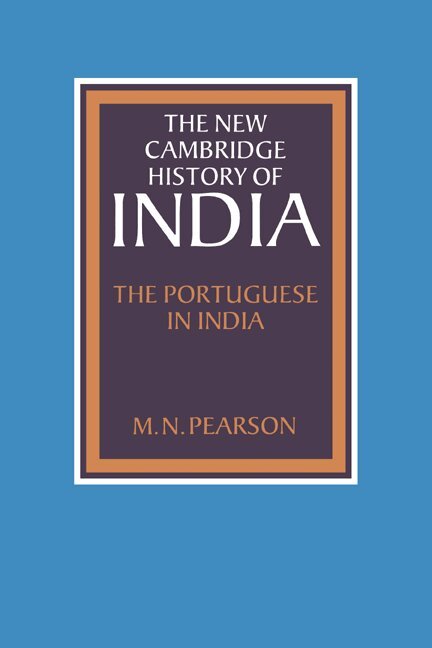
The Portuguese were the first European imperial power in Asia. Dr Pearson's volume of their history is a clear account of their activities in India and the Indian Ocean from the sixteenth century onwards written squarely from an Indian point of view. Laying particular stress on social, economic and religious interaction between Portuguese and Indians, the author argues that the Portuguese in fact had a more limited impact on everyday life in India than is sometimes supposed. Their imperial effort was characterized throughout more by reciprocity and interaction than by any unilateral imposition of Portuguese mores and political structures. The book as a whole has a significance well beyond its ostensible subject since it illuminates a whole range of more general historical themes including religious conversion, race relations, the nature of pre-modern society and early colonialism, and the very beginnings of the world economy.
1 553 kr
Skickas inom 7-10 vardagar
The Portuguese were the first European imperial power in Asia. Dr Pearson's volume of their history is a clear account of their activities in India and the Indian Ocean from the sixteenth century onwards written squarely from an Indian point of view. Laying particular stress on social, economic and religious interaction between Portuguese and Indians, the author argues that the Portuguese in fact had a more limited impact on everyday life in India than is sometimes supposed. Their imperial effort was characterized throughout more by reciprocity and interaction than by any unilateral imposition of Portuguese mores and political structures. The book as a whole has a significance well beyond its ostensible subject since it illuminates a whole range of more general historical themes including religious conversion, race relations, the nature of pre-modern society and early colonialism, and the very beginnings of the world economy.