M. Segal – författare
Visar alla böcker från författaren M. Segal. Handla med fri frakt och snabb leverans.
4 produkter
4 produkter
1 637 kr
Skickas inom 10-15 vardagar
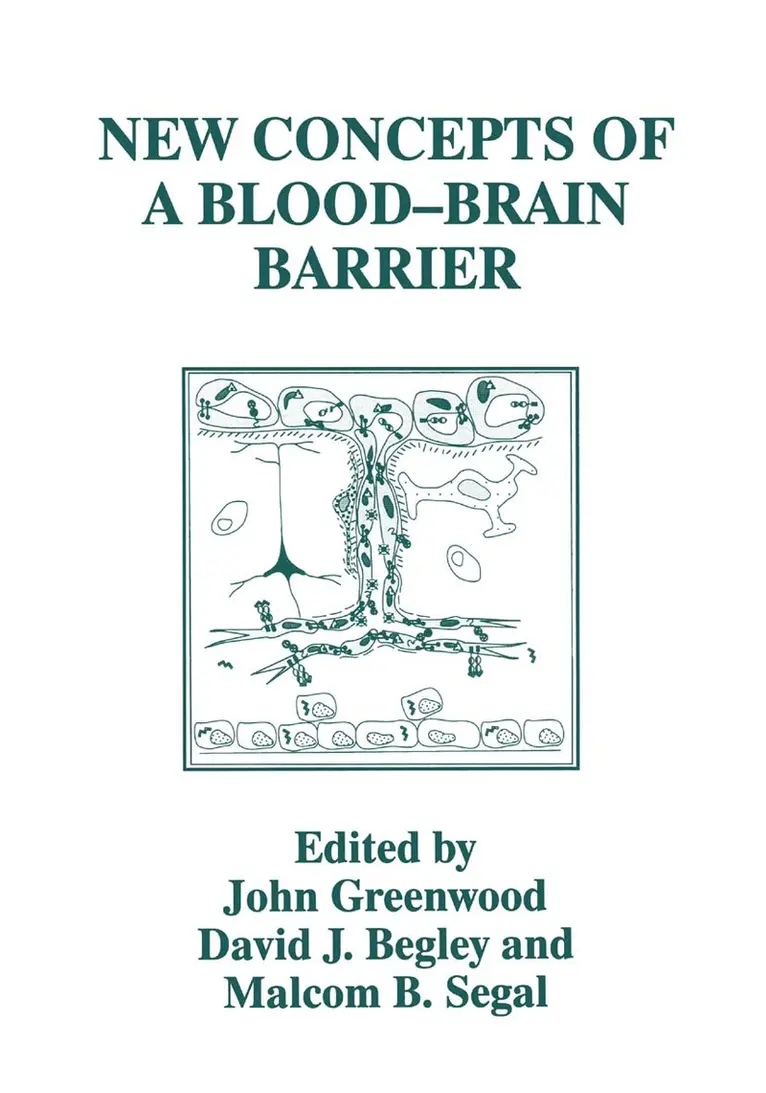
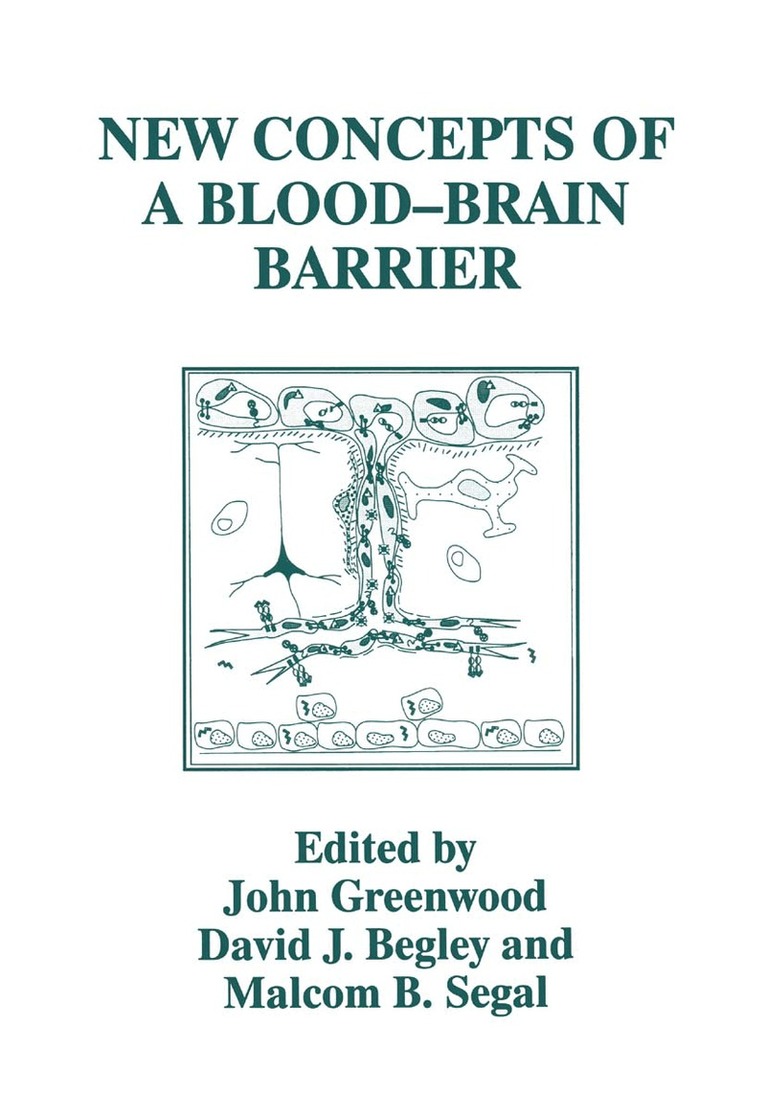
The scientific contribution of Mike Bradbury to the study of the blood-brain barrier is considerable and wide-ranging, starting with his M.D. thesis in 1962 and still continuing today. The varied spectrum of topics relating to the blood-brain barrier presented in this volume and the many geographical locations from which both speakers and participants gathered to attend the symposium are a fitting testament both to Mike's wide-spread influence in the field and to the esteem in which he is held. When we first had the idea of afestschrift to mark Mike's retirement as Professor of Physiology at King's College London and the beginning of a new vie libre as scientist and yachtsman the plan was initially for a gathering of all of the many colleagues, collaborators and students who had worked with him over the years. However what we had not taken into account was the closeness of the international community of workers in the field, the widespread influence that Mike had wielded and the speed with which word would spread. We should have anticipated all three. The final outcome was an excellent symposium with the majority of the world's key workers either contributing or attending. We hope that this volume presents an adequate record of the meeting.
1 589 kr
Skickas inom 10-15 vardagar
Definition of the barrier The interstitial fluid (rSF) of the brain is separated from the blood by the blood-brain barrier (BBB). This barrier must not be thought of as a single entity or as an absolute restriction to all molecules, but as a multiple structure located at several sites within the brain. The first of these interfaces is located at the endothelium of the brain capillaries. Secondly there is a potential site for interchange on the outer linings of the brain between the dura and the arachnoid membranes. Thirdly, there are the choroid plexuses and the cerebrospinal fluid (CSF) which is in contact with the very permeable internal ependymal lining of the brain (Figure 1. 1). Finally there are areas of the brain which lack a blood-brain barrier. These areas constitute the circumventricu lar organs and have leaky capillaries with a barrier at the ependyma which limits the spread of molecules from those regions (Figure 1. 2). Each of these BBB sites has its own characteristic permeability and transport functions. We will now consider the properties of each of these barrier sites between the blood and the brain. THE CEREBRAL CAPILLARY ENDOTHELIUM Morphology This interface has both the largest surface area and the shortest path length between the blood and the brain rSF. The cerebral capillaries, which at first sight seem little different from the rest of the systemic circulation, are in fact unique to the brain.
1 637 kr
Skickas inom 10-15 vardagar
The scientific contribution of Mike Bradbury to the study of the blood-brain barrier is considerable and wide-ranging, starting with his M.D. thesis in 1962 and still continuing today. The varied spectrum of topics relating to the blood-brain barrier presented in this volume and the many geographical locations from which both speakers and participants gathered to attend the symposium are a fitting testament both to Mike's wide-spread influence in the field and to the esteem in which he is held. When we first had the idea of afestschrift to mark Mike's retirement as Professor of Physiology at King's College London and the beginning of a new vie libre as scientist and yachtsman the plan was initially for a gathering of all of the many colleagues, collaborators and students who had worked with him over the years. However what we had not taken into account was the closeness of the international community of workers in the field, the widespread influence that Mike had wielded and the speed with which word would spread. We should have anticipated all three. The final outcome was an excellent symposium with the majority of the world's key workers either contributing or attending. We hope that this volume presents an adequate record of the meeting.
1 637 kr
Skickas inom 10-15 vardagar
Definition of the barrier The interstitial fluid (rSF) of the brain is separated from the blood by the blood-brain barrier (BBB). This barrier must not be thought of as a single entity or as an absolute restriction to all molecules, but as a multiple structure located at several sites within the brain. The first of these interfaces is located at the endothelium of the brain capillaries. Secondly there is a potential site for interchange on the outer linings of the brain between the dura and the arachnoid membranes. Thirdly, there are the choroid plexuses and the cerebrospinal fluid (CSF) which is in contact with the very permeable internal ependymal lining of the brain (Figure 1. 1). Finally there are areas of the brain which lack a blood-brain barrier. These areas constitute the circumventricu lar organs and have leaky capillaries with a barrier at the ependyma which limits the spread of molecules from those regions (Figure 1. 2). Each of these BBB sites has its own characteristic permeability and transport functions. We will now consider the properties of each of these barrier sites between the blood and the brain. THE CEREBRAL CAPILLARY ENDOTHELIUM Morphology This interface has both the largest surface area and the shortest path length between the blood and the brain rSF. The cerebral capillaries, which at first sight seem little different from the rest of the systemic circulation, are in fact unique to the brain.