Mª Carmen África Vidal Claramonte - Böcker
Visar alla böcker från författaren Mª Carmen África Vidal Claramonte. Handla med fri frakt och snabb leverans.
10 produkter
10 produkter
775 kr
Skickas inom 7-10 vardagar
Hypertranslation refers to a vast and virtual field of mobile relations comprising the interplay of signs across languages, modes, and media. In hypertranslation, the notions of source/target, directionality, and authenticity are set in perpetual flow and flux, resulting in a many-to-many interactive dynamic. Using illustrations drawn from a wide range of literary and artistic experiments, this Element proposes hypertranslation as a theoretical lens on the heterogeneous, remediational, extrapolative, and networked nature of cultural and knowledge production, particularly in cyberspace. It considers how developments in artificial intelligence have led to an expansion in intersemiotic potentialities and the liquidation of imagined boundaries. Exploring the translational aspects of our altered semiotic ecology, where the production, circulation, consumption, and recycling of memes extend beyond human intellect and creativity, this Element positions hypertranslation as a fundamental condition of contemporary posthuman communication in Web 5.0 and beyond.
241 kr
Skickas inom 7-10 vardagar
Hypertranslation refers to a vast and virtual field of mobile relations comprising the interplay of signs across languages, modes, and media. In hypertranslation, the notions of source/target, directionality, and authenticity are set in perpetual flow and flux, resulting in a many-to-many interactive dynamic. Using illustrations drawn from a wide range of literary and artistic experiments, this Element proposes hypertranslation as a theoretical lens on the heterogeneous, remediational, extrapolative, and networked nature of cultural and knowledge production, particularly in cyberspace. It considers how developments in artificial intelligence have led to an expansion in intersemiotic potentialities and the liquidation of imagined boundaries. Exploring the translational aspects of our altered semiotic ecology, where the production, circulation, consumption, and recycling of memes extend beyond human intellect and creativity, this Element positions hypertranslation as a fundamental condition of contemporary posthuman communication in Web 5.0 and beyond.
643 kr
Skickas inom 10-15 vardagar
Translation and Repetition: Rewriting (Un)original Literature offers a new and original perspective in translation studies by considering creative repetition from the perspective of the translator. This is done by analyzing so-called "unoriginal literature" and thus expanding the definition of translation.In Western thought, repetition has long been regarded as something negative, as a kind of cliché, stereotype or automatism that is the opposite of creation. On the other hand, in the eyes of many contemporary philosophers from Wittgenstein and Derrida to Deleuze and Guattari, repetition is more about difference. It involves rewriting stories initially told in other contexts so that they acquire a different perspective. In this sense, repeating is often a political act. Repetition is a creative impulse for the making of what is new. Repetition as iteration is understood in this book as an action that recognizes the creative and critical potential of copying.The author analyzes how our time understands originality and authorship differently from past eras, and how the new philosophical ways of approaching repetition imply a new way of understanding the concept of originality and authorship. Deconstruction of these notions also implies subverting the traditional ways of approaching translation. This is vital reading for all courses on literary translation, comparative literature, and literature in translation within translation studies and literature.
2 255 kr
Skickas inom 10-15 vardagar
Translation and Repetition: Rewriting (Un)original Literature offers a new and original perspective in translation studies by considering creative repetition from the perspective of the translator. This is done by analyzing so-called "unoriginal literature" and thus expanding the definition of translation.In Western thought, repetition has long been regarded as something negative, as a kind of cliché, stereotype or automatism that is the opposite of creation. On the other hand, in the eyes of many contemporary philosophers from Wittgenstein and Derrida to Deleuze and Guattari, repetition is more about difference. It involves rewriting stories initially told in other contexts so that they acquire a different perspective. In this sense, repeating is often a political act. Repetition is a creative impulse for the making of what is new. Repetition as iteration is understood in this book as an action that recognizes the creative and critical potential of copying.The author analyzes how our time understands originality and authorship differently from past eras, and how the new philosophical ways of approaching repetition imply a new way of understanding the concept of originality and authorship. Deconstruction of these notions also implies subverting the traditional ways of approaching translation. This is vital reading for all courses on literary translation, comparative literature, and literature in translation within translation studies and literature.
Translation and Objects
Rewriting Migrancy and Displacement through the Materiality of Art
Inbunden, Engelska, 2024
2 410 kr
Skickas inom 10-15 vardagar
Translation and Objectsoffers a new and original perspective in Translation Studies, originating from the conviction that in today’s world translation is pervasive. Building on the ideas of scholars who have expanded the boundaries of the discipline, this book focuses on the analysis of objects that migrants carry with them on their journey of migration.The ideas of displacement and constant movement are key throughout these pages. Migrants live translation literally, because displacement is a leitmotif for them. Translation and Objects analyzes migrant objects—such as shoes, stones, or photographs—as translation sites that function as expressions as well as sources of emotions. These displaced emotional objects, laden with meanings and sentiments, tell many stories, saying a great deal about their owners, who almost never have a voice. This book shows how meaning is displaced through the materiality, texture, smells, sensations, and forms of moving objects.Including examples of translations that have been created from a no-nlinguistic perspective and exploring linguistic issues whilst connecting them to other fields such as anthropology and sociology, Vidal sets out a broad vision of translation. This is critical reading for translation theory courses within Translation Studies, comparative literature, and cultural studies.With the exception of Chapter 3, no part of this book may be reprinted or reproduced or utilised in any form or by any electronic, mechanical, or other means, now known or hereafter invented, including photocopying and recording, or in any information storage or retrieval system, without permission in writing from the publishers.”
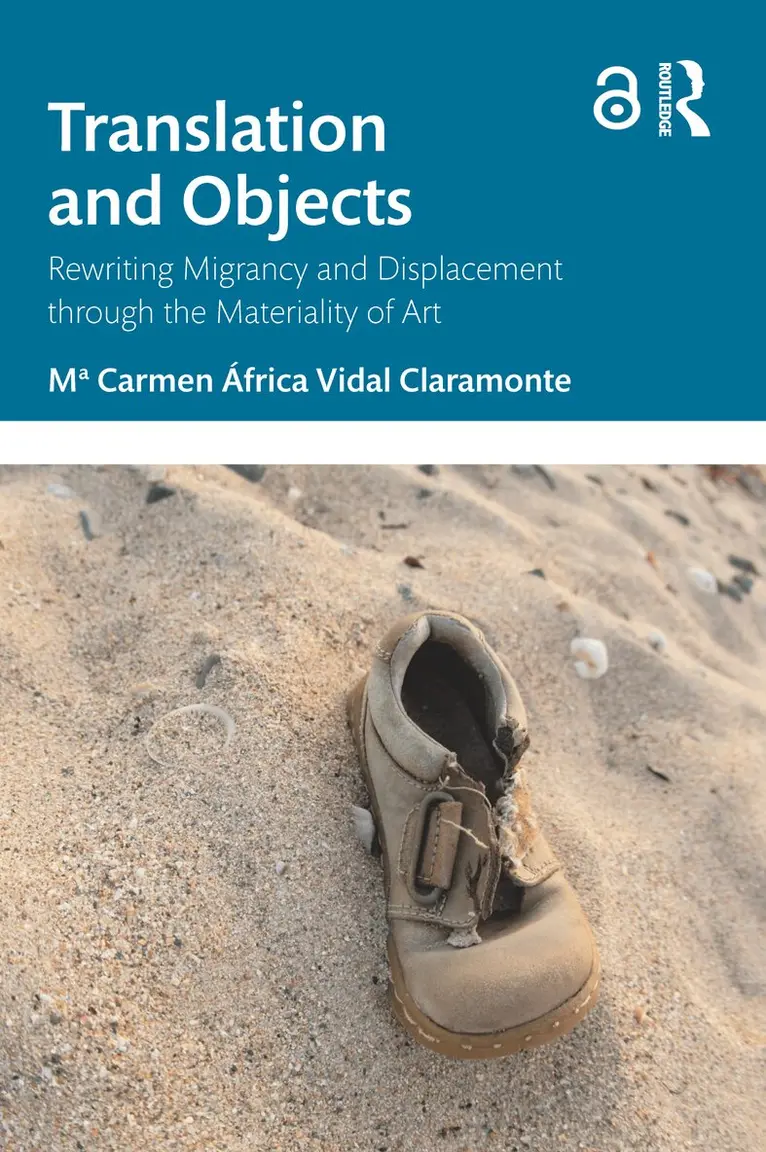
Translation and Objects
Rewriting Migrancy and Displacement through the Materiality of Art
Häftad, Engelska, 2024
643 kr
Skickas inom 10-15 vardagar
Translation and Objectsoffers a new and original perspective in Translation Studies, originating from the conviction that in today’s world translation is pervasive. Building on the ideas of scholars who have expanded the boundaries of the discipline, this book focuses on the analysis of objects that migrants carry with them on their journey of migration.The ideas of displacement and constant movement are key throughout these pages. Migrants live translation literally, because displacement is a leitmotif for them. Translation and Objects analyzes migrant objects—such as shoes, stones, or photographs—as translation sites that function as expressions as well as sources of emotions. These displaced emotional objects, laden with meanings and sentiments, tell many stories, saying a great deal about their owners, who almost never have a voice. This book shows how meaning is displaced through the materiality, texture, smells, sensations, and forms of moving objects.Including examples of translations that have been created from a no-nlinguistic perspective and exploring linguistic issues whilst connecting them to other fields such as anthropology and sociology, Vidal sets out a broad vision of translation. This is critical reading for translation theory courses within Translation Studies, comparative literature, and cultural studies.With the exception of Chapter 3, no part of this book may be reprinted or reproduced or utilised in any form or by any electronic, mechanical, or other means, now known or hereafter invented, including photocopying and recording, or in any information storage or retrieval system, without permission in writing from the publishers.”
2 255 kr
Skickas inom 10-15 vardagar
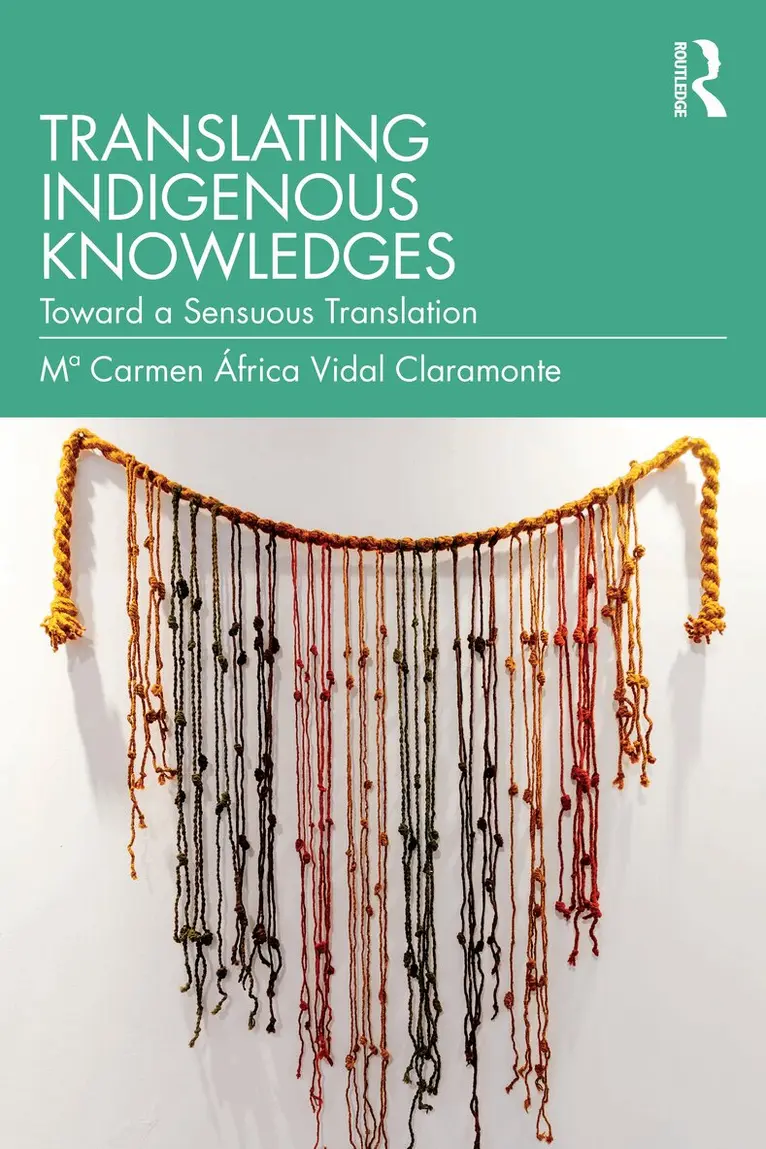
In this book, Vidal presents a new way of translating indigenous epistemologies. For centuries, the Western world has ordained what knowledge is and what it should be and has also been responsible for transmitting that knowledge. This "universal" knowledge has traveled to the four corners of the globe.In recent decades, there has been a steadily growing interest in dialogical epistemologies. Disciplines ranging from historiography and philosophy to anthropology are calling for this universalist idea of knowledge to be modified. Thanks to this change of perspective, other forms of knowledge, which until now have been ignored, are gradually coming to light. Indigenous knowledges are not constructed with the scientific, binary, static, Cartesian, or univocal logic characteristic of Western societies. Non-Western types of knowledge incorporate senses, emotions, body, objects, and matter. It is impossible to reduce indigenous knowledges to Western conceptualizations. The types of translation covered in this book assume that knowledge is not transmitted only in the Western way and that there are world views that take into account the emotions and body, as well as the intellect. This includes all types of beings: human, non-human, and extrahuman. In the face of this plurality of epistemologies, this book affirms that the static Western conceptual traditions characterized by a binary logic are not useful and that there is a need to translate outside the scope of these traditions.The examples given in this book show that translation is not only a process involving Western and non-Western languages. Translation is not a mere substitution of one word for another because knowledge is not only transmitted through words. It also involves non-verbal elements. Knowledge is transmitted through objects, songs, sensations, and emotions, as well as through words. Moreover, many non-Western traditions do not translate with language systems but rather with other semiotic systems, such as knots, threads, colors, and bodies in movement. This is a timely, topical, and transdisciplinary reading, of interest to advanced students and researchers in translation studies, anthropology, and beyond.
612 kr
Skickas inom 10-15 vardagar
In this book, Vidal presents a new way of translating indigenous epistemologies. For centuries, the Western world has ordained what knowledge is and what it should be and has also been responsible for transmitting that knowledge. This "universal" knowledge has traveled to the four corners of the globe.In recent decades, there has been a steadily growing interest in dialogical epistemologies. Disciplines ranging from historiography and philosophy to anthropology are calling for this universalist idea of knowledge to be modified. Thanks to this change of perspective, other forms of knowledge, which until now have been ignored, are gradually coming to light. Indigenous knowledges are not constructed with the scientific, binary, static, Cartesian, or univocal logic characteristic of Western societies. Non-Western types of knowledge incorporate senses, emotions, body, objects, and matter. It is impossible to reduce indigenous knowledges to Western conceptualizations. The types of translation covered in this book assume that knowledge is not transmitted only in the Western way and that there are world views that take into account the emotions and body, as well as the intellect. This includes all types of beings: human, non-human, and extrahuman. In the face of this plurality of epistemologies, this book affirms that the static Western conceptual traditions characterized by a binary logic are not useful and that there is a need to translate outside the scope of these traditions.The examples given in this book show that translation is not only a process involving Western and non-Western languages. Translation is not a mere substitution of one word for another because knowledge is not only transmitted through words. It also involves non-verbal elements. Knowledge is transmitted through objects, songs, sensations, and emotions, as well as through words. Moreover, many non-Western traditions do not translate with language systems but rather with other semiotic systems, such as knots, threads, colors, and bodies in movement. This is a timely, topical, and transdisciplinary reading, of interest to advanced students and researchers in translation studies, anthropology, and beyond.
659 kr
Skickas inom 10-15 vardagar
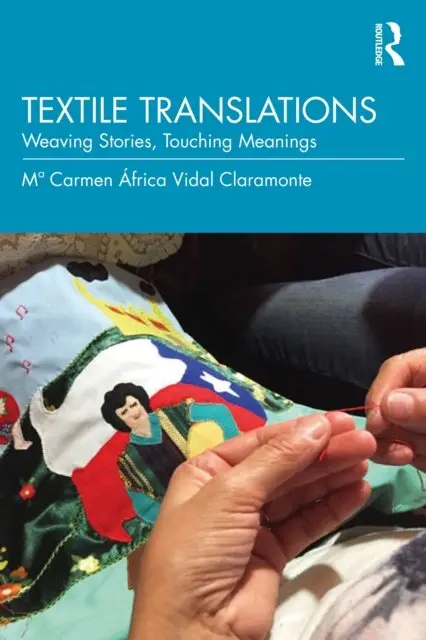
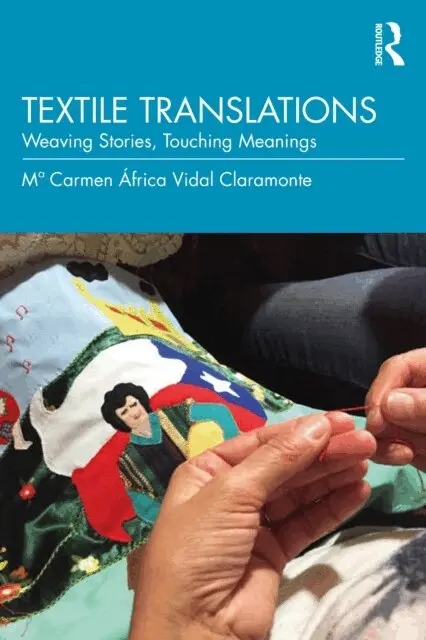
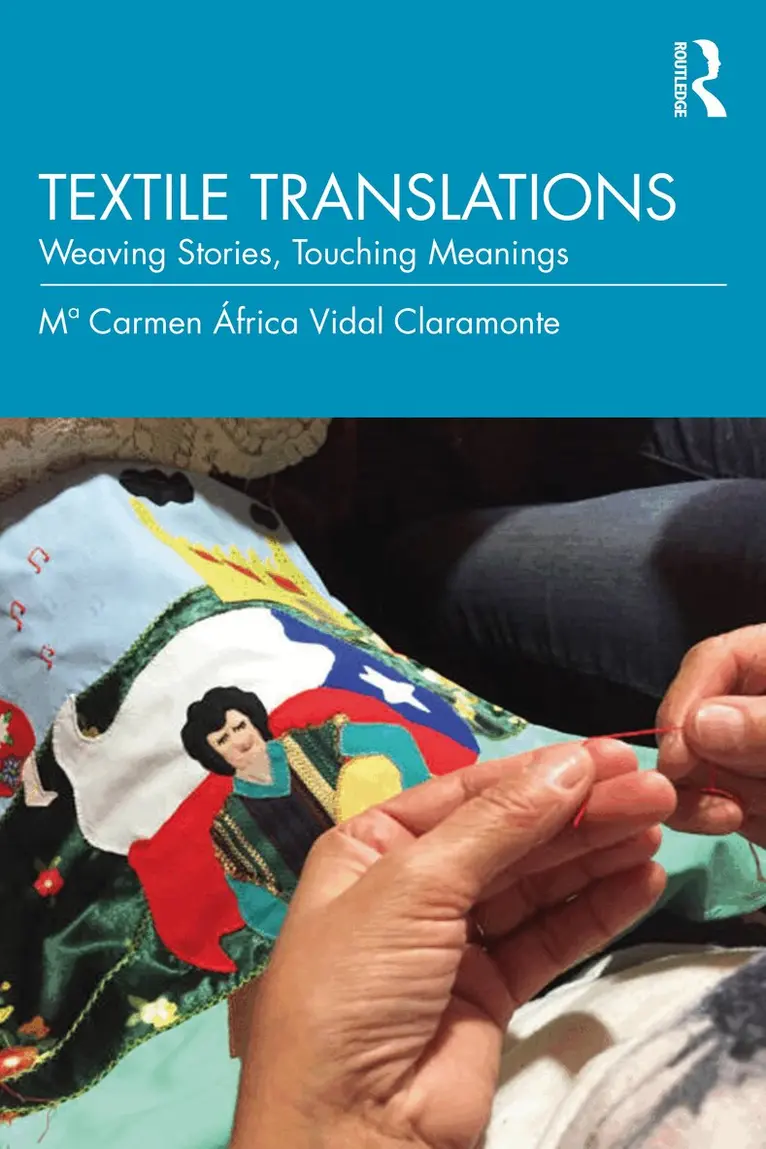
Textile Translations: Weaving Stories, Touching Meanings offers a new and original perspective in translation studies. The key idea explored in this book is that we communicate not only through our intellect but also through our senses. Mª Carmen África Vidal Claramonte presents her view that if we communicate with our body, we also translate with our body through embodied translations. The book focuses on textile art as a form of textile translation that communicates without words, not only through the visual but also through tactile sensory experiences. It is richly illustrated with examples such as arpilleras and other creations by contemporary artists, such as Ghada Amer and Jen Bervin, who use the tactility of materials to rewrite not only situations of injustice, poverty, abuse of power, suffering, and despair, but also of hope and solidarity. A key text for anyone studying and researching translation studies, but also, due to the transdisciplinary nature of the book, it will appeal to those with an interest in anthropology and sensory studies.
2 410 kr
Skickas inom 10-15 vardagar
Textile Translations: Weaving Stories, Touching Meanings offers a new and original perspective in translation studies. The key idea explored in this book is that we communicate not only through our intellect but also through our senses. Mª Carmen África Vidal Claramonte presents her view that if we communicate with our body, we also translate with our body through embodied translations. The book focuses on textile art as a form of textile translation that communicates without words, not only through the visual but also through tactile sensory experiences. It is richly illustrated with examples such as arpilleras and other creations by contemporary artists, such as Ghada Amer and Jen Bervin, who use the tactility of materials to rewrite not only situations of injustice, poverty, abuse of power, suffering, and despair, but also of hope and solidarity. A key text for anyone studying and researching translation studies, but also, due to the transdisciplinary nature of the book, it will appeal to those with an interest in anthropology and sensory studies.