Madeline Zavodny - Böcker
Visar alla böcker från författaren Madeline Zavodny. Handla med fri frakt och snabb leverans.
6 produkter
6 produkter
1 094 kr
Tillfälligt slut
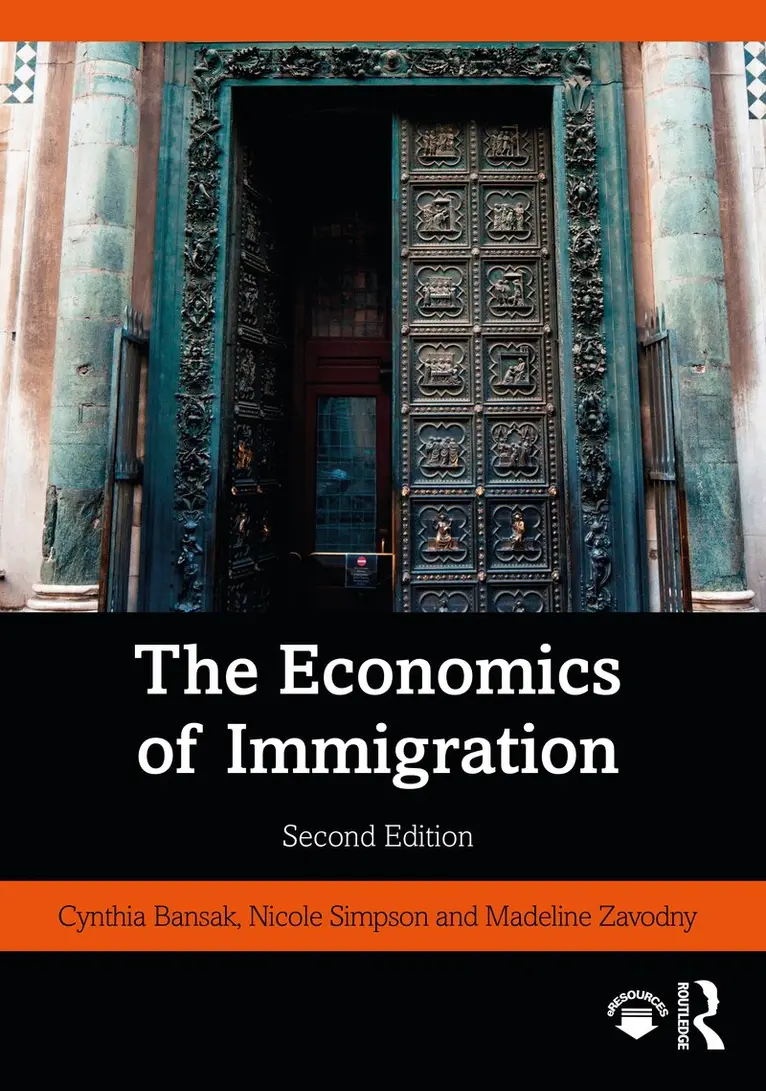
This book, in its second edition, introduces readers to the economics of immigration, which is a booming field within economics. The main themes and objectives of the book are for readers to understand the decision to migrate, the impacts of immigration on markets and government budgets and the consequences of immigration policies in a global context. Our goal is for readers to be able to make informed economic arguments about key issues related to immigration around the world.This book applies economic tools to the topic of immigration to answer questions like whether immigration raises or lowers the standard of living of people in a country. The book examines many other consequences of immigration as well, such as the effect on tax revenues and government expenditures, the effect on how and what firms decide to produce and the effect on income inequality, to name just a few. It also examines questions like what determines whether people choose to move and where they decide to go. It even examines how immigration affects the ethnic diversity of restaurants and financial markets.Readers will learn how to apply economic tools to the topic of immigration. Immigration is frequently in the news as more people move around the world to work, to study and to join family members. The economics of immigration has important policy implications. Immigration policy is controversial in many countries. This book explains why this is so and equips the reader to understand and contribute to policy debates on this important topic.
504 kr
Skickas inom 3-6 vardagar
"I lift my lamp beside the golden door!"—the last line of Emma Lazarus's famous poem invites immigrants to enter a land of economic opportunity. Many have accepted that invitation; today, foreign-born workers make up nearly 16 percent of the U.S. workforce and account for almost half of workforce growth over the last decade. Rather than capitalizing on these gains, however, recent immigration reforms have resulted in an inefficient, patchwork system that shortchanges high-skilled immigrants and poorly serves the American public. Beside the Golden Door: U.S. Immigration Reform in a New Era of Globalization proposes a radical overhaul of current immigration policy designed to strengthen economic competitiveness and long-run growth. Pia M. Orrenius and Madeline Zavodny outline a plan that favors employment-based immigration over family reunification, making work-based visas the rule, not the exception. They argue that immigration policy should favor high-skilled workers while retaining avenues for low-skilled immigration; family reunification should be limited to spouses and minor children; provisional visas should be the norm; and quotas that lead to queuing must be eliminated. A selective immigration policy focused on high-skilled, high-demand workers will allow the United States to compete in an increasingly global economy while protecting the interests of American citizens and benefiting taxpayers. Orrenius and Zavodny conclude that "while not all potential immigrants who knock at the golden door should be admitted, the door should swing wide open to welcome those who desire nothing more than the opportunity to work for the American dream."
861 kr
Skickas inom 10-15 vardagar
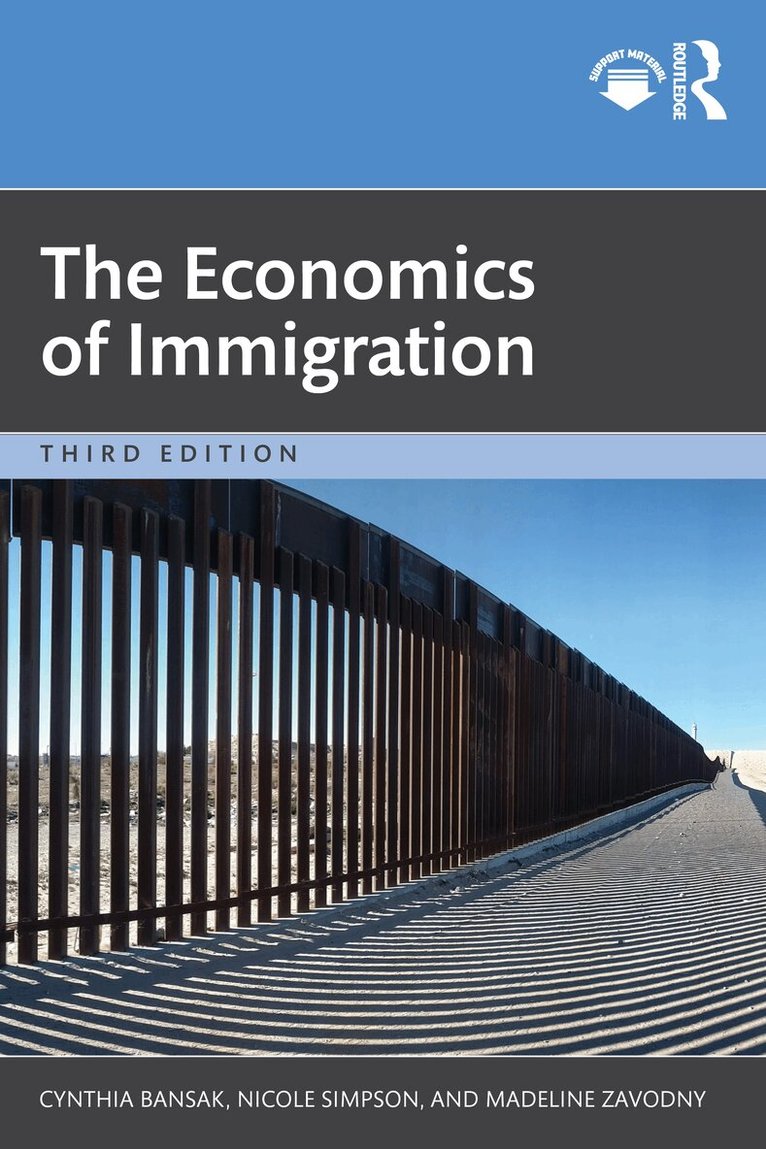
The Economics of Immigration provides students with the tools needed to examine the impact of immigration and immigration policies over the past century. The main objectives of the book are for students to understand the decision to migrate, the impacts of immigration on markets and government budgets, and the consequences of immigration policies in a global context.Students will develop an appreciation of the importance of immigration as a separate academic field within labor economics and international economics. Topics covered include the effects of immigration on labor markets, housing markets, international trade, tax revenues, human capital accumulation, government fiscal balances, and climate migration. The book also considers the impacts of immigration on what firms choose to produce, the ethnic diversity of restaurants, and financial markets, as well as the theory and evidence on immigrants’ economic assimilation. The textbook includes comparisons of immigration policies in a number of immigrant-receiving and sending countries, highlighting recent policy changes in Europe. Finally, the book explores immigration topics that directly affect low- and middle-income countries, such as remittances, brain drain, and human trafficking. Readers will be fully equipped with the tools needed to understand and contribute to policy debates on this controversial topic.This is the first textbook to comprehensively cover the economics of immigration, and it is suitable both for economics students and for those studying migration in other disciplines, such as sociology and political science.
2 088 kr
Skickas inom 10-15 vardagar
The Economics of Immigration provides students with the tools needed to examine the impact of immigration and immigration policies over the past century. The main objectives of the book are for students to understand the decision to migrate, the impacts of immigration on markets and government budgets, and the consequences of immigration policies in a global context.Students will develop an appreciation of the importance of immigration as a separate academic field within labor economics and international economics. Topics covered include the effects of immigration on labor markets, housing markets, international trade, tax revenues, human capital accumulation, government fiscal balances, and climate migration. The book also considers the impacts of immigration on what firms choose to produce, the ethnic diversity of restaurants, and financial markets, as well as the theory and evidence on immigrants’ economic assimilation. The textbook includes comparisons of immigration policies in a number of immigrant-receiving and sending countries, highlighting recent policy changes in Europe. Finally, the book explores immigration topics that directly affect low- and middle-income countries, such as remittances, brain drain, and human trafficking. Readers will be fully equipped with the tools needed to understand and contribute to policy debates on this controversial topic.This is the first textbook to comprehensively cover the economics of immigration, and it is suitable both for economics students and for those studying migration in other disciplines, such as sociology and political science.
1 096 kr
Skickas inom 10-15 vardagar
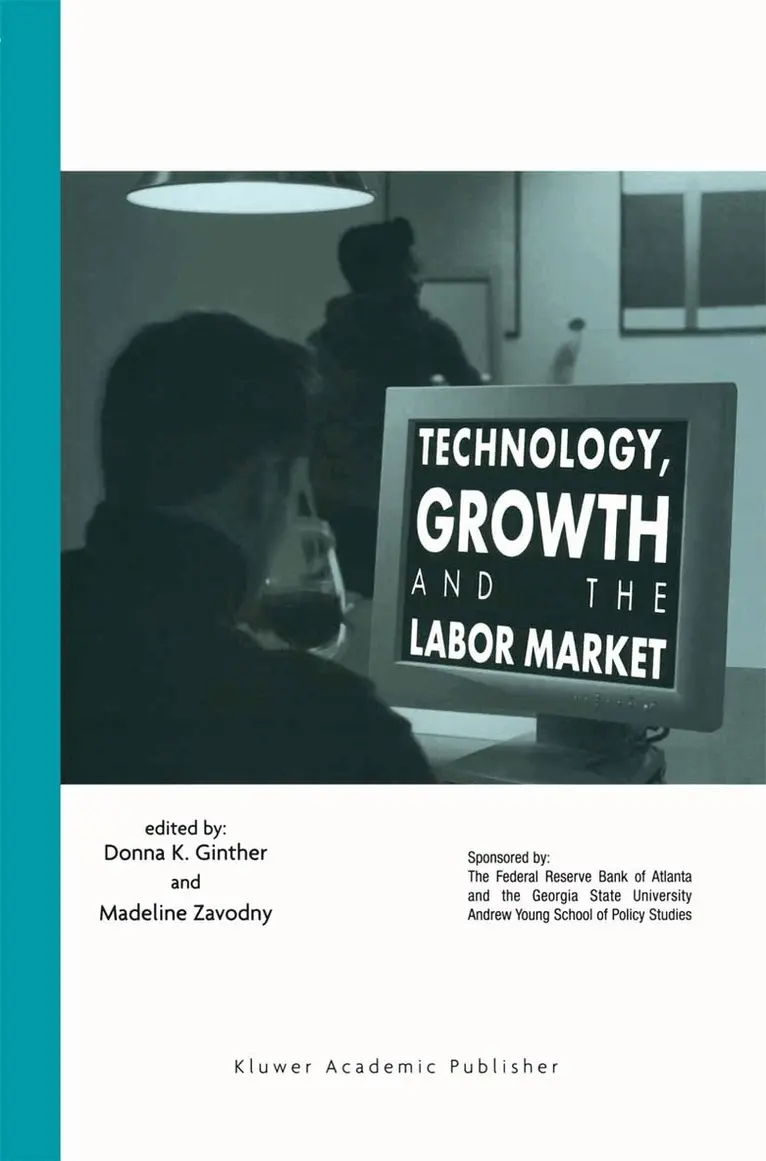
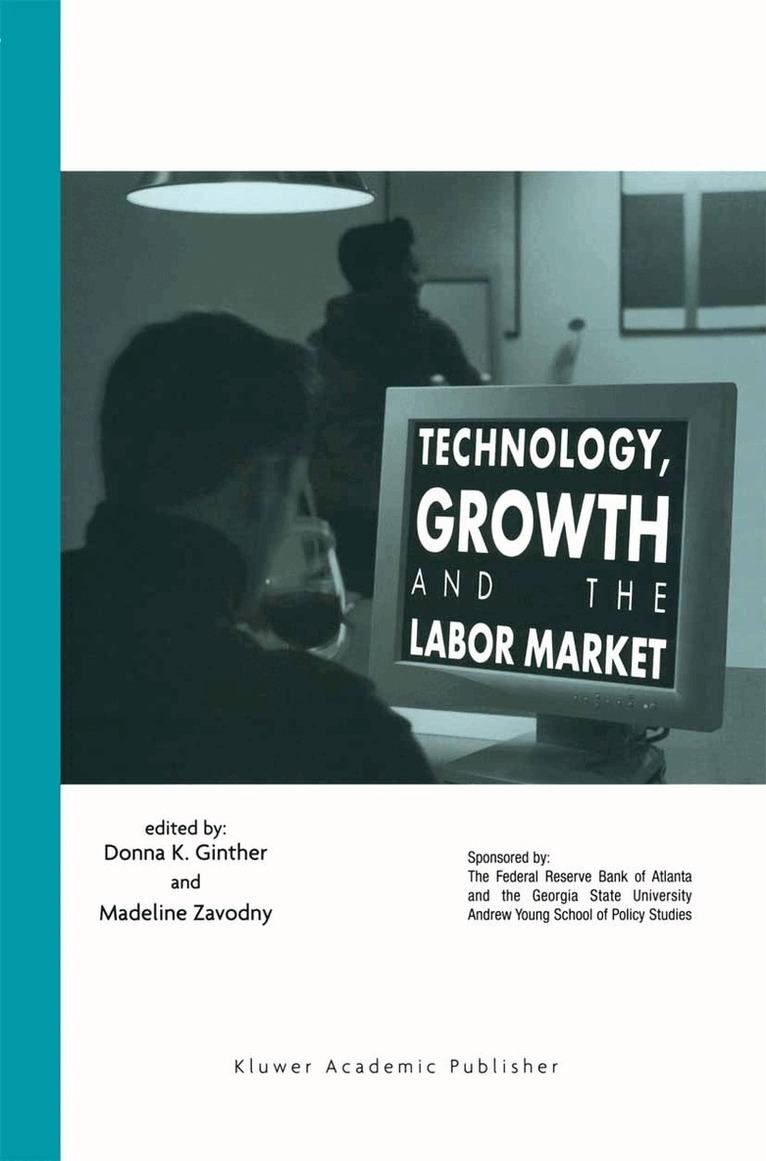
In the late-20th and early-21st centuries, economic prognosticators have pondered whether the US economy has entered a new era. This "new economy" is generally characterized as having technological innovations that have raised productivity and, accordingly, removed pricing power from the world's producers on a more lasting basis. Although the 2001 recession quelled the discussion about whether the United States, and perhaps even the world, had entered a period characterized by sustained high levels of economic growth, researchers continue to investigate the effects of technological change on the economy. This volume examines the labour market. "Technology, Growth, and the Labor Market" brings together research by economists from academia and the Federal Reserve System. The first section of the volume includes discussions by monetary policymakers with firsthand experience in determining how technology affects productivity, inequality, and macroeconomic growth. Papers in the second section discuss the sources of the surge in labour productivity growth during the latter half of the 1990s and present forecasts of labour productivity growth rates during the next few years.In the third section, the papers focus on the role of technological advances in changes in earnings inequality in the labour market. The authors examine whether inequality should be viewed as a causal result of skill-biased technological change or whether there is a missing link - or perhaps no link - between changes in technology and changes in wage inequality. The final section explores the relationships between computer investment, worker skills, human resource practices, and productivity at the industry and firm levels.
1 096 kr
Skickas inom 10-15 vardagar
Technology, Growth, and the Labor Market brings together research by economists from academia and the Federal Reserve System. The first section of the volume includes discussions by monetary policymakers with firsthand experience in determining how technology affects productivity, inequality, and macroeconomic growth. Papers in the second section discuss the sources of the surge in labor productivity growth during the latter half of the 1990s and present forecasts of labor productivity growth rates during the next few years. In the third section, the papers focus on the role of technological advances in changes in earnings inequality in the labor market. The authors examine whether inequality should be viewed as a causal result of skill-biased technological change or whether there is a missing link - or perhaps no link - between changes in technology and changes in wage inequality. The final section explores the relationships between computer investment, worker skills, human resource practices, and productivity at the industry and firm levels.