Magdalena Kunińska - Böcker
Visar alla böcker från författaren Magdalena Kunińska. Handla med fri frakt och snabb leverans.
4 produkter
4 produkter
2 160 kr
Skickas inom 10-15 vardagar
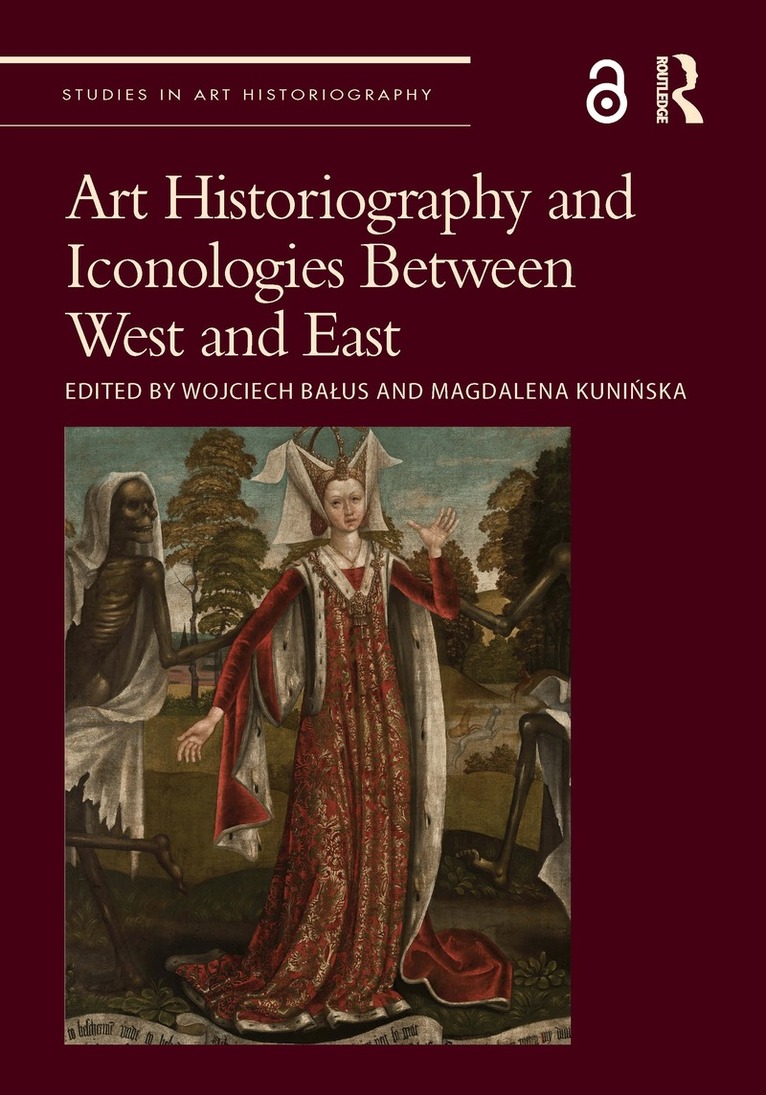
This volume explores a basic question in the historiography of art: the extent to which iconology was a homogenous research method in its own immutable right. By contributing to the rejection of the universalizing narrative, these case studies argue that there were many strands of iconology.Methods that differed from the ‘canonised’ approach of Panofsky were proposed by Godefridus Johannes Hoogewerff and Hans Sedlmayr. Researchers affiliated with the Warburg Institute in London also chose to distance themselves from Panofsky’s work. Poland, in turn, was the breeding ground for yet another distinct variety of iconology. In Communist Czechoslovakia there were attempts to develop a ‘Marxist iconology’. This book, written by recognized experts in the field, examines these and other major strands of iconology, telling the tale of iconology’s reception in the countries formerly behind the Iron Curtain. Attitudes there ranged from enthusiastic acceptance in Poland, to critical reception in the Soviet Union, to reinterpretation in Czechoslovakia and the German Democratic Republic, and, finally, to outright rejection in Romania.The book will be of interest to scholars working in art history, visual studies, and historiography.Chapters 8 and 15 of this book are freely available as a downloadable Open Access PDF at www.taylorfrancis.com under a Creative Commons Attribution-Non Commercial-No Derivatives (CC-BY-NC-ND) 4.0 international license
610 kr
Skickas inom 10-15 vardagar
This volume explores a basic question in the historiography of art: the extent to which iconology was a homogenous research method in its own immutable right. By contributing to the rejection of the universalizing narrative, these case studies argue that there were many strands of iconology.Methods that differed from the ‘canonised’ approach of Panofsky were proposed by Godefridus Johannes Hoogewerff and Hans Sedlmayr. Researchers affiliated with the Warburg Institute in London also chose to distance themselves from Panofsky’s work. Poland, in turn, was the breeding ground for yet another distinct variety of iconology. In Communist Czechoslovakia there were attempts to develop a ‘Marxist iconology’. This book, written by recognized experts in the field, examines these and other major strands of iconology, telling the tale of iconology’s reception in the countries formerly behind the Iron Curtain. Attitudes there ranged from enthusiastic acceptance in Poland, to critical reception in the Soviet Union, to reinterpretation in Czechoslovakia and the German Democratic Republic, and, finally, to outright rejection in Romania.The book will be of interest to scholars working in art history, visual studies, and historiography.Chapters 8 and 15 of this book are freely available as a downloadable Open Access PDF at www.taylorfrancis.com under a Creative Commons Attribution-Non Commercial-No Derivatives (CC-BY-NC-ND) 4.0 international license
2 160 kr
Skickas inom 10-15 vardagar
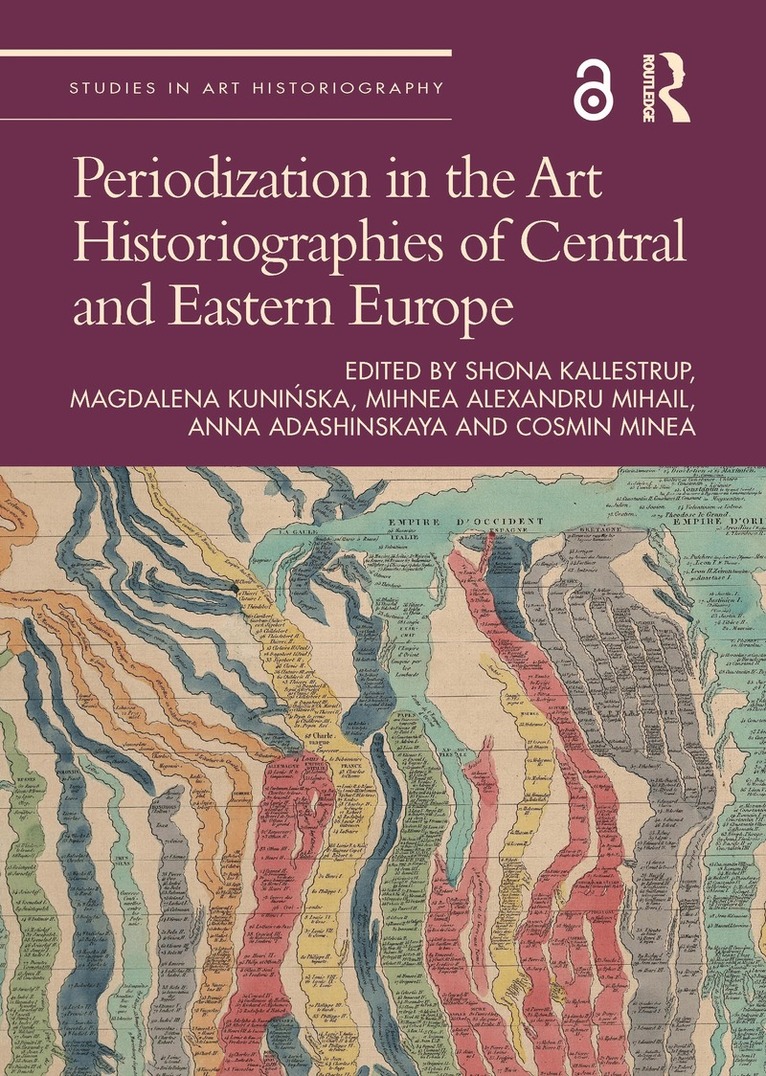
This volume critically investigates how art historians writing about Central and Eastern Europe in the late nineteenth and early twentieth centuries engaged with periodization.At the heart of much of their writing lay the ideological project of nation-building. Hence discourses around periodization – such as the mythicizing of certain periods, the invention of historical continuity and the assertion of national specificity – contributed strongly to identity construction. Central to the book’s approach is a transnational exploration of how the art histories of the region not only interacted with established Western periodizations but also resonated and ‘entangled’ with each other. In their efforts to develop more sympathetic frameworks that refined, ignored or hybridized Western models, they sought to overcome the centre–periphery paradigm which equated distance from the centre with temporal belatedness and artistic backwardness. The book thus demonstrates that the concept of periodization is far from neutral or strictly descriptive, and that its use in art history needs to be reconsidered.Bringing together a broad range of scholars from different European institutions, the volume offers a unique new perspective on Central and Eastern European art historiography. It will be of interest to scholars working in art history, historiography and European studies.The Open Access version of this book, available at http://www.taylorfrancis.com, has been made available under a Creative Commons Attribution-Non Commercial-No Derivatives 4.0 license.
596 kr
Skickas inom 10-15 vardagar
This volume critically investigates how art historians writing about Central and Eastern Europe in the late nineteenth and early twentieth centuries engaged with periodization.At the heart of much of their writing lay the ideological project of nation-building. Hence discourses around periodization – such as the mythicizing of certain periods, the invention of historical continuity and the assertion of national specificity – contributed strongly to identity construction. Central to the book’s approach is a transnational exploration of how the art histories of the region not only interacted with established Western periodizations but also resonated and ‘entangled’ with each other. In their efforts to develop more sympathetic frameworks that refined, ignored or hybridized Western models, they sought to overcome the centre–periphery paradigm which equated distance from the centre with temporal belatedness and artistic backwardness. The book thus demonstrates that the concept of periodization is far from neutral or strictly descriptive, and that its use in art history needs to be reconsidered.Bringing together a broad range of scholars from different European institutions, the volume offers a unique new perspective on Central and Eastern European art historiography. It will be of interest to scholars working in art history, historiography and European studies.The Open Access version of this book, available at http://www.taylorfrancis.com, has been made available under a Creative Commons Attribution-Non Commercial-No Derivatives 4.0 license.