Malcolm Graham – Författare
Visar alla böcker från författaren Malcolm Graham. Handla med fri frakt och snabb leverans.
4 produkter
4 produkter
Del 49 - Oxford Historical Society New Series
Minutes of the Oxford Paving Commissioners 1771–1801
Inbunden, Engelska, 2023
634 kr
Skickas inom 7-10 vardagar
Oxford Town and Gown came together in 1771 as Paving Commissioners, the city's principal local government body. Within thirty years this remarkable collaboration did much to transform Oxford from a medieval to a modern city.Eighteenth century Oxford was a place of great contrast with the architectural splendour of its university and college buildings set among narrow streets and timber-framed houses. Ancient gates and market stalls obstructed traffic and rubbish piled up in unpaved streets. Neither Town nor Gown could satisfy the growing appetite for urban improvement so they came together after centuries of rivalry in 1771 in a remarkable collaboration to sponsor a Local Act establishing Oxford Paving Commissioners as the city's principal local government body. The commissioners included the vice-chancellor and the mayor, heads of colleges, professors, councillors and local businessmen. A minority of these commissioners used the authority's extensive powers to rebuild Magdalen Bridge and reshape its approaches, abolish street markets, pull down old buildings, and pave, light and cleanse the streets. Some critics regretted these changes, others wanted more, but all could agree that, within thirty years, Oxford had been transformed.
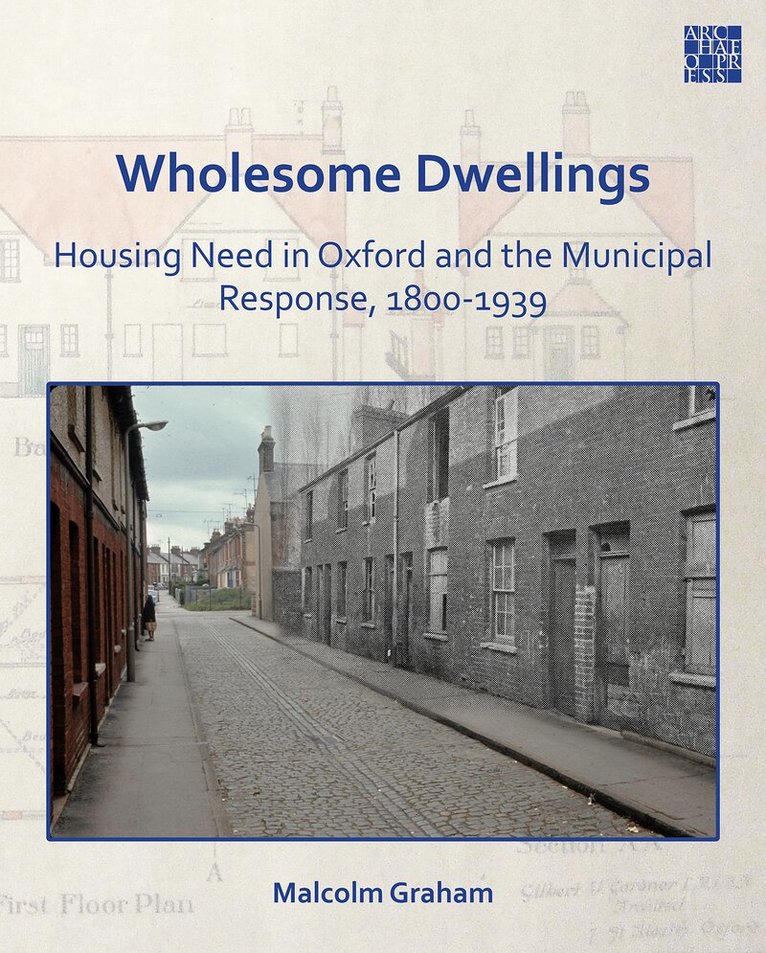
Wholesome Dwellings: Housing Need in Oxford and the Municipal Response, 1800-1939
Häftad, Engelska, 2020
456 kr
Skickas
A shortage of affordable new housing, builders choosing to build larger, more profitable houses, and a diminishing stock of cheap houses for rent. All this sounds very familiar today, but at the end of the Great War, scarcely any houses had been built for four years and there was political pressure to build ‘Homes for Heroes’, impelled to a degree by fear of revolution. Council housing, supported by central government funding, was the chosen solution in 1919, and this study by Malcolm Graham, a leading Oxford local historian for many years, examines the consequences in Oxford, then a university city on the cusp of change. Behind the city’s Dreaming Spires image, housing for the working population was already in short supply, but an economy-minded and largely non-political City Council had always been reluctant to intervene in the housing market. In 1919, there was no hint of the city’s industrial future, and the City Council saw the replacement of substandard houses as its main challenge. The meteoric rise of the local motor industry in the early 1920s led to rapid population growth and created a massive new demand for cheap housing. Dr Graham examines the uneasy partnership between the City Council and Whitehall which led to the building of over 3,000 council houses in Oxford between the Wars. The provision of these ‘wholesome dwellings’ was a substantial, and lasting, achievement, but private builders were in fact catering for most housing need in and around the city by the 1930s. The notorious Cutteslowe Walls, built to exclude council tenants from an adjoining private estate, reflected the way in which the growing city was being socially segregated. Dr Graham provides a fascinating insight into how modern Oxford evolved away from the university buildings and college quadrangles for which the city is internationally renowned.
280 kr
Skickas inom 5-8 vardagar
191 kr
Skickas inom 5-8 vardagar