Malgorzata Sadowska – författare
Visar alla böcker från författaren Malgorzata Sadowska. Handla med fri frakt och snabb leverans.
4 produkter
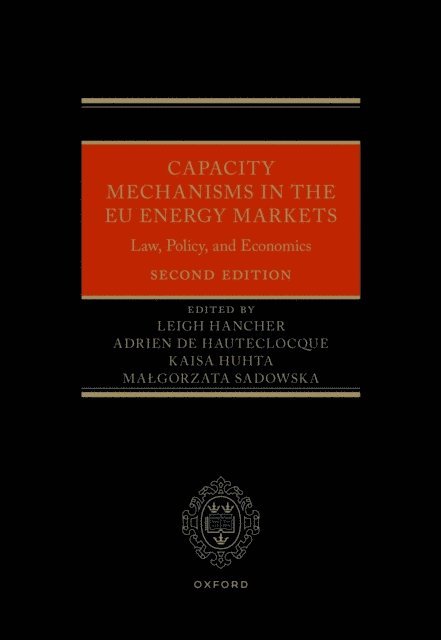
Capacity Mechanisms in the EU Energy Markets
Law, Policy, and Economics
Av Malgorzata Sadowska, Kaisa Huhta m. fl.
E-bok, 2022
2631 kr
Lägg i varukorg
Capacity remuneration mechanisms (or simply capacity mechanisms) have become a fact of life in member states'' energy markets and are one of the hottest topics in the wider European regulatory debate. Concerned about the security of electricity supply, national governments are implementing subsidy …
Capacity Mechanisms in the EU Energy Markets
Law, Policy, and Economics
Av Malgorzata Sadowska, Kaisa Huhta m. fl.
E-bok, 2022
2631 kr
Lägg i varukorg
Capacity remuneration mechanisms (or simply capacity mechanisms) have become a fact of life in member states'' energy markets and are one of the hottest topics in the wider European regulatory debate. Concerned about the security of electricity supply, national governments are implementing subsidy …
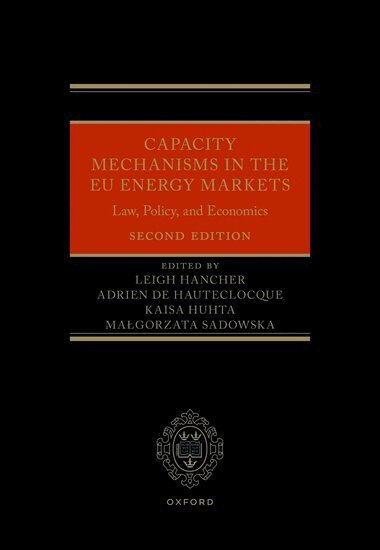
Capacity Mechanisms in the EU Energy Markets
Law, Policy, and Economics
Av Leigh Hancher, Adrien de Hauteclocque m. fl.
Inbunden, 2022
2925 kr
Lägg i varukorg
Capacity remuneration mechanisms (or simply capacity mechanisms) have become a fact of life in member states' energy markets and are one of the hottest topics in the wider European regulatory debate. Concerned about the security of electricity supply, national governments are implementing subsidy …
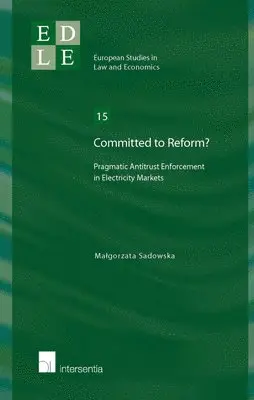
Committed to Reform?
Pragmatic Antitrust Enforcement in Electricity Markets
Häftad, 2014
919 kr
Tillfälligt slut
A wave of antitrust scrutiny has swept across the European energy markets in recent years. For fear of drawn-out competition law investigations and high fines, targeted energy firms voluntarily offered far-reaching commitments to the European Commission, oftentimes selling off substantial parts of …