Mandy Sadan – författare
Visar alla böcker från författaren Mandy Sadan. Handla med fri frakt och snabb leverans.
4 produkter
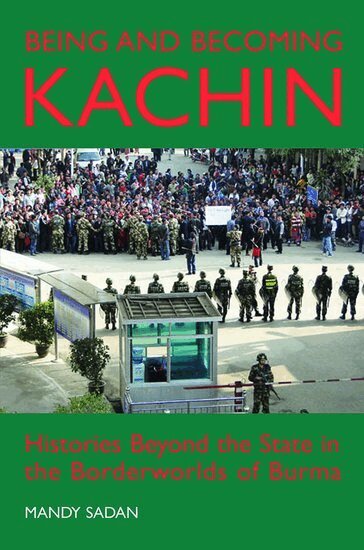
Being and Becoming Kachin
Histories Beyond the State in the Borderworlds of Burma
Av Mandy Sadan
Inbunden, 2013
1714 kr
Lägg i varukorg
Since independence in 1948, Burma has suffered from many internal conflicts. One of the longest of these has been in the Kachin State, in the far north of the country where Burma has borders with India to the west and China to the east. In Being and Becoming Kachin Mandy Sadan explores the origins …
War and Peace in the Borderlands of Myanmar
The Kachin Ceasefire, 1994–2011
Av Mandy Sadan
Häftad, 2016
424 kr
Lägg i varukorg
In 2011 armed hostilities between the Kachin Independence Organisation and Myanmar Army ended a 17-year ceasefire agreement. The unwillingness of local Kachin people and the Kachin political-military leadership to bow to pressure for a speedy renewal of the ceasefire frustrated many observers and …
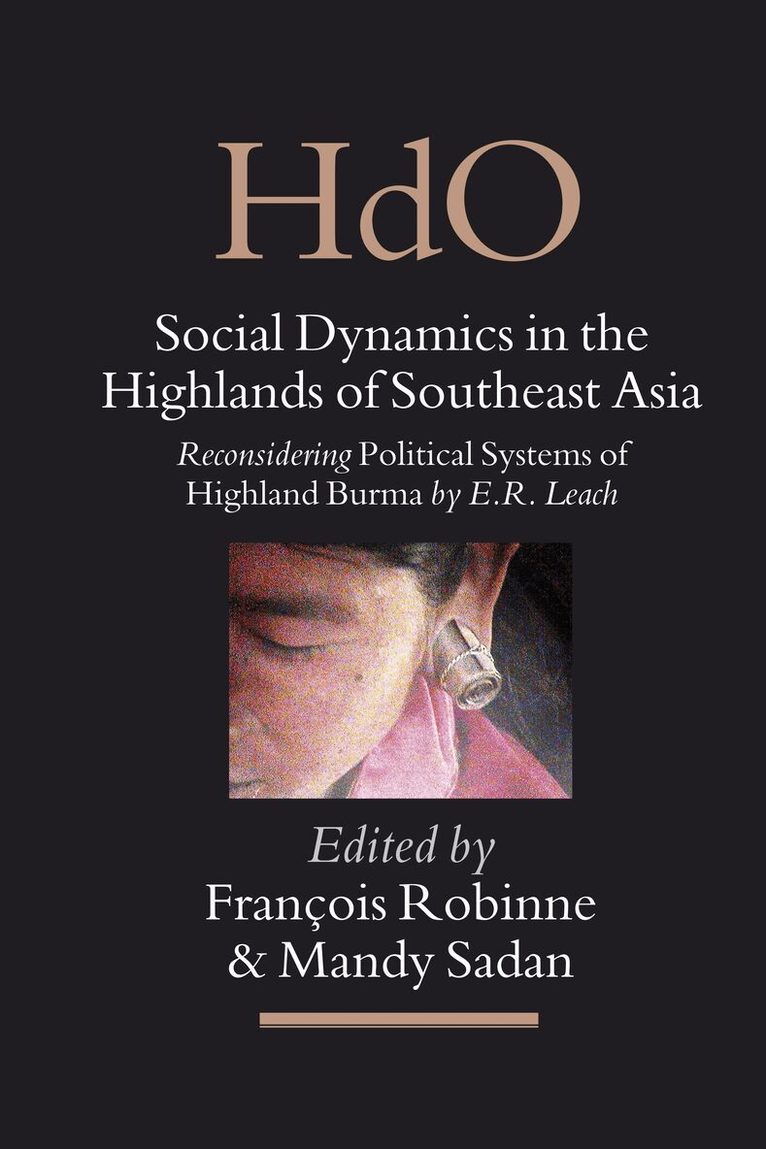
Social Dynamics in the Highlands of Southeast Asia
Reconsidering Political Systems of Highland Burma by E.R. Leach
Av François Robinne, Mandy Sadan
Inbunden, 2007
2591 kr
Lägg i varukorg
This reappraisal of Political Systems of Highland Burma, the seminal work by E.R. Leach, presents much new material on the highlands of Southeast Asia and its borders from writers with long-term research experience in these areas. The Introduction establishes in detail both the theoretical and …
War and Peace in the Borderlands of Myanmar
The Kachin Ceasefire, 1994–2011
Av Mandy Sadan
Inbunden, 2016
1042 kr
Tillfälligt slut
In 2011 armed hostilities between the Kachin Independence Organisation and Myanmar Army ended a 17-year ceasefire agreement. The unwillingness of local Kachin people and the Kachin political-military leadership to bow to pressure for a speedy renewal of the ceasefire frustrated many observers and …