François Robinne – författare
Visar alla böcker från författaren François Robinne. Handla med fri frakt och snabb leverans.
6 produkter
Inter-Ethnic Dynamics in Asia
Considering the Other through Ethnonyms, Territories and Rituals
Av Christian Culas, François Robinne
Inbunden, 2009
2504 kr
Lägg i varukorg
South-East Asia is one of the most complex regions in the world as far as ethnic, linguistic and cultural diversity is concerned with an extremely rich ancient and contemporary history. Because of this, it offers an exceptionally rich field of study for inter-ethnic relations. This book examines …
Inter-Ethnic Dynamics in Asia
Considering the Other through Ethnonyms, Territories and Rituals
Av Christian Culas, François Robinne
Häftad, 2013
646 kr
Lägg i varukorg
South-East Asia is one of the most complex regions in the world as far as ethnic, linguistic and cultural diversity is concerned with an extremely rich ancient and contemporary history. Because of this, it offers an exceptionally rich field of study for inter-ethnic relations. This book examines …
Inter-Ethnic Dynamics in Asia
Considering the Other through Ethnonyms, Territories and Rituals
Av Francois Robinne, Christian Culas
E-bok, 2009
762 kr
Lägg i varukorg
South-East Asia is one of the most complex regions in the world as far as ethnic, linguistic and cultural diversity is concerned with an extremely rich ancient and contemporary history. Because of this, it offers an exceptionally rich field of study for inter-ethnic relations. This book examines …
Inter-Ethnic Dynamics in Asia
Considering the Other through Ethnonyms, Territories and Rituals
Av Francois Robinne, Christian Culas
E-bok, 2009
762 kr
Lägg i varukorg
South-East Asia is one of the most complex regions in the world as far as ethnic, linguistic and cultural diversity is concerned with an extremely rich ancient and contemporary history. Because of this, it offers an exceptionally rich field of study for inter-ethnic relations. This book examines …
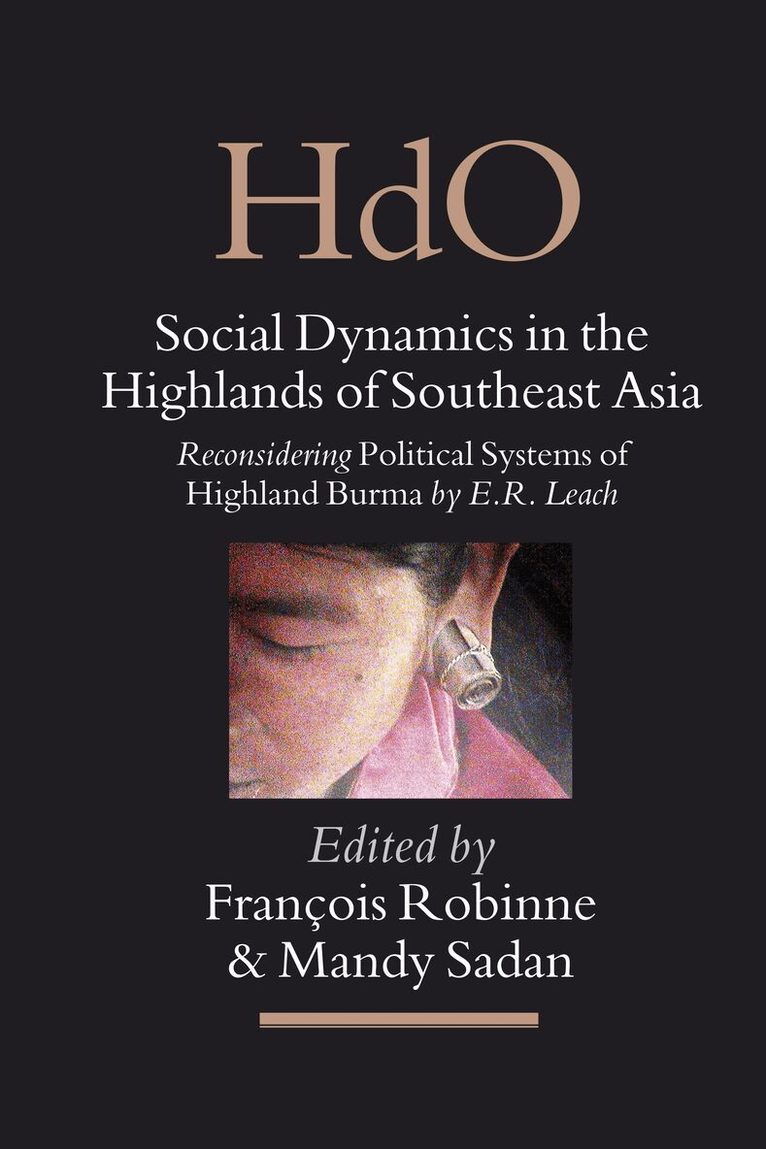
Social Dynamics in the Highlands of Southeast Asia
Reconsidering Political Systems of Highland Burma by E.R. Leach
Av François Robinne, Mandy Sadan
Inbunden, 2007
2591 kr
Lägg i varukorg
This reappraisal of Political Systems of Highland Burma, the seminal work by E.R. Leach, presents much new material on the highlands of Southeast Asia and its borders from writers with long-term research experience in these areas. The Introduction establishes in detail both the theoretical and …
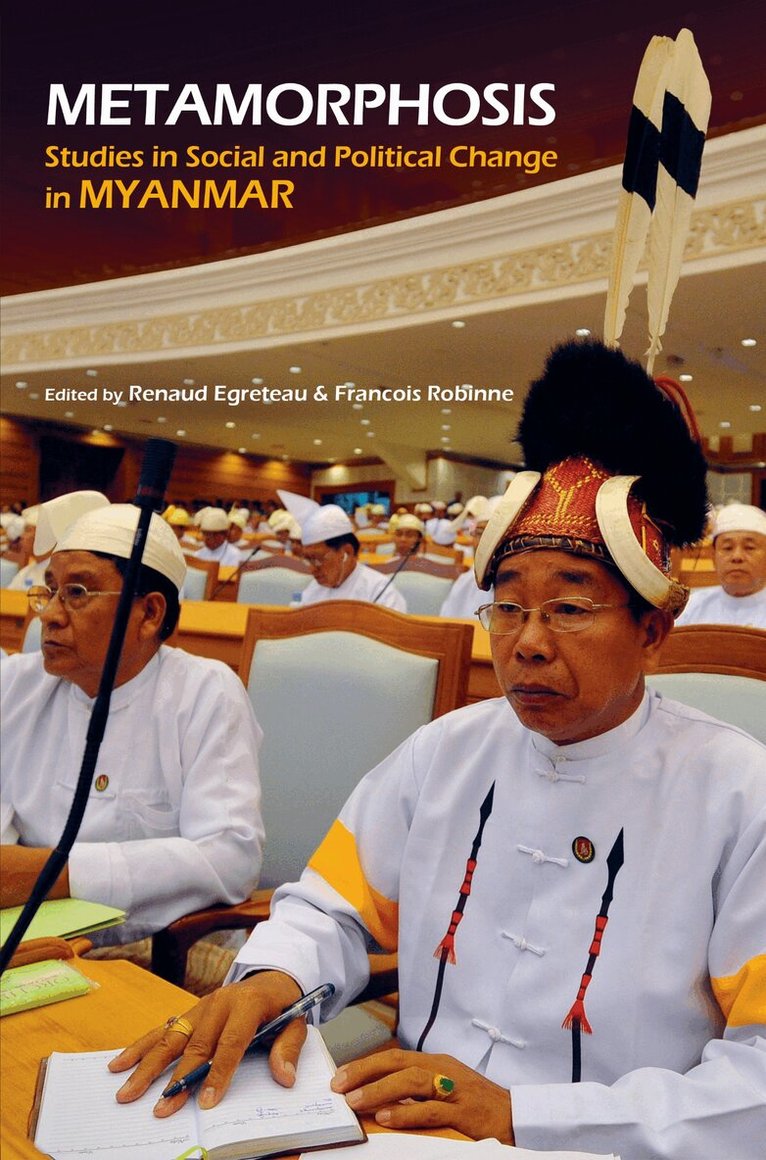
Metamorphosis
Studies in Social and Political Change in Myanmar
Av Renaud Egreteau, François Robinne
Häftad, 2015
391 kr
Lägg i varukorg
With a young population of 50 million, an ambitious roadmap for political reform, and on the cusp of rapid economic development, since 2010 the world's attention has been drawn to Myanmar or Burma.But underlying recent political transitions are other wrenching social changes and shocks, a set of …