Manuel R. González Morales - Böcker
Visar alla böcker från författaren Manuel R. González Morales. Handla med fri frakt och snabb leverans.
3 produkter
3 produkter
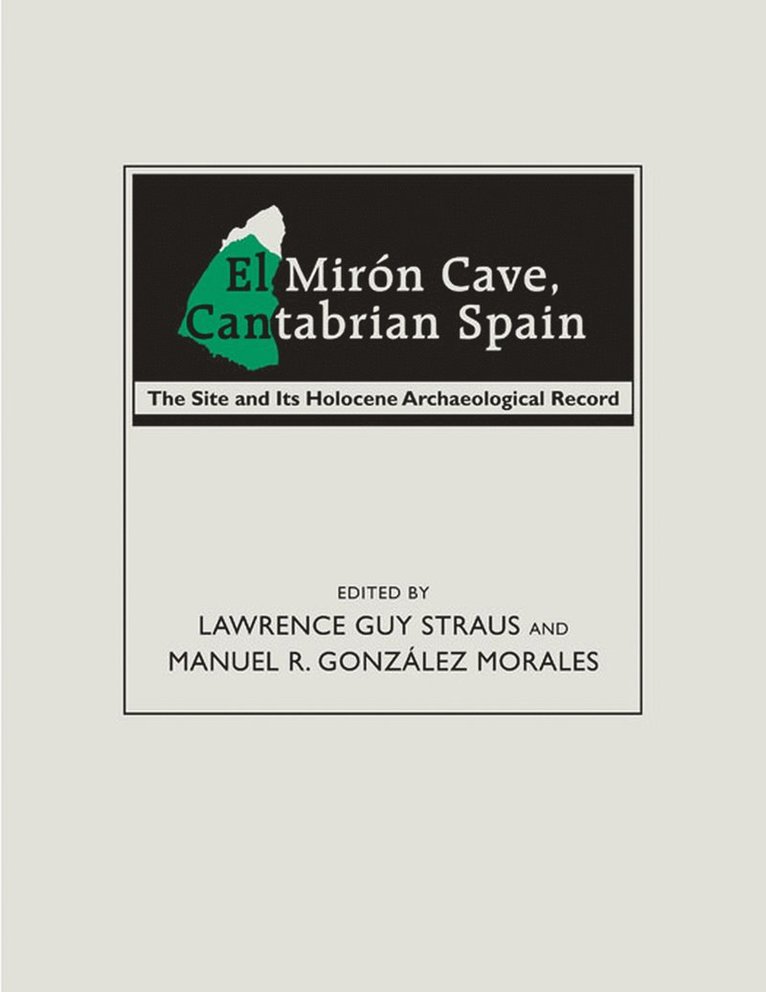
El Mirón Cave, Cantabrian Spain
The Site and Its Holocene Archaeological Record
Inbunden, Engelska, 2012
818 kr
Skickas inom 7-10 vardagar
Though known as a site since 1903, El Mirón Cave in the Cantabrian Mountains of northern Spain remained unexcavated until a team from the universities of New Mexico and Cantabria began ongoing excavations in 1996. This large, deeply stratified cave allowed the team to apply cutting-edge techniques of excavation, recording, and multidisciplinary analysis in the meticulous study of a site that has become a new reference sequence for the classic Cantabrian region. The excavations uncovered the long history of human occupation of the cave, extending from the end of the Middle Paleolithic, through the Upper Paleolithic, up to the modern era. This volume comprehensively describes the background information on the setting, the site, the chronology, and the sedimentology. It then focuses on the biological and archaeological records of the Holocene levels pertaining to Mesolithic, Neolithic, Chalcolithic, and Bronze Age.Archaeologists, anthropologists, and historians will be drawn to this study and its extensive findings, dated by some seventy-five radiocarbon assays.
1 314 kr
Skickas inom 10-15 vardagar
This special issue publication of the Journal of Archaeological Method and Theory devoted to Pleistocene and Holocene arts examines a number of recent developments in the study of deep-time images. The contributions argue that in a context marked by new technological advances, the study of what was traditionally known as ‘prehistoric art’ has been transformed into a dynamic area of research marked by four main interrelated processes: (A) the inclusion of new corpuses of images beyond traditional conceptualizations of ‘prehistoric’ art, (B) the shift from a ‘contemplative model’ (which treated images and artefacts as ‘already made art’) to a ‘construction model’ that focuses on the processes involved in the making of artwork, (C) the transition from a Eurocentric model to a worldwide paradigm, and (D) the increasing incorporation of Holocene and Indigenous arts into general discussions about ‘prehistoric’ arts. This text appeals to students and researchers in the field. Previously published in Journal of Archaeological Method and Theory Volume 27, issue 3, September 2020Chapters Art (Pre)History: Ritual, Narrative and Visual Culture in Neolithic and Bronze Age Europe, Chapter An Archaeology of Affect: Art, Ontology and the Carved Stone Balls of Neolithic Britain, and Chapter Hidden Sites, Hidden Images, Hidden Meanings: Does the Location and Visibility of Motifsand Sites Correlate to Restricted or Open Access? are available open access under a Creative Commons Attribution 4.0 International License via link.springer.com.
1 314 kr
Skickas inom 10-15 vardagar
This special issue publication of the Journal of Archaeological Method and Theory devoted to Pleistocene and Holocene arts examines a number of recent developments in the study of deep-time images. The contributions argue that in a context marked by new technological advances, the study of what was traditionally known as ‘prehistoric art’ has been transformed into a dynamic area of research marked by four main interrelated processes: (A) the inclusion of new corpuses of images beyond traditional conceptualizations of ‘prehistoric’ art, (B) the shift from a ‘contemplative model’ (which treated images and artefacts as ‘already made art’) to a ‘construction model’ that focuses on the processes involved in the making of artwork, (C) the transition from a Eurocentric model to a worldwide paradigm, and (D) the increasing incorporation of Holocene and Indigenous arts into general discussions about ‘prehistoric’ arts. This text appeals to students and researchers in the field. Previously published in Journal of Archaeological Method and Theory Volume 27, issue 3, September 2020Chapters Art (Pre)History: Ritual, Narrative and Visual Culture in Neolithic and Bronze Age Europe, Chapter An Archaeology of Affect: Art, Ontology and the Carved Stone Balls of Neolithic Britain, and Chapter Hidden Sites, Hidden Images, Hidden Meanings: Does the Location and Visibility of Motifsand Sites Correlate to Restricted or Open Access? are available open access under a Creative Commons Attribution 4.0 International License via link.springer.com.