Marc Antoine Campill - Böcker
Visar alla böcker från författaren Marc Antoine Campill. Handla med fri frakt och snabb leverans.
5 produkter
5 produkter
1 635 kr
Skickas inom 10-15 vardagar
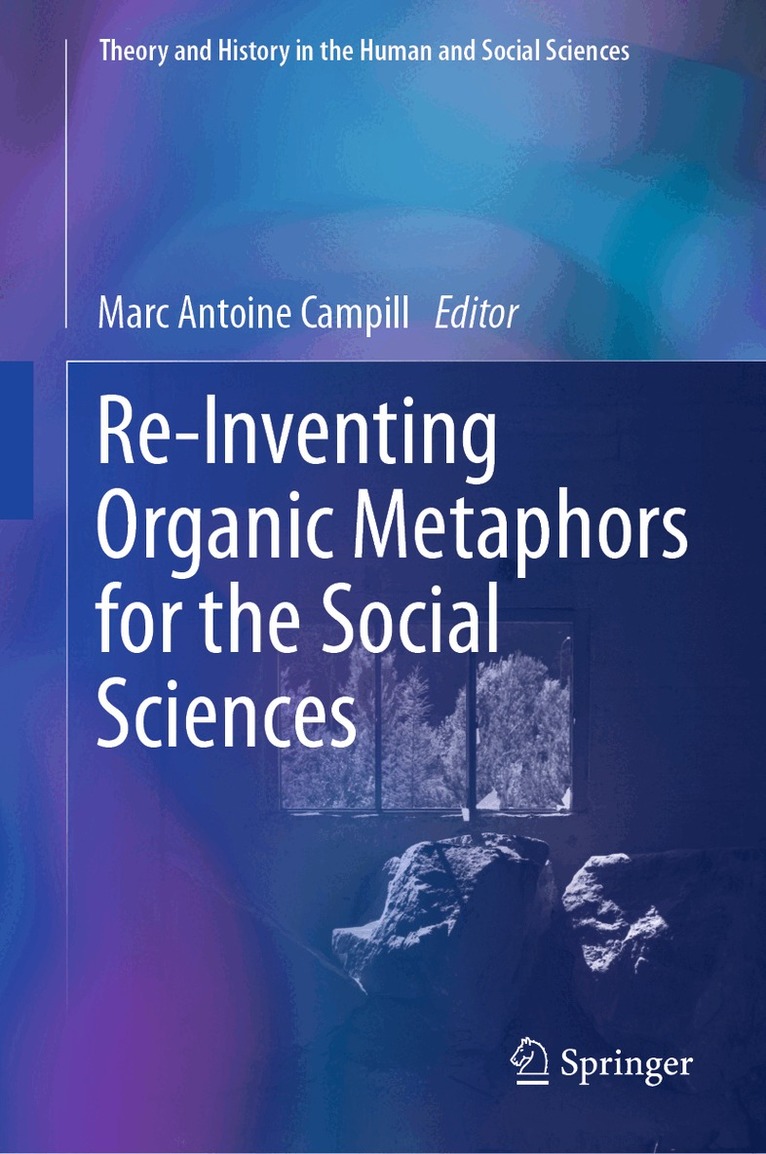
The “Re-Inventing Organic Metaphors for the Social Sciences” is a volume with the specific goal: to challenge psychological understandings by connecting psychological approaches with multidimensional perspectives of various other scientific streams, meanwhile imbedding the generated knowledge in metaphors that allows researchers to follow phenomena into a deeper and more (w)holistic understanding of its appearance. This is particularly important when the humankind faces challenges due to systemic biological changes, as the phenomenological dynamics bonded to those challenges can be conserved in appropriated context. For this purpose, the organic metaphors are introduced. A tool that has central advantage over mechanical metaphors as it can capture the complex and open-systemic nature of biological, psychological, and social phenomena. For example—the widely used notion “mind as a computer” may be more productively replaced by “mind as a membrane”—with implications (e.g. focus on borders in-between, or in systems in themselves- exosystemic realities in our world). There are many other fertile opportunities not yet explored in the realms of psychology and other sciences. Furthermore, the contributors operated also as cross-reviewers for each other’s. In this occasion a new dimension, in chapter construction, will be introduced. Beside the traditional reviewing of another paper the reviewer has been asked to add a small list of extending questions toward the reviewed paper. These added questions have been introduced as potential questions that the authors were demanded to add into a final sub-chapter of their contribution. The subchapter has been titled as “Dialogue” (the author was free to select between the questions and ideas on those they believe could inhabit an especially worth for the future readers).
616 kr
Skickas inom 5-8 vardagar
1 240 kr
Skickas inom 10-15 vardagar
The “Re-Inventing Organic Metaphors for the Social Sciences” is a volume with the specific goal: to challenge psychological understandings by connecting psychological approaches with multidimensional perspectives of various other scientific streams, meanwhile imbedding the generated knowledge in metaphors that allows researchers to follow phenomena into a deeper and more (w)holistic understanding of its appearance. This is particularly important when the humankind faces challenges due to systemic biological changes, as the phenomenological dynamics bonded to those challenges can be conserved in appropriated context. For this purpose, the organic metaphors are introduced. A tool that has central advantage over mechanical metaphors as it can capture the complex and open-systemic nature of biological, psychological, and social phenomena. For example—the widely used notion “mind as a computer” may be more productively replaced by “mind as a membrane”—with implications (e.g. focus on borders in-between, or in systems in themselves- exosystemic realities in our world). There are many other fertile opportunities not yet explored in the realms of psychology and other sciences. Furthermore, the contributors operated also as cross-reviewers for each other’s. In this occasion a new dimension, in chapter construction, will be introduced. Beside the traditional reviewing of another paper the reviewer has been asked to add a small list of extending questions toward the reviewed paper. These added questions have been introduced as potential questions that the authors were demanded to add into a final sub-chapter of their contribution. The subchapter has been titled as “Dialogue” (the author was free to select between the questions and ideas on those they believe could inhabit an especially worth for the future readers).
1 533 kr
Skickas inom 10-15 vardagar
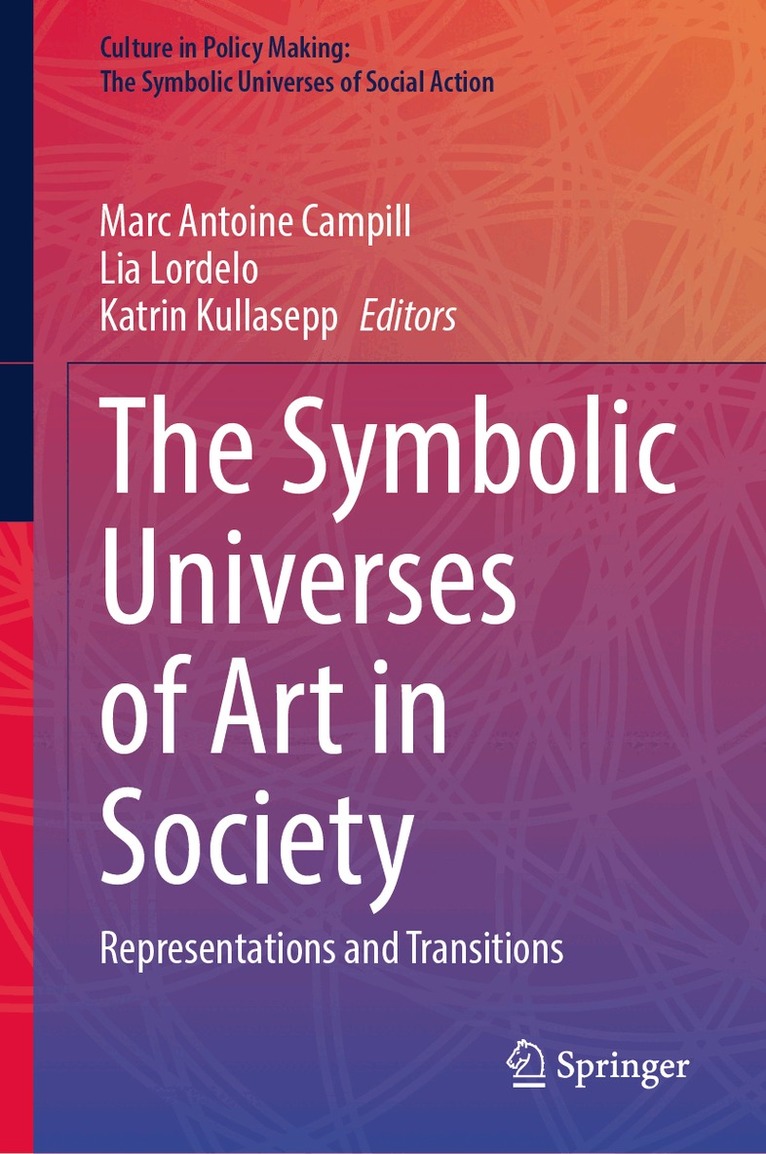
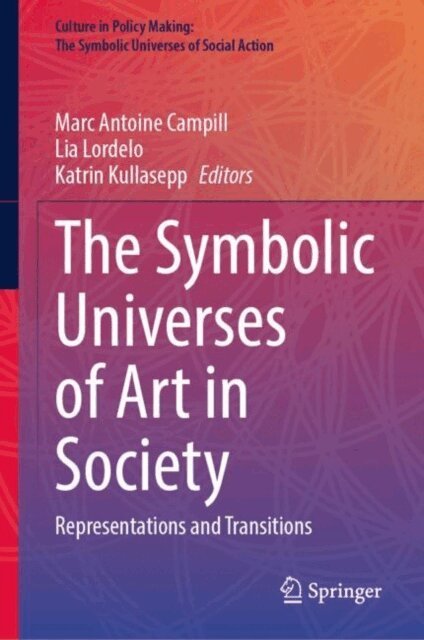
This volume explores the dynamic dialogue of art within society from a multitude of perspectives across the world. It highlights art as a process that is interwoven with notions of physical and metaphysical transition and represents a fundamental awareness of how art is represented and shaped through everyday social challenges. The chapters in this volume link the idea of symbolic universes with social practices of art in different societies and through different historical epochs, under the assumption that art leads the development of cultural systems underlying society. The volume looks at art that is shaped by forgotten or/and hidden perspectives. It suggests that art may have crucial, phenomenologically approachable variations that have been misunderstood in the scientific fields. The work considers art and science as complementary, instead of as counterparts/opposing forces.Divided into an introductory and four thematic parts, the volume reflects on historical signs preserved in artwork; explores the meaning behind art and the experience of cultural cultivation; delves into the dynamic shaping of creative expression through art; and, finally, looks at the artists’ own experiences of performance. This volume is of interest to researchers and students in the fields of cultural psychology, semiotics, arts and aesthetics, and cultural studies.
2 522 kr
Kommande
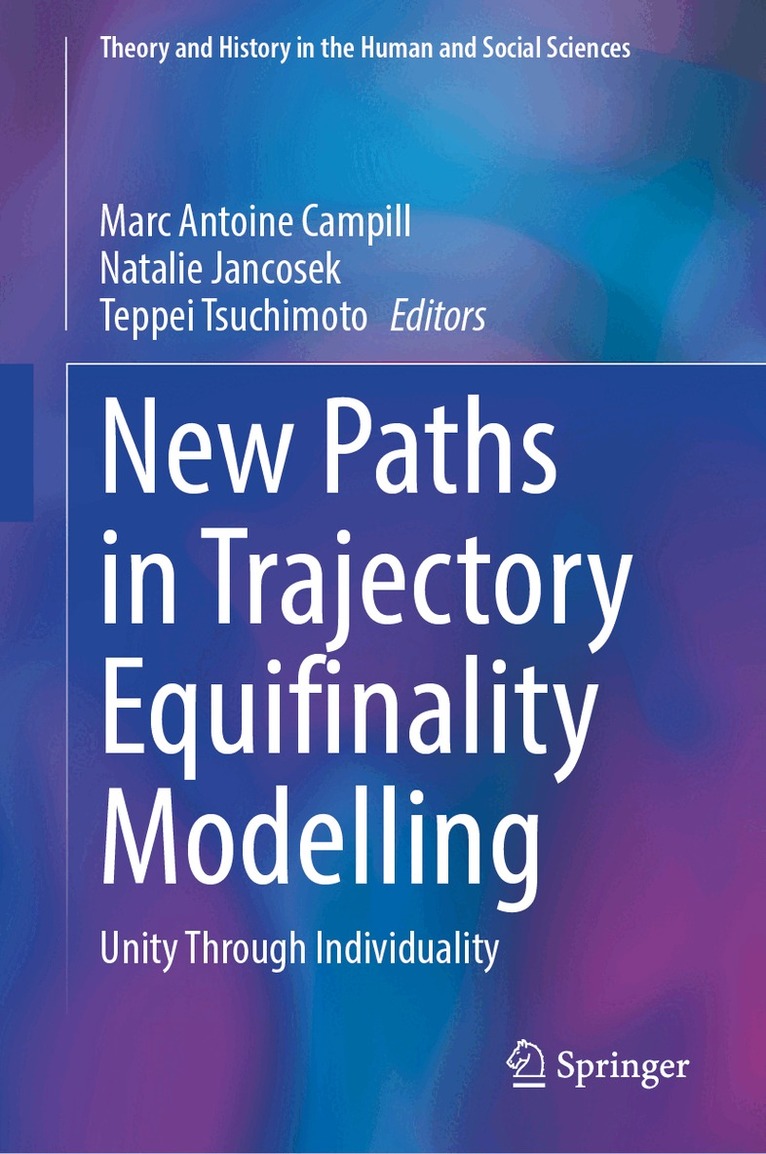
This book explores how the Trajectory Equifinality Approach (TEA), which was introduced in Japan two decades ago by Tatsuya Sato, represents a central milestone for cultural psychology. It involves the use of both real (life events that happened) and imagination-based materials (life events that could have happened, but did not) in psychological data analysis. The potential of TEA is still to be found beyond our current understanding. While the origin of the TEA lies in Japan, where it has grown in popularity over time, today, an extraordinary community of researchers from multiple scientific fields recognises this approach and applies it to their research endeavours. Due to its uniqueness and wide range of application possibilities, this volume enhances the Trajectory Equifinality Approach for new pathways, perspectives and applications in the field. An essential aim of this contribution is to encourage individuals to connect themselves and their endeavours to TEA and thus possibly explore new viewpoints for their work.