This book is not only a direct study of gardens, but also an exploration of the relationship between personal and collective culture, an important component of cultural psychology. This perspective leads to the strange but fascinating question: "e;How does gardening relate to human development?"e;Exploring the meaning of "e;garden"e; for a human being offers profound insights on the relationship between personal and collective culture. In the process of constructing of a garden, nature becomes the object, on which various liminal, aesthetic, and symbolic activities are directly performed. The term "e;garden"e; encompasses a multitude of meanings. It is a place for recreation as well as a symbol of social status and prosperity. For the gardener, it is a place of work. Feelings aroused by a garden are deeply rooted in people's hearts and have an aesthetic significance. Throughout the book, readers will be awakened to how deeply the garden is connected to the human psyche.This book will be of interest to scholars and students of cultural psychology, as well as to anyone interested in the relationship between people and gardens (gardeners, architects, artists, farmers). Readers are encouraged to look back at their own experiences to deepen their understanding of personal and collective culture. Imagine the garden you are familiar with, be it a home garden, neighborhood park, cemetery, or schoolyard. You may find that facets of your experiences are reflected in the colorful and diverse gardens featured in this book.
This book explores how the Trajectory Equifinality Approach (TEA), which was introduced in Japan two decades ago by Tatsuya Sato, representsa central milestone for cultural psychology. It involves the use of both real (life events that happened) and imagination-based materials (life events that could have happened, but did not) in psychological data analysis. The potential of TEA is still to be found beyond our current understanding. While the origin of the TEA lies in Japan, where it has grown in popularity over time, today, an extraordinary community of researchers from multiple scientific fields recognises this approach and applies it to their research endeavours. Due to its uniqueness and wide range of application possibilities, this volume enhances the Trajectory Equifinality Approach for new pathways, perspectives and applications in the field. An essential aim of this contribution is to encourage individuals to connect themselves and their endeavours to TEA and thus possibly explore new viewpoints for their work.
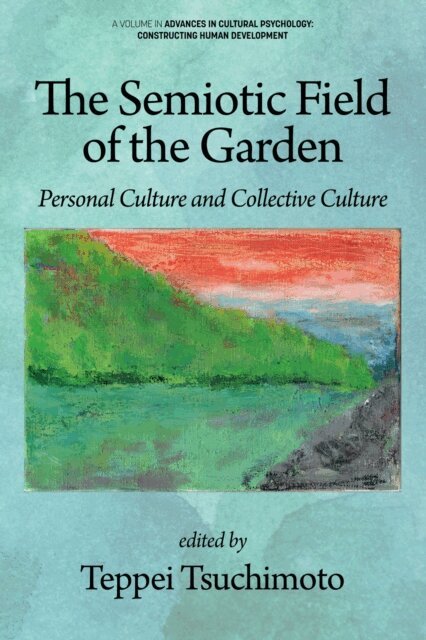
This book is not only a direct study of gardens, but also an exploration of the relationship between personal and collective culture, an important component of cultural psychology. This perspective leads to the strange but fascinating question: "How does gardening relate to human development?"Exploring the meaning of “garden” for a human being offers profound insights on the relationship between personal and collective culture. In the process of constructing of a garden, nature becomes the object, on which various liminal, aesthetic, and symbolic activities are directly performed. The term “garden” encompasses a multitude of meanings. It is a place for recreation as well as a symbol of social status and prosperity. For the gardener, it is a place of work. Feelings aroused by a garden are deeply rooted in people’s hearts and have an aesthetic significance. Throughout the book, readers will be awakened to how deeply the garden is connected to the human psyche.This book will be of interest to scholars and students of cultural psychology, as well as to anyone interested in the relationship between people and gardens (gardeners, architects, artists, farmers). Readers are encouraged to look back at their own experiences to deepen their understanding of personal and collective culture. Imagine the garden you are familiar with, be it a home garden, neighborhood park, cemetery, or schoolyard. You may find that facets of your experiences are reflected in the colorful and diverse gardens featured in this book.
This book is not only a direct study of gardens, but also an exploration of the relationship between personal and collective culture, an important component of cultural psychology. This perspective leads to the strange but fascinating question: "e;How does gardening relate to human development?"e;Exploring the meaning of "e;garden"e; for a human being offers profound insights on the relationship between personal and collective culture. In the process of constructing of a garden, nature becomes the object, on which various liminal, aesthetic, and symbolic activities are directly performed. The term "e;garden"e; encompasses a multitude of meanings. It is a place for recreation as well as a symbol of social status and prosperity. For the gardener, it is a place of work. Feelings aroused by a garden are deeply rooted in people's hearts and have an aesthetic significance. Throughout the book, readers will be awakened to how deeply the garden is connected to the human psyche.This book will be of interest to scholars and students of cultural psychology, as well as to anyone interested in the relationship between people and gardens (gardeners, architects, artists, farmers). Readers are encouraged to look back at their own experiences to deepen their understanding of personal and collective culture. Imagine the garden you are familiar with, be it a home garden, neighborhood park, cemetery, or schoolyard. You may find that facets of your experiences are reflected in the colorful and diverse gardens featured in this book.