Margaret Bull Kovera - Böcker
Visar alla böcker från författaren Margaret Bull Kovera. Handla med fri frakt och snabb leverans.
6 produkter
6 produkter
670 kr
Skickas inom 5-8 vardagar
Forensic mental health assessment (FMHA) has grown into a specialization informed by research and professional guidelines. This series presents up-to-date information on the most important and frequently conducted forms of FMHA. The 19 topical volumes address best approaches to practice for particular types of evaluation in the criminal, civil and juvenile/family areas. Each volume contains a thorough discussion of the relevant legal and psychological concepts, followed by a step-by-step description of the assessment process from preparing for the evaluation to writing the report and testifying in court.Volumes include the following helpful features:- Boxes that zero in on important information for use in evaluations- Tips for best practice and cautions against common pitfalls- Highlighting of relevant case law and statutes- Separate list of assessment tools for easy reference- Helpful glossary of key terms for the particular topicIn making recommendations for best practice, authors consider empirical support, legal relevance, and consistency with ethical and professional standards. These volumes offer invaluable guidance for anyone involved in conducting or using forensic evaluations. Jury selection is the process by which attorneys remove people from the jury pool whom they judge to be undesirable, presumably because they fear that the potential juror would be biased against their side. In Jury Selection, Kovera and Cutler review the law governing attorneys' decisions to remove potential jurors from jury service, including laws prohibiting the systematic removal of particular categories of people from the jury. The book provides an overview of standardized tools for assessing personality traits and attitudes that may be related to jurors' verdicts as well as the research establishing the validity of these measures. The authors review the studies that evaluate the effectiveness of both traditional and scientific methods of jury selection, including the methods used to conduct a community survey to guide a change of venue motion and the selection of potential jurors to excuse. Kovera and Cutler also discuss the ethical principles to be followed when assisting attorneys with jury selection issues.
616 kr
Skickas inom 5-8 vardagar
Forensic mental health assessment (FMHA) has grown into a specialization informed by research and professional guidelines. This series presents up-to-date information on the most important and frequently conducted forms of FMHA. The 19 topical volumes address best approaches to practice for particular types of evaluation in the criminal, civil, and juvenile/family areas. Each volume contains a thorough discussion of the relevant legal and psychological concepts, followed by a step-by-step description of the assessment process from preparing for the evaluation to writing the report and testifying in court. Volumes include the following helpful features:BL Boxes that zero in on important information for use in evaluationsBL Tips for best practice and cautions against common pitfallsBL Highlighting of relevant case law and statutesBL Separate list of assessment tools for easy referenceBL Helpful glossary of key terms for the particular topicIn making recommendations for best practice, authors consider empirical support, legal relevance, and consistency with ethical and professional standards. These volumes offer invaluable guidance for anyone involved in conducting or using forensic evaluations.
1 521 kr
Skickas inom 7-10 vardagar
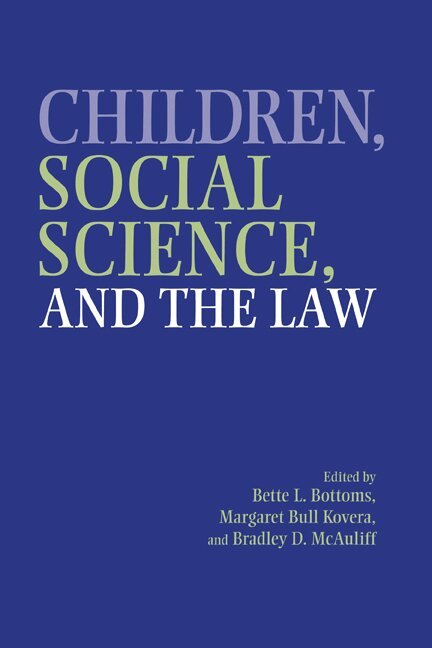
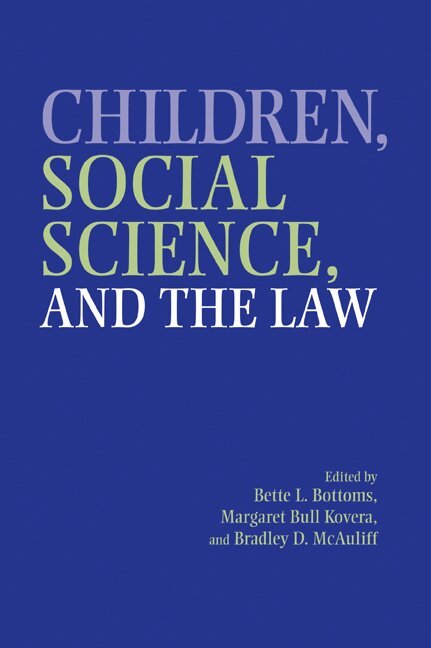
This important book broadens our conceptualization of the topic of children and law, addressing a wide-ranging set of issues in need of attention. The authors confront many difficult questions such as: Are the rights that our nation's laws ascribe to children commensurate with their capabilities and needs? How should laws governing the punishment of crime acknowledge developmental differences between adult and juvenile offenders? Throughout the book, the authors consider (a) current laws and policies relating to children; (b) how social science research can test assumptions behind child-relevant laws and policies; (c) ways that courts can become more receptive to social science recommendations; and (d) challenges faced in the 21st century as our society continues its struggle to accommodate children's concerns within our legal system. With its unique integration of psychological research, social policy, and legal analysis, the volume is an important resource for any professional concerned with children and the law.
636 kr
Skickas inom 7-10 vardagar
This important book broadens our conceptualization of the topic of children and law, addressing a wide-ranging set of issues in need of attention. The authors confront many difficult questions such as: Are the rights that our nation's laws ascribe to children commensurate with their capabilities and needs? How should laws governing the punishment of crime acknowledge developmental differences between adult and juvenile offenders? Throughout the book, the authors consider (a) current laws and policies relating to children; (b) how social science research can test assumptions behind child-relevant laws and policies; (c) ways that courts can become more receptive to social science recommendations; and (d) challenges faced in the 21st century as our society continues its struggle to accommodate children's concerns within our legal system. With its unique integration of psychological research, social policy, and legal analysis, the volume is an important resource for any professional concerned with children and the law.
802 kr
Skickas inom 7-10 vardagar
Juries have a tremendous amount of power and responsibility. They determine the outcomes of trials, including whether a defendant is found guilty or not guilty and, in many cases, what the penalty will be. With the authority to deprive citizens of their freedom and potentially their lives, a fair trial requires that juries function as they should-without bias.But do they function this way? Are juries capable of disregarding inadmissible evidence? Can they understand the instructions that they are given by the judge? And if not, what safeguards or changes would help? Research on juries once served as a pillar of psychological scholarship, but publication of such research has slowed considerably in recent years. This volume summarizes what is known about the psychology of juries and makes a strong call to arms for more research. Margaret Bull Kovera and other esteemed jury scholars identify important, yet understudied, topics at the intersection of psychology and law, review what research is currently available on the topics, and then suggest new research questions that would advance the field. Furthermore, the authors evaluate the relative importance of research methods that emphasize generalizability versus tight experimental control. This book presents a comprehensive survey of the literature on jury behavior and decision making and offers a robust agenda to keep researchers busy in years to come.
1 246 kr
Kommande