Brian L. Cutler – författare
Visar alla böcker från författaren Brian L. Cutler. Handla med fri frakt och snabb leverans.
8 produkter
Expert Testimony on the Psychology of Eyewitness Identification
E-bok, 2009
894 kr
Lägg i varukorg
Eyewitness testimony is highly compelling in a criminal trial, and can have an indelible impact on jurors. However, two decades of research on the subject have shown us that eyewitnesses are sometimes wrong, even when they are highly confident that they are making correct identifications. This book …
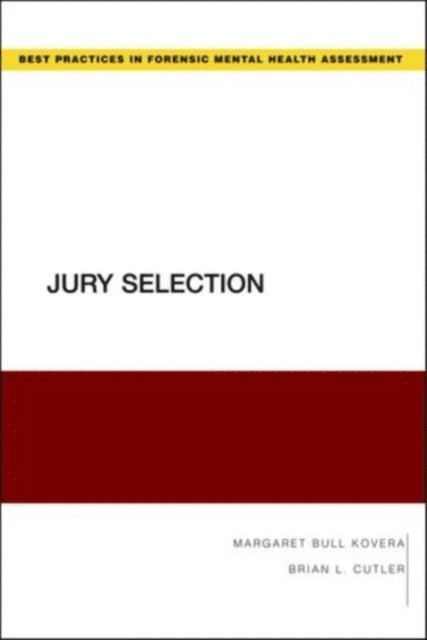
Jury Selection
Av Margaret Bull Kovera, Brian L. Cutler
Häftad, 2012
1206 kr
Lägg i varukorg
Forensic mental health assessment (FMHA) has grown into a specialization informed by research and professional guidelines. This series presents up-to-date information on the most important and frequently conducted forms of FMHA. The 19 topical volumes address best approaches to practice for …
Expert Testimony on the Psychology of Eyewitness Identification
Inbunden, 2009
1633 kr
Lägg i varukorg
Eyewitness testimony is highly compelling in a criminal trial, and can have an indelible impact on jurors. However, two decades of research on the subject have shown us that eyewitnesses are sometimes wrong, even when they are highly confident that they are making correct identifications. This book …
Expert Testimony on the Psychology of Eyewitness Identification
E-bok, 2009
894 kr
Lägg i varukorg
Eyewitness testimony is highly compelling in a criminal trial, and can have an indelible impact on jurors. However, two decades of research on the subject have shown us that eyewitnesses are sometimes wrong, even when they are highly confident that they are making correct identifications. This book …
Jury Selection
Av Brian L. Cutler, Margaret Bull Kovera
E-bok, 2012
607 kr
Lägg i varukorg
Forensic mental health assessment (FMHA) has grown into a specialization informed by research and professional guidelines. This series presents up-to-date information on the most important and frequently conducted forms of FMHA. The 19 topical volumes address best approaches to practice for …
Mistaken Identification
The Eyewitness, Psychology and the Law
Av Brian L. Cutler, Steven D. Penrod
Häftad, 1995
573 kr
Lägg i varukorg
The criminal justice system has devised several procedural safeguards to protect defendants from erroneous conviction resulting from mistaken eyewitness identification. Mistaken Identification: The Eyewitness, Psychology and the Law reviews the empirical research bearing on the adequacy of those …
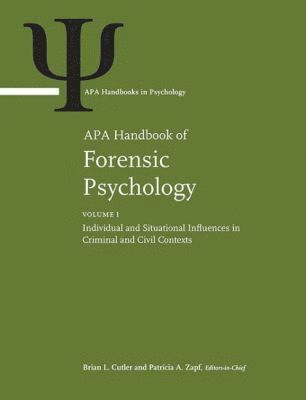
APA Handbook of Forensic Psychology
Volume 1: Individual and Situational Influences in Criminal and Civil Contexts Volume 2: Criminal Investigation, Adjudication, and Sentencing Outcomes
Av Patricia A. Zapf, Brian L. Cutler
2014
5430 kr
Lägg i varukorg
The APA Handbook of Forensic Psychology consolidates and advances knowledge about the scientific foundations and practical application of psychology to law, the practice of law, and law-related policy. Drawing upon contemporary psychological research and practice, this Handbook provides a thorough, …
Encyclopedia of Psychology and Law
2008
5466 kr
Tillfälligt slut
The Encyclopedia of Psychology and Law addresses the interface of psychology and law and draws from the related discipline of criminal justice. These two volumes represent an outstanding collection of entries describing a wide array of contemporary and historical psychology and law topics. With …