Margaret H. Freeman - Böcker
Visar alla böcker från författaren Margaret H. Freeman. Handla med fri frakt och snabb leverans.
9 produkter
9 produkter
1 299 kr
Skickas inom 5-8 vardagar
Poetry is the most complex and intricate of human language used across all languages and cultures. Its relation to the worlds of human experience has perplexed writers and readers for centuries, as has the question of evaluation and judgment: what makes a poem "work" and endure. The Poem as Icon focuses on the art of poetry to explore its nature and function: not interpretation but experience; not what poetry means but what it does. Using both historic and contemporary approaches of embodied cognition from various disciplines, Margaret Freeman argues that a poem's success lies in its ability to become an icon of the felt "being" of reality.Freeman explains how the features of semblance, metaphor, schema, and affect work to make a poem an icon, with detailed examples from various poets. By analyzing the ways poetry provides insights into the workings of human cognition, Freeman claims that taste, beauty, and pleasure in the arts are simply products of the aesthetic faculty, and not the aesthetic faculty itself. The aesthetic faculty, she argues, should be understood as the science of human perception, and therefore constitutive of the cognitive processes of attention, imagination, memory, discrimination, expertise, and judgment.
407 kr
Skickas inom 10-15 vardagar
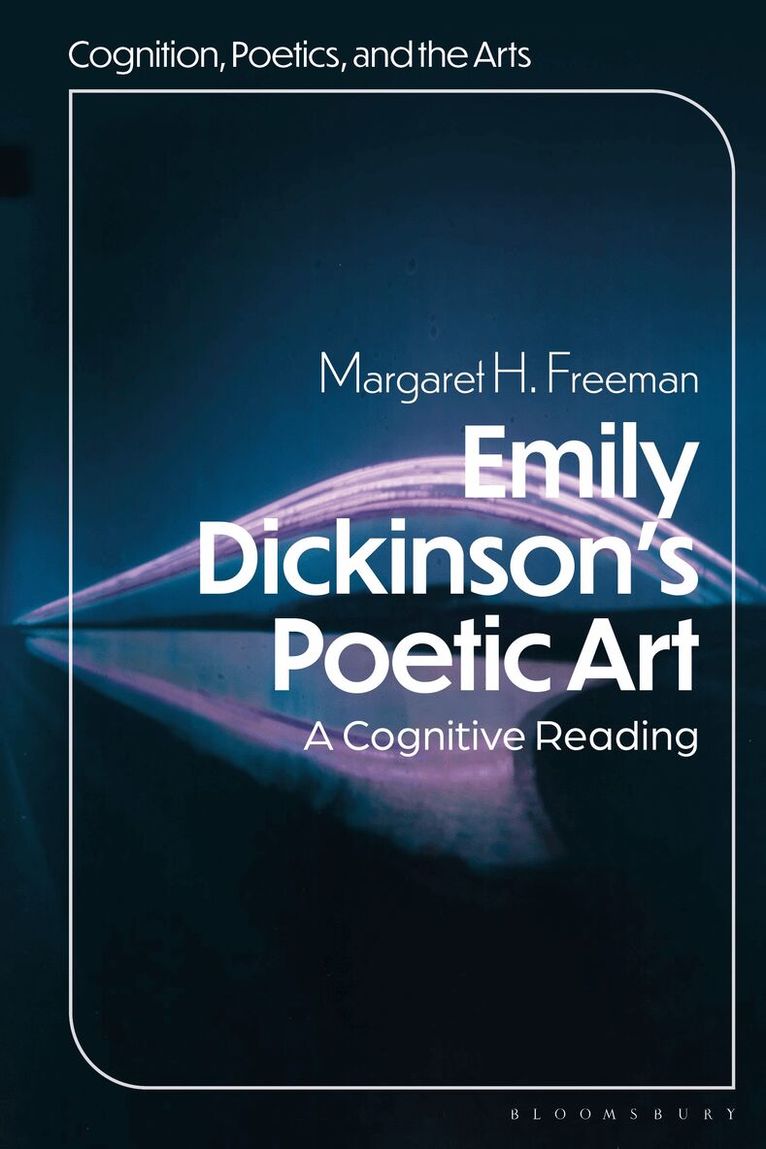
Winner of the Literary Encyclopedia 2024 Book Prize, in the category of literatures originally written in English.Emily Dickinson's Poetic Art is both an exciting work of literary criticism on a central figure in American literature as well as an invitation for students and researchers to engage with cognitive literary studies. Emily Dickinson’s poetry can be challenging and difficult. It paradoxically gives readers a feeling of closeness and intimacy while being puzzling and obscure. Critical interpretations of Dickinson's poems tend to focus on what they mean rather than on what kind of experience they create. A cognitive approach to literary criticism, based on recent cognitive research, helps readers experience and understand the hows and whys of what a poem is saying and doing. These include cognitive linguistic analysis, versification, prosody, cognitive metaphor, schema, blending, and iconicity, all of which explain the sensory, motor, and emotive processes that motivate Dickinson’s conceptualizations.By experiencing Dickinson’s poetry from a cognitive perspective, readers are able to better understand why we feel so close to the poet and why her poetry endures. Emily Dickinson's Poetic Art: A Cognitive Reading is an important contribution to the study of a major American poet as well as to the vibrant field of cognitive literary studies.
1 467 kr
Skickas inom 10-15 vardagar
Winner of the Literary Encyclopedia 2024 Book Prize, in the category of literatures originally written in English.Emily Dickinson's Poetic Art is both an exciting work of literary criticism on a central figure in American literature as well as an invitation for students and researchers to engage with cognitive literary studies. Emily Dickinson’s poetry can be challenging and difficult. It paradoxically gives readers a feeling of closeness and intimacy while being puzzling and obscure. Critical interpretations of Dickinson's poems tend to focus on what they mean rather than on what kind of experience they create. A cognitive approach to literary criticism, based on recent cognitive research, helps readers experience and understand the hows and whys of what a poem is saying and doing. These include cognitive linguistic analysis, versification, prosody, cognitive metaphor, schema, blending, and iconicity, all of which explain the sensory, motor, and emotive processes that motivate Dickinson’s conceptualizations.By experiencing Dickinson’s poetry from a cognitive perspective, readers are able to better understand why we feel so close to the poet and why her poetry endures. Emily Dickinson's Poetic Art: A Cognitive Reading is an important contribution to the study of a major American poet as well as to the vibrant field of cognitive literary studies.
1 532 kr
Kommande
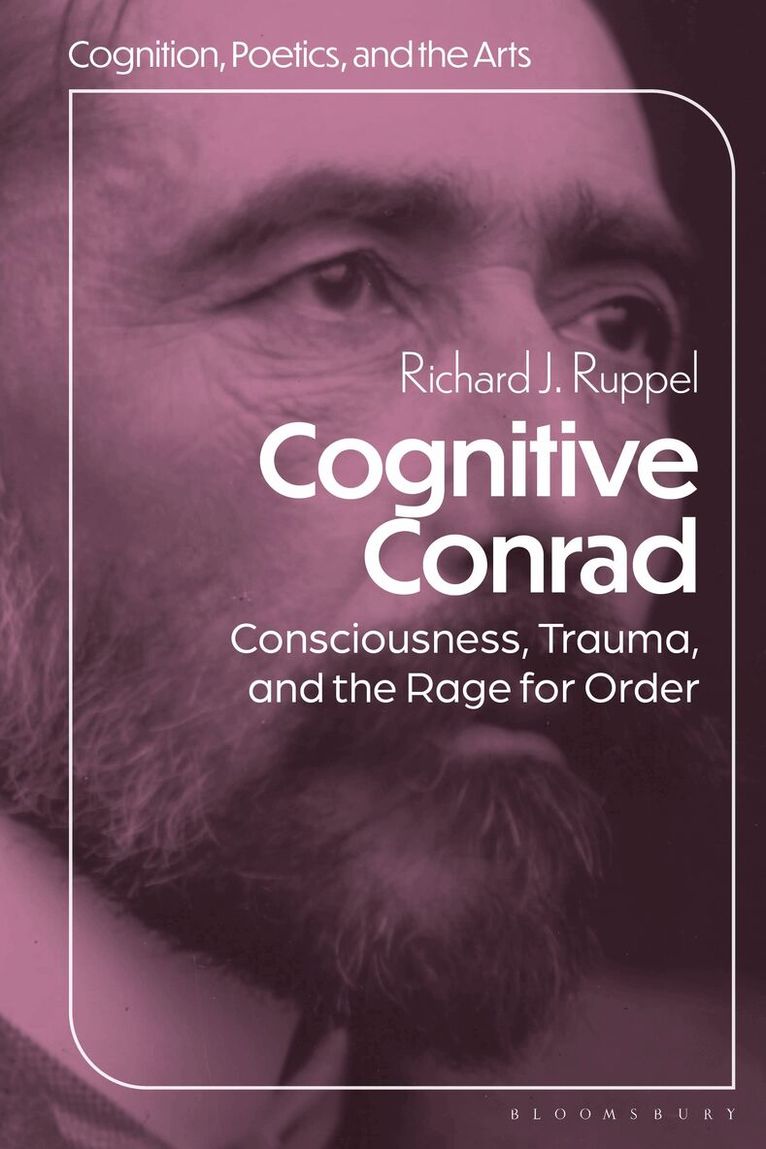
Uncovers how Joseph Conrad's narratives reflect the cognitive studies of his day but also anticipate our own contemporary understandings of consciousness, trauma, and the human need for order. Cognitive Conrad demonstrates the interpretive power of cognitive literary studies and historicism in the most important works of Joseph Conrad. It highlights how Conrad's fiction reflects the complexities of human consciousness, trauma, and the relentless human drive to impose a coherent form on a world that, ultimately, lacks any dependable order independent of individual, human constructions. Through a detailed examination of Conrad's characters and their psychological landscapes – in a wide range of fiction, such as Lord Jim, Under Western Eyes, and various short stories – Richard Ruppel reveals how the novelist anticipated modern cognitive theories and the science of trauma. He also discusses the profound connections between Conrad's fiction and the work of 19th-century scientists like Hermann Helmholtz, who influenced Conrad's portrayal of perception and consciousness. Cognitive Conrad asserts the power of the arts and humanities to supplement and correct the sciences, which most often look to generalize and categorize. It argues that one key role of the arts – often articulated poignantly in Conrad’s greatest work – is to highlight the anomalous, to champion the peculiar.
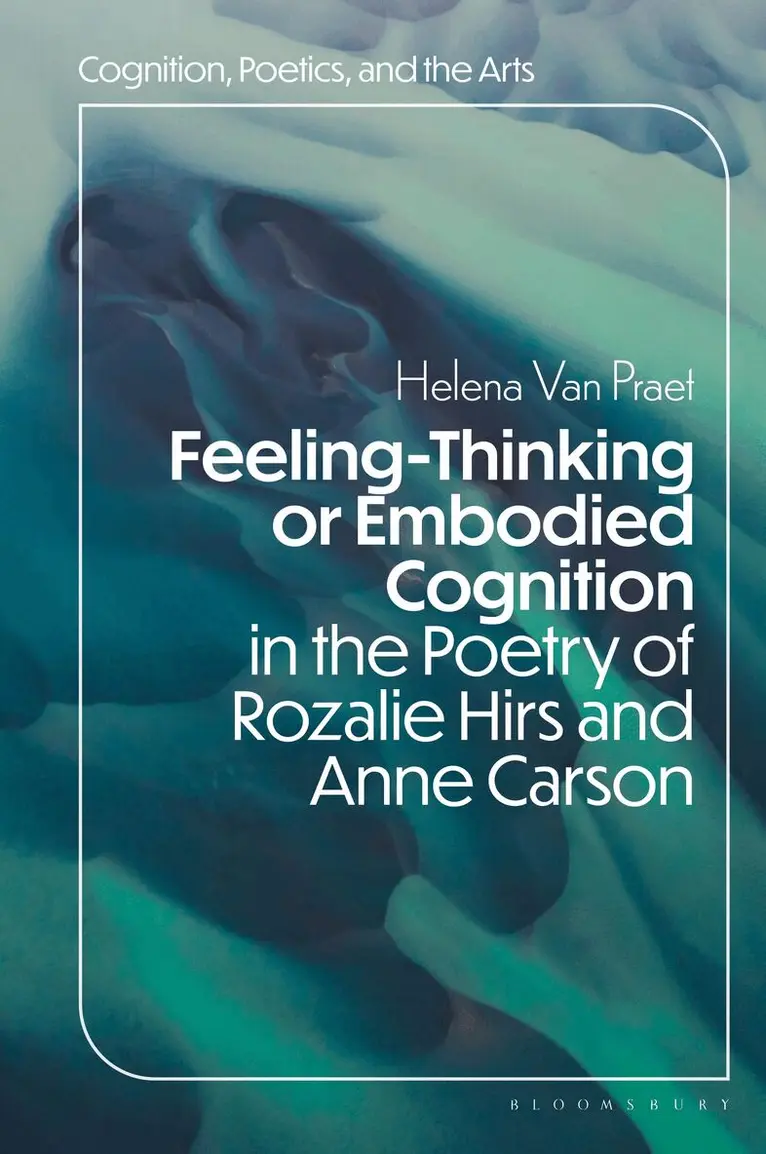
Feeling-Thinking or Embodied Cognition in the Poetry of Rozalie Hirs and Anne Carson
Inbunden, Engelska, 2026
2 066 kr
Kommande
A stimulating cross-disciplinary study of how poetry taps into an embodied cognition at its various levels of signification. Feeling-Thinking or Embodied Cognition in the Poetry of Rozalie Hirs and Anne Carson asks: How can we feel-think in poetry and what are the effects of this embodied cognition for the poetic epistemology that is advanced? Combining a new materialist approach with insights from psychology, philosophy, and cognitive science, Helena Van Praet argues that such poetry is not only about felt knowledge but also invites readers to feel-think on a formal, sensory-material, and discursive level.Using a comparative corpus focused on the contemporary writing of Dutch poet Rozalie Hirs and Canadian poet Anne Carson, this study uses experimental strategies such as situated conceptualizations, word streams, poetic metalepsis, networked configurations, screen thinking, and discursive cues to explore how knowledge and meaning are bodily mediated in poetry. It demonstrates that meaning is not just propositional but rather something that you do with your entire body and that poetry is the prime genre to show such an embodied cognition at work.While earlier accounts tend to be limited to the physicality of the mind or mainly focus on either feeling or thinking, this book develops a full-bodied theory of embodied cognition in poetry. Through close readings, Feeling-Thinking shows how poetry can offer us alternative conceptions of knowledge that transcend purely rational accounts, inviting us to find joy in such cognitive creation.
1 398 kr
Skickas inom 10-15 vardagar
A pioneering work in cognitive versification studies, scrutinizing the rhythmical means of free verse.Investigating a previously neglected area of study, Rhythm in Modern Poetry establishes a foundation for cognitive versification studies with a focus on the modernist free verse. Following in the tradition of cognitive poetics by Reuven Tsur, Richard Cureton and Derek Attridge, every chapter investigates the rhythms of one modern poem, by Lawrence Ferlinghetti, Sylvia Plath and others, and engages each element in the broader interpretation of the poem in question.In her examination of modernist poetry in English and other Germanic languages, Eva Lilja expands her analysis to discuss both the Ancient Greek and Norse origins of rhythm in free verse and the intermedia intersection, comparing poetic rhythm with rhythm in pictures, sculptures and dance. Rhythm in Modern Poetry thus expands the field of cognitive versification studies while also engaging readers writ large interested in how rhythm works in the aesthetic field.
432 kr
Skickas inom 10-15 vardagar
A pioneering work in cognitive versification studies, scrutinizing the rhythmical means of free verse.Investigating a previously neglected area of study, Rhythm in Modern Poetry establishes a foundation for cognitive versification studies with a focus on the modernist free verse. Following in the tradition of cognitive poetics by Reuven Tsur, Richard Cureton and Derek Attridge, every chapter investigates the rhythms of one modern poem, by Lawrence Ferlinghetti, Sylvia Plath and others, and engages each element in the broader interpretation of the poem in question.In her examination of modernist poetry in English and other Germanic languages, Eva Lilja expands her analysis to discuss both the Ancient Greek and Norse origins of rhythm in free verse and the intermedia intersection, comparing poetic rhythm with rhythm in pictures, sculptures and dance. Rhythm in Modern Poetry thus expands the field of cognitive versification studies while also engaging readers writ large interested in how rhythm works in the aesthetic field.
1 471 kr
Skickas inom 10-15 vardagar
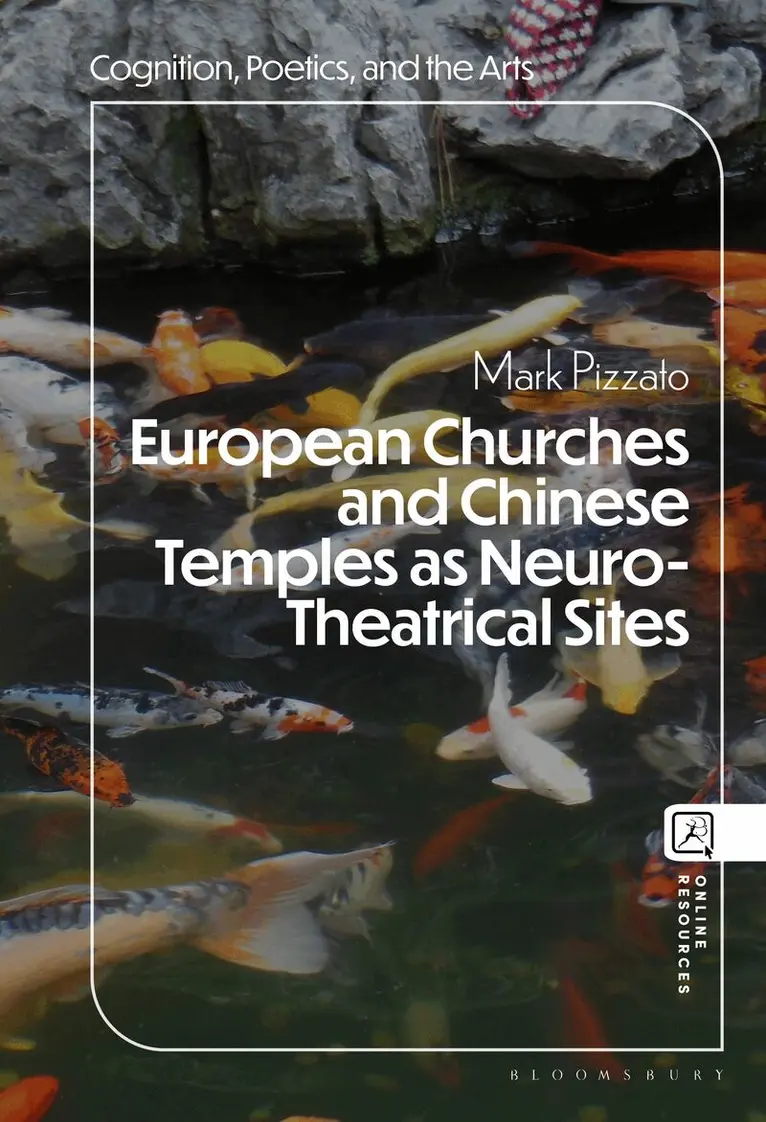
Compares monumental designs and performance spaces of Christian, Buddhist, and related sanctuaries, exploring how brain networks, animal-human emotions, and cultural ideals are reflected historically and affected today as "inner theatre" elements.Integrating research across the humanities and sciences, this book explores how traditional designs of outer theatrical spaces left cultural imprints for the inner staging of Self and Other consciousness, which each of us performs daily based on how we think others view us. But believers also perform in a cosmic theatre. Ancestral spirits and gods (or God) watch and interact with them in awe-inspiring spaces, grooming affects toward in-group identification and sacrifice, or out-group rivalry and scapegoating. In a study of over 80 buildings – shown by 40 images in the book, plus thousands of photos and videos online – Pizzato demonstrates how they reflect meta-theatrical projections from prior generations. They also affect the embodied, embedded, enacted, and extended (4E) cognition of current visitors, who bring performance frameworks of belief, hope, and doubt to the sacred site. This involves neuro-social, inner/outer theatre networks with patriarchal, maternal, and trickster paradigms.European Churches and Chinese Temples as Neuro-Theatrical Sites investigates performative material cultures, creating dialogs between theatre, philosophy, history, and various (cognitive, affective, social, biological) sciences. It applies them to the architecture of religious buildings: from Catholic, Orthodox, and Protestant in Europe, plus key sites in Jerusalem and prior “pagan” temples, to Buddhist, Daoist, Confucian, and imperial in China. It thus reveals individualist/collectivist, focal/holistic, analytical/dialectical, and melodramatic/tragicomic trajectories, with cathartic poetics for the future.
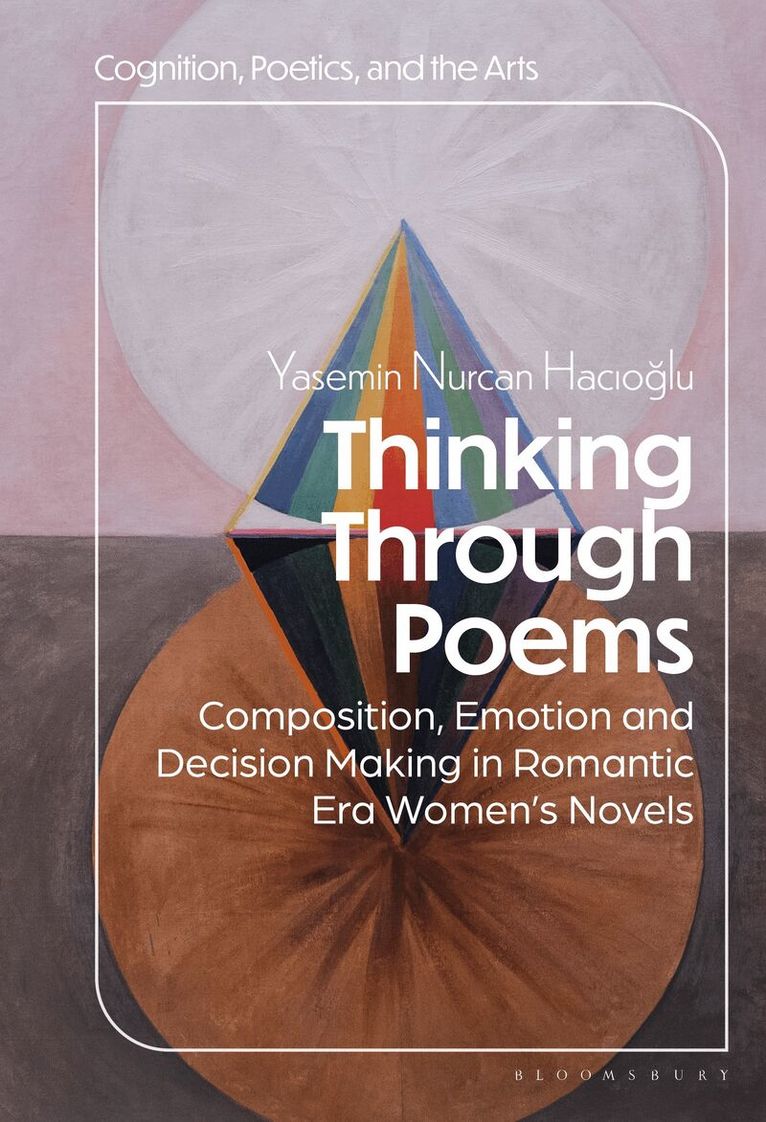
Thinking Through Poems
Composition, Emotion and Decision-Making in Romantic-Era Women’s Novels
Inbunden, Engelska, 2026
1 630 kr
Kommande
A new cognitive approach to the representation of composition in literature that examines five women novelists of the late 18th century and how they use imaginative poetic practices to attain emotional, practical and political agency.During a backlash towards feminism in British politics at the turn of the 19th century, popular women’s novels became saturated with heroines in dangerous situations who turn to composing original poetry. Thinking Through Poems shows how these poems indicate practices of composition that model imaginative decision-making. It reveals how these novels provide readers with cognitive tools to re-think how situations might unfold and to realize how patriarchal threats and cultural narratives can be methodically altered.Using both contemporary cognitive philosophy and historical approaches, Yasemin Nurcan Hacioglu uncovers how fictional heroines manipulate the narrative as they craft thoughts and responses not yet socially scripted. Re-considered as "works in progress," poems in Ann Radcliffe’s and Charlotte Smith’s influential novels are examined as a space in which heroines re-draft experiences into narratives that justify their choices. Hacioglu then investigates how the neglected novels of Eleanor Sleath, Charlotte Dacre and Amelia Opie added new arguments, through compositional practices, to the rich philosophical debate on how agency can be constructed. Thinking Through Poems provides new readings of women’s novels that are often read as conservative. It argues that these novels contributed to feminist politics not through defining values, but by providing frameworks for weaponizing fictional affects to challenge both practical and ideological obstacles during a changing climate in gender politics.