Margie Patlak – författare
435 kr
Läs direkt efter köp
597 kr
Skickas
393 kr
Läs direkt efter köp
The IOM''s National Cancer Policy Board estimated in 2003 that even modest efforts to implement known tactics for cancer prevention and early detection could result in up to a 29 percent drop in cancer deaths in about 20 years. The IOM''s National Cancer Policy Forum, which succeeded the Board after it was disbanded in 2005, continued the Board''s work to outline ways to increase screening in the U.S.
On February 25 and 26, 2008, the Forum convened a workshop to discuss screening for colorectal cancer. Colorectal cancer screening remains low, despite strong evidence that screening prevents deaths. With the aim to make recommended colorectal cancer screening more widespread, the workshop discussed steps to be taken at the clinic, community, and health system levels. Workshop speakers, representing a broad spectrum of leaders in the field, identified major barriers to increased screening and described strategies to overcome these obstacles. This workshop summary highlights the information presented, as well as the subsequent discussion about actions needed to increase colorectal screening and, ultimately, to prevent more colorectal cancer deaths.
435 kr
Läs direkt efter köp
The NCI-sponsored cooperative groups have made important contributions to improving treatment for many types of cancer, including breast, ovarian, colorectal, and childhood cancers. Cooperative group research has been instrumental in establishing innovative treatments that improve outcomes and quality of life. Despite these successes, the Cooperative Group Program has faced a number of challenges that threaten its effectiveness.
To address this problem, the National Cancer Policy Forum (NCPF) convened a workshop titled "Multi-Center Phase III Clinical Trials and NCI Cooperative Groups" in Washington, DC, on July 1-2, 2008. The purpose of the workshop was to outline the challenges that the public clinical cancer research enterprise faces, and to identify possible solutions to these challenges.
465 kr
Skickas inom 3-6 vardagar
618 kr
Läs direkt efter köp
New technologies and improved understanding of the genesis and progression of various cancers have added to the enthusiasm for potential new strategies to improve screening and early detection of cancer. Research is also under way to evaluate refinements in current screening approaches, including determining optimal screening intervals, the ages at which screening should begin and end, as well as more specific estimates of the potential risks and benefits of screening for certain populations, such as racial and ethnic minority populations and people who have elevated risk for specific cancers. However, there remain significant challenges to developing, validating, and effectively implementing new cancer screening approaches. Guidelines for screening issued by different organizations vary considerably with no clear way of deciding which guidelines are most trustworthy. There is also a need to improve access to high-quality cancer screening and follow-up care, particularly in low-resource communities and among populations who are underserved or have numerous barriers to receiving care.
To examine the challenges and opportunities related to improving current approaches to cancer screening, as well as the evidence base for novel cancer screening methods, the National Cancer Policy Forum held a workshop, Advancing Progress in the Development and Implementation of Effective, High-Quality Cancer Screening, on March 2-3, 2020, in Washington, DC. This workshop convened a broad range of experts, including clinicians, researchers, statisticians, and patient advocates, as well as representatives of health care organizations, academic medical centers, insurers, and federal agencies. This publication summarizes the presentations and discussions of the workshop and highlights suggestions from individual participants regarding how to improve cancer screening.
268 kr
Läs direkt efter köp
One of the challenges in treating cancer is the disease''s complexity and variation among patients. Cancer manifests differently in each patient, so treatments that are effective in one patient may not be effective in another. As cancer care becomes more personalized, subpopulations of individuals will be given preventive or therapeutic interventions based on their susceptibility to a particular disease or their predicted response to a specific treatment. However, before the use of personalized cancer care can reach its full potential, the health care system must resolve a number of technological, regulatory, and reimbursement issues.
To explore these policy challenges, the National Cancer Policy Forum held the workshop Policy Issues in the Development of Personalized Medicine in Oncology in June 2009. Experts provided presentations on the current state of personalized medicine technology, as well as issues in the validation of, regulation of, and reimbursement for the predictive tests that underpin personalized medicine. Participants discussed the obstacles and possible solutions to further developing and using personalized medicine technologies. This document summarizes the workshop.
410 kr
Läs direkt efter köp
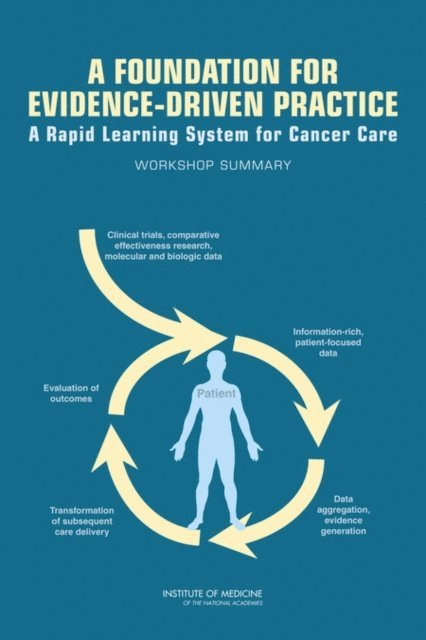
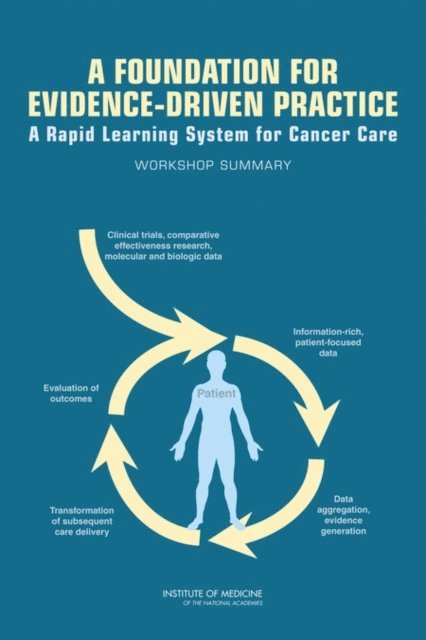
The IOM''s National Cancer Policy Forum held a workshop October 5-6, 2009, to examine how to apply the concept of a ''rapid learning health system'' to the problem of cancer. This document summarizes the workshop.
390 kr
Läs direkt efter köp
One of the challenges in treating cancer is the disease''s complexity and variation among patients. Cancer manifests differently in each patient, so treatments that are effective in one patient may not be effective in another. As cancer care becomes more personalized, subpopulations of individuals will be given preventive or therapeutic interventions based on their susceptibility to a particular disease or their predicted response to a specific treatment. However, before the use of personalized cancer care can reach its full potential, the health care system must resolve a number of technological, regulatory, and reimbursement issues.
To explore these policy challenges, the National Cancer Policy Forum held the workshop Policy Issues in the Development of Personalized Medicine in Oncology in June 2009. Experts provided presentations on the current state of personalized medicine technology, as well as issues in the validation of, regulation of, and reimbursement for the predictive tests that underpin personalized medicine. Participants discussed the obstacles and possible solutions to further developing and using personalized medicine technologies. This document summarizes the workshop.
385 kr
Läs direkt efter köp
Despite spending more time and money in developing novel therapeutics, the success rate for new pharmacologic treatments has been poor. Although the research and development expenditures have grown 13 percent each year since 1970 (a 50-fold increase), the number of new drugs approved annually is no greater now than it was 50 years ago. Over the past decade, skyrocketing costs and the complexity of the scientific knowledge upon which to develop new agents have provided incentives for alternative approaches to drug development, if we are to continue to improve clinical care and reduce mortality. These challenges create opportunities for improved collaboration between industry, academia, government, and philanthropic organizations at each stage in new drug development, marketing, and implementation. Perhaps the most appropriate initial step in addressing the need for collaboration is to consider more precompetitive relationships that allow sharing of scientific information to foster drug development. While these collaborative relationships in basic and preclinical research on drug targets and the early stages of clinical testing are acknowledged to be potentially important drivers for innovation and more rapid marketing of new agents, they also raise a number of concerns that must be addressed. For example, acknowledgment of academic productivity and independence and economic competitiveness must be considered and these challenges managed to foster a culture of collaboration. At the same time, regulatory issues, the need for standardization, and intellectual property concerns must be confronted if the current models for drug development are to be refined to encourage robust participation in precompetitive collaborations. Recognizing the growing importance of precompetitive collaborations in oncology drug development, as well as the challenges these innovative collaborations pose, the National Cancer Policy Forum of the Institute of Medicine held a workshop on February 9 and 10, 2010. This book is a summary of the workshop proceedings.
585 kr
Läs direkt efter köp
The IOM''s National Cancer Policy Forum held a workshop October 5-6, 2009, to examine how to apply the concept of a ''rapid learning health system'' to the problem of cancer. This document summarizes the workshop.
552 kr
Läs direkt efter köp
Despite spending more time and money in developing novel therapeutics, the success rate for new pharmacologic treatments has been poor. Although the research and development expenditures have grown 13 percent each year since 1970 (a 50-fold increase), the number of new drugs approved annually is no greater now than it was 50 years ago. Over the past decade, skyrocketing costs and the complexity of the scientific knowledge upon which to develop new agents have provided incentives for alternative approaches to drug development, if we are to continue to improve clinical care and reduce mortality. These challenges create opportunities for improved collaboration between industry, academia, government, and philanthropic organizations at each stage in new drug development, marketing, and implementation. Perhaps the most appropriate initial step in addressing the need for collaboration is to consider more precompetitive relationships that allow sharing of scientific information to foster drug development. While these collaborative relationships in basic and preclinical research on drug targets and the early stages of clinical testing are acknowledged to be potentially important drivers for innovation and more rapid marketing of new agents, they also raise a number of concerns that must be addressed. For example, acknowledgment of academic productivity and independence and economic competitiveness must be considered and these challenges managed to foster a culture of collaboration. At the same time, regulatory issues, the need for standardization, and intellectual property concerns must be confronted if the current models for drug development are to be refined to encourage robust participation in precompetitive collaborations. Recognizing the growing importance of precompetitive collaborations in oncology drug development, as well as the challenges these innovative collaborations pose, the National Cancer Policy Forum of the Institute of Medicine held a workshop on February 9 and 10, 2010. This book is a summary of the workshop proceedings.
187 kr
Läs direkt efter köp
The Gulf of Mexico oil spill is unprecedented not only in its size but also in the use of chemical dispersants and controlled burns to remove the oil. The National Institute of Environmental Health Sciences (NIEHS) is designing a study to investigate the health effects on clean-up workers. The IOM held a workshop to review and comment on NIEHS''o;s study protocol.
401 kr
Läs direkt efter köp
One way scientists are working to overcome challenges in cancer treatment and improve cancer care is through nanotechnology. Nanotechnology, engineered materials that make use of the unique physical properties, presents a new array of medical prospects that will revolutionize cancer prevention, diagnosis, and treatment practices. Giving new hope to patients, practitioners, and researchers alike, nanotechnology has the potential to translate recent discoveries in cancer biology into clinical advances in oncology. While public investments in nanotechnology for cancer continue to increase, medical products based on nanotechnology are already on the market.
The National Cancer Policy forum held a workshop July 12-13, 2010, to explore challenges in the use of nanotechnology in oncology. Nanotechnology and Oncology evaluates the ongoing discussion on the role of nanotechnology in cancer as it relates to risk management, treatment, and regulatory policy. Assessments on nanomedicine and the physical properties of nanomaterials were presented during the workshop, along with an appraisal of the current status of research and development efforts.
284 kr
Läs direkt efter köp
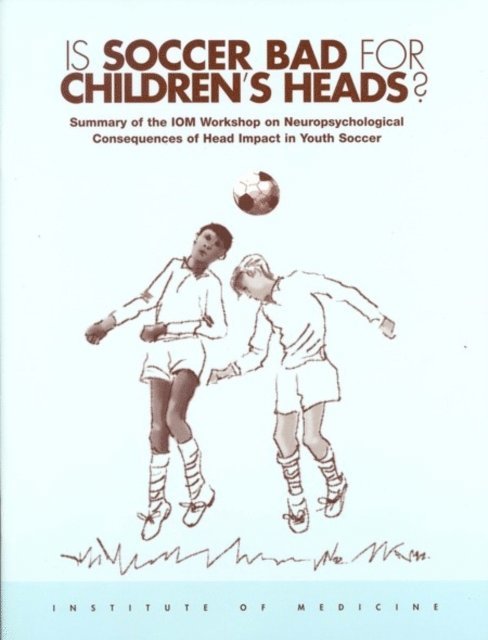
To explore whether soccer playing puts youths at risk for lasting brain damage, the Institute of Medicine brought together experts in head injury, sports medicine, pediatrics, and bioengineering. In a workshop entitled "Youth Soccer: Neuropsychological Consequences of Head Impact in Sports," that was held in Washington D.C. on October 12, 2001, these experts presented the scientific evidence for long-term consequences of head injury from youth sports, especially soccer, possible approaches to reduce the risks, and policy issues raised by the subject. Some of the findings presented by the speakers raised concerns, such as the high concussion rate of high school soccer players, the frequent persistence of impaired brain functions even after other symptoms of a concussion disappear, and the need for a better understanding of when it is safe for players to resume playing after they have had a concussion. But other findings were reassuring, such as studies that suggest that with the type of soccer balls used in the United States, heading is not likely to cause brain injury in youths, nor is playing soccer likely to cause permanent brain damage.
This is a summary of the reports from these experts in the field, and the lively discussions that followed them. Topics covered include: causes of head injuries in soccer; how to detect a concussion; the biology of concussion; studies of soccer and football players; the role of protective headgear; and policy implications, such as how to decide when a concussed player should be allowed to return to the playing field.
618 kr
Läs direkt efter köp
The NCI-sponsored cooperative groups have made important contributions to improving treatment for many types of cancer, including breast, ovarian, colorectal, and childhood cancers. Cooperative group research has been instrumental in establishing innovative treatments that improve outcomes and quality of life. Despite these successes, the Cooperative Group Program has faced a number of challenges that threaten its effectiveness.
To address this problem, the National Cancer Policy Forum (NCPF) convened a workshop titled "Multi-Center Phase III Clinical Trials and NCI Cooperative Groups" in Washington, DC, on July 1-2, 2008. The purpose of the workshop was to outline the challenges that the public clinical cancer research enterprise faces, and to identify possible solutions to these challenges.
401 kr
Läs direkt efter köp
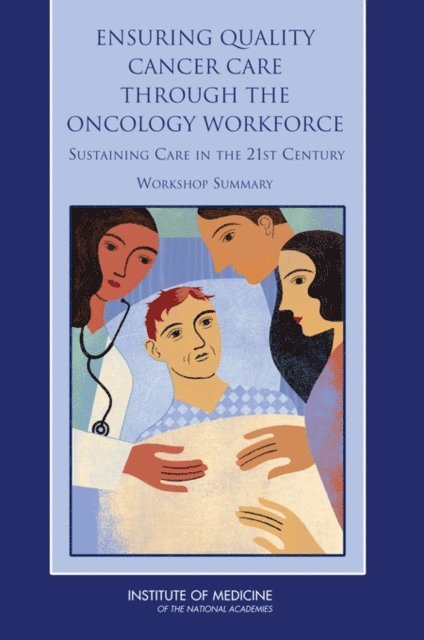
The American Society of Clinical Oncology (ASCO) predicts that by 2020, there will be an 81 percent increase in people living with or surviving cancer, but only a 14 percent increase in the number of practicing oncologists. As a result, there may be too few oncologists to meet the population''s need for cancer care. To help address the challenges in overcoming this potential crisis of cancer care, the National Cancer Policy Forum of the Institute of Medicine (IOM) convened the workshop Ensuring Quality Cancer Care through the Oncology Workforce: Sustaining Care in the 21st Century in Washington, DC on October 20 and 21, 2008.
618 kr
Läs direkt efter köp
552 kr
Läs direkt efter köp
The IOM''s National Cancer Policy Board estimated in 2003 that even modest efforts to implement known tactics for cancer prevention and early detection could result in up to a 29 percent drop in cancer deaths in about 20 years. The IOM''s National Cancer Policy Forum, which succeeded the Board after it was disbanded in 2005, continued the Board''s work to outline ways to increase screening in the U.S.
On February 25 and 26, 2008, the Forum convened a workshop to discuss screening for colorectal cancer. Colorectal cancer screening remains low, despite strong evidence that screening prevents deaths. With the aim to make recommended colorectal cancer screening more widespread, the workshop discussed steps to be taken at the clinic, community, and health system levels. Workshop speakers, representing a broad spectrum of leaders in the field, identified major barriers to increased screening and described strategies to overcome these obstacles. This workshop summary highlights the information presented, as well as the subsequent discussion about actions needed to increase colorectal screening and, ultimately, to prevent more colorectal cancer deaths.
552 kr
Läs direkt efter köp
Research has long sought to identify biomarkers that could detect cancer at an early stage, or predict the optimal cancer therapy for specific patients. Fueling interest in this research are recent technological advances in genomics, proteomics, and metabolomics that can enable researchers to capture the molecular fingerprints of specific cancers and fine-tune their classification according to the molecular defects they harbor. The discovery and development of new markers of cancer could potentially improve cancer screening, diagnosis, and treatment. Given the potential impact cancer biomarkers could have on the cost effectiveness of cancer detection and treatment, they could profoundly alter the economic burden of cancer as well.Despite the promise of cancer biomarkers, few biomarker-based cancer tests have entered the market, and the translation of research findings on cancer biomarkers into clinically useful tests seems to be lagging. This is perhaps not surprising given the technical, financial, regulatory, and social challenges linked to the discovery, development, validation, and incorporation of biomarker tests into clinical practice. To explore those challenges and ways to overcome them, the National Cancer Policy Forum held the conference "Developing Biomarker-Based Tools for Cancer Screening, Diagnosis and Treatment: The State of the Science, Evaluation, Implementation, and Economics" in Washington, D.C., from March 20 to 22, 2006.At this conference, experts gave presentations in one of six sessions. In addition, seven small group discussions explored the policy implications surrounding biomarker development and adoption into clinical practice. Developing Biomarker-based Tools for Developing Cancer Screening, Diagnosis, and Treatment: The State of the Science, Evaluation, Implementation, and Economics-Workshop Summary presents the conference proceedings and will be used by an Institute of Medicine (IOM) committee to develop consensus-based recommendations for moving the field of cancer biomarkers forward.
101 kr
Läs direkt efter köp
X-ray mammography screening is the current mainstay for early breast cancer detection. It has been proven to detect breast cancer at an earlier stage and to reduce the number of women dying from the disease. However, it has a number of limitations.
These current limitations in early breast cancer detection technology are driving a surge of new technological developments, from modifications of x-ray mammography such as computer programs that can indicate suspicious areas, to newer methods of detection such as magnetic resonance imaging (MRI) or biochemical tests on breast fluids. To explore the merits and drawbacks of these new breast cancer detection techniques, the Institute of Medicine of the National Academy of Sciences convened a committee of experts. During its year of operation, the committee examined the peer-reviewed literature, consulted with other experts in the field, and held two public workshops.
In addition to identifying promising new technologies for early detection, the committee explored potential barriers that might prevent the development of new detection methods and their common usage. Such barriers could include lack of funding from agencies that support research and lack of investment in the commercial sector; complicated, inconsistent, or unpredictable federal regulations; inadequate insurance reimbursement; and limited access to or unacceptability of breast cancer detection technology for women and their doctors. Based on the findings of their study, the committee prepared a report entitled Mammography and Beyond: Developing Technology for Early Detection of Breast Cancer, which was published in the spring of 2001. This is a non-technical summary of that report.
276 kr
Läs direkt efter köp
Many ongoing changes are likely to have an impact on cancer research and care. For example, technological advances are rapidly changing the way cancer research is conducted, and the recently passed healthcare reform legislation has many implications for cancer care. Technological advances are altering the way cancer research is conducted and cancer care is delivered, and the recently passed healthcare reform legislation has many implications for cancer care. There is a growing emphasis on molecularly targeted therapies, information technology (IT), and patient-centered care, and clinical cancer research has become a global endeavor. At the same time, there are concerns about shrinking research budgets and escalating costs of cancer care.
Considering such changes, the National Cancer Policy Forum (NCPF) of the Institute of Medicine held a National Cancer Policy Summit on October 25, 2010. The Summit convened key leaders in the cancer community to identify and discuss the most pressing policy issues in cancer research and cancer care. The National Cancer Policy Summit: Opportunities and Challenges in Cancer Research and Care is a summary of the summit. The report explores policy issues related to cancer research, the implementation of healthcare reform, delivery of cancer care, and cancer control and public health needs. Expert participants suggested many potential actions to provide patient-centered cancer care, to foster more collaboration, and to achieve other goals to improve research and care.
220 kr
Skickas
310 kr
Läs direkt efter köp
Each year approximately 1.5 million people are diagnosed with cancer in the United States, most of whom inevitably face difficult decisions concerning their course of care. Recognizing challenges associated with cancer treatment, the National Coalition for Cancer Survivorship (NCCS) and the National Cancer Policy Forum (NCPF) of the Institute of Medicine (IOM) hosted a public workshop in Washington, DC on February 28 and March 1, 2011, entitled Patient-Centered Cancer Treatment Planning: Improving the Quality of Oncology Care.
This workshop summary includes an overview of patient-centered care and cancer treatment planning, as well as subject areas on shared decision making, communication in the cancer care setting, and patient experiences with cancer treatment. Best practices, models of treatment planning, and tools to facilitate their use are also discussed, along with policy changes that may promote patient-centeredness by enhancing patient''s understanding of and commitment to the goals of treatment through shared decision-making process with their healthcare team from the moment of diagnosis onward. Moreover, Patient-Centered Cancer Treatment Planning emphasizes treatment planning for patients with cancer at the time diagnosis.
334 kr
Läs direkt efter köp
Each year approximately 1.5 million people are diagnosed with cancer in the United States, most of whom inevitably face difficult decisions concerning their course of care. Recognizing challenges associated with cancer treatment, the National Coalition for Cancer Survivorship (NCCS) and the National Cancer Policy Forum (NCPF) of the Institute of Medicine (IOM) hosted a public workshop in Washington, DC on February 28 and March 1, 2011, entitled Patient-Centered Cancer Treatment Planning: Improving the Quality of Oncology Care.
This workshop summary includes an overview of patient-centered care and cancer treatment planning, as well as subject areas on shared decision making, communication in the cancer care setting, and patient experiences with cancer treatment. Best practices, models of treatment planning, and tools to facilitate their use are also discussed, along with policy changes that may promote patient-centeredness by enhancing patient''s understanding of and commitment to the goals of treatment through shared decision-making process with their healthcare team from the moment of diagnosis onward. Moreover, Patient-Centered Cancer Treatment Planning emphasizes treatment planning for patients with cancer at the time diagnosis.
284 kr
Läs direkt efter köp
Many ongoing changes are likely to have an impact on cancer research and care. For example, technological advances are rapidly changing the way cancer research is conducted, and the recently passed healthcare reform legislation has many implications for cancer care. Technological advances are altering the way cancer research is conducted and cancer care is delivered, and the recently passed healthcare reform legislation has many implications for cancer care. There is a growing emphasis on molecularly targeted therapies, information technology (IT), and patient-centered care, and clinical cancer research has become a global endeavor. At the same time, there are concerns about shrinking research budgets and escalating costs of cancer care.
Considering such changes, the National Cancer Policy Forum (NCPF) of the Institute of Medicine held a National Cancer Policy Summit on October 25, 2010. The Summit convened key leaders in the cancer community to identify and discuss the most pressing policy issues in cancer research and cancer care. The National Cancer Policy Summit: Opportunities and Challenges in Cancer Research and Care is a summary of the summit. The report explores policy issues related to cancer research, the implementation of healthcare reform, delivery of cancer care, and cancer control and public health needs. Expert participants suggested many potential actions to provide patient-centered cancer care, to foster more collaboration, and to achieve other goals to improve research and care.
518 kr
Läs direkt efter köp
Advances in biomedical research have increased our understanding of the complex nature of disease and the interaction of multiple molecular pathways involved in cancer. Combining investigational products early in their development is thought to be a promising strategy for identifying effective therapies. The IOM''s National Cancer Policy Forum held a workshop to discuss challenges and identify potential solutions to improve collaboration and advance the development of combination investigational cancer therapies.
535 kr
Läs direkt efter köp
Recent research suggests that obesity and excess weight can play a prominent role in the incidence and progression of various cancers. Obesity results from an energy imbalance - that is, energy intake that is higher than energy expenditure - could also influence the growth of cancers. Recognizing the impact that current findings on obesity and cancer could have on future cancer prevention and care, the National Cancer policy Forum (NCPF) of the Institute of Medicine (IOM) help a 2-day workshop on "The Role of Obesity in Cancer Survival and Recurrence," in Washington, DC, on October 31 and November 1, 2011.
The Role of Obesity in Cancer Survival and Recurrence: Workshop Summary reviews each presenter''s latest clinical evidence on the obesity-cancer link and the molecular mechanisms that might explain that link. Clinicians, researchers, cancer survivors, and policy makers also discussed potential interventions to counter the effects of obesity on cancer, and research and policy measures needed to stem the rising tide of cancer mortality predicted by an increasingly overweight and older population worldwide.
The Role of Obesity in Cancer Survival and Recurrence: Workshop Summary explores the complex web of molecular mechanisms that underlie the obesity-cancer link, the ways to design future studies to acquire the information needed to guide patient care, what to advise cancer patients about weight loss, diet, exercise, and other measures to reduce their risk of cancer progression or recurrence and policy suggestions related to research, education, and dissemination of the findings on obesity and cancer.
611 kr
Skickas inom 3-6 vardagar
552 kr
Läs direkt efter köp
Tobacco use is the leading cause of preventable death in United States, causing more than 440,000 deaths annually and resulting in $193 billion in health-related economic losses each year—$96 billion in direct medical costs and $97 billion in lost productivity. Since the first U.S. Surgeon General''s report on smoking in 1964, more than 29 Surgeon General''s reports, drawing on data from thousands of studies, have documented the overwhelming and conclusive biologic, epidemiologic, behavioral, and pharmacologic evidence that tobacco use is deadly. This evidence base links tobacco use to the development of multiple types of cancer and other life-threatening conditions, including cardiovascular and respiratory diseases. Smoking accounts for at least 30 percent of all cancer deaths, and 80 percent of lung cancer deaths. Despite the widespread agreement on the dangers of tobacco use and considerable success in reducing tobacco use prevalence from over 40 percent at the time of the 1964 Surgeon General''s report to less than 20 percent today, recent progress in reducing tobacco use has slowed. An estimated 18.9 percent of U.S. adults smoke cigarettes, nearly one in four high school seniors smoke, and 13 percent of high school males use smokeless tobacco products.
In recognition that progress in combating cancer will not be fully achieved without addressing the tobacco problem, the National Cancer Policy Forum of the Institute of Medicine (IOM) convened a public workshop, Reducing Tobacco-Related Cancer Incidence and Mortality, June 11-12, 2012 in Washington, DC. In opening remarks to the workshop participants, planning committee chair Roy Herbst, professor of medicine and of pharmacology and chief of medical oncology at Yale Cancer Center and Smilow Cancer Hospital, described the goals of the workshop, which were to examine the current obstacles to tobacco control and to discuss potential policy, outreach, and treatment strategies that could overcome these obstacles and reduce tobacco-related cancer incidence and mortality. Experts explored a number of topics, including: the changing demographics of tobacco users and the changing patterns of tobacco product use; the influence of tobacco use on cancer incidence and cancer treatment outcomes; tobacco dependence and cessation programs; federal and state level laws and regulations to curtail tobacco use; tobacco control education, messaging, and advocacy; financial and legal challenges to tobacco control efforts; and research and infrastructure needs to support tobacco control strategies, reduce tobacco related cancer incidence, and improve cancer patient outcomes. Reducing Tobacco-Related Cancer Incidence and Mortality summarizes the workshop.